
No products in the cart.
Hidden Dash Cam: A UK Guide to Discreet Protection
A hidden dash cam setup helps keep your windscreen uncluttered while recording road incidents. For drivers wanting continuous recording without a bulky camera housing, a compact or low-profile dash cam reduces visual distraction and fits neatly into the cabin.
Safe and Sound Mobile fits dash cameras across the UK, working with drivers who want a clean interior finish alongside reliable evidence. This guide covers what discreet mounting involves, positioning rules, key video features, and practical power and parking setups.
Get in touch when you are ready to discuss a professionally installed system tailored to your vehicle.
What Does “Hidden” Mean for a Dash Cam?
A hidden dash cam refers to a compact, unobtrusively mounted unit rather than a covert surveillance device. In the UK, dash cams are typically used openly to record journeys, with “hidden” describing physical discretion and clean integration.
Discreet dash cams achieve a low profile through small casings, hidden cabling, and screenless designs. A compact unit can sit close to the glass, but its position must still preserve the driver’s view.
Discreet Placement and Transparency
Discreet placement keeps hardware unobtrusive, but choosing a smaller camera does not remove legal transparency obligations. Road safety recordings remain subject to data protection rules when vehicles are used for commercial or fleet purposes.
A compact camera fitted for personal driving records the road ahead openly. It maintains a tidy interior without concealing the fact that recording takes place.
Visible and Low-Profile Considerations

A visible dash cam can signal to other road users that driving conduct is being recorded. Some drivers prefer a visible camera body to encourage better road behaviour from nearby motorists.
Conversely, a low-profile camera reduces interior clutter and avoids drawing unnecessary attention to windscreen equipment when parked. Neither design offers a guaranteed deterrent against interference or theft.
Who Chooses a Low-Profile Setup
Owners of private vehicles often prefer discreet cameras to preserve factory interior aesthetics and minimise windscreen reflections. Compact hardware keeps the cabin looking clean and original.
Commercial operators, fleet managers, and company car drivers also select compact models for tidy, unobtrusive installation across work vehicles.
Where Should a Hidden Dash Cam Be Fitted?
A discreet dash cam is usually positioned high on the windscreen, tucked behind the rear-view mirror within the swept area of the windscreen wipers. This maintains a clear forward perspective while keeping the device outside the driver’s primary sightline.
Mounting Position and Visibility Rules
Placement must strictly comply with UK road safety rules. Drivers should review the official government guidance on windscreen obscuration.
The unit, its mounting bracket, and connected cabling should ensure a clear camera view through cleaned glass while not obstructing the driver’s road view, sensors, or airbags.
Coverage Options and Lens Design
A front camera records the road ahead, while adding a rear camera covers following traffic and rear impacts. Our guide to vehicle cameras front and rear explains how multi-channel setups integrate.
When checking camera specifications, note that a 6G lens denotes a six-element all-glass optical construction rather than a field-of-view angle. Glass elements provide optical clarity and heat resistance across changing vehicle cabin temperatures.
UK Privacy, Taxi and Business Requirements
Privacy obligations depend on how footage is collected, used and shared. Discreet mounting is not permission for covert recording. Business, taxi and fleet operators should follow ICO vehicle-surveillance guidance and applicable licensing rules, assess necessity and proportionality, inform affected people, control access and retention, and justify any audio recording. Private users should also consider privacy when recording or sharing footage.
Hidden Dash Cam Features for Clear Evidence
Lens quality, dynamic range, and sensor capability determine whether footage provides usable evidence. Recorded detail depends on optical quality and processing rather than camera body size.
Video Resolution
Full HD 1080p provides a reliable baseline for everyday driving evidence. Higher resolutions such as 2K (1440p) or 4K deliver greater pixel density, which assists in resolving vehicle registrations at longer distances when paired with quality optics.
Lens Quality and Sensor Performance
A wide lens aperture, such as f/1.6 or f/1.8, lets more light reach the sensor in low ambient conditions. Reading number plates clearly depends on exposure balance, shutter speed, and optical focus, not sensor resolution figures alone.
Night Recording in Changing UK Conditions
Wide Dynamic Range (WDR) and High Dynamic Range (HDR) balance harsh headlights against unlit roads at night. Premium sensors, such as the Sony STARVIS series, can help reduce digital noise and motion blur in dark driving conditions, subject to camera model and ambient lighting.
Connectivity and Data Logging
Wi-Fi connectivity allows direct video transfer to a paired smartphone app without removing the memory card at the roadside. Integrated GPS logs vehicle speed and coordinates onto the video file to corroborate claim details.
Systems featuring dash cam with Wi-Fi app control simplify settings and file management. Some cameras also support voice commands to save emergency files without taking your hands off the steering wheel.
How Do Parking Mode, Power and Storage Work?
Parking mode monitors the car when the ignition is switched off. Internal supercapacitors only provide backup power to finalise the current recording on shutdown, meaning sustained parking surveillance requires an external power feed.
Impact Detection vs Motion Sensing
Parking surveillance uses distinct trigger methods. An internal G-sensor detects physical shocks, impacts, and acceleration changes, whereas optical or radar motion detection identifies moving objects in front of the lens.
Time-lapse recording captures continuous low-frame-rate footage to reduce file sizes and lower power demand. For an overview of parking monitoring options, read our guide on what is parking mode on a dash cam.
Power Supplies and Battery Protection

A vehicle’s 12V auxiliary socket may be switched with the ignition or permanently live depending on vehicle make and model. USB-C refers solely to the physical connector interface, not power delivery behaviour or runtime.
Sustained parking recording requires a compatible hardwire kit fitted with an adjustable low-voltage cut-off or cut-off timer, or a dedicated dash cam battery pack. For configuration instructions, consult manufacturer documentation such as Thinkware parking mode guidance and our complete guide to dash camera with parking mode.
A low-voltage cut-off reduces the risk of draining the battery below starting levels, though restarting depends on battery health, ambient conditions, and vehicle model.
Selecting High-Endurance Memory Cards
Continuous loop recording places heavy read-write strain on flash memory. Drivers should select high-endurance microSD cards specifically rated for continuous dash cam use to reduce the risk of corruption, though regular formatting and card checks remain necessary.
Always verify the camera manufacturer’s exact card capacity limits, speed ratings, and recommended formatting schedule. To retrieve and secure video files correctly, refer to our guide on how to download footage from a dash cam.
A Professionally Fitted System That Stays Discreet
Professional installation integrates a discreet dash cam with a tidy cable route. Professional fitters route power cables behind interior panels, ensuring safety systems and sensors remain completely unobstructed.
Safe Cabling and Airbag Precautions
DIY wiring can inadvertently pin down A-pillar trim or cross curtain airbag deployment zones, creating serious safety risks during an impact. Professional fitters follow vehicle- and manufacturer-approved cable routes clear of airbags and route connections directly to the fuse box.
System Checklist Before Purchasing
Before purchasing, confirm whether your vehicle needs front or dual-channel coverage and whether parking surveillance requires a separate hardwire module. Check current manufacturer documentation for video resolution, memory card limits, and smartphone app compatibility.
Professional Fitting With Safe and Sound Mobile
Safe and Sound Mobile provides nationwide mobile fitting across the UK, installing dash cams, vehicle trackers, and immobilisers with carefully routed cabling. Contact our team to ensure your chosen hardware suits your vehicle make and model.
Explore our dedicated services for dash cameras and professional installation of dash cam units.
Choose Discreet Recording Without Compromising Evidence
A discreet dash cam provides valuable journey evidence while maintaining a clean windscreen and cabin interior. Focus on optical clarity, a clear camera view through cleaned glass without obstructing the driver’s road view, sensors or airbags, and a properly configured power connection for dependable operation.
Frequently Asked Questions
What is the best hidden dash cam setup for a car?
A compact, screenless camera mounted behind the rear-view mirror with concealed hardwiring offers the cleanest look. Following vehicle-approved cable routes clear of airbags keeps hardware unobtrusive and safe.
Can a dash cam be made completely invisible from outside?
No windscreen-mounted dash cam is completely invisible upon close inspection. Choosing a dark, compact housing positioned in the shaded area behind the rear-view mirror significantly reduces external visibility.
Can a discreet dash cam record while the car is parked?
Yes, provided the camera supports parking mode and is powered by a compatible hardwire kit with voltage cut-off protection or a dedicated dash cam battery pack. Supercapacitors only supply shutdown power to save the current file.
Do I need a front and rear discreet dash cam?
A dual-channel setup records incidents both ahead and behind your vehicle, capturing tailgating and rear impacts. A front-only camera covers forward road events with a simpler, lower-cost installation.
Is it legal to use a hidden dash cam with audio in the UK?
Privacy obligations depend on how footage is collected, used and shared. Discreet mounting is not permission for covert recording. Business, taxi and fleet operators should follow ICO vehicle-surveillance guidance and applicable licensing rules, assess necessity and proportionality, inform affected people, control access and retention, and justify any audio recording. Private users should also consider privacy when recording or sharing footage.
Should I hardwire a hidden dash cam?
Hardwiring provides the neatest finish with hidden cabling and supports parking mode when paired with a configured low-voltage cut-off or cut-off timer. An auxiliary 12V socket is easier to fit but leaves visible wires and may switch off with the ignition.

About author
Related posts

A tracker can help locate a vehicle after it’s stolen, but it won’t prevent the theft itself. To choose between auto security systems, understand... Continue reading

A dash camera may record when the car is off if it has parking mode and a suitable power supply. Whether dash cameras record when... Continue reading
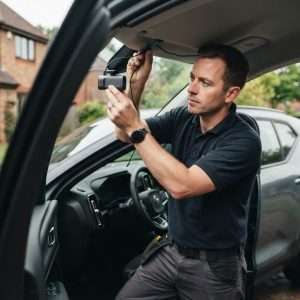
Professional car dash camera fitting gives you a securely mounted camera, concealed wiring and a tested power connection. With mobile fitting, the... Continue reading
Does a gps tracking dash cam let you find your car if it’s stolen? Not by itself. GPS can add location and journey context to... Continue reading
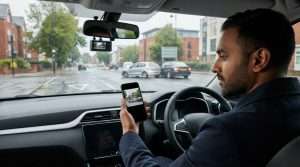
A dash camera can capture a collision clearly and still not tell the whole story. Understanding car dash camera causes of road traffic accidents... Continue reading