
No products in the cart.

What is Parking Mode on a Dash Cam?
A Complete 2026 UK Guide
Last Tuesday, a motorist in Manchester returned to their car to find a £580 repair bill in the form of a dented bumper and no note left on the windscreen. It’s a sickening feeling that 21% of UK drivers face every year. You want to protect your investment, but you’re likely anxious about a flat battery or the confusion of hardwiring. Understanding exactly what parking mode is on a dash cam is the essential first step to ensuring your vehicle has a reliable witness that never sleeps.
We agree that vehicle security shouldn’t be a source of stress or technical headaches. This guide promises to show you how dash cam parking mode provides 24/7 protection, prevents battery drain, and secures the vital evidence needed for insurance claims. We’ll cover the different recording types available in 2026, the specific hardware required for safe operation, and why booking a professional UK-wide installation is the most reliable way to stay safe and sound.
Key Takeaways
- Understand what parking mode on a dash cam is and how it provides 24/7 vehicle security by recording incidents while your ignition is switched off.
- Compare motion, impact, and time-lapse triggers to ensure you capture vital evidence during "hit and run" incidents.
- Learn how professional hardwiring and voltage cutoff technology prevent battery drain while maintaining constant surveillance.
- Navigate UK privacy laws and see how high-quality parking footage can significantly speed up your insurance claims.
- Discover why expert nationwide installation is the only way to guarantee your security system remains reliable and effective.
What is Dash Cam Parking Mode & Why is it Essential for UK Drivers?
Dash cam parking mode is a specialised surveillance feature that allows your camera to continue monitoring your vehicle after the engine is turned off. While most people have a basic understanding of what a dashcam is, they often view it solely as a tool for recording motorway accidents. Parking mode changes this dynamic entirely. It shifts the device from a simple journey recorder to a 24/7 security system. When you understand what is parking mode on a dash cam, you realise it acts as a silent sentry, capturing footage of car park bumps, vandalism, or attempted thefts while you’re away from the wheel.
By 2026, the demand for this feature will have spiked due to increasingly cramped UK infrastructure. Recent 2024 statistics from major UK insurers indicate that roughly 35% of all vehicle damage claims involve incidents where the car was stationary. Whether you’re squeezed into a tight multi-storey bay or parked on a narrow residential street, the risk of a "hit and run" is high. Leaving your vehicle unattended shouldn’t be a source of anxiety. Having a camera that stays alert provides psychological peace of mind. You know that if a delivery driver clips your wing mirror or a trolley rolls into your door, you’ll have the high-definition evidence needed for a successful insurance claim.
The Difference Between Driving Mode and Parking Mode
Your camera doesn’t just stay "on" in the traditional sense; it changes its operational logic. Most modern units detect that the car has stopped via a hardwire kit that senses the ignition signal, or through a built-in G-sensor that monitors for a lack of movement. In driving mode, the camera records at a high bitrate to capture fast-moving details. In parking mode, it scales back activity to save energy. It might switch only to "Time Lapse" or "Impact Detection". You can usually tell it’s active by a slow-pulsing LED indicator or a specific "P" icon on the display. This ensures the device is ready to snap into action the moment it detects a physical jar or movement in its field of vision.
Why Standard ‘Cigarette Lighter’ Power Isn’t Enough
Most UK drivers try to rely on the standard 12V cigarette lighter socket, but this is rarely effective for security. In most British cars, such as the Ford Puma or Volkswagen Golf, these sockets are "switched." This means the power cuts the second you pull the key or press the stop button. Without a permanent power source, your camera shuts down, leaving your car vulnerable.
While a few older models feature "unswitched" sockets that stay live, using them is risky. An always-on socket does not protect against battery drainage. Without a dedicated hardwire kit to manage the voltage, a dash cam can pull power until the car battery drops below 11.8V. At that point, you’ll return to a car that won’t start. Professional installation solves this by using a smart power cable that monitors the battery level. It will automatically cut the camera’s power if the vehicle’s battery gets too low, ensuring you’re never left stranded while still providing maximum protection time. If you’re wondering what parking mode on a dash cam is worth without a hardwire kit, the answer is very little.
- 24/7 Protection: Captures incidents even when the car is locked and empty.
- Smart Power Management: Hardwire kits prevent the car battery from going flat.
- Evidence Quality: Provides clear footage for "no-fault" insurance claims in car parks.
- Deterrent Factor: Visible flashing LEDs can discourage potential vandals.
How Different Parking Modes Work: Motion vs Impact vvsTime Lapse
Understanding what the "ging mode" on a dash cam is about starts with the three primary triggers: motion, impact, and time-lapse. Premium units from Thinkware and Blackvue let you tailor these settings to your specific risk profile. If you park on a busy London high street, your security needs differ significantly from someone with a private, gated driveway in rural Surrey. Choosing the wrong setting can lead to missed incidents or a flat vehicle battery.
Buffering technology is the essential feature that distinguishes basic cameras from professional-grade security cameras. Instead of starting the recording only after a collision occurs, the camera continuously writes to a temporary cache. When the internal sensors detect a bump, the device permanently saves the 10 seconds leading up to the hit and the 20 seconds following it. This provides a complete narrative of the event. Without buffering, you often only catch the back of a fleeing vehicle rather than the approach of the culprit.
Storage management involves a direct trade-off between video quality and duration. A standard 32GB SD card holds roughly 120 minutes of 4K footage before it begins overwriting the oldest files. Selecting the right recording mode helps you stretch this capacity without sacrificing evidence. Before committing to a specific model, checking consumer advice on buying a dash cam helps ensure your chosen hardware supports the necessary power requirements for these advanced features.
Impact Detection: The G-Sensor Explained
The internal G-sensor is a 3-axis accelerometer that measures physical force. It detects "dings" from car doors or low-speed reversing bumps. You can adjust sensitivity settings to prevent "false positives" caused by 45mph wind gusts or heavy rain. In "Energy Saving" mode, the camera remains dormant until an impact occurs. It then wakes up and records within 1 second. This reduces battery drain by roughly 95% compared to active motion sensing, making it ideal for cars parked for several days.
Motion Detection and Time Lapse Options
Motion detection uses the camera lens to monitor pixel changes in the environment. It’s the best choice for catching vandals or "keying" incidents because it triggers as soon as someone approaches the vehicle. However, on a busy pavement, every passing pedestrian will trigger a recording. This quickly fills your SD card and consumes more power from your battery pack.
Time Lapse offers a more efficient alternative for high-traffic areas. By capturing just 2 frames per second (fps) instead of the standard 30 fps, you can record 15 times longer on the same memory card. It provides a constant "CCTV" style overview of your car’s surroundings. If you’re unsure which setup fits your specific vehicle and parking habits, you can speak with one of our specialists for a tailored recommendation. This ensures you have the right balance between** parking mode on a dash cam** and real-world reliability.
Powering Your Dash Cam: Hardwiring, Battery Packs, and Preventing Drain
To understand what parking mode is on a dash cam, you first need to know how the device stays awake when your engine is off. Most vehicles cut power to the 12V cigarette lighter socket the moment you remove the key. Without a dedicated power source, your camera shuts down, leaving your vehicle vulnerable to hit-and-runs or vandalism. You have two primary options to keep the lens rolling: hardwiring to the vehicle’s fuse box or installing a dedicated external battery pack.
Hardwire kits are the most common solution for UK drivers. These kits involve running a cable from the camera, behind the A-pillar trim, and directly into the vehicle’s fuse box. A professional three-wire kit connects to a constant live feed, a switched live feed, and a ground point. This setup allows the camera to detect exactly when you turn off the ignition, automatically switching from continuous recording to parking mode. It’s a seamless transition that ensures you never forget to protect your car.
Battery health is a major concern, especially during British winters where temperatures frequently drop below 5°C. Cold weather can reduce a lead-acid battery’s capacity by 20% to 30%. To prevent a flat battery, quality hardwire kits include an integrated voltage cutoff switch. You can typically set this to 11.8V, 12.0V, or 12.2V. Once the car’s battery hits that threshold, the kit cuts power to the dash cam. This prioritises your car’s ability to start over the camera’s recording time, providing essential peace of mind.
Modern UK cars equipped with Stop-Start technology require extra care. These vehicles use AGM (Absorbent Glass Mat) batteries and complex Power Management Systems. If you tap into the wrong fuse or bypass the battery sensor, you might see "Battery Discharge" warnings on your dashboard. Professional installation is vital for vehicles from brands like BMW, Audi, and Mercedes-Benz to ensure the dash cam doesn’t interfere with sensitive on-board electronics or void your manufacturer’s warranty.
Hardwiring Kits: The Professional’s Choice
Hardwiring is the cleanest way to enable what is parking mode on a dash cam without cluttering your cabin with cables. It provides a permanent, hidden connection that stays active 24/7. Always choose a kit with an adjustable voltage regulator. This allows you to fine-tune the cutoff point based on your driving habits. If you only drive short distances, setting a higher cutoff, like 12.4V, ensures your alternator has enough time to replenish the battery during brief trips.
External Dash Cam Battery Packs (LiFePO4)
If you need an extended recording or drive a luxury vehicle with sensitive electronics, an external LiFePO4 battery pack is the ultimate upgrade. These packs sit under the passenger seat or in the glovebox and offer several distinct advantages:
- Extended Runtime: Achieve 25 to 35 hours of continuous parking mode recording from a single 50-minute charge.
- Zero Battery Strain: The dash cam draws 100% of its power from the pack, meaning your car’s main battery remains untouched while parked.
- Temperature Resilience: Lithium Iron Phosphate (LiFePO4) technology is designed to handle the UK’s fluctuating climate safely, unlike standard lithium-ion power banks.
- Fast Charging: Most professional packs, such as those from Cellink or BlackVue, fully recharge in under an hour while you drive.
Investing in a dedicated battery pack is the safest way to guarantee 24-hour surveillance without ever worrying about a non-start in the morning.

Practical Considerations: Legality, Insurance, and SD Card Health
Understanding what parking mode on a dash cam is requires looking at the legalities of UK surveillance. Recording on a public street in the United Kingdom is perfectly legal under the Data Protection Act 2018. You have a right to protect your property, provided the camera is used for domestic purposes. If your vehicle is parked on a public highway, you don’t need permission from passersby to record, as there’s no reasonable expectation of privacy in a public space. However, you should avoid pointing the camera directly into a neighbour’s window to comply with the Information Commissioner’s Office (ICO) guidelines.
British law supports the use of dash cam footage as evidence in both criminal and civil proceedings. If your camera captures a vandal or a reckless driver, the police can use that footage to issue fines or make arrests. Always ensure your camera’s timestamps are accurate. Incorrect timestamps can lead to evidence being dismissed in court, leaving you vulnerable to repair costs that could exceed £1,000 for a simple bumper replacement.
Insurance Benefits for UK Policyholders
Hit-and-run incidents account for 12% of all UK road accidents, according to 2023 traffic data. Without parking mode, you’re often forced to pay your own excess and lose your No Claims Bonus (NCB) because there’s no third party to claim against. Dash cam footage provides irrefutable evidence that identifies the offending vehicle’s registration plate. This allows your insurer to recover costs directly from the other party’s insurance provider, keeping your premiums low and your NCB intact.
Parking mode is particularly effective in car park disputes where liability is often split 50/50 due to a lack of witnesses. Clear footage showing a stationary vehicle being hit removes all ambiguity. UK insurers view dash cam footage as a primary fraud deterrent, as it validates claims and reduces settlement times.
Maintaining Your Silent Sentry
High-resolution 4K parking mode requires specific hardware to function reliably over long periods. You must use ‘High Endurance’ SD cards specifically designed for constant overwrite cycles. Standard SD cards often fail within 3 months when used for parking mode because the flash memory wears out under the pressure of continuous 4K data streams. A V30 U3-rated card ensures the write speed stays above 30 MB/s, preventing dropped frames or file corruption during a critical incident.
Regular maintenance is mandatory for system reliability. You should format your SD card every 2 to 4 weeks to clear out protected files that might be taking up space. Many modern cameras, such as those from Thinkware and BlackVue, include ‘Professionals still recommend Format Free’ technology, but manual checks. Check your camera’s LED indicators once a week to ensure it’s actually entering parking mode when the ignition turns off. If the battery voltage drops too low, the hardwire kit will cut power to protect your car’s battery, meaning no recording will take place.
Extreme weather in the UK also impacts performance. During 40°C heatwaves, internal car temperatures can soar to 70°C, causing cheap cameras with lithium-ion batteries to swell or fail. We recommend cameras with supercapacitors, which are rated to handle temperatures from -20°C during winter frosts to 80°C in direct summer sun. This ensures your vehicle remains protected regardless of the British weather forecast.
Secure your vehicle with a professional dash cam installation to ensure your parking mode is configured correctly for 24/7 protection.
Professional Nationwide Dash Cam Installation with Safe & Sound Mobile
Professional fitting is the only way to guarantee your security system operates reliably 24/7. While DIY kits exist, they often lead to flat batteries or messy, exposed wires that compromise your vehicle’s interior. Safe & Sound Mobile removes this risk by providing expert, nationwide installation at your home or workplace. Our team of over 60 specialist engineers ensures your hardware is integrated correctly into the vehicle’s electrical system. Understanding which parking mode to use on a dash cam is only half the battle; the other half is ensuring the power management system is configured to protect your car battery when the engine is off.
We maintain your vehicle warranty by using non-invasive installation techniques. Modern car electronics are sensitive; a single incorrect connection can trigger dashboard error codes or void your manufacturer’s electrical guarantee. Our technicians use piggyback fuse circuits and vehicle-specific hardwire kits to keep the factory wiring intact. This professional approach is why 98% of our customers report being totally satisfied with their discreet, factory-fitted look. We handle everything from high-value supercars to standard family hatchbacks with the same level of precision and care.
You can customise your setup based on your specific security needs. Some drivers prefer a simple front-facing camera to monitor the road ahead, while others opt for comprehensive front-and-rear systems. A dual-channel setup provides 360-degree coverage, which is vital for capturing hit-and-run incidents in supermarket car parks. Since 2002, we’ve helped thousands of UK drivers secure their vehicles with tailored packages that combine premium hardware from brands like Thinkware and BlackVue with our industry-leading installation service.
Our Mobile Installation Process
During a professional dash cam fitting appointment, our engineer arrives at your preferred location with all the necessary tools and components. We begin by identifying the correct fuse spurs that provide both ignition-switched and permanent power. This dual-power setup is essential for parking mode to function correctly. We route all cables behind the A-pillar airbags and interior trim panels, ensuring no wires are visible and no safety systems are obstructed.
Our technicians perform a rigorous multi-point check before handing back your keys. We test the voltage cutoff settings to ensure the camera shuts down before it can drain your car battery below the level required to start the engine. We also trigger the G-sensor and motion detection to verify that the system records correctly while parked. This meticulous testing phase ensures your investment is ready to protect you from the moment we leave.
Ready for Total Peace of Mind?
Choosing a dash cam with parking mode is the single best investment you can make for your vehicle’s security. It provides an unbiased witness that never sleeps, protecting you against insurance fraud, vandalism, and accidental damage. Given that the average UK car insurance excess is now over £250, a single captured incident pays for the entire system and installation cost. Don’t leave your vehicle’s safety to chance with a dangling cigarette lighter cable or a poorly configured DIY setup.
Get a bespoke quote for a premium dash cam and professional fitting package today. We offer transparent pricing and flexible scheduling to suit your busy lifestyle. Our specialists are ready to guide you through the best hardware options for your specific vehicle and budget. Speak with one of our specialists today about a Dash Cam with Parking Mode and secure your vehicle with the UK’s leading mobile installation experts.
Secure Your Vehicle With Expert 24/7 Surveillance
Understanding what parking mode on a dash cam is gives you the upper hand against the thousands of hit-and-run incidents reported across the UK every year. By choosing between motion detection, time-lapse, or impact sensing, you ensure your car stays protected even when you’re not around. You’ve learned that professional hardwiring is essential for preventing battery drain and ensuring your system stays active during critical moments. Don’t leave your car’s safety to chance with a dangling cigarette lighter cable that stops working the moment you turn off the ignition.
At Safe & Sound Mobile, we provide a Nationwide UK Mobile Fitting Service that brings the experts directly to your doorstep. As Trustpilot 5-Star Rated Security Experts, we’ve built our reputation on precision and reliability. We offer a lifetime warranty** on trackers and professional fitting**, giving you total peace of mind for the long road ahead. Our team handles everything from Thatcham-approved trackers to the latest 2026 dash cam technology with absolute care.
Book Your Professional Dash Cam Installation Today and join thousands of protected UK drivers. It’s time to give your vehicle the security it deserves.
Frequently Asked Questions
Will dash cam parking mode drain my car battery?
Parking mode won’t drain your battery if you install a hardwire kit with an integrated voltage cutoff. These kits monitor your 12V battery and stop the camera if the power drops below a set level, usually 11.8V. This ensures you always have enough charge to start the engine. Understanding what parking mode on a dash cam is helps you choose the right protection for your vehicle’s electrical system.
Do I need a special dash cam for parking mode?
You need a dash cam designed with internal parking software and a dedicated power source to use this feature. Most entry-level cameras only record while you drive. Professional models from brands like Thinkware and BlackVue include G-sensors that wake the unit upon impact. Using a professional UK-wide installation service ensures your hardware is correctly configured for 24/7 surveillance.
Is it better to have motion detection or time-lapse in parking mode?
Time-lapse is generally more reliable than motion detection because it captures a constant stream of images at one frame per second. Motion detection can sometimes lag, missing the first two seconds of an incident. In a busy UK car park, motion sensors might trigger 50 times an hour, quickly filling your SD card. Time-lapse provides a consistent record of everything happening around your car.
Can I use parking mode without hardwiring my dash cam?
You can use a dedicated external battery pack to run parking mode without hardwiring into the vehicle’s fuse box. A Cellink NEO 8+ battery provides up to 30 hours of continuous recording and charges while you drive. Most UK cars cut power to the 12V cigarette lighter when the ignition is off; therefore, a standard plug-in won’t work for overnight security.
How long will a dash cam record in parking mode?
A standard setup typically records for 12 to 24 hours before the voltage protection kicks in. If you use a 128GB industrial-grade SD card, you can store approximately 40 hours of parking footage before the oldest files are overwritten. The exact duration depends on whether you use motion triggers or continuous low-bitrate recording. This provides peace of mind during your daily commute or overnight parking.
Will parking mode record someone keying my car?
Parking mode will record someone keying your car if they enter the camera’s field of vision, which is usually 140 degrees. A dual-channel system covers both the front and rear, capturing roughly 280 degrees of the area around your vehicle. If the vandal hits the car, the G-sensor triggers an "Event" file that’s saved in a protected folder so it isn’t deleted.
Does dash cam parking mode work in the dark?
Modern dash cams work exceptionally well in the dark thanks to Sony STARVIS image sensors, which are designed for low-light environments. These sensors boost light sensitivity by 30% compared to standard cameras, making registration plates readable under UK street lamps. While it won’t see in total pitch black, it captures clear evidence in most urban parking situations where ambient light is present.
Is it legal to use a dash cam parking mode in the UK?
It’s entirely legal to use dash cam parking mode in the UK, provided the installation complies with the Highway Code and GDPR. Ensure the device doesn’t block more than 40mm of the swept area of your windscreen. Over 90% of UK motor insurers now accept dash cam footage to prove fault in an accident, which helps protect your no-claims bonus and provides vital evidence.


About author
Related posts

A GPS location alone doesn’t mean a tracker meets a Thatcham security standard. For motorhome tracker installation in the UK, the key difference is... Continue reading

A dash camera may record when the car is off if it has parking mode and a suitable power supply. Whether dash cameras record when... Continue reading
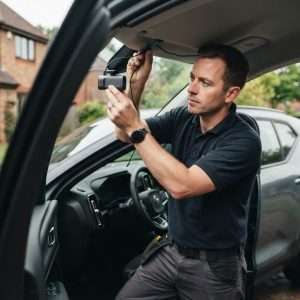
Professional car dash camera fitting gives you a securely mounted camera, concealed wiring and a tested power connection. With mobile fitting, the... Continue reading
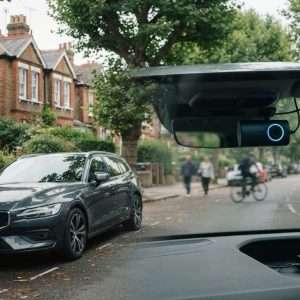
A dash cam can keep recording when your car is off, but only if it has a suitable power source and parking mode. A hardwired... Continue reading
Does a gps tracking dash cam let you find your car if it’s stolen? Not by itself. GPS can add location and journey context to... Continue reading