
No products in the cart.
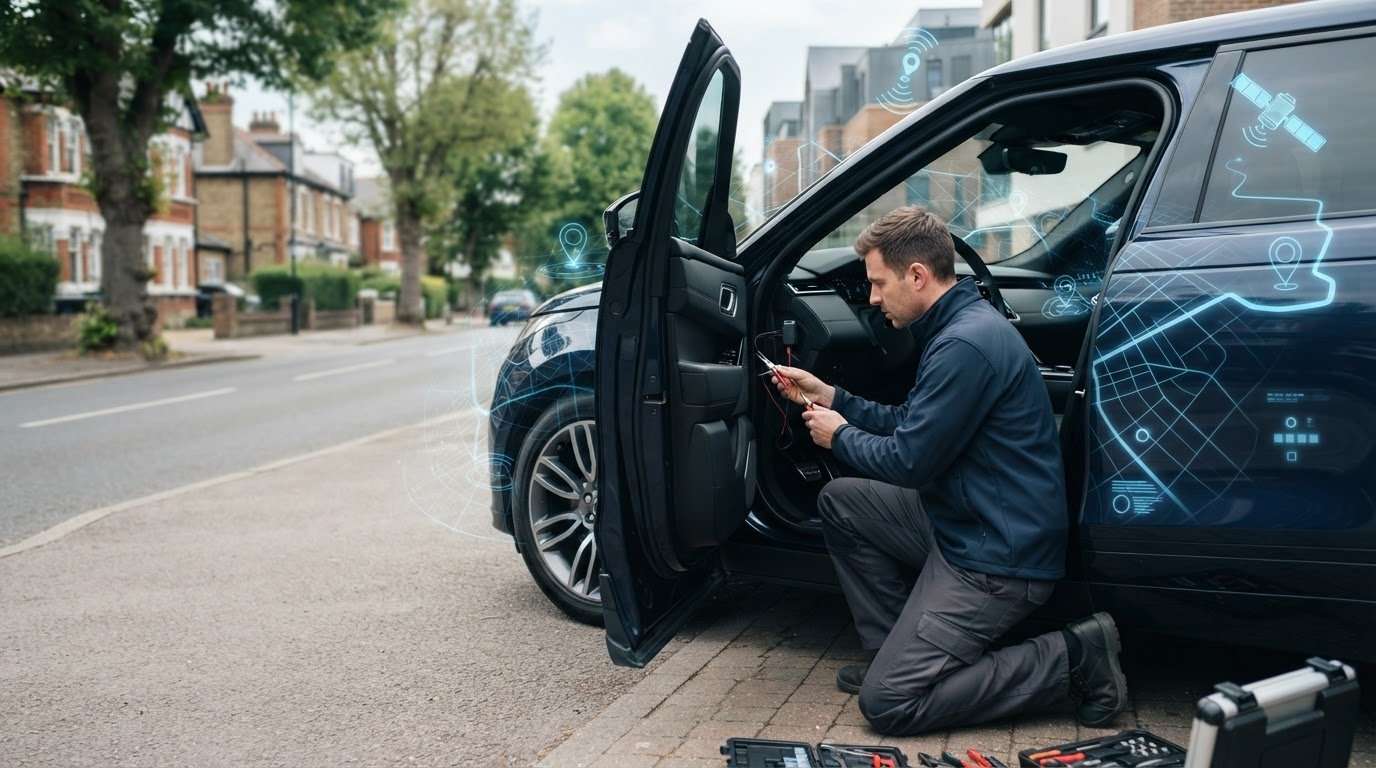
GPS Tracker Device for Vehicles
How to Choose the Right System
The most advanced tracker isn’t automatically the right choice for your car. The right GPS TRACK DEVICE FOR VEHICLES depends on what you need it to do, whether your insurer specifies an approved category and how it will be fitted.
It’s easy to confuse a vehicle tracker with a broader telematics system. A tracker helps locate a vehicle, while telematics can also help manage journeys and business fleets. The distinction matters: extra features won’t necessarily meet an insurance requirement, and not every policy calls for the same tracker category.
This guide explains how vehicle GPS tracking works, compares the main device types, and outlines what to consider for personal or business use. You’ll also learn how to check your policy requirements and compare options that fit. Safe & Sound Mobile supplies and professionally installs insurance-approved Thatcham S5 and S7 vehicle trackers, with mobile fitting across the UK. Use this information to narrow your needs and choose a suitable, professionally fitted system.
Key Takeaways
- Understand how a vehicle tracker determines its location and communicates that information to a tracking service.
- Compare hard-wired, OBD and self-install GPS TRACK DEVICE FOR VEHICLES options by fitting approach and intended use.
- Start with your priority, whether that’s meeting an insurance requirement, improving vehicle security, or gaining fleet visibility.
- Read your policy wording carefully and identify any specified tracker category before choosing a device.
- Once you’ve narrowed down your needs, consider professional fitting to complete your vehicle security setup.
What Is a GPS Tracker Device for Vehicles, and What Does It Do?
A GPS tracker fitted to a vehicle is an electronic device that uses satellite positioning to determine the vehicle’s location and shares that information through an associated tracking service. Depending on the device and service, it can help an owner see where a vehicle is. A tracker may help respond if a vehicle is stolen, but it can’t guarantee the vehicle will be found or recovered.
A GPS tracking device for vehicles serves a different purpose from a vehicle-history check. It relates to the location of a specific vehicle fitted with a tracker, rather than a vehicle history check. A tracker also differs from a full telematics system, which broadly combines many management-wide data points for managing vehicles or drivers. Understanding these distinctions helps you choose a system for the job you need it to do.
For a general introduction to the hardware and its applications, the GPS tracking unit overview explains the basic concept. In a vehicle system, satellite positioning and the method used to communicate location information are separate parts of the process.
How is a GPS tracker different from a vehicle check or telematics system?
A vehicle-history check uses identifying details, such as a registration number or VIN, to look up available records. It doesn’t locate a car as it moves. For example, Car Owl provides vehicle-check information, which can help someone understand a vehicle’s history but isn’t a substitute for a fitted tracking device.
Telematics can include vehicle location alongside broader fleet or driver information. A business might use a telematics platform to view vehicles and review operational data, while a simpler tracking setup may focus on location. The term “tracker” alone doesn’t tell you which features are included, so consider the purpose and capabilities of the specific system.
Who might benefit from a vehicle tracking device?
Private owners may choose a tracker as an additional vehicle-security measure, particularly if knowing the vehicle’s location is a priority. Businesses may value visibility across company vehicles, for example to understand where vehicles are during working journeys. A tracker provides location information; it doesn’t replace sensible security measures or guarantee recovery after theft.
The right system depends on how the vehicle is used and the level of insurance coverage. An insurer may specify an approved tracker category, sodon’tt assume every device meets every policy’s requirements. A personal car owner focused on security and a business seeking vehicle visibility can have different needs. Identify your main purpose first, then compare tracker types and fitting options against it.
How Does a GPS Vehicle Tracker Locate and Report a Vehicle?
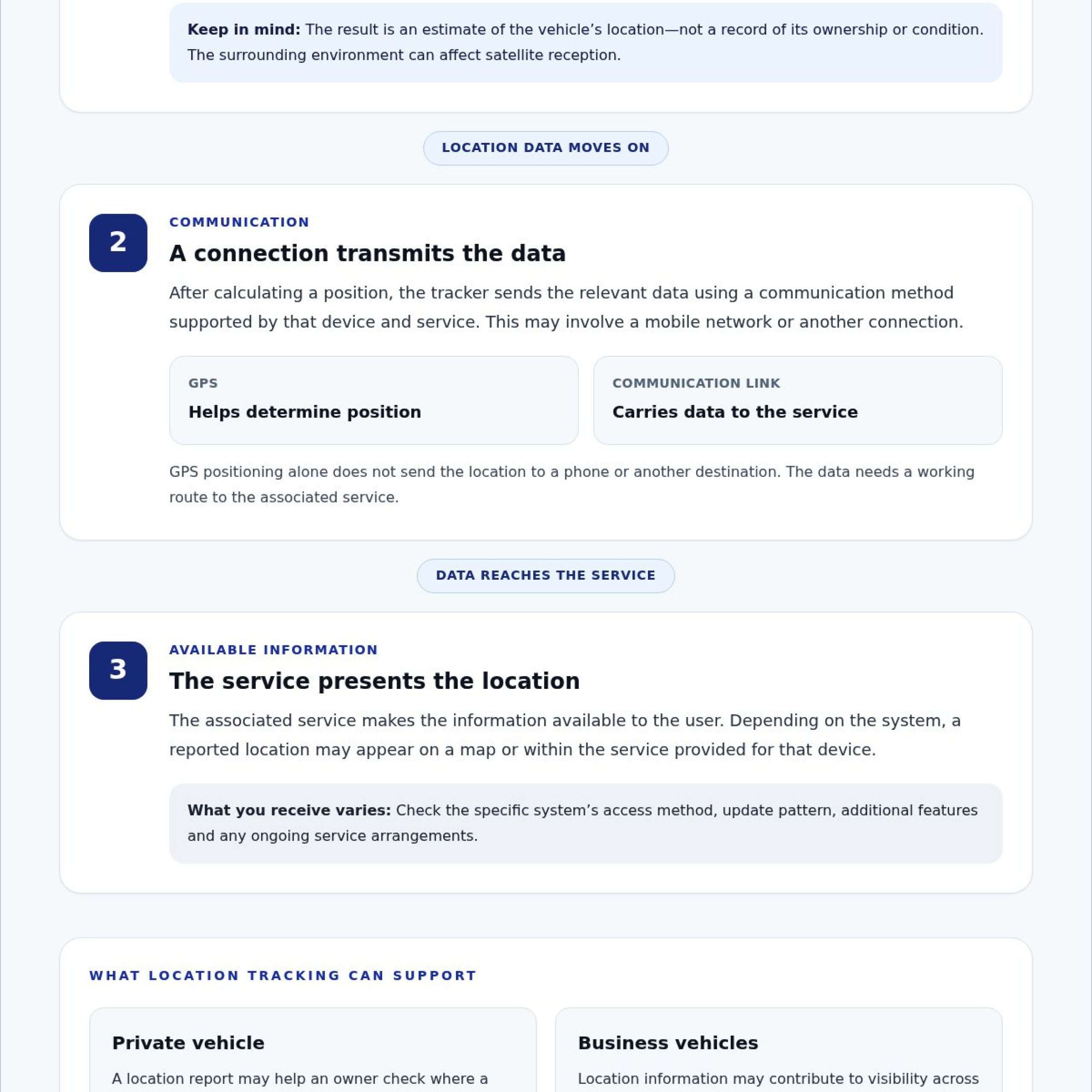
A vehicle tracking system has two separate jobs. First, it estimates the tracker’s position using signals received from GPS satellites. Then it sends location data to a service that makes it available to the user. GPS provides the positioning; a separate communication link transmits the data.
That distinction matters. GPS signals help the device work out where it is, but they don’t, by themselves, send that position to your phone or another destination. The tracker also needs a way to report the information. The How Does Vehicle Tracking System Work? overview describes the broader sequence of collecting, transmitting and processing tracking data.
What role does GPS play in a vehicle tracker?
GPS, or the Global Positioning System, uses satellite signals to help a compatible receiver calculate its position. In a vehicle tracker, this gives the device location information that can be associated with the vehicle—the vehicle’s location at a given time, not a historical record of its ownership or condition.
For example, if you want to check where you left your car, the tracker’s reported location may help you identify its position on a map or within the service provided for that device. The practical detail you receive depends on the system. Factors such as the surrounding environment can affect satellite reception, so don’t assume every tracker will perform the same in every location.
How does location information reach the vehicle owner?
After calculating a position, the tracker must send the relevant data using a communications method the system supports. This may involve a mobile network or another connection, depending on the device and service. GPS positioning and data transmission are distinct: a tracker might determine a position, but the information still needs a working route to the associated service before it can be presented to the user.
Think of it as three stages: the device estimates its location, sends data through its communication link, and the relevant service makes that information available. The exact arrangement varies by product. Don’t assume every GPS track device for vehicles includes the same access method, update pattern or additional features. Before choosing, check what the tracker and its service provide, including any ongoing service arrangements.
For a private owner, a location report may help establish where a vehicle is at a given point; for a business, it may contribute to visibility across vehicles. Neither use means location is necessarily refreshed continuously or that a recovery response is included. A tracker’s capabilities depend on its specifications and service, so distinguish between locating information and what happens next.
If you’re considering an insurance-approved system, Safe & Sound Mobile supplies and professionally fits vehicle trackers. Explore insurance-approved trackers as you decide which setup suits your vehicle and requirements.
Which Vehicle GPS Tracker Type Fits Your Security or Fleet Needs?
Tracker choice isn’t just about how a device is fitted. First decide what it needs to do. A private owner may prioritise a security system that matches their insurer’s wording, while a business may need location visibility across several vehicles. Hard-wired, OBD and self-install describe fitting approaches, not a guaranteed security level or set of features.
Use this comparison as a starting point. The exact design and functions vary between products.
| Tracker type | Installation approach | Typical use and key limitation |
|---|---|---|
| Hard-wired | Connected to the vehicle’s electrical system and fitted. | Can suit owners seeking a fitted security tracker. Installation is more involved than simply plugging in a device; suitability depends on the tracker and vehicle. |
| OBD | Plugs into the vehicle’s OBD port. | Can suit users looking for a straightforward plug-in approach. Its format may not meet an insurer’s requirement for an approved security tracker. |
| Self-install | Users set it up according to the device’s instructions. The exact fitting method varies. | May appeal to users who want to handle setup themselves. Features, fitting requirements, and insurance acceptance vary by product. |
Hard-wired, OBD and self-install trackers: what is the difference?
A hard-wired tracker connects to the vehicle’s electrical system, so fitting involves more than plugging it in. An OBD tracker uses the vehicle’s OBD port, while “self-install” covers devices intended for user setup and can describe different formats. Don’t assume a convenient fit means a tracker has the security approval your policy requires.
For fleet visibility, the key question may be whether the system gives the business the location information it needs across its vehicles. That is different from choosing an insurance-approved security tracker for a private car. A device designed mainly for fleet use shouldn’t be treated as interchangeable with one selected to meet an insurer’s stated security requirement.
When should you consider insurance-approved vehicle tracking?
Consider an insurance-approved tracker if your policy wording specifies a tracker or a particular category. Requirements vary by policy and vehicle, so don’t assume one category applies to all. Check the wording before choosing a device, and match the exact requirement rather than relying on a general description such as “GPS tracker”.
Safe & Sound Mobile supplies and professionally installs insurance-approved trackers, including Thatcham S5 and S7 categories. These are categories available through the business, not a recommendation that either one suits every vehicle or policy. Use your insurer’s wording to guide the choice. The right GPS TRACK DEVICE FOR VEHICLES is the one that fits its intended role, the way you use the vehicle and any applicable insurance requirement.
How to Choose a GPS Tracker Device for Your Vehicle
Choose a tracker by starting with its job, not its feature list. Is your priority meeting an insurer’s requirement, adding a vehicle-security measure, or tracking business vehicles? Your answer helps narrow the device type, features and fitting approach. Use this checklist to decide in a clear order.
- Define your need. Decide whether you need an insurance-approved security tracker, location visibility for business vehicles or another tracking function. A system designed mainly for fleet oversight may not meet a policy requirement.
- Read your policy wording. Look for a specified tracker category, approval requirement or fitting condition. Note the exact wording before comparing devices.
- Compare tracker types. Consider hard-wired, OBD and self-install formats, then compare their installation methods with your intended use. Don’t assume an easy-to-fit device provides the approval or features you need.
- Plan the fitting. Consider the vehicle, its existing equipment and how the tracker will be installed. Professional fitting is a practical next step for an insurance-approved system.
What should you check in your insurance policy before choosing?
Read the section on vehicle security carefully. Identify whether your insurer names an approval standard or a specific category, and note any stated installation requirements. Not every policy requires an S5 or S7 tracker. Your policy wording, not a general rule, should guide your tracker selection. If the policy specifies a category, compare that requirement with the tracker’s stated approval before arranging a fitting.
Safe & Sound Mobile supplies insurance-approved vehicle trackers, including Thatcham S5 and S7 categories. The Insurance Approved Vehicle Trackers guide helps you understand what to look for when comparing your policy’s requirements with a suitable device.
What should you compare before arranging a fitting?
Compare the device category, fitting method and functions you’ll actually use. A private owner may focus on meeting policy wording and adding a security measure; a business may prioritise visibility across its vehicles. The vehicle itself matters, too. Consider how it’s used and whether existing equipment affects which installation approach is suitable. The Vehicle Tracking Explained guide provides useful context for matching a tracker’s role to your intended use.
Keep the decision practical. Write down your main priority, any policy requirement and the type of access or tracking information you need. Then match these points to a suitable tracker rather than choosing features you may not use. If a professionally fitted, insurance-approved tracker is the right route, arrange fitting with Safe & Sound Mobile.
Get a Vehicle GPS Tracker Professionally Fitted Across the UK
Onceyou’vee identified the tracker type and checked your policy wording, professional fitting is the practical next step. The installation approach should suit both the selected device and the vehicle. This matters particularly when choosing a tracker that connects to the vehicle’s electrical system, as fitting is more involved than plugging in a device.
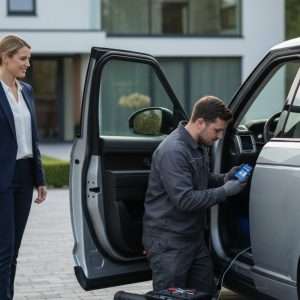
Safe & Sound Mobile offers UK-wide mobile fitting for vehicle security products. A technician fits the selected tracker at your location, bringing the installation to you. The tracker’s functions depend on the device and its associated service, so not every system offers the same location access, updates, or other features.
What happens when a mobileWe fit the selected trackerThe selected tracker is fitted at your locatiotheing an approach suited to that device and vehicle. Before arranging a fitting, have the vehicle details and any relevant policy requirements to hand. This keeps the choice centred on the system you need, rather than assuming one type of tracker or installation suits every car or van.
Plan around the intended use, too. A personal vehicle with an insurance requirement calls for a different decision from business vehicles being tracked for visibility. The installation itself doesn’t determine what information the tracker reports. That depends on the device you select and its service arrangements.
Choose an insurance-approved tracker and arrange fitting
Safe & Sound Mobile supplies and installs insurance-approved vehicle trackers, including Thatcham S5 and S7 categories. These categories don’t automatically suit every insurer or vehicle. Match the selected tracker to your policy wording, then choose an installation approach that fits the vehicle and device.
As a final check, make sure your decision covers three points: the policy requirement, the vehicle’s use, and the tracking role you want. This helps you move from comparing a GPS TRACK DEVICE FOR VEHICLES to a suitable fitted system with fewer unknowns. The next step is to arrange a fitting that reflects those needs.
Arrange UK-wide mobile vehicle tracker fitting with Safe & Sound Mobile.
Make Your Next Vehicle Security Decision with Confidence
The best next step is to turn your requirements into a clear fitting plan. Keep your vehicle’s policy wording and security priorities in view, so the system you select has a defined purpose from the outset. A GPS TRACK DEVICE FOR VEHICLES is most useful when its role, installation and service arrangements make sense for the way you use your vehicle.
After fitting, take time to understand the instructions for your specific tracker and how its associated service works. Knowing where to find the device information and what the system is designed to provide helps you use it with confidence. Keep relevant details accessible, particularly if the vehicle’s use or insurance requirements change.
Safe & Sound Mobile specialises in vehicle security and professional installation. Take the practical next step and arrange UK-wide mobile vehicle tracker fitting. With a system suited to your needs, you can move forward with greater confidence in your vehicle’s security setup.
Frequently Asked Questions
Is a GPS tracker device for vehicles the same as a car tracker?
Yes, the terms usually describe the same broad type of device. A GPS tracker device for vehicles is fitted to a vehicle, while “car tracker” is a common, shorter name. The label alone doesn’t tell you what functions are included. A security tracker is meant to help locate a vehicle; fleet telematics may combine location with broader tools for managing vehicles or drivers. Compare the specific system’s features before choosing.
Can a GPS tracker help locate a stolen vehicle?
It may provide location information that could help establish where a stolen vehicle is, depending on the tracker and its service. That information doesn’t guarantee recovery. What happens next depends on the system’s theft-response arrangements and the circumstances of the incident. Before relying on a tracker, understand what its service provides and keep its instructions and relevant account details accessible.
Do all vehicle GPS trackers need professional installation?
No. Some formats plug into a vehicle’s OBD port, while others are hard-wired or designed for user setup. Before choosing, check the device instructions and any fitting conditions in your insurance policy. A simple-to-install device may not meet your policy’s requirements. The vehicle’s compatibility matters, too. Follow the selected tracker’s installation requirements, and use professional fitting where the device or policy calls for it.
Does my insurer require a Thatcham-approved vehicle tracker?
Some policies specify an approved tracker, but requirements depend on the individual policy and vehicle. Read your policy schedule and security conditions for the exact wording, including any named category or installation condition. S5 and S7 are distinct. Thatch is required for all vehicles; here is a universal requirement. Don’t base your choice on another vehicle owner’s policy or ass; use your insurer’s, use your insurer’s guidance guidance if a term is unclear.
What is the difference between an S5 and an S7 vehicle tracker?
S7 is a category for higher-security stolen-vehicle systems. S5 is a higher-security category that includes S7 features plus automatic driver recognition (ADR) tags, which help prevent the vehicle from being driven if its keys are stolen. These categories describe different system requirements, not a rule that S5 is right for every vehicle. Check your policy wording to see which category, if any, it specifies.
Can I use a vehicle GPS tracker for a business fleet?
Yes. A business can use vehicle tracking to support visibility across its vehicles. First decide whether you need location information or a broader telematics system with additional fleet-management functions. Don’t assume a security tracker includes tools for reviewing journeys or driver activity. If employees use tracked vehicles, set clear expectations about the purpose and use of tracking, and choose a system that fits your business’s operational needs.
Does a GPS vehicle tracker work everywhere in the UK?
Coverage shouldn’t be assumed to be identical everywhere. Before choosing a tracker, review its coverage information and service terms against the places where the vehicle is usually kept and driven. Check whether any stated limitations affect your regular routes or parking locations. Also distinguish installation reach from tracking-service coverage: a fitting service operating across the UK doesn’t mean every tracker has identical service availability throughout the country.


About author
Related posts
A dash cam’s recording time depends on its memory card and video quality. For a single-camera setup, a 32GB card stores around 2 to 4... Continue reading

Does a gps tracking dash cam let you find your car if it’s stolen? Not by itself. GPS can add location and journey context to... Continue reading
Could choosing the wrong tracker category leave your insurer’s requirement unmet? The right thatcham approved tracker installation uk starts with the... Continue reading

Real-Time GPS Tracking Chelmsford: Cars, Vans and Fleets Real-time GPS tracking can help vehicle owners and businesses in Chelmsford view location information through a supported... Continue reading
Thatcham Trackers in Widford: S5, S7 and Fitting Checks Thatcham trackers for a vehicle in Widford should be chosen around the exact product, vehicle and... Continue reading