
No products in the cart.
Vehicle Tracking Device: How to Choose the Right Tracker in the UK
How to Choose the Right Tracker in the UK
The most feature-packed vehicle tracking device may not be the right one for your car. Choosing a tracking device you can rely on starts with its purpose and your insurer’s requirements, not a long list of features. You’ll also want to understand what the tracker does, how it reports a vehicle’s location and whether ongoing service fees apply.
This guide explains how vehicle tracking works and what a tracker can and can’t do. It may help locate a stolen vehicle, but it can’t prevent theft or guarantee recovery. The right choice also depends on whether your insurer specifies an approved category, such as Thatcham S5 or S7, and whether the device’s service and installation arrangements suit you.
You’ll learn how insurance-approved and other vehicle trackers differ, what to consider about subscriptions and vehicle compatibility, and why professional fitting matters. Safe & Sound Mobile supplies and professionally installs insurance-approved S5 and S7 trackers through a UK-wide mobile installation service. Use the steps below to compare your options against your vehicle and insurance requirements.
Key Takeaways
- Choose a tracking device for its purpose, service arrangement and fitting needs, not just its feature list.
- Distinguish between determining a vehicle’s location and communicating that information to a tracking service.
- Compare insurance-category trackers with other devices. Focus on S5 or S7 if your insurer specifies an approved category.
- Use a clear decision path: identify your needs, review your insurance wording, compare the service and plan professional fitting.
- UK-wide mobile fitting makes it practical to have an insurance-approved S5 or S7 tracker professionally installed.
What does a vehicle tracking device do, and what can it realistically achieve?
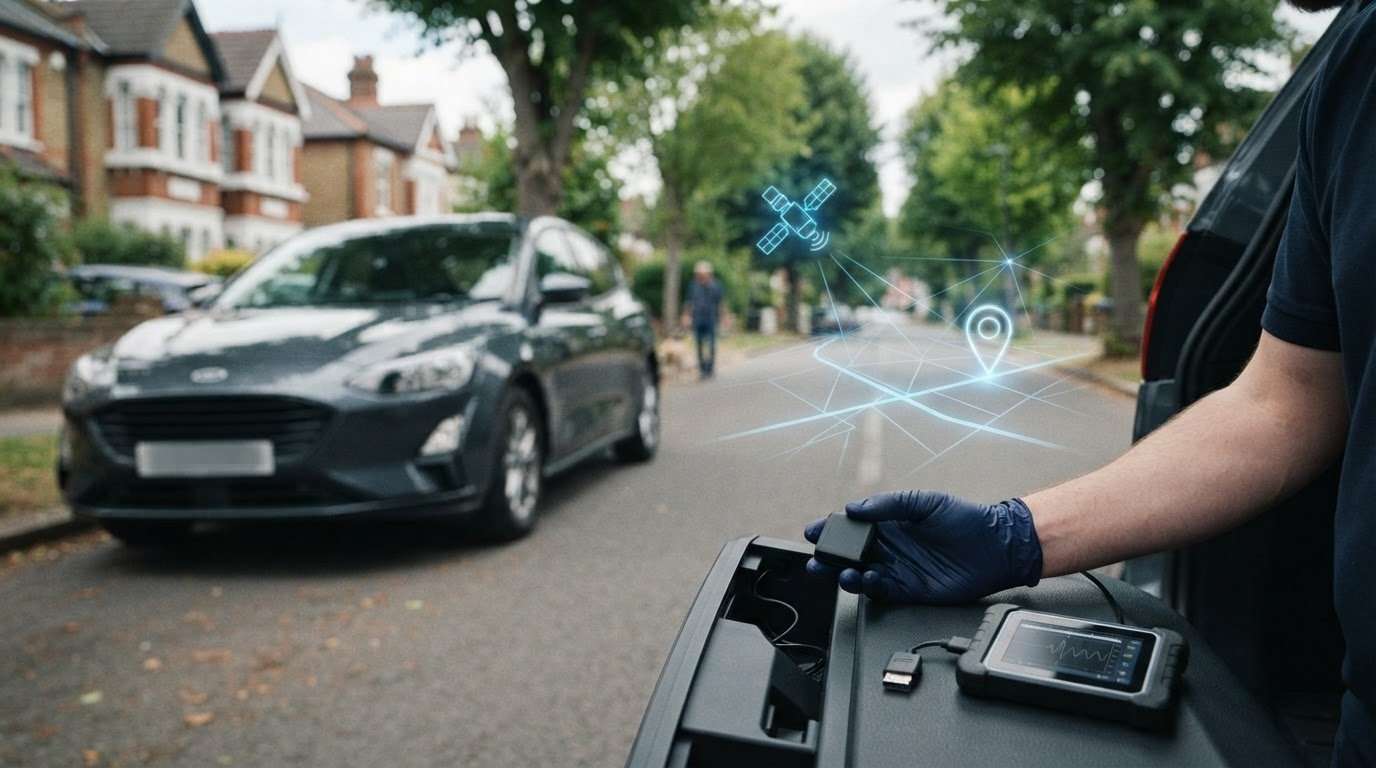
A vehicle tracking device reports a vehicle’s location through a compatible tracking service. Depending on the device and service, it may also provide alerts. Its main function is to give you location information, not to guarantee that theft will be prevented or the vehicle recovered.
A tracker is different from an alarm or an immobiliser. It focuses on location reporting, while an alarm can alert you to an event and an immobiliser can restrict a vehicle’s use. These measures serve different purposes, so a tracker shouldn’t be treated as a replacement for every other form of vehicle security.
When comparing a tracking device, ask what information the system provides and how it reaches you. This Vehicle tracking system overview explains the technology’s applications and history. Available functions depend on the tracker and its compatible service.
What information can a vehicle tracker provide?
A tracker can provide location information, while some devices and services also offer alerts. Features vary, so don’t assume every tracker provides live updates, journey history or the same app functions. Check the details of the service you’re considering.
For example, an unexpected movement alert may prompt you to check the vehicle’s location through the service. If you believe it has been stolen, share relevant details with the police and follow the appropriate reporting steps. An alert is a reason to assess the situation, not proof on its own that a theft has occurred.
Does a vehicle tracking device stop vehicle theft?
No. A tracker can support efforts to locate a vehicle, but it doesn’t, by itself, stop someone from gaining access, starting the vehicle or moving it. Those are separate security concerns. Treat tracking as one part of a considered vehicle-security setup, not a guarantee against theft.
What happens after an alert or theft report depends on the tracker, its service, signal conditions and the circumstances. Location information may be limited or delayed, and recovery isn’t guaranteed. Keep the service’s instructions accessible so you know how to use its features and what to do if you suspect your vehicle has been taken.
How vehicle tracking devices locate and report a vehicle
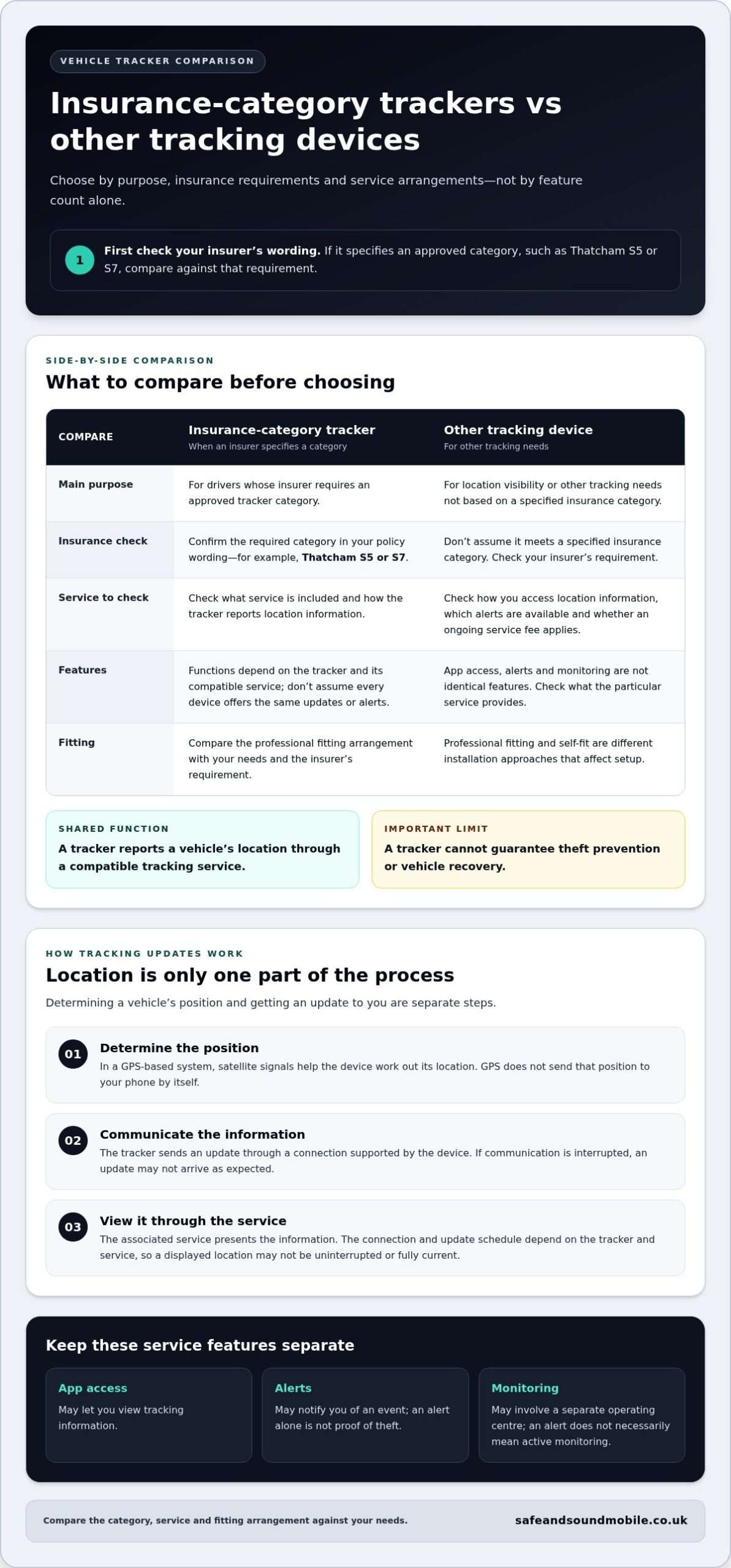
A tracker works in stages. It determines the vehicle’s location, communicates that information through a connection supported by the device, then makes it available through an associated service. These steps are related, but determining a location and getting an update to you are not the same thing.
In a GPS-based system, GPS means Global Positioning System. The device uses satellite signals to determine its position. GPS determines location, but it doesn’t send that position to your phone on its own. A separate communication method transmits the information, and the tracker’s service presents it in a usable form.
A vehicle tracker determines its position, sends an update through a supported connection, and its associated service presents the information.
GPS location, connectivity and tracking updates
Think of location and communication as two separate steps. A tracker may determine the vehicle’s location, but the service can display that information only after the device sends it. The connection and update schedule depend on the tracker and its associated service. Don’t assume all devices use the same network or report at the same frequency.
Connectivity can be interrupted. If the device can’t communicate, an update may not reach the service as expected, so the information available to you may be less current than you expect. A displayed location is useful, but it shouldn’t be treated as an uninterrupted view of the vehicle in every circumstance.
Alerts, apps and monitoring are not identical features
App access, automated alerts and monitoring are separate parts of a tracking service. An app may let you view information; an alert may notify you of an event; a monitoring service may involve a separate operating centre. Not every tracker includes the same combination, and an alert doesn’t necessarily mean someone is actively monitoring the vehicle.
Before choosing a system, check how you access location information, which alerts are included and what happens if communication is interrupted. These are practical differences between services, not interchangeable features. If you’re considering a professionally fitted tracker, installation is one way to add your chosen security measure.
Vehicle tracking device options: compare purpose, category and service
The right tracker depends on your needs. A device chosen to meet an insurance requirement isn’t automatically interchangeable with a general-purpose tracker. Installation and service arrangements also affect how the system works for you. Use this comparison to narrow your options before looking at specific models.
| Option | Broad intended use | Points to compare |
|---|---|---|
| Insurance-category tracker | For drivers whose insurer specifies an approved tracker category. | Required category, professional fitting and included service. |
| Other tracking device | For location visibility or other tracking needs not based on a specified insurance category. | How location information is accessed, available alerts and any ongoing service. |
| Professionally fitted or self-fit device | Different installation approaches that affect how the device is set up. | Who installs it, setup requirements and whether the chosen arrangement suits the vehicle. |
In the UK, S5 and S7 are insurance-approved tracker categories. They are different categories that may be named in an insurer’s requirements. The category alone doesn’t describe every detail of the ongoing service or how you access information, so compare those separately. Your chosen tracker should suit both its intended use and any specific policy requirement.
When an insurance-approved S5 or S7 tracker may be relevant
Your insurer may specify a tracker category for a particular vehicle or policy. If so, use the insurer’s written wording as your guide rather than assuming S5 and S7 are interchangeable. Safe & Sound Mobile professionally installs insurance-approved S5 and S7 trackers. For more category detail, read the dedicated Insurance Approved Vehicle Trackers guide.
Fitted and self-fit tracking devices compared
With professional fitting, an installer handles the installation. With a self-fit device, the vehicle owner sets it up. These are installation approaches, not measures of a tracker’s features. Compare the fitting method separately from the service, including what information, alerts or ongoing support it provides. The Vehicle Tracking Explained guide offers broader background on how trackers work.
Consider the practical setup involved. With a professionally fitted tracker, installation is handled for you; with a self-fit option, you’re responsible for following its setup instructions. Neither approach automatically includes a particular app, alert system or subscription. Details vary by device and service, and some options may involve ongoing service arrangements, while others may not.
Keep three questions in view: does the category match your insurer’s wording, does the installation approach suit you, and does the associated service provide the information you want? Separating these points helps you compare what matters rather than relying on a feature list alone.
How to choose a vehicle tracking device for your needs
Work from your main requirement towards the practical details. If your insurer has set a condition, make that your priority. If not, focus on the location information and service you want. The right tracking device should fit its purpose, your vehicle, and how you expect to use it, rather than simply offering the longest feature list.
Identify your priority, check your insurer’s wording, compare the service, and plan the fitting. Use this decision path to make the choice more manageable:
- Identify the need. Decide whether your main reason is to meet an insurance requirement, get vehicle location information, or add to broader vehicle security. Keeping the main need clear helps separate essential functions from optional extras.
- Check the insurance wording. If you’re buying because of your policy, use the insurer’s written requirement to identify any specified tracker category or fitting condition. Don’t assume one category meets a requirement written for another. Fitting a tracker also doesn’t automatically change your premium or satisfy every policy.
- Compare the service. Check what information the service provides and whether it includes features such as app access, alerts or journey information. Treat these as separate features. An app function or alert may be useful, but it doesn’t replace meeting a stated insurance requirement.
- Plan the fitting. Decide whether professional installation suits your vehicle and preferences, or whether you’d rather fit the device yourself. Compare the installation method separately from the tracker’s category and service features.
Start with your vehicle, insurer and security priority.
Start with your vehicle and why you’re fitting a tracker. A driver responding to a written insurance condition has a different priority from someone seeking location visibility. If broader security is also a concern, consider how a tracker could sit alongside another measure, such as a vehicle immobiliser. Each serves a different role, and neither removes the need to check your policy wording.
Read theinsurer’ss requirement carefully, including any category or installation condition it specifies. Don’t assume premium reductions or automatic policy compliance. Use the requirement that applies to your vehicle and policy.
Compare the ongoing service and installation approach
Once you understand the essential requirement, compare service details. Check how you access location information, which alerts are available and whether an ongoing service is needed. Features vary, so base your choice on the specific device and service details.
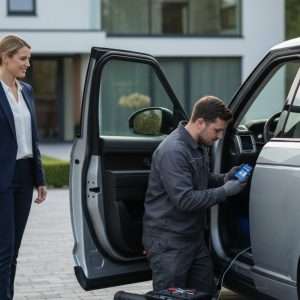
Professional fitting is a practical option if you’d prefer an installer to handle the tracker installation. Safe & Sound Mobile supplies and professionally installs insurance-approved S5 and S7 trackers through its UK-wide mobile fitting service. Arrange professional vehicle tracker fitting when you install your chosen option.
Get a vehicle tracking device professionally fitted across the UK
Once you’ve chosen a tracker that suits your vehicle and any insurance requirement, plan its installation. Safe & Sound Mobile provides a UK-wide mobile fitting service for insurance-approved Thatcham S5 and S7 trackers, bringing the fitting service to your location. This connects your tracker choice with professional installation in one practical step.
Keep your insurer’s written requirement to hand as you prepare. It helps you focus on the category and any fitting condition that applies to your policy. A suitable tracker and professional fitting can help you meet a stated requirement, but installation alone doesn’t guarantee theft prevention, vehicle recovery, or acceptance under every policy. Outcomes depend on the relevant circumstances and requirements.
What to expect from mobile tracker fitting
Mobile fitting brings professional tracker installation to your location across the UK. It provides a direct route from selecting an insurance-approved tracker to having it fitted, rather than leaving installation as an afterthought. Safe & Sound Mobile fits S5 and S7 trackers. Installation supports the selected device, but it doesn’t change what its tracking service provides or guarantee a particular security outcome.
Move from tracker choice to a fitting enquiry.
Keep the decision straightforward: match the tracker category to your insurer’s wording, choose the service that suits your needs, then plan professional fitting. This sequence connects the product decision with installation while keeping expectations realistic. A tracker can support location awareness, but it can’t promise a vehicle won’t be stolen or that it will be recovered.
Safe & Sound Mobile offers professional installation of insurance-approved trackers through its UK-wide mobile service. Explore the fitting service below.
Explore vehicle tracker installation.
Take the next step towards fitted vehicle protection
Choosing a tracking device you can rely on is only part of the decision. If insurance approval is why you’re buying, use your insurer’s wording as your reference point when planning the fit. Keep that requirement handy as you move from comparing options to arranging installation.
A thoughtful choice matters more than a long feature list. Focus on what your vehicle and policy require, then choose a route that works for you. A tracker can support efforts to locate a vehicle, but it can’t guarantee that theft will be prevented or recovery achieved. Clear expectations help you choose protection for the right reasons.
Safe & Sound Mobile provides professional tracker installation. The link below takes you to information about the service.
Explore vehicle tracker installation.
Frequently Asked Questions
Does a vehicle tracking device need a subscription?
Some vehicle tracking devices need an ongoing subscription or service, while others work differently. It depends on the tracker and how it provides location information or alerts. Before choosing, check whether service costs apply, what they cover and what happens if the service ends. Include this ongoing commitment in your comparison alongside the device and fitting arrangements.
Will a vehicle tracking device lower my insurance premium?
Not automatically. An insurer may require a tracker for a particular vehicle or policy, but that doesn’t mean it will reduce your premium. If you’re choosing a tracker for insurance reasons, make sure it meets your insurer’s written requirements. For questions about your cover or premium, refer to your insurer’s policy information and guidance rather than assuming a discount.
Can a vehicle tracker work when the car is switched off?
It may, but it depends on the tracker’s design and power supply. Switching off the engine doesn’t necessarily stop the tracker, but devices don’t all behave the same way. Check the tracker’s information to understand how it operates while the vehicle is parked and whether its functions suit how you leave or store your car.
Can you use a vehicle tracking device abroad?
Overseas use depends on the tracker and its associated service. Coverage, connectivity, and service terms can vary, so don’t assume a tracker that reports in the UK will work the same way abroad. If you plan to take the vehicle overseas, review the device and service information before travelling, including any stated coverage limitations and conditions for use outside the UK.
What happens if a vehicle tracker loses its signal?
If communication is interrupted, new location updates may not reach the service until the connection is available again. What you can see during that time depends on the system. It may show previously received information or present differently. Don’t treat an older location as the vehicle’s current position. Check the tracker’s instructions to understand how it handles interruptions and restored service.
Can you move a vehicle tracking device to another car?
Sometimes, but transferring a tracker isn’t always straightforward. The device may need to be removed and installed again, and its suitability can depend on the new vehicle and the tracker’s requirements. If it was fitted to meet an insurance condition, check the replacement vehicle’s policy wording before relying on it. Don’t assume the original installation meets the new vehicle’s requirements.
Does a vehicle tracker record every journey?
Not necessarily. Journey recording and history depend on the tracker and its associated service, so don’t assume every device stores a complete record. If journey information matters to you, check what the service collects, how you can view it and whether records are retained. This helps distinguish a system focused on location or alerts from one that also provides journey details.
Ready to arrange professional fitting? Explore Safe & Sound Mobile’s vehicle tracker installation service.


About author
Related posts
A dash cam’s recording time depends on its memory card and video quality. For a single-camera setup, a 32GB card stores around 2 to 4... Continue reading

Does a gps tracking dash cam let you find your car if it’s stolen? Not by itself. GPS can add location and journey context to... Continue reading
Could choosing the wrong tracker category leave your insurer’s requirement unmet? The right thatcham approved tracker installation uk starts with the... Continue reading

Real-Time GPS Tracking Chelmsford: Cars, Vans and Fleets Real-time GPS tracking can help vehicle owners and businesses in Chelmsford view location information through a supported... Continue reading
Thatcham Trackers in Widford: S5, S7 and Fitting Checks Thatcham trackers for a vehicle in Widford should be chosen around the exact product, vehicle and... Continue reading