
No products in the cart.
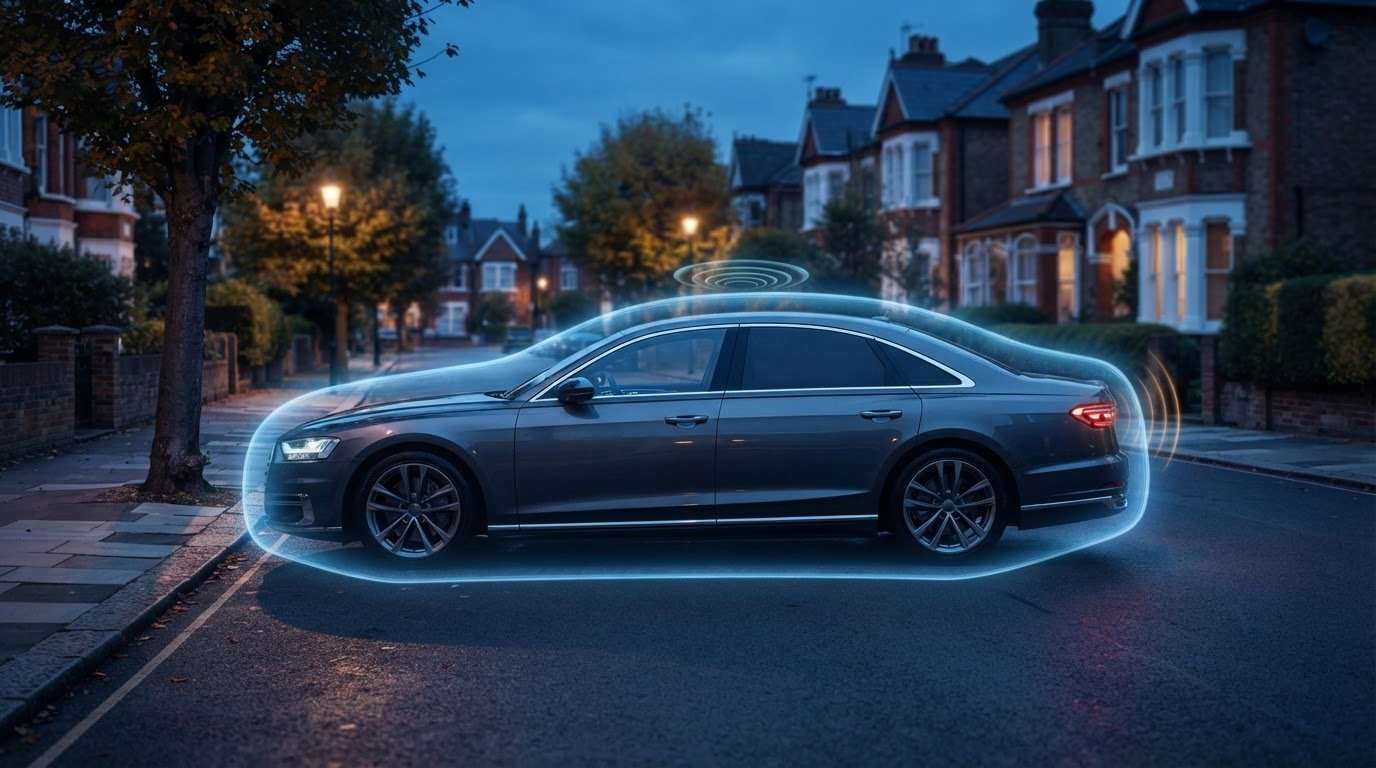
Ghost Alarms Explained
What They Are and How to Choose the Right Protection
Searching for ghost alarms can be confusing: the term is often used informally to mean a ghost immobiliser, a conventional car alarm that sounds an audible warning. These are different types of vehicle security products. A Ghost immobiliser is a vehicle-specific anti-theft device, while a traditional car alarm is a separate product. Knowing which one you mean makes it easier to compare options and choose protection that matches your priorities.
This guide explains the difference between immobilisers, alarms, and trackers, and how to think about them as part of a vehicle-security plan. It also covers what to consider before arranging professional fitting. Safe & Sound Mobile supplies Ghost immobilisers and additional car alarms, with mobile installation at home or work across the UK. By the end, you’ll have a clearer way to describe what you need and decide what to explore next.
Key Takeaways
- “Ghost alarm” is often informal wording. Identify the specific product before comparing its purpose or features.
- A ghost immobiliser, a traditional car alarm, and a tracker each play a distinct role in a vehicle-security setup.
- Start with your main concern, then consider which product category matches it.
- Vehicle-specific advice helps you choose the right product and approach for your car.
- Safe & Sound Mobile provides professional mobile installation at home or work, with advice tailored to your vehicle.
What Does “Ghost Alarm” Mean in Vehicle Security?
Drivers sometimes use “ghost alarm” when they’re asking about a Ghost immobiliser; the phrase can sound like it means an audible alarm, but these are separate product categories—a Ghost immobiliser is a vehicle-specific anti-theft device. A traditional car alarm is a separate security product that provides an audible alert.
In brief: “Ghost alarm” is informal wording often used to refer to a Ghost immobiliser; it does not mean the same thing as a conventional audible car alarm.
The simplest way to compare the products is to look at their intended roles. An immobiliser is an anti-theft device; an audible alarm is intended to alert people to an event. A tracker is another distinct product that offers GPS tracking and, for S7 trackers, ongoing monitoring. These products should not be treated as interchangeable. Identify what you want your security setup to address before deciding which category to consider.
The general meaning of an immobiliser in the context of vehicle-security products. The Immobiliser Wikipedia article provides background on the device category and its role in vehicle security. In this guide, Ghost immobiliser refers to this specific product category, distinct from a traditional audible alarm.
Why drivers use the phrase “ghost alarm”
The informal phrase can leave drivers unsure what a product actually does. Someone may expect a siren or another audible warning, but they may be asking about an immobiliser. When comparing options or discussing your requirements, use the product name and say whether you mean a Ghost immobiliser or a traditional car alarm.
What a Ghost immobiliser is meant to do
A Ghost immobiliser is a vehicle-specific anti-theft device. That is the key point when comparing it with an audible alarm or a tracker: each is a separate product category. Avoid assuming that a device described informally as a “ghost alarm” has a siren, tracking or other features. Clear product wording helps you focus on the function you’re considering. Read more about the Ghost immobiliser before deciding what to ask about your vehicle.
How Ghost Immobilisers Fit Into a Vehicle Security Plan
Vehicle-security products serve different roles—a Ghost immobiliser is an anti-theft device.e A traditional car alarm is intended to provide an audible alert. At the same time, le a GPS tracker is a separate product that can help locate a vehicle. A tracker isn’t part of an immobiliser, and an alarm isn’t a substitute for either. Start by deciding which concern matters most to you, then compare products by their purpose.
A ghost immobiliser is an option to consider as part of a vehicle-security plan. Don’t confuse it with an audible alarm or a tracker. This distinction is especially useful when searching for ghost alarms, because the informal term can make different products sound like one. Focus on the product being offered and its intended role, rather than relying on the label alone.
An immobiliser compared with other security layers
A Ghost immobiliser is an anti-theft device, while a traditional car alarm is a separate audible-alert product. A GPS tracker is another option, but it serves a different purpose. Safe & Sound Mobile supplies insurance-approved S5 and S7 trackers, plus Ghost immobilisers and traditional car alarms. Considering these products separately helps you decide which role you want each one to play.
If you’re comparing products, write down the outcome you’re looking for: an anti-theft device, an audible alert or GPS tracking. Then check that the product you’re considering is in the category you intended. For a general definition of the term, see the Collins Dictionary definition of immobilise. Vehicle-specific advice matters.
The right products depend on the vehicle and the owner’s priorities. One driver may want a Ghost immobiliser; another may prefer a traditional alarm or a GPS tracker. Advice should account for the vehicle and keep product roles clear, rather than assuming the same setup suits every car. Safe & Sound Mobile provides vehicle-specific advice to help you compare the options.
To start, describe your vehicle and explain what you want your security setup to address. You can then discuss an immobiliser or a broader combination of products without mixing up their functions. Safe & Sound Mobile provides professional mobile installation at home or work. Explore Safe & Sound Mobile’s vehicle security advice to learn more about its fitting service.
Ghost Immobiliser vs Traditional Car Alarm: Which Does What?
A Ghost immobiliser and a traditional car alarm are different products. A Ghost immobiliser is a vehicle-specific anti-theft device; a traditional alarm is an audible security product. Neither description means that one product performs every security role. Compare them by what they are designed to do, not by the informal phrase “ghost alarm”.
Product type: Ghost immobiliser; purpose: Vehicle-specific anti-theft device
Question it answers: Am I looking for an immobiliser? Type: Traditional car alarm.
Broad purpose: Audible security alert
Question it answers: Am I looking for an audible alarm?
This comparison helps clarify whatyou’ree searching for. “Ghost alarm” is sometimes used informally, but it doesn’t make a Ghost immobiliser a traditional alarm. Check the product category and intended role before choosing what suits your priorities.
When an immobiliser is the concern
If you’re looking for a vehicle-specific anti-theft device, a Ghost immobiliser may be relevant. It doesn’t provide an audible warning, and no security product should be treated as a guarantee against theft. Consider the product’s intended role, then discuss how it relates to your vehicle and requirements.
Start with the concern and match it to the product category. If your priority is an audible alert, look at traditional car alarms. That simple distinction can prevent disappointment when you expect one product to do another product’s job.
When a conventional alarm may match the concern
A traditional car alarm may suit someone looking for an audible security product. The category name alone doesn’t tell you an individual product’s exact features, so base your decision on the product information and the role you want it to play.
You may also choose to consider more than one type of security product. For example, an owner might want an immobiliser as an audible alarm. These remain separate products with distinct roles. Safe & Sound Mobile supplies Ghost immobilisers and additional car alarms, and can provide vehicle-specific advice to help you compare them. The article Ghost Alarm vs Traditional Car Alarms offers a fuller comparison. Keep your priorities in mind: an immobiliser and an audible alarm aren’t the same.
How to Decide Whether a Ghost Immobiliser Suits Your Vehicle
Start with what you want your vehicle-security setup to address, not a product name. Searches for ghost alarms can blur the difference between an immobiliser and an audible alarm. Identify the role you need, then consider the product category and whether it suits your vehicle.
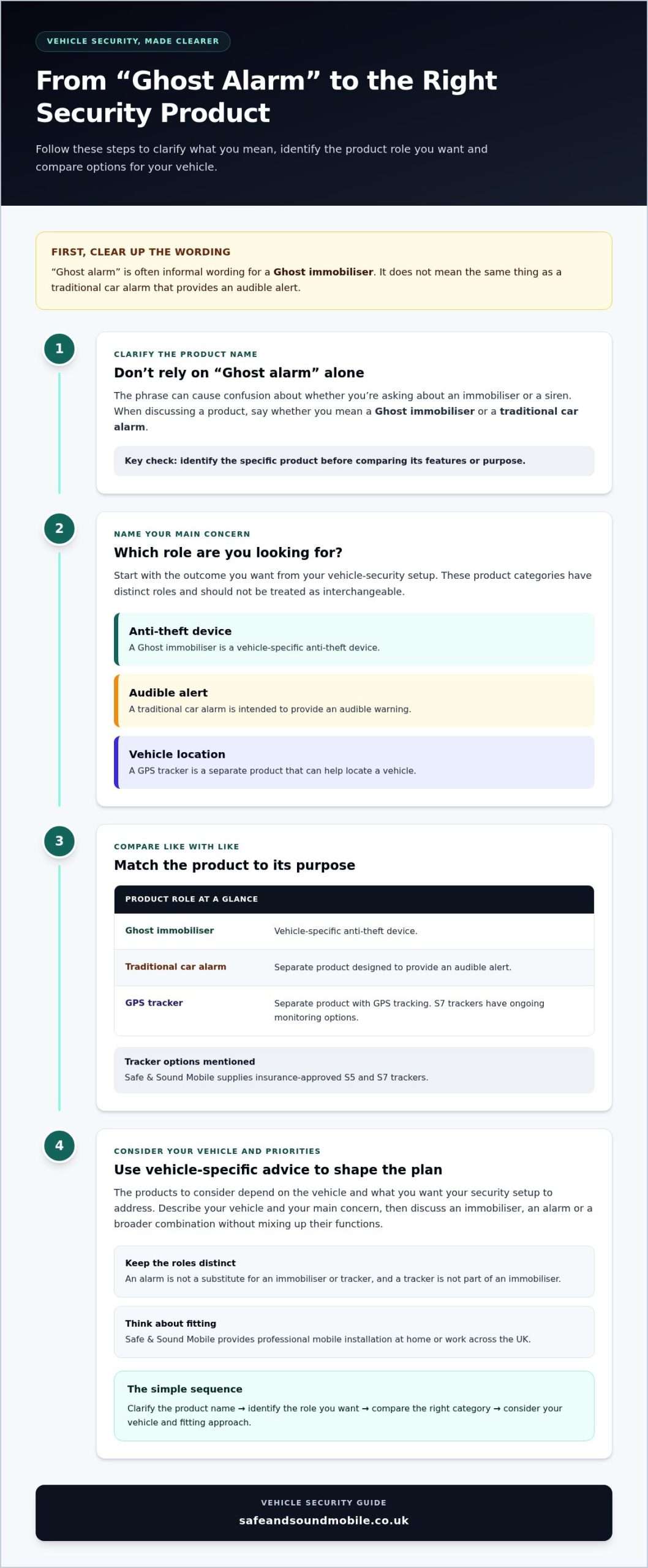
Checklist: identify your concern, match it to the product’s purpose, then consider vehicle-specific advice and fitting.
- Identify your priority. Are you looking for a vehicle-specific anti-theft device, an audible warning, GPS tracking, or a combination?
- Clarify the product role. A Ghostimmobiliser, an additionalan additional car alarm, and a tracker are distinct product categories. A name alone does not tell you every feature.
- Consider the vehicle and fitting. Once you know the product category, discuss your vehicle and installation with a mobile fitting service.
Match the product category to your concern.
If you’re looking for a vehicle-specific anti-theft device, consider a Ghost immobiliser. If you want an audible security product, look at a traditional car alarm. If GPS tracking is important to your plan, consider a separate tracker. A broader setup may involve more than one category, with each product serving a different purpose. Avoid choosing based on a loose label; focus on the product and its stated role.
If you’re comparing additional products with your vehicle’s existing equipment, distinguish factory-fitted features from the security products you’re considering adding. Don’t assume two products described as immobilisers have identical features or work the same way. Share your vehicle details when discussing your options so the advice is specific to your car.
Consider vehicle-specific fitting and support.
Your vehicle and your requirements should both inform your decision. Safe & Sound Mobile provides vehicle-specific advice and professional fitting, helping you choose security products for your car rather than relying on a one-size-fits-all recommendation. Its mobile installation service operates across the UK, with fitting at home or work.
If you’re considering an immobiliser for your insurance policy, read the policy wording and speak to your insurer about its requirements. Safe & Sound Mobile also supplies insurance-approved S5 and S7 trackers, but trackers and immobilisers are different products. Don’t assume that a requirement for one is met by the other.
Once you’ve identified the product category you’re interested in, give the team a clear brief: describe your vehicle and whether you’re considering an immobiliser, a tracker or a wider setup. For vehicle-specific advice and professional fitting, discuss your vehicle-security options with Safe & Sound Mobile.
Arrange Professional Ghost Immobiliser Across the UK
Once you’ve decided a Ghost immobiliser fits your security priorities, consider how it will be fitted. Safe: Safe & Sound Mobile provides mobile installation at home or work across the UK. You can discuss your vehicle, get tailored advice, and arrange professional fitting. This gives you a clear path from comparing product categories to planning an installation.
What to expect from mobile fitting
Mobile installation means a technician can fit the Ghost immobiliser at your home or workplace. The installation is planned around your vehicle, with professional fitting and vehicle-specific advice. A useful first step is to explain which product you’re considering and share the vehicle details it will be fitted to.
Before arranging fitting, think about what you want the device to address and have your vehicle details ready. This helps keep the discussion focused on your requirements and the right product category. If your search began with “ghost alarms”, make clear that you mean a Ghost immobiliser is the product you want to discuss, rather than a traditional audible alarm.
Take the next step with Safe & Sound Mobile
The process is straightforward:
- Discuss your vehicle. Share the vehicle details and explain what you want from its security setup.
- Receive vehicle-specific advice. Safe & Sound Mobile can help you understand the Ghost immobiliser for your vehicle and requirements.
- Arrange fitting. If you decide to proceed, we can arrange a mobile installation at home or work.
Nationwide mobile fitting lets you arrange installation at home or work and discuss your vehicle as part of the same process. Before deciding, keep the product’s purpose in mind and be clear about what you want it to do. Vehicle-specific advice can help you understand the fitting service and consider whether the product suits your requirements.
Make Your Next Security Decision With Confidence
Before choosing a product, write down what you want your vehicle-security setup to address. Are you looking for an anti-theft device, an audible alarm, GPS tracking, or more than one? Clear priorities cut through confusion around terms like ghost alarms and keep your decision focused on what the product needs to do for you.
Safe & Sound Mobile provides vehicle-specific advice and professional mobile fitting at home or work across the UK. Custom reviews praise professional, tidy installations. If you’re considering a Ghost immobiliser, our team can discuss your vehicle and explain the fitting process.
Talk to Safe & Sound Mobile about a Ghost immobiliser nd take the next step toward vehicle security that suits your needs.
Frequently Asked Questions
Is a ghost alarm the same as a Ghost immobiliser exactly? Drivers often say “ghost alarm” when they mean a Ghost immobiliser; the phrase can be unclear. A Ghost immobiliser is a vehicle-specific anti-theft device, while a traditional car alarm is a separate product. When discussing your requirements or reading product information, use “Ghost immobiliser ” if that is the device you mean. This helps keep the conversation focused on the productyou’ree looking for.
Does a Ghost immobiliser have an audible alarm sound?
Don’t assume a Ghost immobiliser has an audible siren. It and a traditional car alarm are different product categories. Safe & Sound Mobile also supplies and fits traditional car alarms for drivers considering audible alarm protection. If you want both products, describe them as separate requirements when discussing your vehicle-security setup.
Can a Ghost immobiliser work alongside factory engine immobiliser security features? Don’t assume every make or model has the same setup. If you’re considering adding a Ghost immobiliser to a vehicle with factory security, share the vehicle details when discussing your options. Safe & Sound Mobile can provide vehicle-specific advice and professional fitting.
Is a Ghost immobiliser approved?
Don’t assume your insurer’s requirements for a Ghost immobiliser are the same simply because it is a vehicle-security product. Requirements depend on your policy, so read the relevant wording and speak to your insurer before relying on a particular product. Safe & Sound Mobile also supplies insurance-approved S5 and S7 trackers. A tracker and an immobiliser are separate products, so a requirement for one should not be taken to mean that the other fulfils it.
Can I have a Ghost immobiliser at home or work?
Yes. Safe & Sound Mobile provides mobile Ghost immobiliser installation at home or work, with nationwide coverage across the UK. Share your vehicle details and explain what you’re looking for. The team can provide vehicle-specific advice and discuss professional fitting so that you can arrange installation at home or work.
Does a Ghost immobiliser mean that my vehicle cannot be stolen?
No. A Ghost immobiliser is an anti-theft device, but it should not be treated as a guarantee against theft or a promise of recovery. Consider each security product by its purpose and decide which concerns you want your setup to address. An immobiliser and a tracker serve different roles, so treat one as a substitute for the other. Vehicle-specific advice can help you compare the options without assuming a particular outcome.

About author
Related posts

Car Immobiliser Fitting Shenfield: Options and Preparation Immobiliser fitting in Shenfield should start with the vehicle and the purpose of the installation. An additional immobiliser... Continue reading
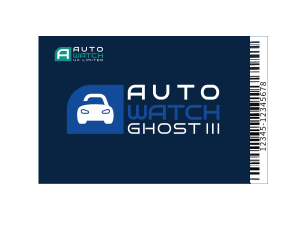
Ghost Immobiliser 3: How Ghost III Works and UK Fitting Ghost Immobiliser 3 is a common way of searching for Autowatch Ghost III, a digital... Continue reading
What Is Car Ghosting? Ghost Immobilisers and Relay Theft Car ghosting is a phrase you may encounter while researching Ghost immobilisers and keyless theft. It... Continue reading
Ghost Immobiliser Cost: UK Prices and Fitting Explained The Ghost immobiliser cost depends on the exact product and the installation being quoted. As checked on... Continue reading
Features, Costs and Fitting in 2026 A vehicle key no longer guarantees that only you can drive your car. Relay devices, cloned fobs, and OBD... Continue reading