
No products in the cart.
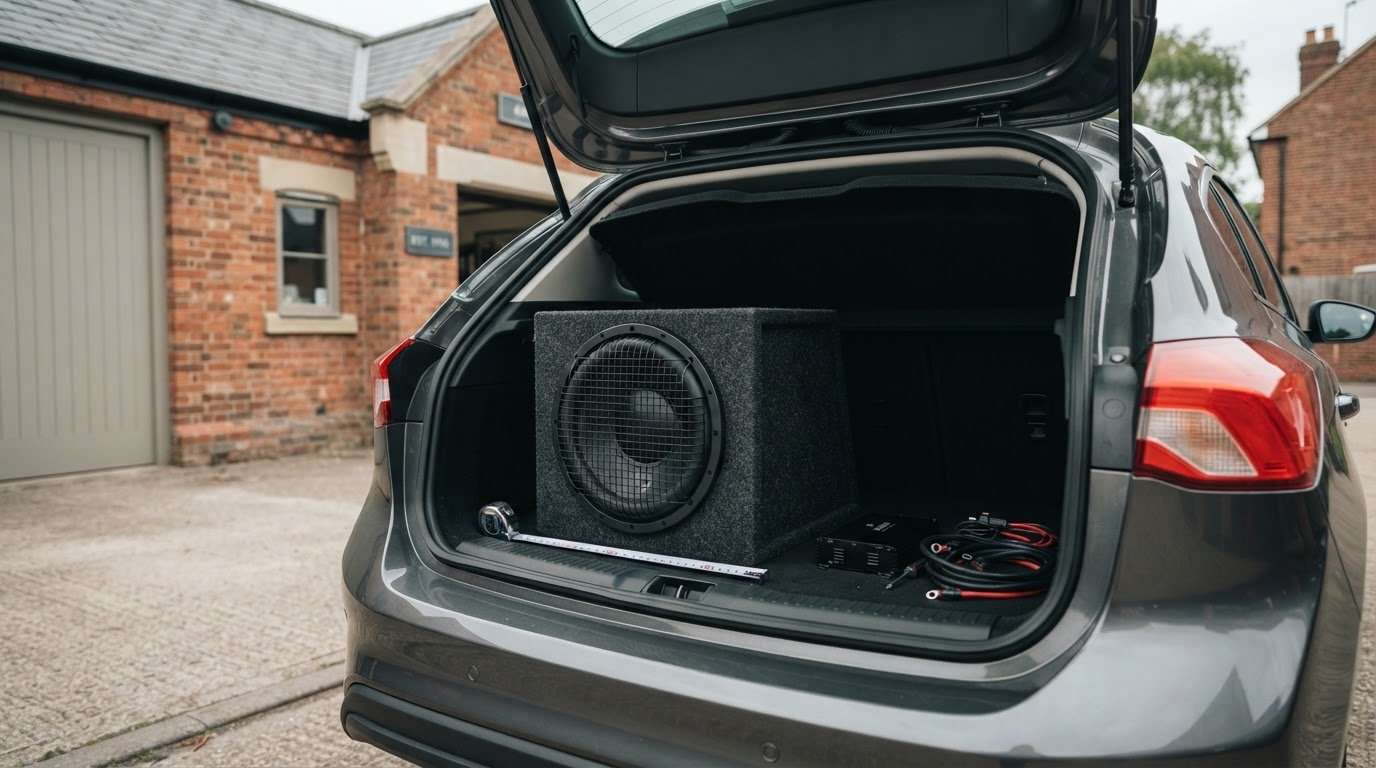
Powerbass Loaded Enclosures: A UK Buyer’s Guide
A UK Buyer’s Guide
Will a Powerbass-loaded enclosure fit your car and work with your existing stereo and amplifier? A box can look right but take up too much boot space or be incompatible with your system, so check the details before you buy.
Powerbass Loaded Enclosures pair a subwoofer with an enclosure. Some versions may also have a built-in amplifier. This can simplify choosing the main bass components, but size, enclosure type, power handling and electrical compatibility still matter. Check carefully if your vehicle has limited space or a factory-fitted stereo.
This guide explains what a loaded enclosure includes, how sealed and ported designs differ, and which measurements and amplifier specifications to compare. You’ll also find what to confirm before arranging professional installation. Safe & Sound Mobile provides car audio installation and mobile fitting across the UK. Check whether the specific enclosure can be supplied or fitted before making plans.
Key Takeaways
- Powerbass Loaded Enclosures pair a subwoofer with an enclosure, but check the product listing to see whether an amplifier, wiring or fitting components are included.
- Measure the available boot or cabin space and compare it with the manufacturer’s dimensions before choosing a model.
- Check the enclosure’s documented power and connection specifications against your audio system, especially if you’re using a separate amplifier.
- Compare sealed and ported designs, then weigh your sound preferences against space and system requirements.
- Before arranging professional installation, confirm the exact product and discuss fit, compatibility and fitting requirements with an installer.
What Are Powerbass Loaded Enclosures, and What Do They Include?
A loaded subwoofer enclosure is a subwoofer supplied already fitted in a matching speaker box. The subwoofer and enclosure come together, but an amplifier, wiring and installation may be separate. Check the individual product listing to confirm exactly what’s included.
That distinction matters when comparing Powerbass Loaded Enclosures. “Loaded” describes the subwoofer and enclosure as a paired product. It doesn’t guarantee that the system is complete or ready to connect. A passive enclosure may need a separate amplifier and suitable wiring, along with any installation components required for your vehicle. Some products are amplified, but don’t assume that from the word “loaded” alone.
What does ‘loaded’ mean in a subwoofer enclosure?
Usually, it means the subwoofer driver is supplied inside its enclosure, rather than sold separately for you to match with a box. The manufacturer has paired those components, which can simplify choosing them together. Still, check the listing’s included-items details. Accessories vary, and an amplifier, cables or fitting service may be separate.
How does an enclosure affect a car subwoofer?
The enclosure houses the subwoofer and helps manage sound from the front and rear of the speaker driver. For a basic explanation of enclosure design, see this guide to the loudspeaker enclosure.
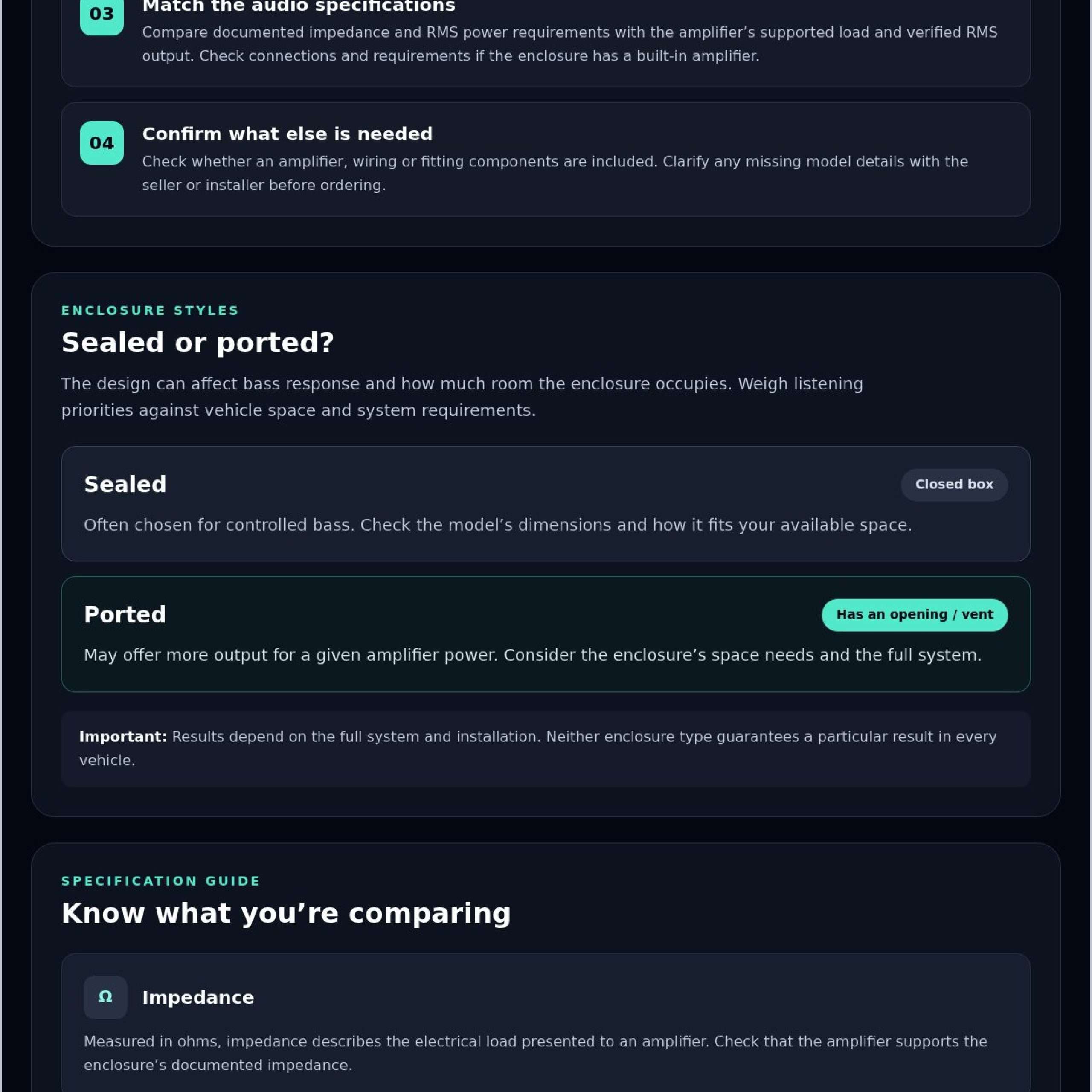
Sealed and ported are two broad enclosure types. A sealed box is closed, while a ported design has an opening, or vent. The design can affect bass response and the space the unit occupies, so consider both your listening priorities and the room available in your vehicle. A ported enclosure may offer more output for a given amplifier power, while sealed designs are often chosen for controlled bass. Results depend on the full system and installation.
A pre-paired subwoofer and enclosure can reduce guesswork when choosing components, but it doesn’t guarantee the whole setup will work in your car. Before buying, check the product’s dimensions, connection and power specifications, and whether the amplifier and installation components are included. Assess vehicle space and compatibility separately.
How to Check Powerbass Loaded Enclosure Compatibility
A loaded enclosure can suit one vehicle and be impractical in another. Check your car, available space and audio system as a complete setup before ordering. These steps can help you avoid choosing a product that won’t fit or connect as intended.
- Identify the vehicle and installation area. Note the make, model, year and body style, then decide whether the enclosure would sit in the boot or cabin. Don’t assume a product fits just because it’s described as suitable for cars.
- Measure the available space. Record the width, height and depth of the intended area. Compare these with the exact enclosure dimensions in the manufacturer’s information. Allow for the opening it must pass through, access to storage, seat movement and practical clearance.
- Check the audio specifications. Compare the subwoofer’s documented impedance and RMS power requirements with the amplifier’s verified output and supported load. If the enclosure has a built-in amplifier, check its connections and requirements against your existing system.
- Confirm the installation plan. Check what else you need, such as an amplifier, wiring, or fitting components. Ask the seller or installer to clarify missing model details before placing your order.
Will a loaded enclosure fit in your car?
Measure the actual space, not just the boot’s overall capacity. A box may fit inside the boot but block useful storage, restrict access or be difficult to move through the opening. Compare your measurements with the manufacturer’s listed external dimensions and consider how you use the vehicle. Confirm the fit only after checking the exact product against your vehicle.
Which audio system specifications should you check?
Impedance, measured in ohms, describes the electrical load an amplifier sees. RMS power indicates continuous power handling, rather than a brief peak rating. Compare the enclosure’s documented figures with the amplifier’s supported impedance and RMS output. Don’t rely on headline wattage alone. If the system details are unclear, ask a qualified installer to check them before connecting anything.
Compatibility depends on the whole setup, not the Powerbass Loaded Enclosures name alone. Safe & Sound Mobile provides car audio installation and mobile fitting across the UK. For professional input after checking the product details, explore car audio installation. Confirm whether the specific enclosure can be supplied or fitted before making arrangements.
Sealed vs Ported Enclosures: Which Setup Suits Your Priorities?
Sealed and ported enclosures are two common designs, but neither suits every car or listener. Their construction can affect bass response, enclosure size and the demands on the rest of the audio system. Use this comparison as a starting point, then check the specifications for the exact product you’re considering.
| Design | General characteristics | Practical considerations |
|---|---|---|
| Sealed | A closed enclosure. Often associated with controlled, well-defined bass, though the result depends on the subwoofer and system. | Can be more compact, but confirm the enclosure’s dimensions and the subwoofer’s requirements. |
| Ported | Has a vent or port. It may produce louder or deeper bass in its intended operating range, depending on the design and system. | Often takes up more space than a sealed design. Check the required enclosure volume and amplifier compatibility. |
What should you know about sealed enclosures?
A sealed enclosure has no vent connecting its interior to the cabin. Buyers often choose this type when they want controlled bass or need to save space, but the category alone doesn’t guarantee either outcome. The subwoofer, box dimensions, vehicle and amplifier all affect performance. Check the manufacturer’s product information for intended use and stated sound or power-handling specifications.
What should you know about ported enclosures?
A ported enclosure includes a tuned opening that works with the subwoofer and box design. It may suit listeners seeking greater output at particular frequencies, but the result depends on the complete setup. Ported boxes are often larger than sealed alternatives, so measure available space and check the manufacturer’s dimensions. Don’t assume a Powerbass product is ported unless its listing confirms it.
When comparing Powerbass Loaded Enclosures, match the confirmed enclosure type to your available boot or cabin space, listening preferences and system specifications. A larger box may not suit a vehicle where retaining storage is a priority. A compact option may not meet your expectations for bass output. Check the product’s documented design, dimensions, impedance, and RMS power requirements, then compare them with your amplifier and vehicle.
Choose based on fit and verified specifications, not a universal “best” label. If the product information doesn’t clearly explain the enclosure type or system requirements, ask the seller or a car audio installer before buying.
What to Check Before Buying a Powerbass Loaded Enclosure
A product title rarely tells you everything you need to plan a purchase. Before choosing among Powerbass Loaded Enclosures, use the listing and manufacturer information to confirm what you’re buying, whether it suits your vehicle, and what else you may need for installation.
Which listing details should you verify?
Start with the exact model name and check that the description, photographs and specifications refer to the same product. Confirm whether the listing is for one enclosure or a package, then review the full included-items list. Don’t assume accessories are supplied just because the product is described as loaded.
- Model and package: Check the model reference and whether the listing includes a single unit or multiple components.
- Dimensions: Compare the manufacturer’s measurements with the boot or cabin space you’ve measured, including the access opening and room needed around the enclosure.
- Included items: Confirm whether an amplifier, wiring and installation components are supplied or need to be sourced separately.
- Specifications: Verify the enclosure type, impedance and RMS power information against the manufacturer’s documentation for that exact model.
- Seller terms: Check current availability, returns conditions and warranty terms directly with the seller before ordering. Don’t assume particular cover or return options apply.
How can you avoid system-matching mistakes?
Before buying, write down the subwoofer’s documented requirements and your existing amplifier’s supported impedance and RMS output. Compare the figures directly. If the enclosure is amplified, check its stated connections and requirements against the vehicle’s audio system. A loaded enclosure doesn’t necessarily include an amplifier, cables or fitting, so confirm each item rather than relying on the product name.
Pause if a specification is missing, unclear or inconsistent between the listing and manufacturer information. Do the same if you’re unsure whether your amplifier can support the enclosure or how the system should connect. Ask the seller to clarify product details, and speak with a qualified car audio installer about compatibility and fitting before ordering. Keep the listing and your vehicle information handy so they can assess the intended setup.
After reviewing the product information, discuss your car audio installation. Confirm whether the specific Powerbass enclosure can be installed before making arrangements.
Getting a Loaded Enclosure Professionally Installed
Professional fitting can help turn a promising product choice into a setup that suits your vehicle and existing audio system. An installer can assess where the enclosure could go, whether its dimensions fit that space, how it may connect to your equipment, and what the fitting involves. Compatibility still needs to be checked against your specific car and product.
What can a car audio installer assess?
An installer can review your vehicle, the enclosure’s manufacturer dimensions and your current audio equipment. They can also identify practical considerations, such as access to the installation area, available connections and whether extra components may be needed. Requirements vary by vehicle and equipment, so don’t assume Powerbass Loaded Enclosures will fit or connect universally.
What happens when you arrange professional fitting?
Prepare a few details before enquiring. Share the exact product model, your vehicle’s make, model, year and body style, plus information about the stereo and amplifier if known. Include the product listing or manufacturer specifications. This gives the installer useful context, though they may need to confirm details before advising whether the setup is suitable.
Before booking, agree on the product and installation scope, then discuss how the system will be checked afterwards. Confirm directly what the service includes, whether you need to supply the enclosure and any additional equipment, and what arrangements apply to your vehicle. Don’t assume installation, wiring or system testing is included unless confirmed.
If you’ve identified a loaded enclosure and want to discuss fitting, contact Safe & Sound Mobile about car audio installation. Share the exact product and vehicle details, and confirm whether that specific enclosure can be installed before booking.
Choose Your Setup with Confidence
Powerbass Loaded Enclosures combine a subwoofer and enclosure, but the right choice still depends on your vehicle, available space, and audio system. Before buying, check the exact model, dimensions, included components and documented specifications. Compare sealed and ported designs with your priorities, then confirm unclear details with the seller or an installer.
A professional assessment can clarify whether the enclosure will fit and how it may connect with your existing equipment. Safe & Sound Mobile supplies and installs car audio equipment, including subwoofers and amplifiers, with mobile fitting across the UK. Check product supply and fitting arrangements directly, as availability of a specific Powerbass enclosure isn’t confirmed.
Ready to discuss installation? Arrange professional car audio installation and share your vehicle and product details. Confirm whether the specific enclosure can be supplied or fitted before making plans.
Frequently Asked Questions
What is a Powerbass loaded enclosure?
A Powerbass loaded enclosure is a subwoofer supplied in an enclosure designed to house it. This pairing brings those two main components together, but it doesn’t include the complete audio setup. Check the exact product listing for its contents, dimensions and specifications. Depending on the product and your vehicle’s existing system, you may need to arrange an amplifier, wiring, and installation separately.
Does a Powerbass loaded enclosure come with an amplifier?
Not necessarily. Some loaded enclosures are passive and need a separate amplifier, while an amplified enclosure has a built-in amplifier. Check the exactmodel’s manufacturerr information and the seller’s included-items list before buying. Don’t assume cables or fittings are included either. If the listingdoesn’tt clearly identify the amplifier or connections, ask the seller to confirm what’s supplied.
Will a Powerbass loaded enclosure fit my car?
Fit depends on the enclosure’s exact dimensions and the space available in your vehicle. Measure the intended boot or cabin area, including the opening the enclosure must pass through, and compare it with the manufacturer’s measurements. Allow for storage access and practical clearance. A general product description can’t confirm a vehicle-specific fit, so ask a seller or installer if you’re unsure.
How do I match a loaded enclosure to an amplifier?
Compare the subwoofer’s documented impedance and RMS power requirements with the amplifier’s supported impedance and RMS output. Impedance, measured in ohms, describes the electrical load the speaker presents. RMS indicates continuous power handling. Check specifications for the exact components, not just headline peak figures. If details are missing or confusing, ask a qualified car audio installer to assess the pairing before connecting it.
Are sealed or ported enclosures better?
Neither design is universally better. A sealed enclosure has no vent and is often associated with controlled bass, while a ported enclosure uses a vent and may provide greater output at particular frequencies. Actual results depend on the subwoofer, enclosure design and the rest of the system. Compare the manufacturer’s specifications with your listening priorities and available vehicle space before choosing.
Can I install a loaded enclosure myself?
You may be able to fit one yourself if you understand the product instructions, your vehicle’s audio connections and the requirements of the full system. Installation can involve amplifier matching, wiring and finding a secure, practical position. Don’t proceed if you’re unsure about compatibility or connections. A professional car audio installer can assess the vehicle and equipment before arranging the fit.
Does Safe & Sound Mobile sell Powerbass Loaded Enclosures?
Safe & Sound Mobile supplies and installs car audio equipment, including subwoofers and amplifiers. Contact the business directly to check whether it can supply or install the exact Powerbass Loaded Enclosure you’re considering. Its mobile fitting service covers the UK, but confirm product availability and installation arrangements before making plans.


About author
Related posts
Car Subwoofers: 7 Essential Checks for Better Bass Car subwoofers reproduce the lower bass notes that ordinary vehicle speakers can struggle to deliver. A well-matched... Continue reading

Car Amplifier Cutting Out? 7 Common Causes and Safe Checks A car amplifier cutting out usually points to overheating, a power supply problem, an unsuitable... Continue reading
Could a well-known audio range still be the wrong fit for your car? Powerbass PBX covers several types of components, including amplifiers,... Continue reading

Vauxhall vehicle security should match your car, your insurance policy and your daily routine. Safe and Sound Mobile helps UK owners compare immobilisers, monitored trackers,... Continue reading

Skoda vehicle security works best when protection is chosen for your exact car and the way you use it. Whether you drive an Octavia estate,... Continue reading