
No products in the cart.
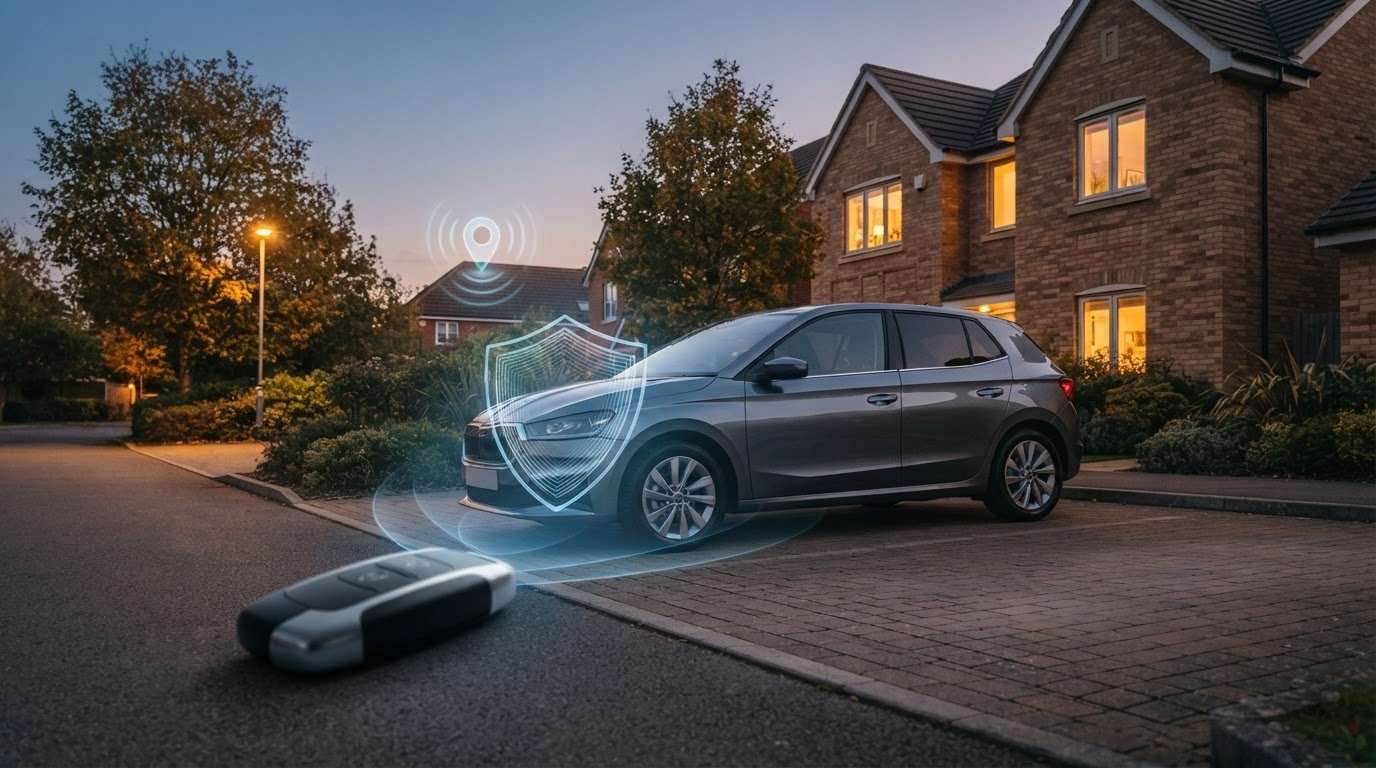
What Is a Car Immobiliser? A Clear Guide for UK Drivers
A Clear Guide for UK Drivers
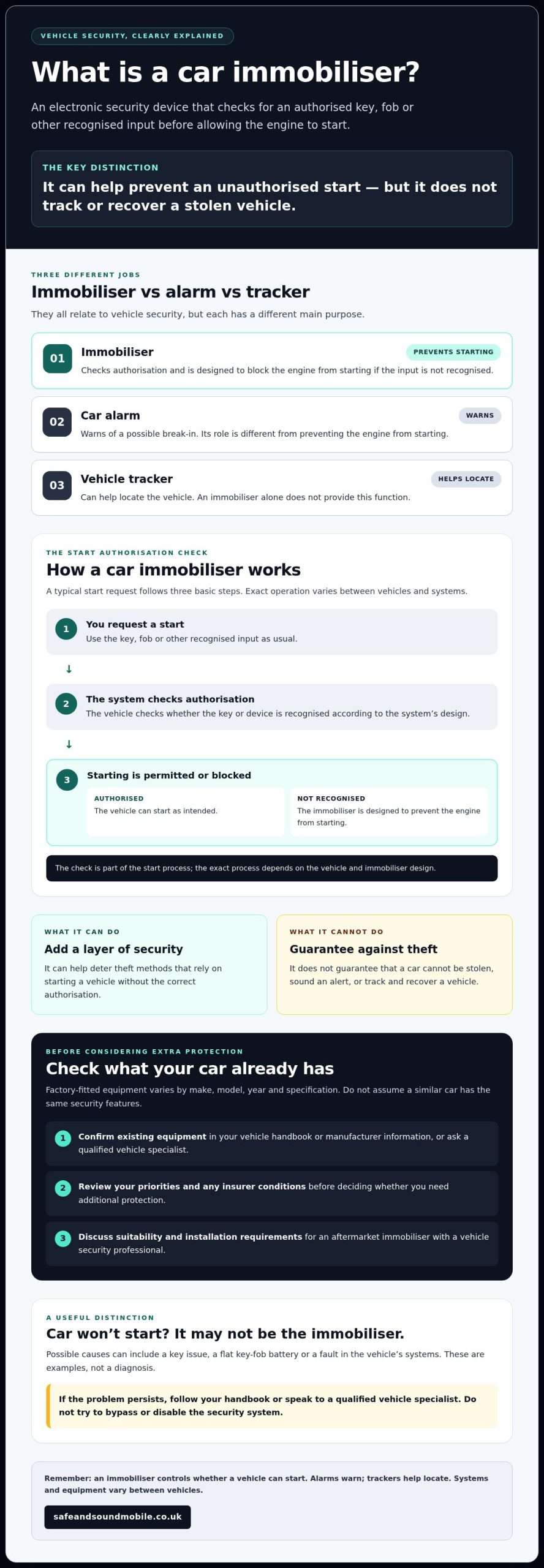
What if the security feature that stops a thief from starting your car can’t help you find it afterwards? That’s the key distinction behind the question, “What is a car immobiliser?” An immobiliser prevents the engine from starting without the correct key or other authorised input. It can help prevent an unauthorised start, but it doesn’t track or recover a stolen vehicle.
It’s easy to mix up immobilisers, car alarms and trackers because they’re all part of vehicle security. Their jobs are different: an immobiliser blocks the vehicle from starting, an alarm warns of a possible break-in, and a tracker can help locate the vehicle. Knowing the difference makes it easier to check what protection your car already has and identify any gaps.
This guide explains how car immobilisers work, how factory-fitted and aftermarket systems compare, and how to distinguish them from alarms and tracking devices. You’ll also find practical points to consider when reviewing your vehicle’s security and deciding whether to explore professional installation.
Key Takeaways
- Learn what a car immobiliser is and how an authorised key, fob or other recognised input helps prevent an unauthorised start.
- See how a typical immobiliser checks authorisation before allowing the vehicle to start, while recognising that systems vary.
- Compare immobilisers, alarms and trackers by their main purpose and limitations.
- Understand why an immobiliser adds a layer of security but can’t guarantee your car won’t be stolen.
- Check your vehicle’s existing equipment, your priorities and any insurer conditions before discussing extra protection or installation with a vehicle security professional.
What Is a Car Immobiliser and What Does It Do?
A car immobiliser helps prevent the engine from starting without an authorised key, fob or other recognised input. It’s an electronic security device designed to block an unauthorised start, rather than sound an alert or help locate the vehicle if it’s taken. In simple terms, it checks whether the start request is authorised before allowing the engine to run.
If you’re asking, “What is a car immobiliser?”, that distinction is the clearest place to start. The system can help deter theft methods that rely on starting a vehicle without the correct authorisation. It doesn’t guarantee your car can’t be stolen, and it isn’t a substitute for other suitable security precautions. You can read more about this electronic security device and how immobilisers developed.
How does a car immobiliser recognise an authorised start?
When you try to start the car, the vehicle checks for the authorised key, fob or recognised input associated with its immobiliser. If the system confirms the start request is authorised, it permits the engine to start. If it doesn’t, the system prevents the engine from starting. The vehicle and key or device must communicate as intended, but the exact process varies by vehicle and immobiliser design.
This is why an immobiliser is different from a visible deterrent: its main job is to prevent an unauthorised engine start, not to warn people nearby.
Do modern cars already have an immobiliser?
Some vehicles have a factory-fitted immobiliser, but equipment varies by make, model, year and specification. Don’t assume that another car of a similar age has the same security features as yours. Check your vehicle handbook or manufacturer information, or ask a qualified vehicle specialist to confirm what’s fitted and how it works.
If you’re considering additional protection, first establish what your car already has. A specialist can check whether an aftermarket immobiliser suits your vehicle and explain the installation requirements. Safe & Sound Mobile supplies and professionally installs vehicle immobilisers, including Ghost immobilisers, with mobile fitting available across the UK.
How Does a Car Immobiliser Work Without Complicating the Technology?
The process is an authorisation check. The details depend on the vehicle and immobiliser design, but a typical start request follows three basic steps:
- You request a start. You use the key, fob or other recognised input as you normally would.
- The system checks authorisation. The vehicle checks whether the key or device is recognised according to the system’s design.
- The vehicle permits or blocks starting. If authorisation is accepted, the vehicle can start as intended. If it isn’t, the immobiliser prevents the engine from starting.
That’s the basic answer to “How does a car immobiliser work?” The check happens as part of the vehicle’s start process, but there’s no universal design. The exact operation can vary between makes, models and immobiliser systems, so don’t assume another car’s behaviour will match yours.
What happens when the correct key or input is present?
The vehicle and its recognised key or device carry out an authorisation check. When the system accepts that input, it allows the vehicle to start as intended. In everyday use, this should happen as part of the normal start-up process, without the driver needing to understand the electronics behind it. Consult your vehicle handbook for instructions specific to your car.
Why might an immobiliser stop a car from starting?
A car that won’t start doesn’t automatically have an immobiliser fault. A key issue, a flat key fob battery, or a fault in the vehicle’s systems could be among the possible causes. These are examples, not a diagnosis. Symptoms can vary, so don’t assume the immobiliser is responsible without checking.
If the issue persists, follow the guidance in your handbook or speak to a qualified vehicle specialist. Don’t try to bypass or turn off the security system. A specialist can help establish what may be affecting the start process and what action is appropriate for your vehicle—learn more about automotive locksmith services for transponder and fob issues.
An immobiliser controls whether a vehicle can start; it doesn’t track the car or recover it if it’s stolen. That’s why it’s useful to understand how each security measure works. Thatcham Research offers guidance on vehicle security, alarms, and immobilisers as part of a wider approach.
If you’re exploring an additional system after checking your existing equipment, you can consider vehicle immobiliser installation. Safe & Sound Mobile supplies and professionally installs vehicle immobilisers, including Ghost immobilisers, with mobile fitting across the UK.
Car Immobiliser vs Alarm vs Tracker: What Is the Difference?
Vehicle security terms can sound interchangeable, but an immobiliser, car alarm and tracker have different jobs. If you’re asking, “What is a car immobiliser compared with an alarm or tracker?”, start with each system’s main purpose: an immobiliser prevents an unauthorised start, an alarm alerts, and a tracker helps locate a vehicle.
| System | Primary function | Typical response | Key limitation |
|---|---|---|---|
| Immobiliser | Helps prevent unauthorised engine starting. | Allows or blocks starting based on authorisation. | Doesn’t alert you to an incident or locate a vehicle. |
| Car alarm | Alerts to a possible intrusion or disturbance. | Sounds an alert when triggered. | An alert doesn’t necessarily stop the vehicle being taken or locate it afterwards. |
| Vehicle tracker | Helps locate a vehicle and may support recovery. | Provides location information according to the system’s design. | Doesn’t itself prevent an unauthorised engine start. |
These systems address different parts of vehicle security, so one isn’t a direct replacement for another. An immobiliser focuses on starting, an alarm on alerting, and a tracker on location. For general background on the immobiliser as a car security device, see the overview on Wikipedia.
Does an immobiliser replace a car alarm?
No. An immobiliser acts on the vehicle’s ability to start, while an alarm is intended to alert you or others to a possible incident. Neither system alone can prevent every form of theft. Consider what each feature does, then check what your vehicle already has. For more detail on alarm types and their role, read our car alarms and vehicle security guide.
Can an immobiliser track a stolen car?
No. An immobiliser isn’t a vehicle-tracking service. If a vehicle is taken, a tracker plays a different role: it can provide location information that may support recovery efforts, depending on the system. It doesn’t prevent an unauthorised start, and recovery can’t be guaranteed. Learn more in our vehicle tracking guide or explore insurance-approved vehicle trackers.
Knowing these differences helps you assess your vehicle’s existing protection and identify what each additional system could contribute. Safe & Sound Mobile supplies and professionally installs vehicle immobilisers and insurance-approved vehicle trackers, with mobile fitting across the UK.
Does a Car Immobiliser Stop Theft Completely? What Drivers Should Know
No. A car immobiliser adds a layer of security, but it can’t guarantee a vehicle won’t be stolen. Its intended role is to prevent an unauthorised engine start. It doesn’t alert the owner or locate the car on its own, and itcan’tt cover every part of vehicle security.
Protection depends on several factors, including the vehicle, the type of system, how it’s installed and the precautions taken around the car. The useful question isn’t whether one device offers complete protection, but whether the security measures suit your vehicle and circumstances. Understanding what a car immobiliser is also means understanding its limits.
What an immobiliser can and cannot protect against
An immobiliser is designed to stop the engine from starting without the expected authorisation. That can make unauthorised starting harder, but the device isn’t an alarm or a tracker. It won’t sound an alert if there’s a disturbance, and it won’t show you the vehicle’s location. Each system has a different purpose, so don’t rely on an immobiliser to do what it wasn’t designed to do.
Think of it as one part of a considered security approach, not a promise that theft is impossible. The right combination of measures will depend on what your vehicle already has and what concerns you most.
How should drivers check their existing protection?
Start with information specific to your car. Equipment can vary, so check the vehicle handbook and manufacturer information, or ask a qualified vehicle specialist to confirm what’s fitted. If you’re considering extra protection, check the system’s suitability and installation requirements for your make and model.
If your insurer has specified a security requirement, read the policy wording and confirm which system it refers to. Don’t assume that approval or acceptance for a tracker also applies to an immobiliser. Check the exact requirement with your insurer before choosing equipment.
Use this quick checklist:
- Confirm existing equipment: Check your handbook, manufacturer information or ask a qualified specialist.
- Review insurer wording: Verify any stated security condition against your policy.
- Assess your concerns: Decide whether you want to prevent unauthorised starting, receive an alert or help locate a vehicle.
- Check installation suitability: Ask a qualified vehicle security professional about the system and your vehicle.
These steps can help you make an informed decision without expecting one device to do everything. If you’re considering an additional system, explore professionally installed vehicle immobilisers from Safe & Sound Mobile, with mobile fitting across the UK.
When Should You Consider an Additional Car Immobiliser?
An additional immobiliser may be worth exploring if you’ve checked your car’s existing security and want to consider another layer of protection. The right decision depends on your vehicle, how you use it and any specific security conditions set by your insurer. Don’t assume you need extra equipment before you know what’s already fitted.
If you’re asking, “What is a car immobiliser, and would another one suit my car?”, start by confirming the existing system. Check your vehicle documents or ask the manufacturer or a qualified vehicle security professional. If an insurer has stated a requirement, review the exact wording and confirm directly with them which system they require. Don’t assume tracker approval or acceptance automatically applies to an immobiliser.
What should you check before choosing an aftermarket immobiliser?
Before deciding, ask the installer to confirm the proposed system suits your vehicle and explain its relevant features. Make sure you understand who will fit it and what the installation process involves. These checks help you compare options based on your needs, rather than choosing a system based only on its name or general claims.
- Existing equipment: Find out what factory-fitted security your vehicle has.
- Vehicle suitability: Confirm compatibility and proposed system details with the installer.
- Installation: Ask who will carry out the fitting and what to expect.
- Insurer conditions: Check any stated requirements directly with your insurer before deciding.
- Your priorities: Consider why you want added protection and what you expect it to do.
After checking those points, you can explore vehicle security installation as a possible next step. Safe & Sound Mobile supplies and professionally installs vehicle immobilisers, including Ghost immobilisers, and offers mobile fitting across the UK.
What should you expect from a professional fitting enquiry?
Be ready to share your vehicle’s make, model, and year, along with the security features you already know about and what you’d like to improve. This gives the installer useful context to discuss potentially suitable options, installation requirements and availability. You can ask questions before deciding whether to proceed.
To discuss your vehicle’s immobiliser needs, contact Safe & Sound Mobile.
Make an Informed Choice About Your Car’s Security
Understanding what a car immobiliser is starts with its main purpose: helping prevent an unauthorised engine start. It doesn’t alert you to an incident or locate a vehicle, so it isn’t interchangeable with a car alarm or tracker. Each system has a distinct role.
An immobiliser can add a layer of protection, but it can’t guarantee your car won’t be stolen. Before considering extra security, check what’s already fitted, think about your vehicle and how you use it, and review any specific insurer requirements. Confirm suitability and installation details with a qualified vehicle security professional.
Safe & Sound Mobile supplies and professionally installs vehicle immobilisers, with mobile fitting across the UK. If you’d like to explore your options, explore professional vehicle security installation. Choose protection that makes sense for your vehicle and priorities.
Frequently Asked Questions
What is a car immobiliser in simple terms?
A car immobiliser is an electronic security system designed to prevent the engine from starting without an authorised key, fob, or recognised input. Think of it as a start authorisation check. It doesn’t sound an alert or locate your vehicle. Its purpose differs from a car alarm or tracker, and it can’t guarantee that a vehicle won’t be stolen.
How does a car immobiliser work?
A car immobiliser checks whether the key, fob or other recognised input is authorised when you request a start. If the system accepts it, the vehicle can start as intended. If it doesn’t, the immobiliser prevents the engine from starting. The exact process varies by vehicle and immobiliser design. If your car won’t start, don’t assume the immobiliser is at fault, as key, battery or other system issues may also be involved.
Do all cars have an immobiliser fitted?
No single answer applies to every car. Security equipment can differ by make, model, year and specification, so don’t assume your vehicle has an immobiliser based only on its age or comparison with a similar car. Check the handbook or manufacturer information. If you’re still unsure, ask a qualified vehicle specialist to confirm what security equipment is fitted and explain how it works.
Does a car immobiliser stop a car being stolen?
No. An immobiliser can add a layer of security by helping prevent an unauthorised engine start, but it can’t guarantee that a car won’t be stolen. It doesn’t alert you to an incident or locate the vehicle. It’s one part of a wider security approach, which can depend on the vehicle, the system, installation, and other precautions. Consider what protection you already have before deciding whether to add more.
Can a car immobiliser drain the battery?
You can’t attribute a battery problem to the immobiliser without checking the vehicle. A car that won’t start or a battery that repeatedly loses charge may have several possible causes, including a weak vehicle battery, a key-fob battery issue or another system fault. Check the handbook and seek advice from a qualified vehicle specialist if the problem persists. Avoid assuming a security system is responsible without a proper assessment.
What is the difference between an immobiliser and a tracker?
An immobiliser is designed to help prevent the engine starting without authorisation. A vehicle tracker has a different role: it can provide location information that may support efforts to locate or recover a vehicle, depending on the system. An immobiliser doesn’t track a car, and a tracker doesn’t itself prevent an unauthorised start. Check the features of any system you’re considering rather than treating the two as interchangeable.
Should I get an aftermarket car immobiliser?
It depends on your vehicle, its existing security and your priorities. First, confirm what equipment is already fitted by checking your handbook, asking the manufacturer or speaking to a qualified vehicle security specialist. If your insurer has stated a security requirement, check the exact policy wording and confirm it directly with them. Before choosing an aftermarket immobiliser, ask about vehicle suitability, system details and installation requirements.
To discuss an immobiliser or other vehicle security installation for your car, contact Safe & Sound Mobile.
About author
Related posts
A dash cam’s recording time depends on its memory card and video quality. For a single-camera setup, a 32GB card stores around 2 to 4... Continue reading
Could choosing the wrong tracker category leave your insurer’s requirement unmet? The right thatcham approved tracker installation uk starts with the... Continue reading
Car Immobiliser Fitting Shenfield: Options and Preparation Immobiliser fitting in Shenfield should start with the vehicle and the purpose of the installation. An additional immobiliser... Continue reading
Ghost Immobiliser 3: How Ghost III Works and UK Fitting Ghost Immobiliser 3 is a common way of searching for Autowatch Ghost III, a digital... Continue reading
What Is Car Ghosting? Ghost Immobilisers and Relay Theft Car ghosting is a phrase you may encounter while researching Ghost immobilisers and keyless theft. It... Continue reading