
No products in the cart.
UK’s Most Stolen Cars: Latest Rankings and How to Protect Yours
Latest Rankings and How to Protect Yours
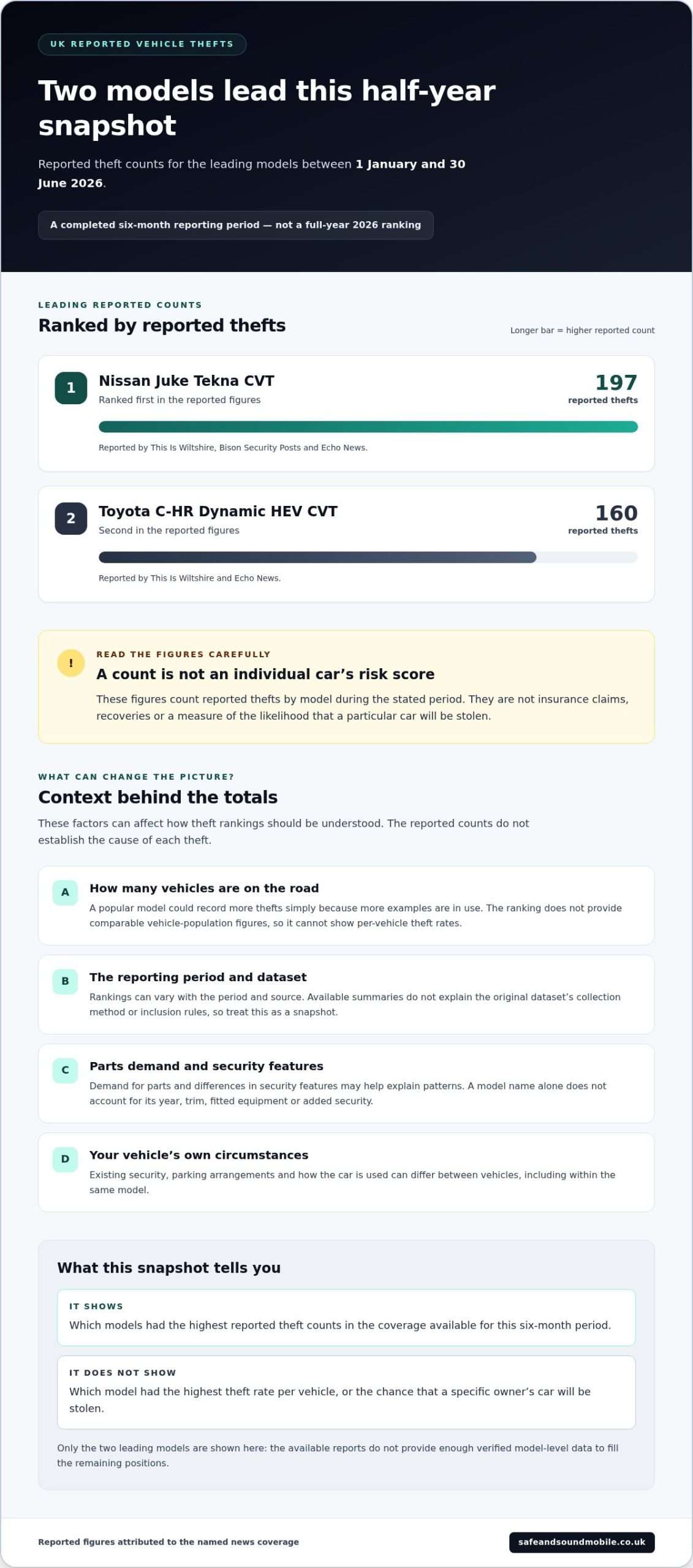
In the first six months of 2026, 197 Nissan Juke Tekna CVTs were reported stolen, making the model the most stolen in the latest UK ranking. The Toyota C-HR Dynamic HEV CVT followed with 160 thefts, according to figures reported by This Is Wiltshire and Echo News. But the UK’s most stolen cars list records reported thefts, not what will happen to your car.
Checking whether your vehicle appears in a theft ranking can be useful, but results vary by reporting period and dataset. A high theft count does not reveal an individual owner’s risk level. The number of vehicles on the road, demand for parts and differences in security features can all affect the picture.
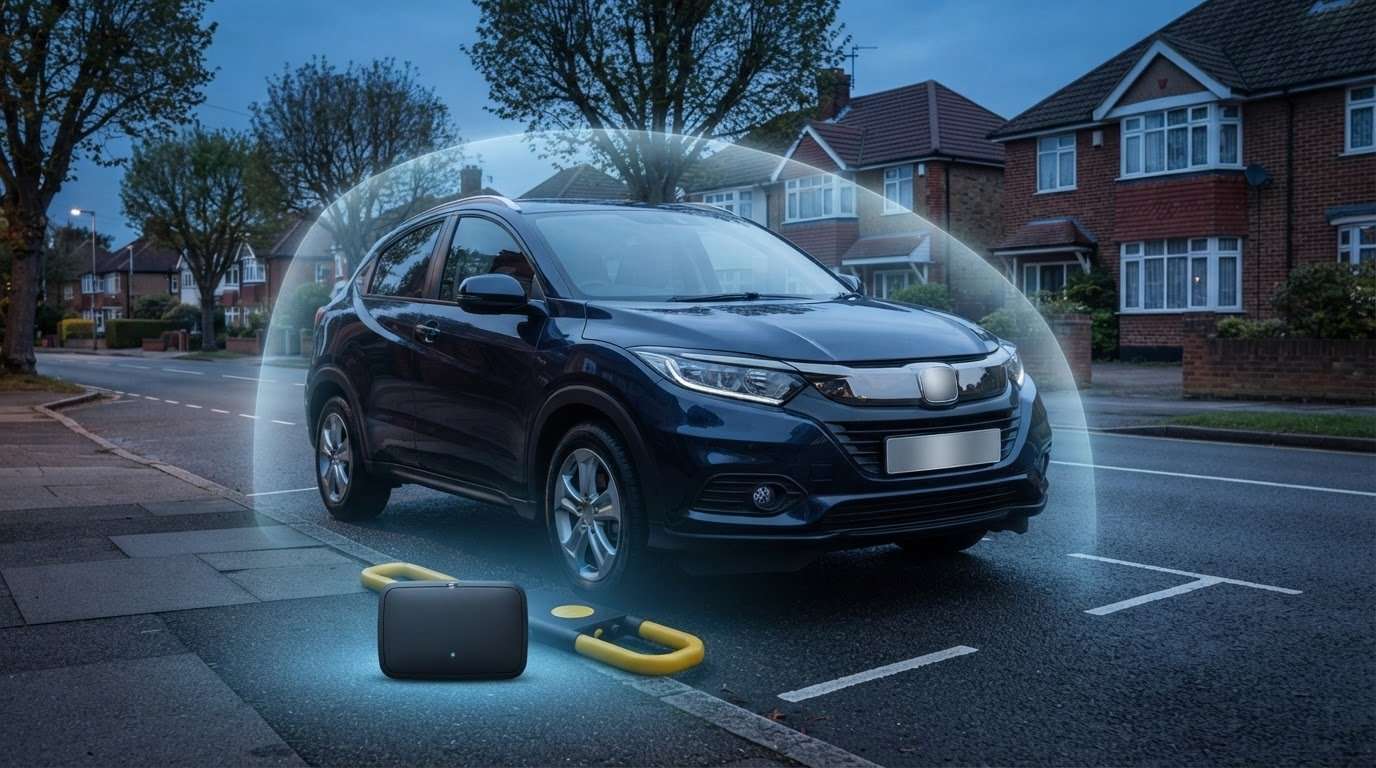
This guide explains how to read the latest UK car theft rankings and what may make certain models more exposed. You’ll also find practical ways to reduce theft opportunities and support recovery, from everyday security habits to vehicle trackers and immobilisers. Use the figures as a starting point, then choose protection to suit your vehicle and circumstances.
Key Takeaways
- Use the UK’s most stolen cars rankings as a starting point, and check which period and data source each list covers.
- Popular models can lead theft totals, but raw counts do not show an individual vehicle’s risk.
- Build consistent everyday security habits, then consider additional physical and electronic protection.
- Choose protection to suit your vehicle, its existing security and where you usually park, rather than relying on one device.
- Check your insurer’s stated security requirements and consider how a tracker or immobiliser could fit into your plan.
Which cars are most stolen in the UK? Start with the latest verified rankings
The Nissan Juke Tekna CVT ranked first in the latest model-level figures presented here, followed by the Toyota C-HR Dynamic HEV CVT. The ranking covers the six months from 1 January to 30 June 2026. It is a completed half-year reporting period, not a full-year 2026 league table.
The ranking measures reported vehicle thefts by model between 1 January and 30 June 2026, not insurance claims, recoveries or the likelihood of an individual car being stolen. This Is Wiltshire and Echo News attribute the figures to UK theft data, but the source details available here do not identify the original dataset’s collection method or inclusion rules. Treat the results as a snapshot, rather than a fully explained or independently comparable risk measure. For wider context on theft and prevention, see this overview of motor vehicle theft.
What does ‘ most stolen’ mean in the data?
Here, “most stolen” means the largest reported theft count for a named model during the stated period. It does not mean that the model has the highest theft rate per vehicle on UK roads. The reports present these figures as UK rankings, but their summaries do not explain precisely how the data was assembled. The counts are described as thefts, not insurance claims or recovered vehicles.
How to read the latest UK stolen-car list
The table shows the leading models and figures reported in the available coverage, ordered by reported theft count. The reports do not provide enough verified model-level data here to fill the remaining positions, so no further ranks are included.
| Rank | Model | Reported thefts | Period and attribution |
|---|---|---|---|
| 1 | Nissan Juke Tekna CVT | 197 | 1 January to 30 June 2026; reported by This Is Wiltshire, Bison Security Posts and Echo News |
| 2 | Toyota C-HR Dynamic HEV CVT | 160 | 1 January to 30 June 2026; reported by This Is Wiltshire and Echo News |
These figures show which models feature prominently in the reported theft data, but raw totals do not account for how many examples of each model are on the road. Nor is a six-month list a full-year ranking. Use the UK most stolen cars figures as a starting point, then assess your own vehicle’s security and circumstances.
Why some cars appear more often in UK theft reports
A high position in the UK most stolen cars rankings does not automatically mean that every vehicle of that model faces unusually high theft risk. Rankings based on total incidents count thefts, but do not show how many examples of each model are on the road. A common model could record more thefts simply because there are more of them.
Popularity and raw theft totals
A fair comparison of theft risk between models needs both the theft count and a reliable figure for how many vehicles of each model were in use during the same period. Dividing the count by the vehicle population can help produce a rate, but only when the data uses consistent definitions, coverage and timeframes.
The ranking discussed above provides reported theft counts, not comparable per-vehicle rates. Without a suitable vehicle-population denominator, it can show which models appear most often in those reports, but not which model is most likely to be stolen. The Office for National Statistics vehicle theft data offers official context on vehicle-related crime. Still, it is not a model-by-model count that can be used to calculate theft rates for the ranked cars.
Security features and changing theft methods
Keyless entry is one security consideration for owners. Electronic theft methods can target a vehicle’s keyless system, but that general risk does not prove that a particular model in a ranking is vulnerable, or that every example has the same security equipment. A model name alone does not account for differences in year, trim, fitted features or added security.
It is also important to distinguish what a ranking records from possible explanations for why thefts happen. Demand for parts, model popularity and security characteristics may help explain patterns, but theft totals do not establish the cause of each incident. Treat an explanation as a theory unless the dataset or a separate, named study supports it.
Your vehicle’s own circumstances matter too. Existing security, parking arrangements and how the car is used can differ from one vehicle to another, even within the same model. Review those factors rather than assuming your car is bound to be targeted because its model appears on a list.
For another layer of protection, consider how a professionally fitted vehicle immobiliser or tracker could complement your car’s existing security. Explore vehicle security options from Safe & Sound Mobile.
What UK stolen-car rankings can, and cannot, tell you
A ranking can show which models recorded the most thefts in a particular dataset and period. On its own, it cannot tell you the chance that a specific car or owner will experience theft. A list is useful context, not a personal risk score.
This ranking’s main limitation is that it reports model-level theft counts without a comparable number of vehicles in use for each model. Without that denominator, you can’t compare the listed models’ per-vehicle theft rates. A model with more recorded incidents may also be much more common on UK roads.
Why different UK sources may publish different rankings
Not every list measures the same outcome. One publisher may use police-recorded thefts, while another may analyse insurance claims, tracker records or vehicle recoveries. These figures answer different questions. A list of recovered vehicles, for example, describes vehicles found, not all vehicles reported stolen.
Check the source and dates before comparing rankings. A calendar-year list is not directly comparable with one covering six months. Coverage and inclusion rules can also affect which vehicles appear and how they are ordered. The reporting summaries behind the latest ranking identify reported thefts but do not fully explain how the original dataset was collected or what it included.
Differences between two lists do not necessarily mean one is wrong. They may cover different periods, use different records or count different outcomes. Avoid combining them into one league table unless their measures and coverage are genuinely comparable.
When a ranking is useful for owners and buyers
Use the uUKmost stolen cars list as a prompt to look more closely, not as a reason to panic or reject a vehicle automatically. If you are considering a car, look for information about its exact model year and specification, including its existing security features. Don’t assume a broad model name tells you what equipment every example has.
If you already own a listed model, focus on practical steps. Review how you secure and park the vehicle, understand its fitted security, and consider whether an additional immobiliser or tracker suits your needs. A ranking cannot account for every vehicle’s specification, location, or use, and no single measure guarantees protection.
Different sources can describe different parts of the theft picture, but only like-for-like data supports a fair comparison. Treat rankings as one useful signal, then base your decisions on your car and circumstances.
How to reduce car-theft risk: practical steps for UK owners
Theft rankings can highlight models in reported data, but your security choices should reflect your vehicle and routine. Start with simple habits, then consider additional protection that suits your needs. No single step or device can guarantee that a car will not be stolen.
Everyday habits that reduce avoidable opportunities
Make these checks part of every journey, whether or not your car appears in the UK’s most stolen cars list:
- Park thoughtfully. Choose a secure, well-lit place where practical, and close and lock the vehicle whenever you leave it.
- Secure your keys. Follow the vehicle manufacturer’s current guidance for storing and using keys, including keyless keys if applicable.
- Keep valuables out of sight. Remove items or store them where they cannot be seen from outside the car.
- Check the vehicle is secure. Before walking away, confirm that the doors are locked and windows are closed. Do not assume the locking action worked.
These steps help reduce avoidable opportunities, but they cannot remove every risk. Choose measures you can follow consistently.
When to consider additional vehicle security
Think of added security as layers with different roles. A car alarm can alert people nearby to an event. An immobiliser is intended to prevent the vehicle from being started without the correct authorisation. A tracker can provide location information to support recovery efforts if the car is stolen, but it can’t guarantee it will be found or recovered.
For more detail on how tracking fits into vehicle security, read the vehicle tracking guide. If you are considering an immobiliser, the Ghost immobiliser guide explains that option. Choose equipment that fits your vehicle’s existing security and everyday needs.
Check your insurance policy for any stated security requirements. These can vary by policy, so follow the terms that apply to your cover. If your insurer specifies a tracker category, use that wording to guide your research. You can also read about insurance-approved vehicle trackers as part of your decision.
Once you have assessed your vehicle and priorities, professional fitting is a practical next step. Arrange vehicle security installation with Safe & Sound Mobile.
Choosing a vehicle security plan that fits your car
The UK’s most stolen cars rankings offer context, but the right security plan depends on your vehicle and circumstances. Use this checklist to make a considered choice rather than selecting equipment based on a league table alone:
- Identify your vehicle. Note its make, model, year and specification. Security features can vary between versions.
- Review existing security. Check the vehicle handbook or manufacturer information to understand the equipment already fitted.
- Consider where you park. Think about your usual parking arrangements and which everyday measures are practical for you.
- Read your insurance policy. If it specifies a security device or tracker category, follow the terms that apply to your cover. Requirements vary by policy.
Match protection to the vehicle and the requirement
Choose each security layer for its purpose. An alarm can provide an audible alert; an immobiliser is designed to prevent unauthorised starting; a tracker can provide location information to support recovery efforts if a vehicle is stolen. These functions are different, so do not treat one device as a substitute for another.
If your insurer states a tracker category, use the exact category in your policy when considering options. Do not assume that any tracker meets a particular requirement. Safe & Sound Mobile supplies insurance-approved vehicle trackers, including Thatcham S5 and S7 options, as well as immobilisers and car alarms. Added security can form part of a layered plan, but no device can guarantee that a vehicle will not be stolen or recovered.
What professional mobile fitting adds
Professional installation lets you have security equipment fitted at your location. Safe & Sound Mobile provides UK-wide mobile fitting for vehicle security products. The right setup depends on your car, its existing equipment and the protection you want to add.
Compare your vehicle’s needs with your insurer’s stated terms, then choose a proportionate next step. Explore vehicle security options from Safe & Sound Mobile and build a plan that suits your car.
Make a confident plan to protect your vehicle.
TheUK’sk most stolen cars rankings offer useful context, not a personal prediction. Raw theft totals do not account for how many vehicles of each model are on the road, so use the list to inform your choices rather than assume your car is at particular risk.
Start with consistent parking and locking habits. Then review your vehicle’s existing security and your insurer’s stated requirements. Alarms, immobilisers and trackers have different roles, and a layered approach can help you choose protection that fits your car. A tracker can support recovery efforts, but no device guarantees recovery.
Safe & Sound Mobile provides UK-wide mobile installation of trackers, immobilisers and alarms, including insurance-approved Thatcham S5 and S7 tracker options. Explore the available support and take a practical next step with vehicle security options and UK-wide mobile fitting.
With clear information and measures suited to your vehicle, you can choose with confidence and feel more prepared wherever you park.
Frequently Asked Questions
Which cars are most stolen in the UK?
In the latest figures presented here, the Nissan Juke Tekna CVT and Toyota C-HR Dynamic HEV CVT ranked first and second for reported thefts. The figures cover 1 January to 30 June 2026 and were reported by This Is Wiltshire and Echo News, among other outlets. Rankings can differ by source and period, so check the dates and what each list counts before comparing results.
What is the most stolen car in the UK in 2026?
The Nissan Juke Tekna CVT topped the reported figures for the first half of 2026, with 197 thefts. This is what Wiltshire, Bison Security Posts and Echo News reported. It is a half-year ranking, not a full-year 2026 result. The Toyota C-HR Dynamic HEV CVT came second, with 160 reported thefts during the same period.
How are the UK’s most stolen cars rankings calculated?
Rankings depend on the data source. A list may order vehicle models by reported theft count, insurance claims, tracker records or recoveries, and those measures are not interchangeable. The latest figures discussed in this article are reported theft counts for the first six months of 2026. The reporting summaries do not fully explain how the original dataset was collected or what its inclusion rules are, so treat the order as a snapshot rather than a complete measure of risk.
Does a car appearing on a stolen-car list mean mine is likely to be stolen?
No. A model’s position on a list does not predict what will happen to your individual car. Rankings based on raw totals do not account for how many examples of each model are on the road, or differences in vehicle specification, security, parking and use. Treat a list as a prompt to review your vehicle’s protection, not as a personal risk score or reason to panic.
Why do different sources list different most-stolen cars?
Sources may count different outcomes, such as police-reported thefts, insurance claims, tracker records, or recovered vehicles. They may also cover different areas, apply different inclusion rules or use different reporting periods. A calendar-year list and a six-month ranking should not be treated as directly comparable. Check the source, measure and dates first, and do not combine figures from incompatible datasets into one league table.
Can a car tracker prevent my car from being stolen?
A tracker does not guarantee protection against theft. Its role is to provide location information that may support efforts to recover a vehicle after it is stolen. Everyday security habits and devices such as alarms or immobilisers have different roles in a layered approach. Choose protection to suit your vehicle and circumstances, and remember that no single device can ensure a car will not be stolen or recovered.
What should I do if my car is on a UK theft ranking?
Use the ranking to review your security, not as a prediction. Check your vehicle’s existing features and your insurer’s stated requirements. Lock the car, secure your keys in line with the manufacturer’s guidance, keep valuables out of sight and choose secure, well-lit parking where practical. If you want extra protection, consider whether an alarm, immobiliser or tracker fits your needs.
Do insurance-approved trackers reduce the risk of car theft?
An insurance-approved tracker can be part of your security plan, but don’t assume it prevents theft. A tracker’s key role is to support location and potential recovery efforts if a vehicle is stolen. Insurance requirements vary by policy, so follow the exact terms that apply to your cover. If your policy specifies a tracker category, use that requirement when considering suitable options.
About author
Related posts
A dash cam’s recording time depends on its memory card and video quality. For a single-camera setup, a 32GB card stores around 2 to 4... Continue reading
Does a gps tracking dash cam let you find your car if it’s stolen? Not by itself. GPS can add location and journey context to... Continue reading
Could choosing the wrong tracker category leave your insurer’s requirement unmet? The right thatcham approved tracker installation uk starts with the... Continue reading
Car Immobiliser Fitting Shenfield: Options and Preparation Immobiliser fitting in Shenfield should start with the vehicle and the purpose of the installation. An additional immobiliser... Continue reading

Real-Time GPS Tracking Chelmsford: Cars, Vans and Fleets Real-time GPS tracking can help vehicle owners and businesses in Chelmsford view location information through a supported... Continue reading