
No products in the cart.
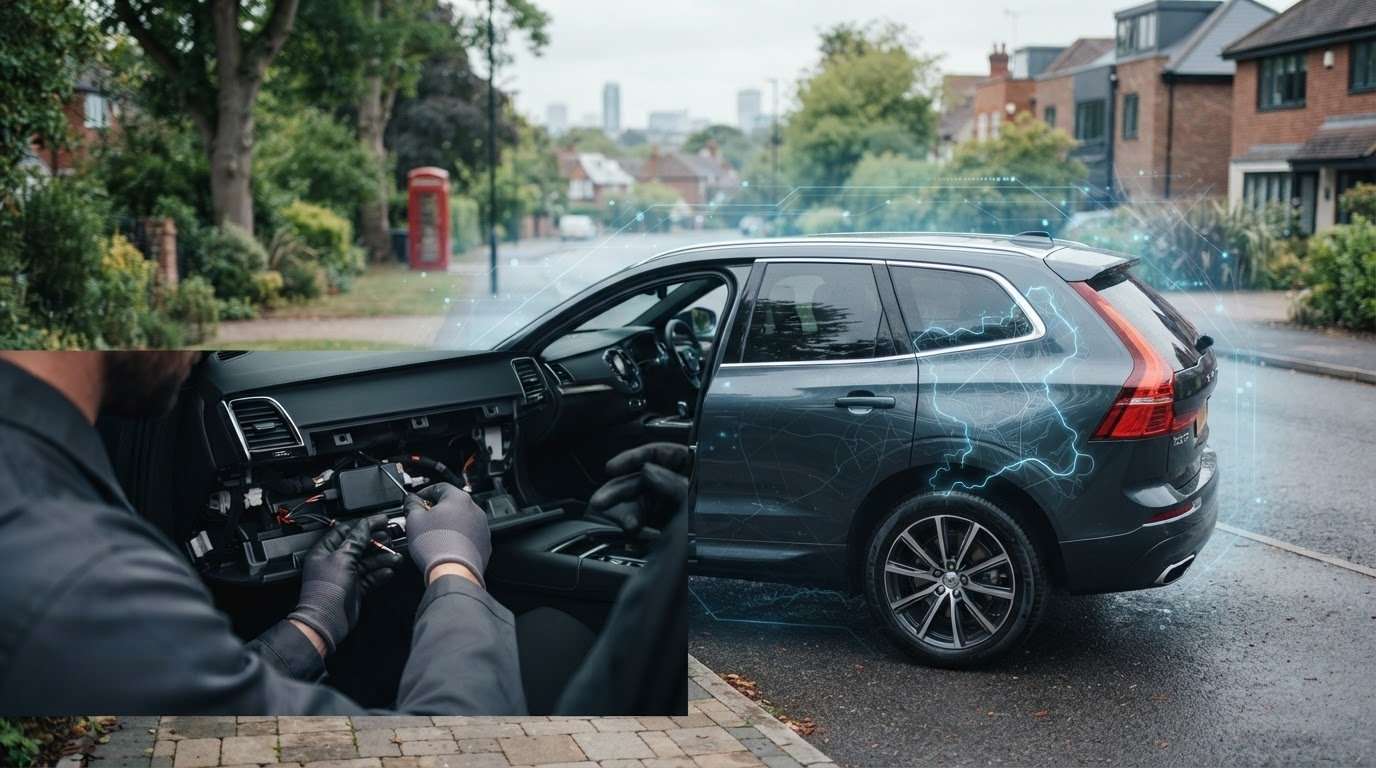
Tracker Device for Car: How to Choose the Right One in 2026
How to Choose the Right One in 2026
The easiest tracker to fit may not be the right choice for your car. A plug-in tracker device for car security can be convenient, but it may not meet your insurer’s requirements or provide the discreet, professionally fitted protection you want. Start by checking what your insurer requires and what you need the tracker to do.
It’s easy to confuse a tracker with an alarm or immobiliser, but they serve different purposes. An alarm can alert you to interference, an immobiliser helps prevent unauthorised starting, and a tracker can help locate a vehicle after theft. Your insurer’s requirements, how you use your car and any ongoing service terms all matter when comparing options.
This guide explains how car trackers work, compares the main types and outlines what to check with your insurer before choosing. You’ll also find questions to ask about service terms, what may happen after a theft and what professional fitting involves. Safe & Sound Mobile supplies insurance-approved Thatcham S5 and S7 trackers and provides mobile fitting across the UK, giving you a specialist option once you know what your vehicle and policy require.
Key Takeaways
- A tracker device for car security can help locate or monitor a vehicle, but it doesn’t physically stop theft.
- Trackers, alarms and immobilisers serve different roles. Compare what each does before deciding what your vehicle needs.
- Check your insurer’s tracker category requirements before choosing an insurance-approved option, including Thatcham S5 or S7.
- Before buying, confirm vehicle compatibility and ask whether a subscription or ongoing service applies.
- Safe & Sound Mobile supplies and professionally fits insurance-approved S5 and S7 trackers, with mobile installation across the UK.
What is a tracker device for a car, and what does it do?
A car tracker helps locate or monitor a vehicle. Depending on its features and service arrangement, it may provide location information to an authorised user through an app or online account. A car security tracker can support monitoring, but it isn’t a physical barrier and can’t guarantee a vehicle won’t be stolen or recovered.
A tracker can help show where a vehicle is; it doesn’t prevent theft. Its capabilities depend on the device, any associated service and how it’s installed. Before choosing one, check what information it provides, how you can access it and whether ongoing service terms apply.
How does a car tracking device locate a vehicle?
GPS uses satellite signals to calculate a device’s position. A tracker may then use a communications network to send location data to a service, where an authorised user can access it. The exact process and information provided vary by product. The Vehicle tracking system overview explains how tracking hardware and software can work together.
Location information isn’t necessarily continuous or exact. Satellite reception, network coverage, the tracker itself and the service arrangement can all affect what’s available and when. Check the product details rather than assuming every tracker reports in the same way. In particular, ask how often the device updates its location and how you can view that information.
What is the difference between a tracker, alarm and immobiliser?
These security devices have distinct roles. A tracker helps locate or monitor a vehicle. An alarm alerts people to an event, such as interference with the vehicle. An immobiliser restricts the vehicle from starting without the required authorisation. They address different parts of vehicle security, so one doesn’t automatically replace the others.
Ghost immobilisers are an example of an immobiliser, not a tracking device. To understand this category and how it differs from a tracker, read the Ghost Immobiliser guide.
When comparing options, start with the job you need the device to do. If you want location information, investigate trackers. If you want an alert or a restriction on starting, compare alarms or immobilisers instead. Your insurer may specify a tracker category, so confirm its requirements before choosing. This helps you match the device to your policy and avoid relying on a feature it doesn’t provide.
How car tracker devices work, including insurance-approved options.
A car tracker gathers location information and, depending on the device and service arrangement, sends it through a communications network so an authorised user can access it. In general, the device determines a location, transmits data and makes available the information supported by its system. Coverage, device operation and service terms can affect what information is available.
An insurance-approved tracker category identifies a recognised security standard, but itdoesn’tt guarantee that a particular insurer will accept a device for your policy. Requirements can vary by insurer, policy and vehicle. Before choosing a tracker or arranging a fitting, confirm the exact category and any installation conditions directly with your insurer.
What does Thatcham approval mean for a car tracker?
Thatcham Research assesses vehicle security products, and its tracker categories provide a reference point when comparing insurance-approved options. Approval indicates that a tracker has been assessed against the requirements of its category. It isn’t a substitute for checking your policy: your insurer decides what it requires for your vehicle and may specify a particular category.
For more detail on these options, see the insurance-approved vehicle tracker guide. Treat the category as one part of your decision, alongside the tracker’s service terms and the fitting requirements your insurer confirms.
How do S5 and S7 tracker categories fit into the decision?
Safe & Sound Mobile supplies insurance-approved vehicle trackers in Thatcham S5 and S7 categories. Both are options to discuss with your insurer, but don’t assume either category meets your policy’s conditions without confirmation. Ask your insurer to specify the required category and any conditions that apply to the device or installation.
Once you have that information, compare suitable options and check what service arrangements apply. If you want to understand how location data may be handled, the US Federal Trade Commission’s report on consumer privacy and geolocation data discusses transparency, choice and security. It’s a US resource, so use it as general background rather than UK-specific guidance.
After confirming your insurer’s requirements, you can consider professional fitting. Safe & Sound Mobile supplies and installs S5 and S7 trackers, with mobile fitting across the UK. You can review the insurance-approved tracker options once you know which category your policy calls for.
Car tracker device comparison: tracker, alarm or immobiliser?
A tracker device for car security, a car alarm and an immobiliser do different jobs. A tracker can provide location information, an alarm can alert you to an event, and an immobiliser prevents the vehicle from starting. Compare them by the need you want to address, then check your insurer’s requirements and the device’s terms.
| Device | Primary purpose | Consider it if you need to | Questions to verify |
|---|---|---|---|
| Tracker | Support vehicle location or monitoring | Access location information through the device’s service | Does your insurer require a specific category? What service terms apply? |
| Alarm | Alert to an event involving the vehicle | Add an alerting function to your vehicle security | What events trigger an alert, and how is it given? |
| Immobiliser | Restrict the vehicle from starting without authorisation | Address unauthorised vehicle starting | Is it compatible with your vehicle, and what does installation involve? |
A tracker may support location or recovery efforts, but it can’t guarantee that a stolen vehicle will be found or returned. An alarm or immobiliser doesn’t perform the same location role. You could consider combining devices if their separate functions match your needs, but don’t assume a combination is necessary or sufficient for your circumstances.
When might a tracker be more relevant than an alarm?
Choose based on the function you need. A tracker may provide location information through its service; an alarm is meant to alert, not show where the vehicle is. Check whether your insurer specifies a tracker category and consider which concern matters most to you. Don’t assume an alert means someone is monitoring it or will respond within a particular time.
Can a tracker and immobiliser work as complementary security?
They can serve complementary roles: a tracker supports access to location information, while an immobiliser restricts starting. Neither replaces the other, and neither guarantees a particular outcome. Ghost immobilisers are one type of vehicle immobiliser; consult a dedicated immobiliser guide to learn more about that device category.
Before choosing either device, ask a qualified provider to confirm compatibility with your vehicle and explain the installation requirements. For a tracker, consider how the service handles access to location data. For background on GPS tracker security, review how a provider protects account access and location information. Check product-specific details before deciding.
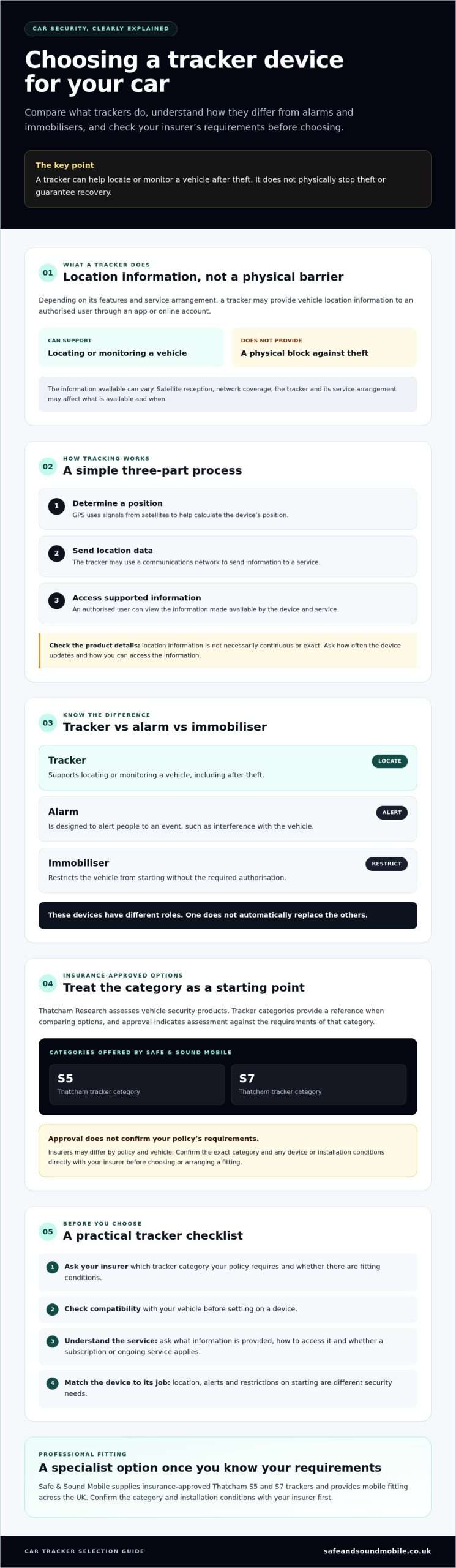
How to choose a tracker device for your car: a practical checklist
Choose a tracker device for car security by matching it to your policy, vehicle and expectations of the service. Work through these checks before you buy or book a fitting. For wider background on how vehicle tracking works, read this vehicle tracking guide.
- 1. Check your policy. Ask your insurer whether it requires a tracker, a particular approval or category, or specific installation conditions. Confirm any fitting deadline and what evidence or documentation it needs. Don’t assume a tracker automatically changes your cover or premium.
- 2. Confirm the required category. If your insurer specifies Thatcham S5 or S7, confirm which one applies to your vehicle and policy. Get the requirement directly from your insurer before selecting a device.
- 3. Review service terms. Ask whether the tracker requires a subscription or another ongoing service, and what that covers. Check how the system accesses location information, whether it requires an app or account, and what happens if the service ends. Terms vary by device, so verify them before you commit.
- 4. Confirm compatibility. Give the installer your vehicle’s make, model and any other relevant details. Ask whether the tracker is suitable and whether there are vehicle-specific fitting considerations.
- 5. Arrange fitting. Confirm what the installation includes, how it will be carried out and whether any policy evidence will be provided. Check that the fitting arrangement matches your insurer’s conditions.
What should you check with your insurer before buying?
Be specific. Ask which tracker category your policy requires, whether approval must meet a particular condition and whether installation must follow stated requirements. Confirm the fitting deadline and ask what documentation the insurer expects after installation. Keep a written record of the guidance so you can refer to it when comparing options and discussing installation.
What should you ask a tracker installer?
Ask the installer to confirm vehicle compatibility, explain the fitting arrangements and outline what’s included. Check whether an ongoing service applies, how app or account access works, and what service terms you should understand. Don’t rely on assumptions about features or subscriptions; ask for details about the specific tracker you’re considering.
Once you’ve confirmed your insurer’s requirements and identified a suitable category, you can enquire about professional mobile fitting. Safe & Sound Mobile supplies and professionally installs insurance-approved S5 and S7 vehicle trackers, with mobile fitting across the UK. Find out about mobile tracker fitting after confirming what your policy requires.
Arrange a car tracker fitting with confidence.
Once you know what your insurer requires, choosing and arranging a car tracker fitting becomes clearer. Confirm the required category, check the specific tracker’s terms, and ask about installation before you commit. A tracker device for car security should suit both your vehicle and your insurer’s stated conditions. Fitting alone doesn’t guarantee you’ve met a policy requirement, so verify the details directly with your insurer.
What happens when you arrange mobile tracker fitting?
Start by sharing your vehicle details and the instructions you’ve received from your insurer. This gives the supplier the information they need to discuss which tracker options suit your needs and what the fitting arrangement involves. Ask what the installation includes, whether any ongoing service applies and what information you’ll receive afterwards. Confirm any evidence your insurer needs, too.
Mobile fitting can make installation more convenient by bringing the fitting service to an agreed location. The specific arrangements depend on the provider and your vehicle, so confirm the current process and coverage when you enquire. Don’t assume a particular appointment time or fitting outcome until it’s been confirmed. Similarly, if your operational requirements extend to commercial transport or heavy on-site lifting, you can find out more about lorry-mounted and tracked crane hire from Bewlake Lift & Haul Ltd.
Choose an insurance-approved tracker fitting service.
Safe & Sound Mobile supplies and professionally fits insurance-approved vehicle trackers, including Thatcham S5 and S7 options, with mobile fitting across the UK. These categories may be relevant if your insurer specifies one, but confirm the exact requirement with your insurer first. Then share that requirement with the installer and ask them to confirm vehicle compatibility and fitting details before booking.
A useful enquiry is specific: provide yourvehicle’ss make and model, the category your insurer has requested, and any conditions or documentation instructions. This helps you discuss a suitable option and understand the next steps without relying on assumptions about your policy or the tracker’s service terms.
Ready to take the next step? Explore tracker options and arrange a fitting enquiry.
Choose your tracker with confidence.
The right tracker device for car security depends on what you need it to do and what your insurer requires. A tracker can support vehicle location, while an alarm and an immobiliser serve different security roles. Check your policy for the required category and any fitting or documentation conditions before you choose.
Then compare suitable options, confirm whether a subscription or ongoing service applies, and ask an installer about vehicle compatibility and what the fitting includes. These checks help you understand the full arrangement rather than choosing a device based on its category alone. Your insurer can confirm the requirementsforo your policy and vehicle.
Safe & Sound Mobile supplies and professionally fits insurance-approved Thatcham S5 and S7 trackers, with mobile fitting across the UK. Once you’ve checked your insurer’s requirements, explore insurance-approved tracker options and enquire about fitting.
Frequently Asked Questions
What does a car tracker device do?
A car tracker helps establish or report a vehicle’s location, depending on its technology and service. A car security tracker can provide location-related support, but it doesn’t physically stop theft or guarantee recovery. Before choosing one, check what information the specific device provides, how you access it and whether ongoing service terms apply. Confirm any tracker requirements with your insurer.
Is a car tracker worth having?
A car tracker may be worth considering if you want location-related security support or your insurer requires a particular category. Whether it suits you depends on your vehicle, policy and preferences, as well as any ongoing service terms. Compare the device’s actual capabilities and costs with what you need. A tracker can support your security plan, but it doesn’t guarantee protection against theft, loss, or vehicle recovery.
Do I need a Thatcham-approved tracker for my car insurance?
Not every car insurance policy has the same security conditions. Your insurer may specify a tracker category or another requirement, so check your policy wording and ask the insurer directly before buying or arranging installation. Safe & Sound Mobile supplies insurance-approved S5 and S7 tracker options, but confirm which category, device and fitting conditions your insurer will accept for your vehicle.
What is the difference between an S5 and an S7 tracker?
S5 and S7 are Thatcham tracker categories, but don’t assume they differ in features without checking the product details. The right category depends on the tracker and your insurer’s requirements. Ask your insurer which category it requires or accepts for your vehicle. Then confirm the chosen tracker’s specifications, service terms, and installation details with the supplier before deciding.
Does a car tracker stop a vehicle from being stolen?
No. A tracker and an immobiliser have different roles. A tracker may provide location information, depending on its technology, service and operating conditions. An immobiliser is designed topreventt a vehicle from starting unlessit completes the required authenticationd. Neither device guarantees that theft wwon’toccur. Check your insurer’s requirements and consider what each device does before deciding which security measures suit your needs.
Does a car tracker need a subscription?
Subscription and service arrangements vary by tracker, so check the terms for the specific device before choosing. Ask whether ongoing charges apply, what the service includes and whether any tracker functions depend on it. Don’t assume every system has the same costs or operating model. If you’re considering a tracker supplied by Safe & Sound Mobile, confirm the current product-specific subscription and service details before committing.
Can a tracker be fitted at my home or workplace in the UK?
Mobile fitting at your location may be possible. Safe & Sound Mobile provides mobile vehicle-security installation across the UK, but confirm current coverage for your location, vehicle suitability and appointment arrangements directly before booking. Share your vehicle details and any insurer instructions with the installer. This makes it easier to discuss the fitting and confirm that your chosen tracker and installation meet your insurer’s requirements.
About author
Related posts
A dash cam’s recording time depends on its memory card and video quality. For a single-camera setup, a 32GB card stores around 2 to 4... Continue reading

Does a gps tracking dash cam let you find your car if it’s stolen? Not by itself. GPS can add location and journey context to... Continue reading
Could choosing the wrong tracker category leave your insurer’s requirement unmet? The right thatcham approved tracker installation uk starts with the... Continue reading

Real-Time GPS Tracking Chelmsford: Cars, Vans and Fleets Real-time GPS tracking can help vehicle owners and businesses in Chelmsford view location information through a supported... Continue reading
Thatcham Tracker Categories: S5, S7 and Older Labels Thatcham tracker categories can be confusing if your paperwork mentions Category 3, Category 5 or Category 6.... Continue reading