
No products in the cart.
Thatcham Tracker Categories: S5, S7 and Older Labels
Thatcham Tracker Categories: S5, S7 and Older Labels
Thatcham tracker categories can be confusing if your paperwork mentions Category 3, Category 5 or Category 6. These labels do not all describe the same kind of equipment. Category 3 referred to mechanical immobilisers, while current tracking terminology distinguishes S5 vehicle tracking systems and S7 asset location systems.
Do not buy from an assumed category conversion. These seven checks explain Thatcham tracker categories, older wording and the questions to put to your insurer before fitting a new device. Product certification and acceptance for your particular policy remain separate matters.
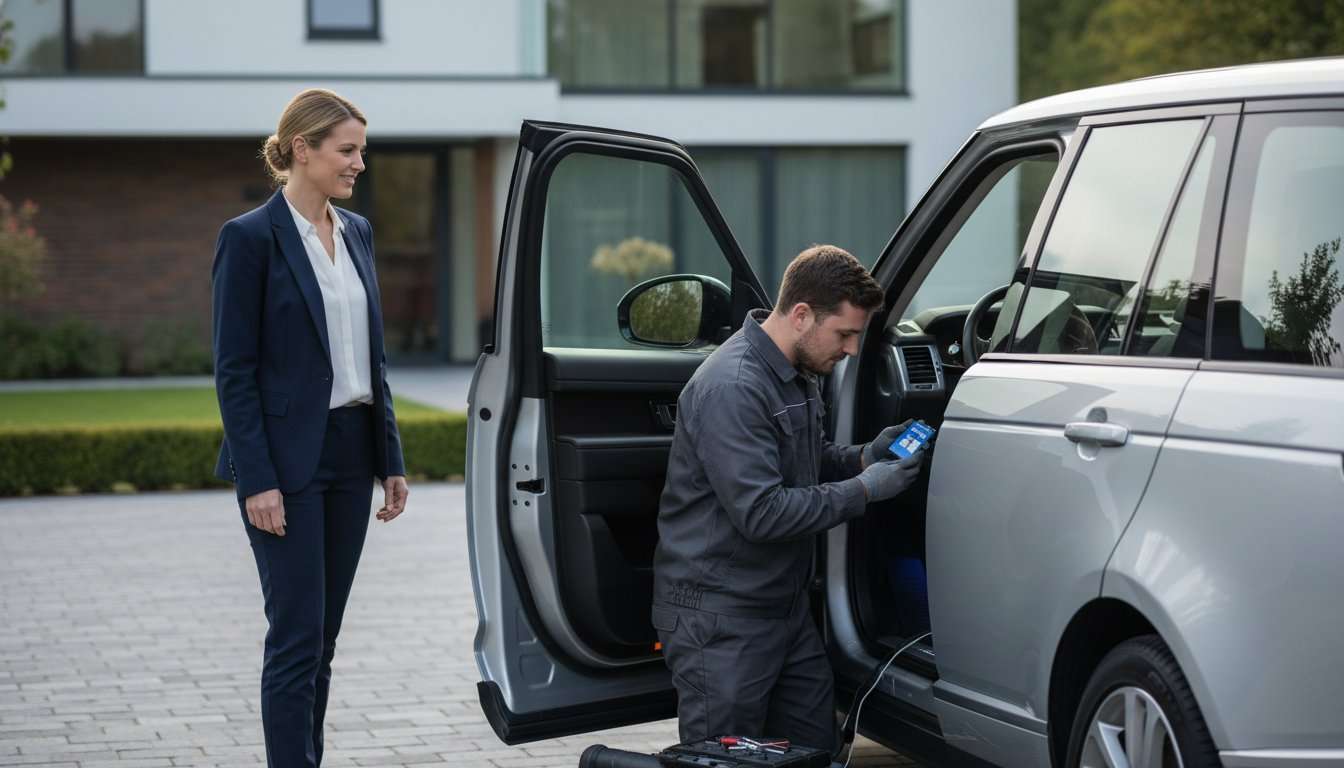
1. Start with current Thatcham tracker categories
Thatcham Research’s current security certification guidance lists S5 vehicle tracking systems and S7 asset location systems. Its official security certification overview is a neutral authoritative starting point for understanding the categories and checking terminology.
The category identifies a type of assessed security product. It is not a guarantee of uninterrupted coverage, successful recovery or acceptance by every insurer. The exact product, installation and supporting service still need checking.
When comparing Thatcham tracker categories, use the complete model name and the current certification information. A brand can sell several systems, and similar names may describe different equipment or service packages. Do not transfer a claim from one model to another.
Safe & Sound Mobile’s car tracker range can help you explore suitable equipment. Provide the vehicle details and insurer wording before narrowing the choice.
2. Understand why Category 3 is not a tracker comparison
The historical Category 3 label referred to mechanical immobilisers. It should not be presented as a lower grade of GPS tracker or compared with S5 and S7 as though all three provide location monitoring.
A mechanical security device physically restricts a defined vehicle function or movement. An electronic immobiliser controls authorisation for supported vehicle operation. A tracking system supplies location information and, depending on the product, a monitoring service.
These security roles may complement one another, but they do not become interchangeable because their names include category numbers. A steering-wheel device does not establish that the vehicle has an insurer-accepted tracking system, and a tracker does not physically secure a door or wheel.
If paperwork appears to request a Category 3 tracker, ask the insurer to clarify what it means. It may be referring to an immobiliser, using an incorrect term or combining separate requirements. Get the corrected specification in writing before buying.
3. Treat Category 5 and Category 6 as older wording
Older documents and discussions may refer to Category 5, Category 6 or Category 7 tracking and location systems. Thatcham’s published transition information identifies the move to S5 and S7 terminology from January 2019.
That history does not justify choosing a replacement solely from a simplified conversion chart. The original product, its current service and the insurer’s requirement need to be identified. Avoid assuming that a larger number means a better fit for your policy.
When reviewing Thatcham tracker categories for an existing installation, collect the model, serial or account details and installation record. Ask the service provider whether the product is still supported and which service is active. Then confirm acceptance with the insurer.
Do not remove a working system simply because its old paperwork uses a previous label. Equally, do not assume that old certification or a fitted unit proves continuing compliance. Check the actual installation and current policy position.
4. Compare Thatcham tracker categories S5 and S7
S5 systems involve driver identification arrangements on the relevant product, while S7 identifies asset location systems. Ask how the selected S5 model recognises an authorised driver and what every regular driver needs to carry or do.
Driver identification is not the same as immobilisation. A tag that identifies the driver should not automatically be described as preventing the engine starting. Only the exact product specification and supported installation can establish that additional function.
Compare the available S5 tracking options and S7 tracking options against the written brief. Ask which models suit your make, model, year and powertrain.
Package names such as S5 Plus need a clear explanation of their additional features. The current Thatcham overview lists S5 and S7; do not assume that a marketing suffix proves a separate certified category or an identical feature set across brands.
| Term | How to interpret it | Practical next step |
|---|---|---|
| Category 3 | Historical mechanical immobiliser terminology | Clarify any wording that calls it a tracker |
| Category 5 or 6 | Older tracking terminology | Identify the actual product and insurer requirement |
| S5 | Current vehicle tracking category | Check model, driver identification and acceptance |
| S7 | Current asset location category | Check model, service and acceptance |
| Plus package | Features need checking by product | Ask what is included and what is certified |

5. Check insurer acceptance of Thatcham tracker categories
Thatcham certification does not guarantee recognition by every insurer. Ask for the exact category or named model required for your vehicle and policy. Confirm whether the device is a condition of cover, an optional measure or relevant to a particular quotation.
A certification logo does not establish a discount. There is no automatic premium reduction, lower excess or faster claim settlement simply because a tracker has been fitted. Obtain the insurer’s actual terms instead of relying on general sales statements.
Ask which installation records, activation evidence and continuing service are required. Keep written acceptance with the policy documents. If an insurer specifies older Thatcham tracker categories, request clarification of the current product it will accept.
When changing insurers or renewing cover, confirm the position again. Another insurer’s decision is not proof of acceptance. Tell the installer about any revised requirement before changing equipment or cancelling an existing service.
6. Look beyond Thatcham tracker categories to the service
Hardware and monitoring form different parts of the decision. Ask who handles an alert, how theft is reported and what information the owner must provide. Confirm service hours, geographic coverage and the provider’s responsibilities.
Location updates depend on the product’s positioning and communication arrangements. Buildings, underground parking and network conditions can limit information. Learn whether the app is showing a current position or the last known location and check its timestamp.
Discuss power, backup operation and storage with the installer. Product-specific battery claims should be supported by current manufacturer information. Explain if the vehicle is unused for long periods or regularly travels outside the UK.
Thatcham tracker categories do not remove these practical checks. A system must suit the vehicle and be operated according to its instructions. At handover, verify account access, registered contacts, normal procedures and any required documentation.
7. Confirm Thatcham tracker categories before booking
Prepare a short brief that includes vehicle details, current equipment and the insurer’s wording. Ask the installer to name the proposed product and service rather than merely repeating a category or promising the highest level of security.
Request a written breakdown of hardware, fitting and ongoing monitoring or connectivity. Find out what happens on renewal, cancellation, vehicle sale or transfer. If an active service is required by the insurer, discuss any interruption before it occurs.
- Clarify incorrect or outdated category wording.
- Check the precise model and current certification.
- Confirm compatibility and insurer acceptance.
- Understand driver identification and any separate immobilisation.
- Agree installation, activation and supporting documents.
- Review monitoring, coverage and recurring costs.
- Keep the provider’s theft-reporting instructions accessible.
If theft occurs, notify the police and provider as appropriate and follow their procedures. Do not attempt a recovery yourself or confront someone at a displayed location. No choice of Thatcham tracker categories guarantees the outcome of a theft.
Frequently asked questions about Thatcham tracker categories
Is Category 3 a vehicle tracker?
No. The historical Category 3 description concerned mechanical immobilisers. Ask for clarification if an insurer or seller uses the phrase Category 3 tracker.
Can I buy a Category 5 or Category 6 replacement?
Identify the original product and ask which current system the insurer accepts. Older wording should prompt a product check rather than an assumed direct conversion.
Is S5 always required for an expensive car?
No universal assumption should be made. Ask your insurer for its exact requirement for the vehicle and policy, then choose compatible equipment against that brief.
Does S5 automatically mean immobilisation?
Do not assume it does. Driver identification and immobilisation are different functions. Confirm the actual product features and supported installation.
Do Thatcham tracker categories guarantee a discount?
No. Certification and insurer recognition are separate, and any premium change depends on the insurer’s quotation. Get confirmation before buying for a financial saving.
Should an old tracker be replaced immediately?
Check its model, support, active service and policy acceptance first. Old terminology alone does not answer whether the existing installation remains suitable.
Conclusion: verify Thatcham tracker categories in context
Thatcham tracker categories are useful only when applied to the correct product and requirement. Separate mechanical immobilisers from tracking, clarify older labels and confirm the exact model, service and insurer acceptance before booking.
Ask Safe & Sound Mobile to help check your tracker requirement. Send the vehicle details and insurer wording so the team can explain suitable equipment and arrange installation.


About author
Related posts

A dash cam’s recording time depends on its memory card and video quality. For a single-camera setup, a 32GB card stores around 2 to 4... Continue reading

Does a gps tracking dash cam let you find your car if it’s stolen? Not by itself. GPS can add location and journey context to... Continue reading
Could choosing the wrong tracker category leave your insurer’s requirement unmet? The right thatcham approved tracker installation uk starts with the... Continue reading

Real-Time GPS Tracking Chelmsford: Cars, Vans and Fleets Real-time GPS tracking can help vehicle owners and businesses in Chelmsford view location information through a supported... Continue reading
Thatcham Trackers in Widford: S5, S7 and Fitting Checks Thatcham trackers for a vehicle in Widford should be chosen around the exact product, vehicle and... Continue reading