
No products in the cart.
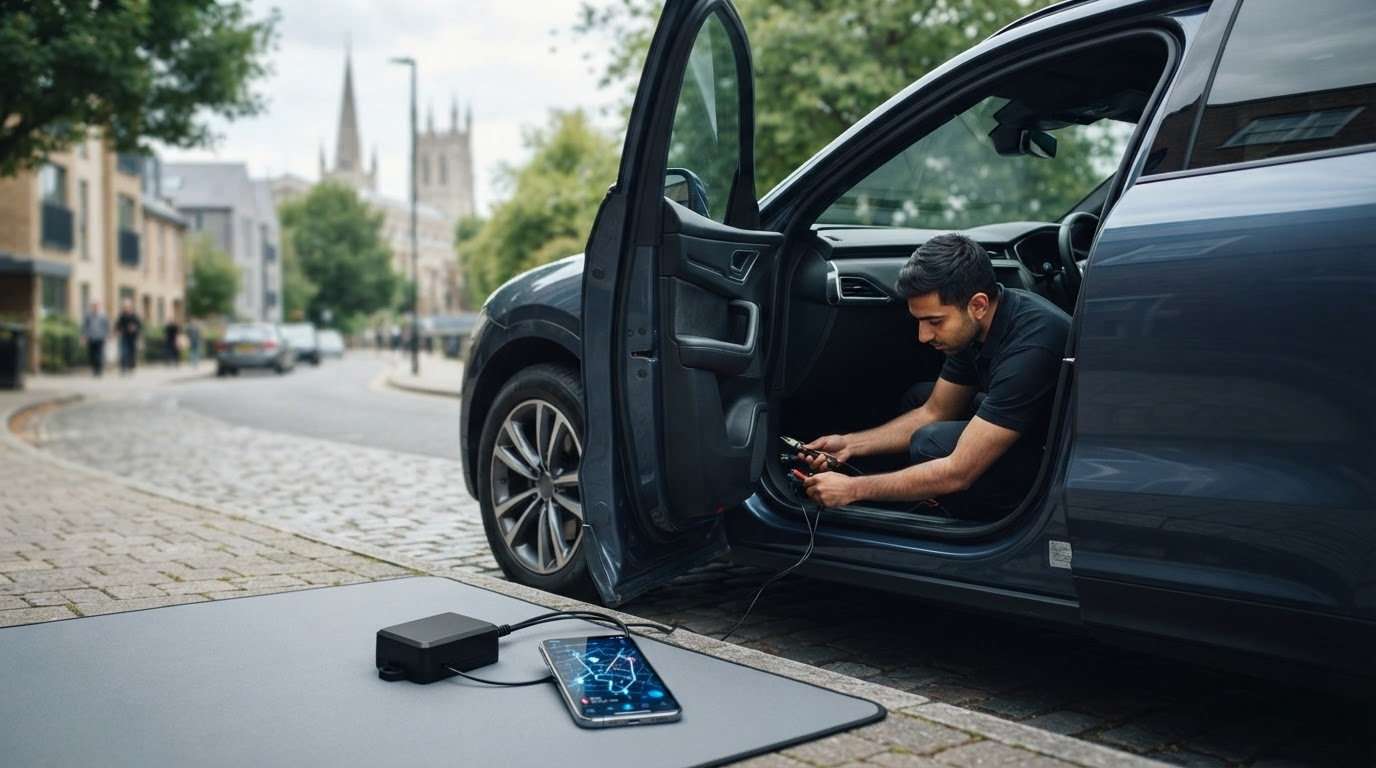
Car Tracking Systems: How to Choose the Right Setup in 2026
How to Choose the Right Setup
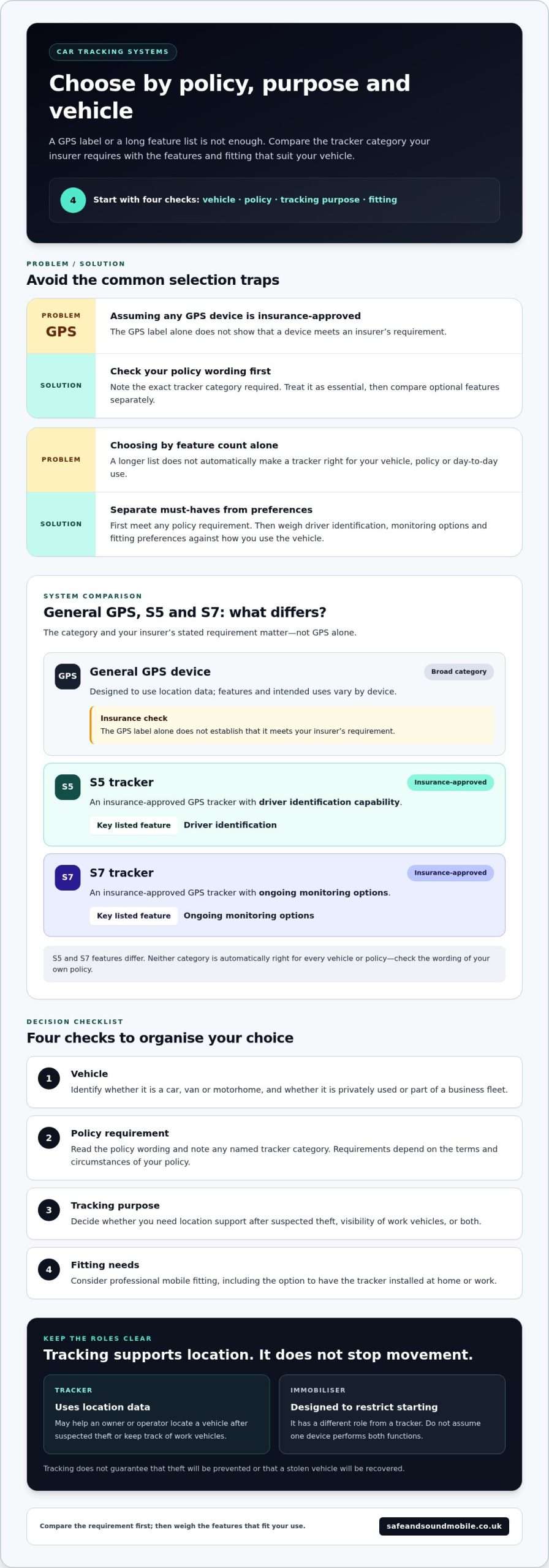
The right car tracking system isn’t necessarily the one with the longest feature list. It’s the one that suits your vehicle, your insurer’s requirements, and your fitting preferences. Car tracking systems range from general GPS devices to insurance-approved options, so it’s worth understanding the differences before choosing.
An insurance-approved tracker is not the same as a general GPS device. Start by checking your policy wording for any required tracker category. This helps you focus on systems that meet the stated requirement instead of relying on a device that may not be suitable for your policy.
This guide compares S5 and S7 trackers with general GPS devices, explains what to consider about monitoring, and helps you match a system to your vehicle and intended use. It also covers professional mobile fitting, including installing a tracker at home or work.
Key Takeaways
- Choose car tracking systems according to the job they need to do, not just their labels or feature lists.
- Compare general GPS devices with S5 and S7 trackers, including S5 driver identification and S7 monitoring options.
- Check your vehicle details and insurance policy wording for any essential tracker requirements before choosing.
- Separate must-haves from preferences, such as monitoring options, driver identification and mobile fitting.
- Prepare for fitting by noting your vehicle details, policy requirements and intended use so the setup can be matched to your needs.
What does a car tracking system do, and who needs one?
A car tracking system uses location data to help track a vehicle. Depending on the system, this information can help an owner or operator locate a vehicle after suspected theft or keep track of vehicles used for work. A tracker can provide location support, but it doesn’t physically stop a vehicle from being moved.
A vehicle tracking system can be used to locate a vehicle or support fleet management. Its practical value depends on who uses the vehicle and what they need the system to do. A private owner may prioritise location support for one car, while a business may need to consider several vehicles.
Vehicle type and use also shape the decision. A car, van or motorhome may have different day-to-day requirements, and business vehicles may be shared by several drivers. Start by identifying the vehicle and how it is used, then decide whether location support after suspected theft, business use or both are relevant.
When might a car tracking system be useful?
If a vehicle is suspected stolen, location information may help its owner or operator understand where it is and provide useful details when reporting the theft. A tracker cannot guarantee that the vehicle will be found or recovered.
- Private owners: A tracker may provide location support if a personal car, van or motorhome is suspected stolen.
- Fleet operators: Tracking can help operators maintain visibility of work vehicles.
- Businesses: A system may help a business keep track of vehicles used by staff, particularly when vehicles are shared or regularly on the road.
These situations have different priorities. A private owner may focus on one vehicle, while fleet operators and businesses may need to consider several vehicles and how they are used.
Tracking systems and other vehicle security measures
A tracker and an immobiliser have different roles in vehicle security. A tracker uses location data to help locate a vehicle. An immobiliser is designed to restrict the vehicle from being started. Tracking alone doesn’t prevent theft, so don’t mistake one function for the other.
Some owners consider location support and a separate theft-prevention measure as part of their security setup. The Ghost Immobiliser guide covers that prevention-focused option. Choose based on the protection role you need, rather than assuming one device handles every security function.
Car tracking systems can support vehicle security, but they don’t guarantee that theft will be prevented or that a stolen vehicle will be recovered. Treat tracking as one element of a considered setup, alongside other measures suited to your vehicle and how you use it.
How car tracking systems differ: GPS devices, S5 and S7
Not every GPS device is an insurance-approved tracker. The key questions are whether a system suits your intended use and meets any requirements in your policy. Safe & Sound Mobile supplies and professionally installs insurance-approved S5 and S7 GPS trackers. Their main differences are outlined below.
| System type | What to know | Insurance consideration |
|---|---|---|
| General GPS device | A broad term for a device designed to use location data. Features and intended uses vary by device. | The GPS label alone doesn’t show that it meets an insurer’s requirement. |
| S5 tracker | An insurance-approved GPS tracker with driver identification capability. | Check whether your policy specifies S5 or another requirement. |
| S7 tracker | An insurance-approved GPS tracker with professional installation and ongoing monitoring options. | Check your policy wording for the category it requires. |
What should buyers understand about S5 and S7 trackers?
Both S5 and S7 trackers are insurance-approved GPS options, but their listed features differ. S5 trackers have driver identification capability. S7 trackers have ongoing monitoring options. These differences can help narrow your choices, but they don’t make one category right for every vehicle or policy.
Use your insurer’s exact wording as your starting point. Requirements depend on an individual policy’s terms and circumstances, so don’t assume one category automatically satisfies every insurer. If your policy names a category, treat it as an essential requirement rather than a preference.
How does a general GPS device compare with an approved tracker?
A general GPS device may be intended for location-related use, but that broad label doesn’t make it equivalent to an S5 or S7 tracker. GPS alone also doesn’t establish insurance approval—both the tracker category and your insurer’s stated requirement matter.
Read your policy wording and note whether it names a particular tracker category. Keep that requirement separate from optional preferences, such as S5 driver identification or S7 monitoring options. This makes it easier to compare car tracking systems on relevant differences rather than choosing by label alone.
Safe & Sound Mobile offers insurance-approved S5 and S7 tracker options, with vehicle-specific advice to help match a setup to your vehicle and requirements.
What to compare before choosing a car tracking system
A useful comparison starts with what the tracker needs to do, not with a long list of features. Separate policy requirements from preferences. A requirement is something your insurer specifies; a preference is a feature or fitting arrangement that suits how you use the vehicle.
Compare four things first: your vehicle, your policy requirement, your tracking purpose and your fitting needs.
Use this checklist to organise your decision:
- Vehicle: Note whether you’re protecting a car, van or motorhome, and whether it’s privately owned or used for work.
- Policy requirement: Find the exact tracker category or wording in your insurance documents.
- Tracking purpose: Decide whether your priority is vehicle security, business use or a combination of needs.
- Fitting: Consider where professional installation makes sense, such as at home or work.
Match the system to the vehicle and policy
Start with the vehicle. A motorhome, work van and privately used car can have different usage patterns, so include the vehicle type and how it’s used when comparing options. Then check your policy wording for any stated tracker category or condition. Policy requirements depend on individual terms and circumstances. Choosing a tracker does not automatically mean an insurer will accept it or change your premium.
Compare monitoring, identification and fitting needs.
Onceyou’vee identified any essential policy requirements, consider which features matter to you. S5 driver identification may be relevant if that capability suits your needs. S7 trackers have ongoing monitoring options, which you can weigh against your intended use. Safe & Sound Mobile provides vehicle-specific advice and professional installation, helping you consider the vehicle and fitting arrangements together.
Private ownership and fleet use can affect which details deserve attention. For a privately owned vehicle, you may focus on the vehicle type, policy requirements and who uses it. Fleet operators and businesses may also need to consider how many vehicles are involved, whether they’re shared, and what location information is useful for day-to-day operations. Let the purpose guide your comparison instead of adding features that don’t address a real need.
Keep the decision practical: mark policy requirements as essential, then compare preferences such as driver identification, monitoring options and fitting location. This gives you a clear basis for comparing car tracking systems without treating every available feature as necessary.
How to prepare for choosing and fitting a car tracker
A little preparation makes choosing a tracker and arranging a fitting easier. Have your vehicle details, relevant policy wording and priorities ready. This gives Safe & Sound Mobile the context to provide vehicle-specific advice and links your tracker choice to your fitting needs.
A simple checklist before arranging installation
Work through these steps in order. Keep essential policy requirements separate from preferences so the decision stays clear.
- Confirm the vehicle. Note its make, model and type, such as a car, van or motorhome. Include how it’s used and whether it’s privately owned or used for work.
- Review the policy. Keep the relevant insurance wording to hand, especially if it states a tracker category. Use the exact wording as a reference rather than relying on a general description of the vehicle.
- Identify your needs. Decide what you want the tracker to support. Consider whether S5 driver identification or S7 monitoring options are relevant to your intended use.
- Arrange fitting. Decide whether installation at home or work suits you, then discuss the vehicle and requirements when arranging professional fitting.
These details turn a broad comparison into a practical discussion. The make and model put the vehicle into context, while the policy wording highlights any category requirement. Your intended use helps distinguish essential needs from optional preferences. You don’t need to have every technical detail decided before discussing your options.
What mobile fitting means for the customer
Safe & Sound Mobile provides professional mobile tracker installation nationwide at home or work. You can arrange fitting at a suitable location instead of taking the vehicle to a fixed fitting site. Share your vehicle details, policy requirements, and any preferences for driver identification or monitoring options so we can focus on a setup that suits you.
Professional fitting is part of the installation process. Discuss your vehicle and requirements when arranging installation so the fitting can be planned around your setup. Bringing the relevant information together clarifies what you’re choosing and where the fitting will take place.
Once you’ve gathered those details, arrange the next step with professional mobile tracker fitting. A clear brief helps match the tracker choice and installation arrangements to your vehicle, policy wording and intended use.
Choose Safe & Sound Mobile for car tracking systems fitted around you
The right setup starts with four practical details: the vehicle you want to protect, the tracker category stated in your policy, the purpose of tracking and where you’d prefer fitting to take place. Keeping these in view makes it easier to compare options and distinguish preferences from insurance requirements.
Safe & Sound Mobile supplies and professionally installs insurance-approved S5 and S7 GPS trackers for cars, vans and motorhomes. Vehicle-specific advice helps you consider a tracker alongside your vehicle and requirements, rather than choosing on a category name alone. If your policy states a tracker category, use its exact wording as part of your decision.
What Safe & Sound Mobile brings to tracker installation
Professional mobile fitting is available nationwide at home or work. This gives you a practical fitting option once you’ve considered your vehicle, policy wording and intended use. S5 trackers include driver identification, while S7 trackers offer ongoing monitoring options. These are distinct features to weigh against your needs, not a substitute for checking your policy’s stated requirement.
Tracker products include a Lifetime Warranty on Trackers. This applies to tracker products only, not to other services or vehicle equipment. Safe & Sound Mobile also offers 0 % Finance Available.
Take the next step with a suitable tracker.
Before deciding, gather the details that matter: your vehicle type, any relevant insurance wording, your tracking purpose, and your preferred fitting location. This gives you a clear starting point for comparing S5 and S7 options and discussing a setup suited to your circumstances. Policy terms vary, so a tracker category should not be treated as a guarantee of insurance acceptance or a premium reduction.
For more background, revisit the vehicle tracking guide’s explanation of how location-based systems are used. Then compare Safe & Sound Mobile’s insurance-approved tracker options with your policy requirements and fitting preferences.
Explore the S5 and S7 tracker options, then take the next step towards professional mobile fitting.
Make yourtracker. choice work for the long term. Choosing a car tracking system is a practical decision, not just a matter of comparing feature lists. If your vehicle or how you use it changes, review whether the setup still meets your needs. Keeping a note of the tracker you chose and why can make future reviews clearer.
Before moving ahead, bring together the details you’ve considered and decide what matters most. A focused comparison helps you prioritise features that support your intended use. Safe & Sound Mobile can provide vehicle-specific advice as you compare suitable options.
Explore tracker options and plan your next step. Choose a setup that fits your vehicle, policy requirements and intended use.
Frequently Asked Questions
Is a GPS car tracker the same as an insurance-approved tracker?
Not automatically. “GPS” describes location technology; by itself, it doesn’t show that a specific device meets an insurer’s requirement. Before buying, note the category or exact wording in your policy and compare it with the tracker information. If the requirement is unclear, ask your insurer to clarify it in writing. Keep the response with your policy documents so you can refer to it when choosing a tracker.
Can a car tracking system stop someone stealing my vehicle?
No tracker can guarantee that theft will be prevented. A tracker provides location support, while an immobiliser is a separate security measure designed to prevent the engine from starting. Consider what each measure is designed to do rather than relying on one device to cover every risk. This helps you build a considered security plan while recognising that no system can guarantee a specific outcome after a theft.
Will installing a car tracker lower my insurance premium?
A lower premiumisn’tt automatic. An insurer may require a tracker as a condition of cover, while any discount depends on that insurer’s terms and your individual policy. Don’t budget on an assumed saving. Ask your insurer whether fitting a tracker affects the premium for your specific vehicle, and keep their response with your insurance records before you decide to buy.
Do car tracking systems need ongoing monitoring?
Monitoring arrangements vary, so understand what applies to the system you’re considering. S7 trackers have ongoing monitoring options. If monitoring matters to your intended use, compare it separately rather than assuming it’s the same across every tracker. Consider whether the available arrangement suits how you plan to use the vehicle.
Can a car tracker be fitted at home or work in the UK?
Yes. Safe & Sound Mobile provides professional mobile fitting at home or work across the UK for cars, vans and motorhomes. This suits owners who prefer to keep the vehicle at a chosen location during installation. When arranging a fitting, provide your preferred location and vehicle type so we can plan the practical arrangements.
Is a car tracker useful for a business fleet?
It can be useful for a business considering vehicle security or location information across its fleet. Before choosing, define the business purpose and decide which vehicles are in scope. For vehicles used by employees, consider how staff will be informed and how location information will be handled under UK data protection requirements. Safe & Sound Mobile serves fleet operators and businesses.
Does a tracker warranty cover other vehicle security products?
No. Safe & Sound Mobile’s Lifetime Warranty on Trackers applies to tracker products only. If you’re comparing a tracker with other vehicle security equipment, review each item’s product-specific terms rather than assuming the tracker warranty applies across the range. This helps you understand what applies to each product without assuming warranty terms for other products.


About author
Related posts

A dash cam’s recording time depends on its memory card and video quality. For a single-camera setup, a 32GB card stores around 2 to 4... Continue reading
A dash cam can keep recording when your car is off, but only if it has a suitable power source and parking mode. A hardwired... Continue reading

Does a gps tracking dash cam let you find your car if it’s stolen? Not by itself. GPS can add location and journey context to... Continue reading
Could choosing the wrong tracker category leave your insurer’s requirement unmet? The right thatcham approved tracker installation uk starts with the... Continue reading

Real-Time GPS Tracking Chelmsford: Cars, Vans and Fleets Real-time GPS tracking can help vehicle owners and businesses in Chelmsford view location information through a supported... Continue reading