
No products in the cart.

Car Amplifier Cutting Out? 7 Common Causes and Safe Checks
Car Amplifier Cutting Out? 7 Common Causes and Safe Checks
A car amplifier cutting out usually points to overheating, a power supply problem, an unsuitable speaker load or a fault elsewhere in the audio system. It does not automatically mean the amplifier needs replacing. Start by noting when the sound stops, what the amplifier’s indicator shows and whether the head unit stays on.
This guide explains seven areas worth checking, the observations you can make safely and the work best left to an installer. Always use the instructions for your exact amplifier and vehicle. There is no single voltage, cable size or protection-light meaning that applies to every installation.
Car amplifier cutting out: start with the symptoms
Park safely before inspecting the system. Keep the volume low and avoid repeatedly provoking the fault with loud bass. If you notice smoke, a burning smell, melted insulation or an unusually hot fuse holder, stop using the audio system and arrange professional inspection.
To investigate a car amplifier cutting out, a short record is useful: does the sound disappear immediately, after a long journey, over bumps or only above a certain volume? Does every speaker stop, or just the subwoofer? Note any warning light without reaching behind trim or touching exposed terminals.
| What you notice | What an installer may investigate |
|---|---|
| Sound stops after extended listening | Ventilation, thermal protection and speaker load |
| Cut-outs on bass peaks | Power delivery, gain settings and load compatibility |
| Interruption over bumps | Loose connections, damaged cables or mounting |
| Only one speaker stops | Speaker, channel, connector or signal-path fault |
| Amplifier appears on but is silent | Source settings, muting, input signal and protection status |
1. Overheating and restricted airflow
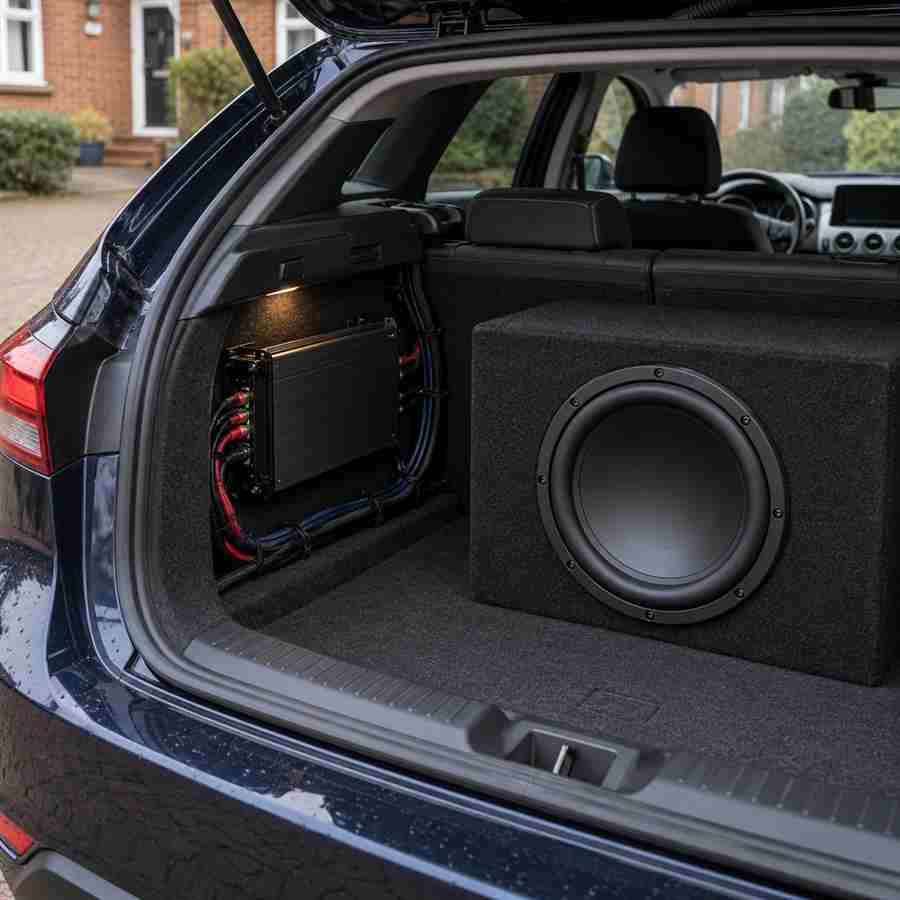
Overheating is one possible reason for a car amplifier cutting out. An amplifier produces heat during operation. If luggage, carpet or trim blocks its cooling surfaces, heat can build up. Some amplifiers reduce output or shut down when their protection circuitry detects excessive temperature; the exact behaviour depends on the model.
With the system switched off, look for belongings covering the amplifier or its vents. Move loose items away if you can do so without disturbing wiring. Do not touch a hot casing to judge its temperature, remove the cover or add a fan as a substitute for diagnosis.
A unit that works again after cooling may have a thermal problem, but that pattern alone does not prove the cause. Excessive load, unsuitable settings or an internal fault can also generate heat. Ask an installer to check the whole system if the problem returns.

2. Power supply and earth connections
A car amplifier cutting out on bass peaks needs its supply checked. The amplifier needs an appropriate power supply and a sound earth connection. A loose terminal, damaged cable or deteriorated fuse holder can interrupt that supply. Problems may become more noticeable when the system demands more current.
Limit your own inspection to accessible, insulated parts with the system off. Look for visible damage and note it for the installer. Do not tighten live terminals, probe cramped connections or run temporary cables through the cabin.
A technician can compare measurements at the battery and amplifier under suitable test conditions. Charging behaviour varies, particularly on vehicles with smart charging systems, so a generic internet voltage range should not be treated as a pass-or-fail test. Cable selection also depends on current demand, length, material and installation conditions.
3. A fuse or fuse-holder fault
A car amplifier cutting out alongside repeated fuse failures needs professional investigation. It may indicate a wiring short, an equipment fault or another installation issue. Repeatedly replacing it without establishing the cause can leave the underlying problem unresolved.
Never bridge a fuse or substitute a higher rating to keep the music playing. Follow the manufacturer’s specified type and rating. If a replacement blows again, leave the system off and arrange inspection.
Do not assume an intact-looking fuse proves the supply is healthy. Its holder and connections also matter. An installer can check these safely and confirm that the power cable has appropriate protection.
4. Speaker impedance or damaged wiring
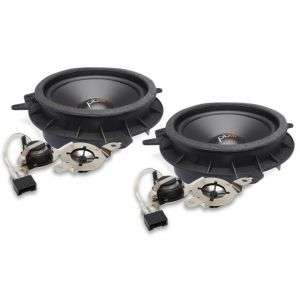
Impedance is the electrical load a speaker presents to the amplifier, expressed in ohms. The connected load must suit the amplifier’s specification. Wiring several speakers or dual voice coils differently can change that load.
Bridged operation can have a different minimum permitted load from ordinary stereo operation. Check the exact model manual rather than assuming a speaker combination will work because the connectors fit.
Damaged speaker cables or loose strands at terminals can also cause faults. Switching off before any wiring change is essential. Speaker isolation tests, resistance measurements and rewiring are best handled by someone who understands the amplifier and the vehicle. A multimeter reading alone does not establish that a speaker is healthy under all operating conditions.
If replacement equipment is needed, compare compatible car speakers with the intended amplifier before ordering.
5. Gain, bass boost and system settings
Gain matches the amplifier’s input sensitivity to the source signal; it is not simply an extra volume control. Unsuitable settings can produce distortion and encourage the system to operate beyond its clean output capability.
If the fault appears only at high volume, reduce the listening level and avoid heavy bass boost. That is a useful observation for diagnosis, not confirmation that the installation is safe or correctly configured.
Ask an installer to review gain, crossovers, equalisation and the source output together. A larger amplifier is not automatically the answer. Matching the equipment and setting it up properly matters more than chasing the largest advertised wattage.
6. Source, signal and turn-on problems
With a car amplifier cutting out intermittently, check whether the power stays on. Sometimes the amplifier remains powered while the audio signal disappears. Check ordinary controls first: mute, balance, fader, subwoofer output and the selected source. Try another familiar source at a modest volume while parked.
If only Bluetooth playback stops, investigate the phone connection before blaming the amplifier. If radio and other sources also fail, record whether the head unit resets or displays a message.
Aftermarket installations may use a remote turn-on connection, signal sensing or an interface to the original system. The correct arrangement depends on the equipment. Do not join wires based on colour alone or bypass an interface to test a theory.
7. An internal amplifier fault
An internal fault remains possible after the supply, load, settings and signal path have been checked. Protection circuitry helps limit damage in some conditions, but it does not guarantee that every component is protected.
Do not open the amplifier or attempt board repairs. Check warranty arrangements and ask whether the unit needs manufacturer assessment. When replacement is appropriate, browse car amplifiers with advice on compatibility and installation.
A safe checklist before booking an installer
- Record the amplifier and head-unit model numbers.
- Note when the fault occurs and which speakers stop.
- Photograph any visible indicator message while parked.
- Remove loose belongings blocking accessible ventilation.
- List recent audio, battery or vehicle electrical work.
- Stop using the system if there are signs of heat damage or repeated fuse failure.
Manufacturer instructions are the right reference for model-specific wiring and protection behaviour. The official Kenwood KAC-959 amplifier manual, for example, explains that model’s installation precautions. It is a manufacturer source rather than a competing retailer; use your own model’s manual for its actual requirements.
How to describe a car amplifier cutting out accurately
The words you use when booking help can narrow the investigation. “No sound” might describe a disconnected source, a muted head unit or an amplifier that has lost power. “It cuts out” could mean a brief interruption, a full restart or a shutdown that lasts until the next journey. Tell the installer which of those happens rather than trying to name the failed part.
Record the conditions you already noticed during normal use. Include the source, approximate listening level, time before the interruption and whether the vehicle was parked or travelling. Do not drive around trying to reproduce an electrical fault. If another person can safely note an indicator while the vehicle is stationary, that information may be helpful.
For a car amplifier cutting out only occasionally, a brief video of the display or indicator can be more useful than a long description. Take it while parked, without removing covers. Avoid including personal information from a paired phone or navigation screen. The purpose is to show the symptom, not to record a live electrical test.
Distinguish complete shutdown from loss of one channel
If all amplified speakers stop together, the installer may look for something shared by those channels. If the door speakers continue but the subwoofer stops, the subwoofer signal path and its separate amplifier deserve attention. Neither observation proves a particular component is faulty. It simply helps the technician plan an orderly test.
Also distinguish loss of bass from total silence. An equaliser setting, source recording or crossover setting can change how much bass you hear without an electrical shutdown. Compare familiar music at a comfortable level before deciding that the sound has changed. Stop if distortion becomes obvious.
What professional diagnosis should establish
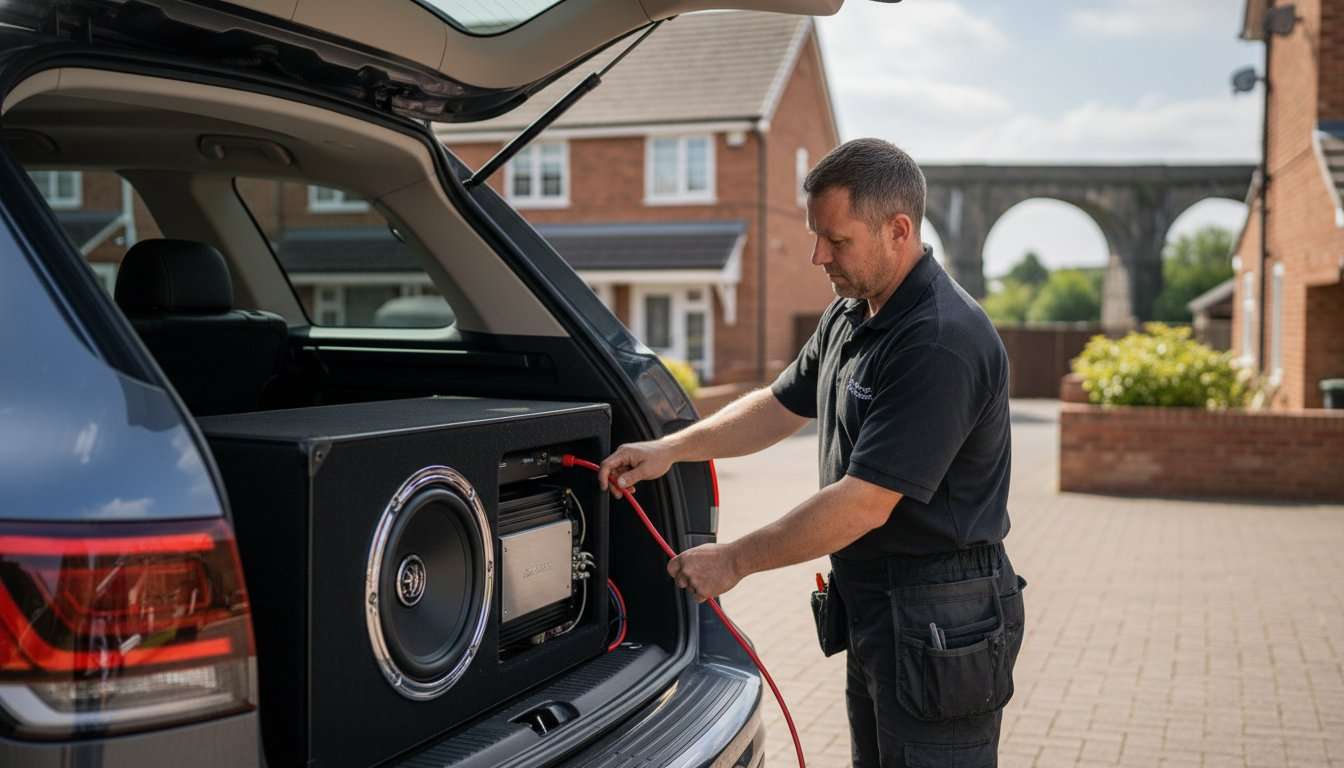
Before authorising replacement equipment, ask for an explanation of the suspected cause and the tests supporting it. A useful diagnosis connects the symptom to a measured or observed fault. It should also explain any uncertainty, especially where an intermittent problem did not appear during the appointment.
For a car amplifier cutting out under load, an installer may need access to the power connections, fuse holder, earth, speaker wiring and audio inputs. Agree any trim removal and associated labour in advance. Some vehicles need specific procedures around batteries, airbags and electronic modules, making a careful installation approach essential.
The technician should check the system against the equipment instructions and vehicle requirements. That includes the permitted speaker load, wiring arrangement, mounting and protection. A test that shows an amplifier playing on a workbench does not by itself prove the complete vehicle installation is healthy.
Agree the repair before parts are ordered
Ask whether the proposed work addresses the cause or simply replaces a component that may have been affected. Where heat damage is present, replacing only the visibly damaged connector may leave an unsuitable cable route or loose connection unresolved. The repair plan should account for the installation as a whole.
Request a written quotation describing parts, labour and any investigation still required. Ask what happens if the fault cannot be reproduced and whether additional testing needs a separate appointment. Clear expectations are useful for both the customer and installer, particularly where the amplifier may need specialist assessment.
Repair or replace: choosing a sensible next step
A car amplifier cutting out does not automatically justify a complete audio upgrade. If testing identifies a repairable installation issue and the equipment remains suitable, correcting the fault may be enough. If the amplifier itself is faulty, compare repair availability, warranty arrangements and replacement compatibility before choosing.
Tell the installer what you actually want from the system: clearer speech, balanced music at everyday volumes or stronger bass without losing boot space. A replacement selected around those needs is more useful than one chosen solely for a headline power figure. Consider how the vehicle is used and whether seats or luggage regularly obstruct the current location.
Check how the proposed equipment integrates with the existing head unit, factory amplifier or signal processor. Retaining steering-wheel controls and other vehicle functions may require suitable interfaces. Compatibility needs confirmation for the exact vehicle and equipment; a general description such as “fits most cars” is not enough to settle it.
Keep useful installation records
Retain the equipment model details, invoice and any installation notes supplied. If settings are adjusted professionally, ask which controls you should leave unchanged and how to operate the ordinary user controls. This makes later troubleshooting easier and avoids accidentally undoing the setup.
Tell a future installer about previous modifications, including additional amplifiers or a changed head unit. You do not need to understand the whole wiring arrangement yourself. An accurate account of what was changed and when is more valuable than guessing which wire or component is responsible.
After the repair: check normal operation
Ask the installer to demonstrate the repaired system at sensible listening levels before the handover is complete. Try the sources you use most often and confirm that balance, fader and subwoofer controls behave as expected. If the original symptom only appeared after extended use, agree how you should report a recurrence.
Keep the amplifier’s accessible ventilation area clear. Avoid storing loose metal items near equipment or exposed connections, and make sure luggage cannot pull on cables. Do not alter the mounting or drill new holes yourself to create space. A secure installation needs to consider what lies behind the trim as well as what is visible.
If you notice the car amplifier cutting out again, stop repeated testing and contact the installer with the new observations. Explain whether the symptom is identical or has changed. A different fault pattern may need a different investigation, and a clear record helps avoid replacing the same part unnecessarily.
Finally, listen at a level that lets you remain aware of your surroundings. Resolve distracting controls and source changes while parked. A reliable audio system should be straightforward to use during ordinary driving, with equipment and wiring secured away from passengers, controls and moving seat mechanisms.
Frequently asked questions
Why does my amplifier stop on bass notes?
Power delivery, speaker load or settings may be involved. Reduce the volume and arrange diagnosis if it repeats.
Does protection mode mean the amplifier is broken?
No. It indicates a condition the amplifier is responding to. The manual and proper testing help identify why.
Can I fit a larger fuse?
Do not increase the rating to stop a fault. Use the specified fuse and investigate repeated failures.
Will a capacitor solve the problem?
It is not a universal repair for overheating, damaged wiring or an unsuitable speaker load. Establish the cause first.
Should I replace my subwoofer?
Only after diagnosis shows it is faulty or incompatible. A cut-out alone does not establish that.
Can Safe & Sound Mobile help with an upgrade?
Safe & Sound Mobile supplies and installs car audio with nationwide mobile fitting. Share your vehicle and equipment details so the team can advise on suitable work.
Questions to ask before your appointment
When you report a car amplifier cutting out, check whether the appointment covers diagnosis of existing equipment or installation of new products. Send model numbers and clear photographs of accessible equipment if requested. Ask whether the vehicle needs to be at a workshop or whether the proposed checks can be completed at your location.
Explain any access restrictions, such as equipment behind a fitted boot floor or beneath a seat. Do not dismantle those areas in preparation unless the installer specifically advises it. Leave enough time for a proper investigation and agree how any additional work will be authorised.
Get reliable sound back
A car amplifier cutting out needs a clear diagnosis before replacement parts. Start with safe observations, avoid repeated high-volume testing and leave electrical changes to a competent installer. Contact Safe & Sound Mobile for car audio advice and discuss your vehicle, symptoms and installation options.


About author
Related posts
Car Subwoofers: 7 Essential Checks for Better Bass Car subwoofers reproduce the lower bass notes that ordinary vehicle speakers can struggle to deliver. A well-matched... Continue reading

Vauxhall vehicle security should match your car, your insurance policy and your daily routine. Safe and Sound Mobile helps UK owners compare immobilisers, monitored trackers,... Continue reading

Skoda vehicle security works best when protection is chosen for your exact car and the way you use it. Whether you drive an Octavia estate,... Continue reading
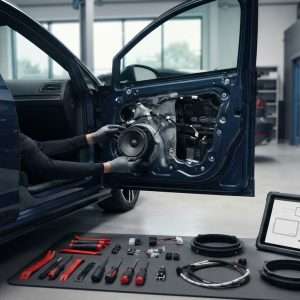
“Direct fit” doesn’t mean “fits every Ford”. If you’re searching for Powebass Ford Oem Direct Fit speakers, match the product to your exact vehicle,... Continue reading
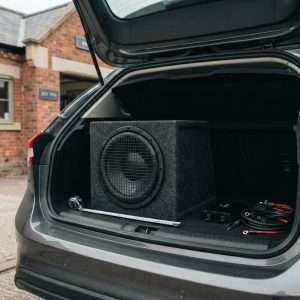
Will a Powerbass loaded enclosure fit your car and work with the stereo and amplifier you already have? A box can look right but take... Continue reading