
No products in the cart.
Van Security: 7 Essential Checks for Better Protection
Van Security: 7 Essential Checks for Better Protection
Van security needs to protect two things: the vehicle itself and what you carry inside it. A tracker may help locate a stolen van, but it does not physically secure a load door. An extra lock may protect an access point without preventing the vehicle being driven away. Start with these separate risks before choosing equipment.
This UK guide covers seven practical van security checks for tradespeople, delivery drivers and small businesses. The aim is a workable combination of habits, physical protection and suitable electronic security. No device guarantees that theft will not happen, and insurer requirements need checking for your own policy.
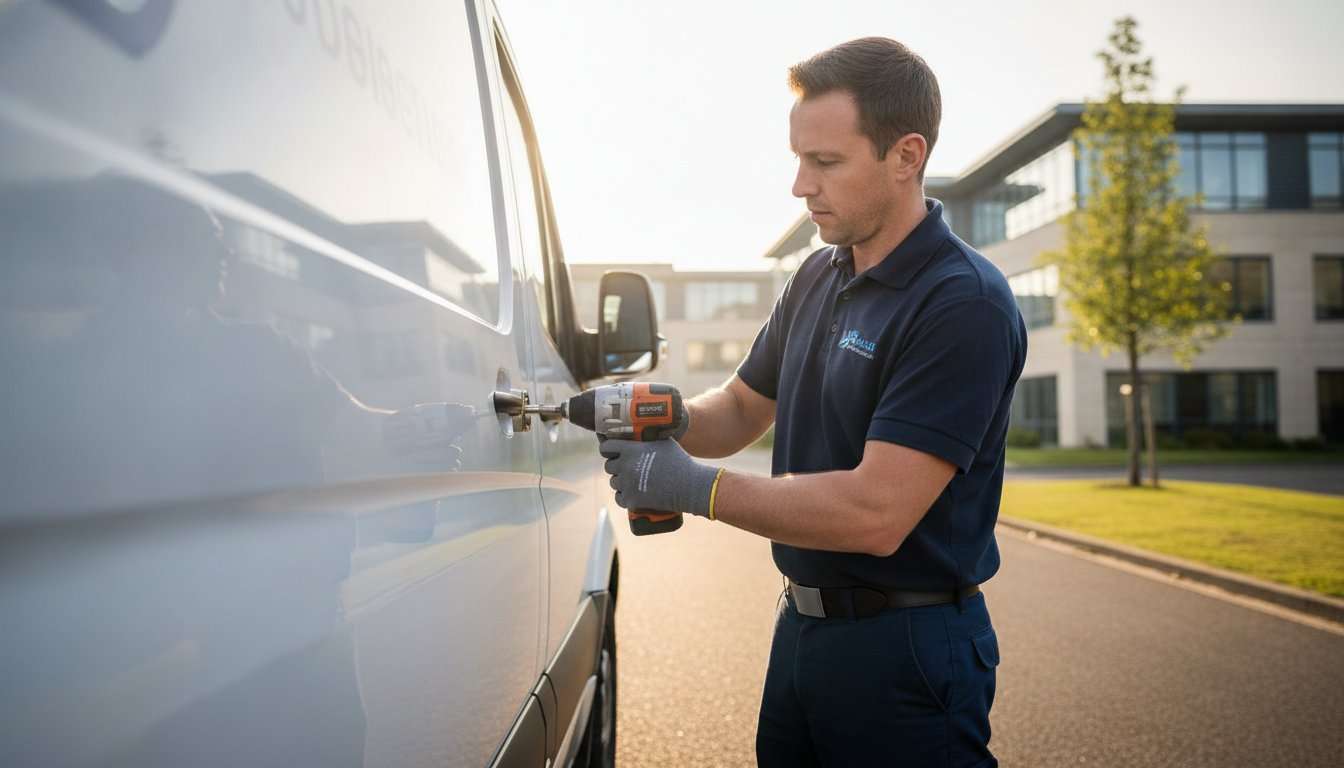
1. Build a van security plan around your working day
Think about where the van spends time and when you leave it unattended. Overnight parking, short delivery stops and an open worksite create different situations. Note which doors you use most, whether other staff have access and how often equipment stays inside after work.
Make a simple inventory of what you carry, including serial numbers and photographs of valuable tools. Store a copy away from the van. This does not prevent a break-in, but it makes reporting a loss and identifying property more straightforward.
Prioritise the consequences as well as the replacement value. Losing a specialist tool, stock or vehicle keys may interrupt several jobs. Decide what can be removed at the end of the day and what must remain secured. A routine that staff can follow consistently is more useful than an elaborate plan that is ignored.
Van security should suit the actual vehicle. Give the installer its make, model, year, door layout and existing equipment. A recommendation for another van with similar branding may not account for a different lock arrangement or factory electrical system.
2. Check locking and parking habits first
Close windows and lock every door when leaving the vehicle, including brief stops. Check that the locking action has worked rather than relying only on pressing a remote. Keep keys under your control and avoid leaving a spare inside the cab.
Choose well-lit parking where practical, consider what can be seen through the windows and keep valuables out of view. These routine steps support other van security measures. A warning sticker should never be treated as evidence that the van or its contents are protected.
The official Police.uk delivery-vehicle security advice is a neutral source for driver and operator precautions. It highlights locking, visibility and practical safety during delivery work.
If the vehicle has keyless entry, ask the manufacturer about the correct way to protect and store its keys. Check any signal-blocking storage with the actual keys and vehicle. Different keys and systems behave differently, so do not assume a pouch works indefinitely without checking it.
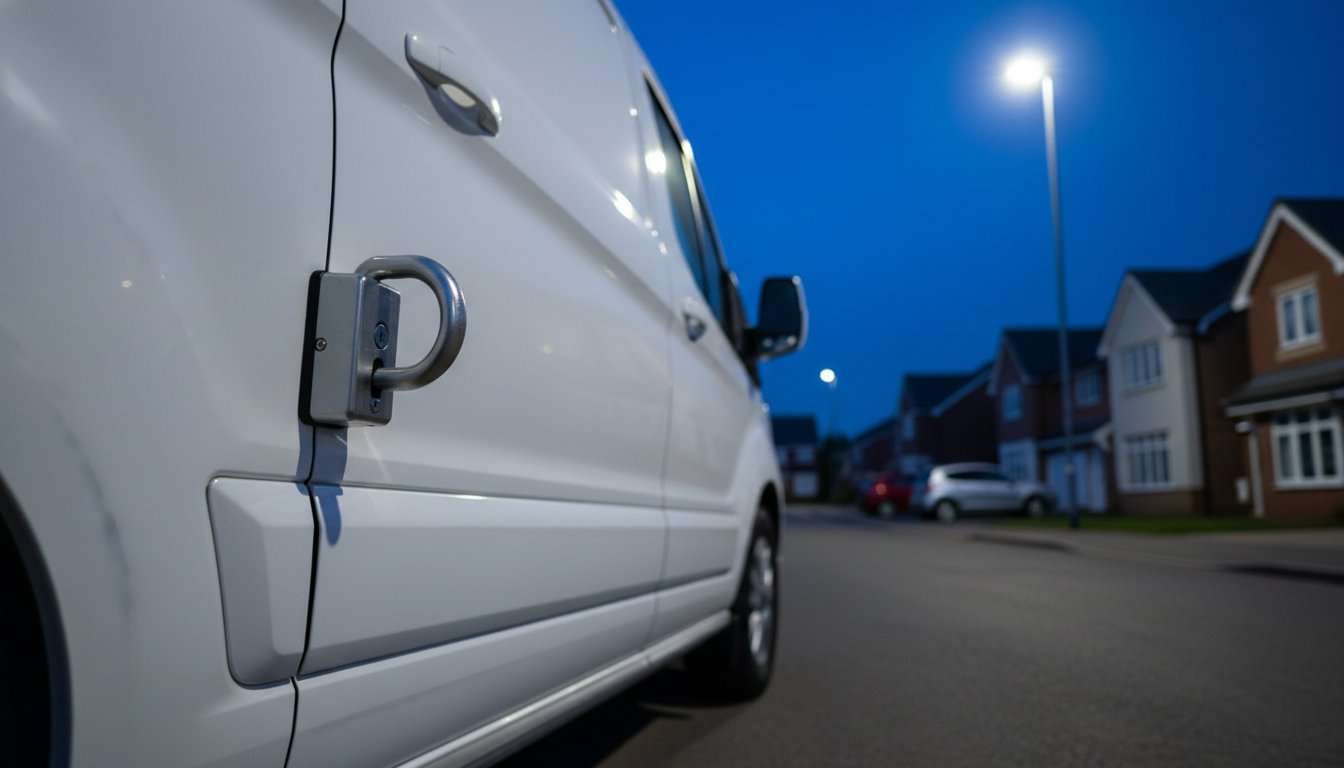
3. Match physical van security to the doors and cargo
Additional door protection needs to match the way you work. A lock that needs a separate manual action may suit overnight security but require a reliable routine during busy deliveries. An automatic locking arrangement may offer convenience while creating a risk of locking yourself out if key management is poor.
Ask a specialist to explain the actual lock type, compatible doors and operating procedure. Confirm what happens if a key is lost, a door is damaged or the mechanism becomes difficult to use. Do not assume that a general product description covers every van body style.
Cargo protection deserves its own discussion. A suitable fixed storage solution can add a further barrier for equipment, but installation, access and vehicle payload still matter. Do not block exits, obstruct controls or compromise the safe restraint of tools and materials.
Visible physical protection can form part of van security, alongside suitable parking and locking habits. Ask about fit, storage and daily use before choosing a steering-wheel lock or similar device. It must be removed and stowed safely before driving.
4. Understand what an alarm or immobiliser adds
An alarm responds to specified triggers, which may include doors or other sensors on a particular installation. An immobiliser controls authorised starting or another defined vehicle function. They do different jobs, and the exact model determines the features available.
When reviewing van security, explain whether your priority is unauthorised access, drive-away theft or both. Ask which factory systems are already fitted and how any additional equipment will interact with them. Avoid buying from a broad claim that one product prevents all methods of theft.
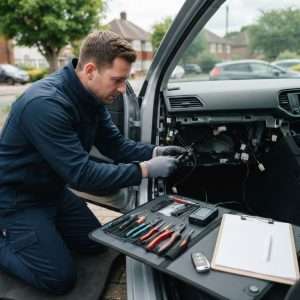
Compare Safe & Sound Mobile’s vehicle immobiliser options with the van’s compatibility confirmed. For an alarm installation, discuss actual sensor coverage, operating instructions and arrangements for servicing or authorised drivers.
At handover, have every regular driver shown the normal authorisation procedure. Ask how to handle a lost tag, forgotten code or workshop visit through the provider’s approved process. Keep sensitive authorisation details secure and do not publish them with installation photographs.
5. Choose van security tracking for the right purpose
A tracker can provide location information, with some systems supported by a monitored stolen-vehicle service. A fleet reporting product, owner app and insurer-required security tracker are not automatically interchangeable. Establish the purpose before comparing specifications.
Look through the van tracker range with your requirements in writing. Ask about monitoring, reporting intervals, alert handling, communication coverage and what happens when a signal is unavailable. A displayed position may be the last known location rather than a current fix.
For insurance-led van security, obtain the exact category or named-model requirement from the insurer. Check the specific product and required service rather than assuming that every tracker is accepted. Keep the certificate and activation confirmation if these are supplied or required.
Do not infer immobilisation from a tracking label. If a package offers it, ask the installer to explain the supported function and operating safeguards. A tracker does not physically protect tools, and fitting one does not guarantee recovery or a premium reduction.
6. Compare the complete cost and maintenance needs
Ask for a written van security quotation separating hardware, installation and recurring services. Monitoring, connectivity and optional functions may have separate terms. Confirm what is included rather than relying on a headline fitted price.
Discuss the vehicle’s usage pattern, especially if it is parked for long periods. Power consumption and backup arrangements are product-specific. Ask the fitter what to do before battery replacement, electrical repairs or extended storage rather than experimenting with security wiring yourself.
Check physical locks according to their manufacturer’s maintenance instructions. Report stiffness, damage or inconsistent operation before a mechanism becomes unusable. Keep spare keys secure and maintain a record of who holds them.
Review electronic van security after relevant repairs or ownership changes. Confirm account access, contact numbers and subscription status. If an active service is an insurance condition, speak to the insurer before allowing it to lapse.
| Measure | Main role | Check before buying |
|---|---|---|
| Additional door protection | Protect a specified access point | Compatibility and daily locking routine |
| Alarm | Warn about supported triggers | Actual sensors and driver instructions |
| Immobiliser | Control authorised vehicle operation | Model compatibility and recovery procedure |
| Tracker | Provide location and supported service | Monitoring, coverage and insurer acceptance |

7. Make van security manageable for the whole team
Write a short end-of-day routine that covers locking, keys, removable valuables and any required system checks. Assign responsibility for renewals and contact-detail updates. With shared vehicles, assumptions about who checked the van can leave simple gaps.
For businesses using location reporting, discuss appropriate access and staff information before deployment. Limit portal accounts to people who need them and avoid shared passwords. Tracking information should have a defined operational purpose and suitable handling arrangements.
Keep the theft-reporting process accessible outside the vehicle. If an incident occurs, prioritise personal safety and contact the police through the appropriate channel. Notify the monitoring provider and insurer as applicable, preserve relevant records and do not attempt to confront suspects or recover a vehicle yourself.
A practical pre-installation checklist
- List the vehicle details, door layout and existing security.
- Identify risks to the van separately from risks to its contents.
- Get insurer requirements and product acceptance confirmed.
- Agree fitting, activation, recurring costs and handover documents.
- Train every regular driver in normal operation.
- Set reminders for renewals and review contact information.
Frequently asked questions about van security
Will a tracker protect the tools inside my van?
It does not physically prevent access to tools. Tracking serves a different role from locks or secure storage. Consider cargo protection separately when planning the installation.
Does every van need the same security package?
No. The vehicle, working pattern, parking, cargo and insurance conditions affect the choice. A delivery van used for frequent stops may need a different operating routine from a vehicle mainly parked overnight.
Will better van security reduce my insurance premium?
A reduction is not guaranteed. Ask the insurer how a specific installation affects your quotation and policy conditions before buying equipment for a hoped-for saving.
Can an immobiliser replace an alarm?
They serve different purposes. An immobiliser is not automatically an audible warning system, and an alarm does not necessarily include the authorisation control you want. Check the selected model.
Should I remove tools every night?
Removing valuable equipment where practical reduces what is left at risk inside the van. Consider safe storage, the work involved and the wording of any tools or goods cover.
What should I ask at handover?
Request a demonstration, operating instructions, relevant documents, activation confirmation and contact details for support. Make sure all regular drivers understand the procedures and that records are stored securely.
Conclusion: make van security part of the working routine
Effective van security combines suitable physical protection, correctly specified electronic equipment and habits that are followed at every stop. Choose measures around the vehicle and its contents, then confirm the insurer’s position and the full running costs.
Discuss your van security requirements with Safe & Sound Mobile. Provide the van details, your working pattern and any insurer wording so the team can help you plan suitable protection and installation.

About author
Related posts

Car Immobiliser Fitting Shenfield: Options and Preparation Immobiliser fitting in Shenfield should start with the vehicle and the purpose of the installation. An additional immobiliser... Continue reading
Ghost Immobiliser 3: How Ghost III Works and UK Fitting Ghost Immobiliser 3 is a common way of searching for Autowatch Ghost III, a digital... Continue reading

Car Alarms: 7 Essential Checks for Better UK Vehicle Security Car alarms can detect certain signs of interference and sound a warning, but the right... Continue reading

Features, Costs and Fitting in 2026 A vehicle key no longer guarantees that only you can drive your car. Relay devices, cloned fobs, and OBD... Continue reading
The tracker category matters as much as the fitting. For thatcham tracker installation uk, start with your insurer’s stated requirement. An S5... Continue reading