
No products in the cart.
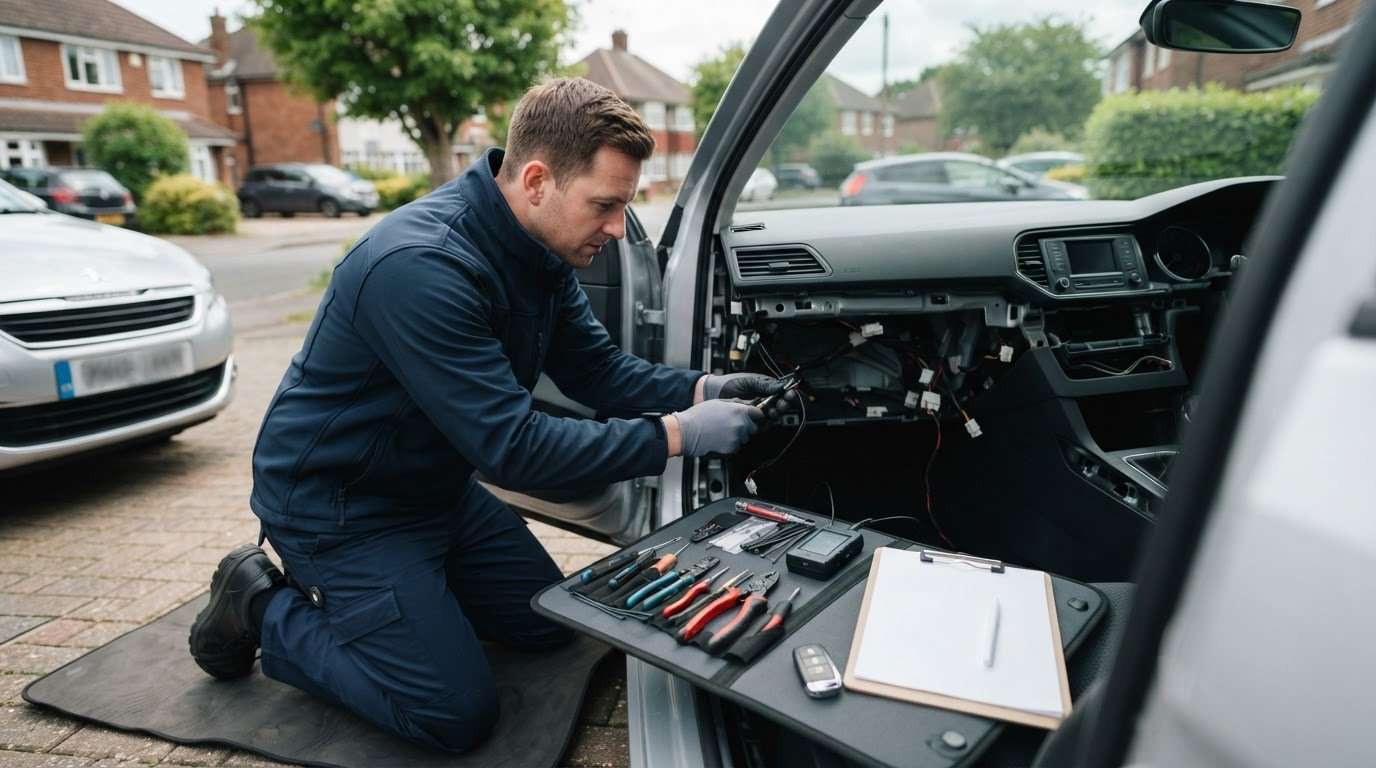
Thatcham Tracker Installation UK: Prep and Process
Prep and Process
The tracker category matters as much as the fitting. For thatcham tracker installation UK, start with your insurer’s stated requirement. An S5 tracker may not meet a policy that specifies S7, or vice versa.
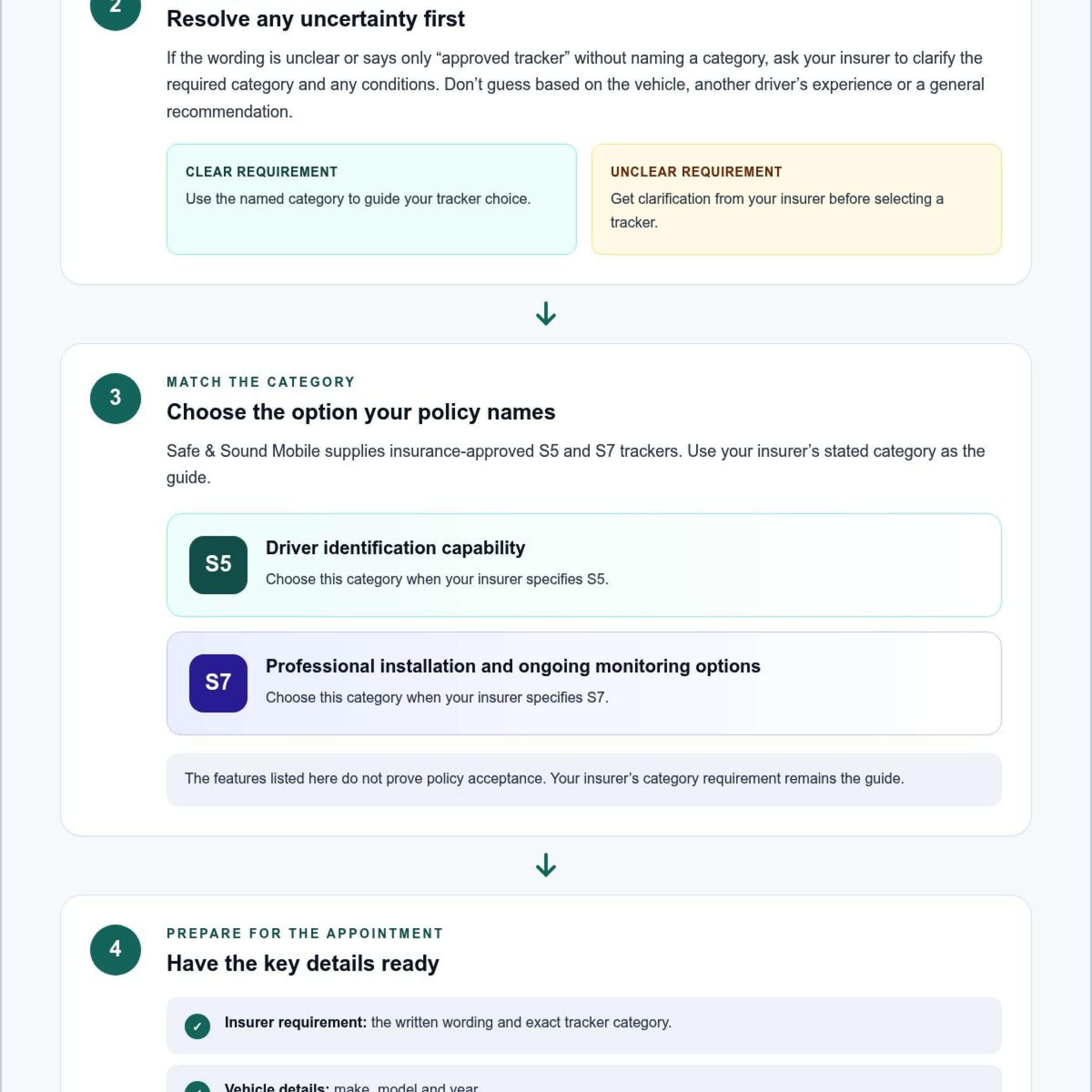
Before arranging a fit, check your policy wording or your insurer’s communication. S5 trackers include driver identification, while S7 trackers offer professional installation and ongoing monitoring. Your insurer determines which category is required for your vehicle and policy.
This guide explains how to identify the right category, what professional installation involves and how to prepare for the appointment. Safe & Sound Mobile supplies and fits insurance-approved S5 and S7 trackers for cars, vans and motorhomes, with mobile fitting at home or work across the UK. You’ll also find practical steps to organise the fitting and follow up with your insurer.
Key Takeaways
- Use your insurer’s written tracker requirement to identify whether your vehicle needs an S5 or S7 category.
- Safe and Sound Mobile provides professional mobile fitting for cars, vans and motorhomes at home or work.
- Have the insurer’s tracker requirement and your vehicle details ready when arranging the fitting.
- Understand the main steps in Thatcham tracker installation UK, from confirming the required category to arranging professional installation.
- Follow your insurer’s instructions to report the installation and provide any requested details.
Thatcham Tracker Installation UK: Start With Your Insurer’s Requirements
A Thatcham tracker installation is the professional fitting of an insurance-approved vehicle tracker in the category required for your vehicle and policy. The category describes the tracker’s classification; installation is the fitting appointment. They’re related, but they’re not the same thing.
Read your insurer’s wording before choosing a tracker. Requirements vary by policy and vehicle, so no single category applies to everyone. If your policy specifies S5 or S7, use that category to guide your product choice. Assuming one category will meet every requirement could leave you with a tracker that doesn’t match your policy.
What does a Thatcham tracker request from an insurer mean?
Thatcham Research is the UK’s independent automotive security research centre, funded by the insurance industry. Its vehicle security classifications give insurers a recognised way to describe the tracker category they require. Your insurer may state the category in your policy documents, an endorsement or other written communication about your cover.
Read the exact wording rather than relying on a general reference to an “approved tracker”. Note the requested category and any policy-specific conditions, including what information or evidence your insurer expects after fitting. Keep the wording accessible when arranging your Thatchem tracker installation in the UK so the category and any additional requirements are clear from the outset.
What should you check before arranging tracker installation?
Gather the key information before arranging the fitting. This gives the discussion a clear starting point and helps keep the tracker choice aligned with your insurer’s instructions.
- Find the insurer’s written tracker requirement and note the exact category, such as S5 or S7.
- Look for any stated installation conditions or evidence you must provide after the tracker is fitted.
- Record the vehicle’s make, model and year so the fitting can be discussed in context.
- Keep the relevant policy wording or insurer communication easy to access.
The category is the key decision. Don’t assume an S5 is required because a vehicle is valuable, or that S7 will suit every policy. Follow the requirement given for your own cover. If the wording is unclear or doesn’t name a category, ask your insurer to clarify it before choosing a tracker.
A tracker installation doesn’t, by itself, guarantee that an insurer will accept the arrangement or reduce your premium. Those decisions depend on your policy and insurer. Safe & Sound Mobile professionally installs insurance-approved S5 and S7 trackers, using your insurer’s stated category to guide the choice. Once you’ve established the requirement, you can choose the right tracker and arrange the fitting.
S5 vs S7 Thatcham Trackers: Match the Category to Your Policy
Choosing between S5 and S7 isn’t about picking the category that sounds most suitable. Your insurer’s written requirement should guide the decision. Safe & Sound Mobile supplies insurance-approved trackers in both categories, so start by matching the tracker to the category named in your policy or insurer communication.
Thatcham Research’s vehicle security classifications are used by insurers to specify tracker categories. You can find out more on the Thatcham Research official website. When deciding, keep the insurer’s instructions at the centre: don’t assume one category can replace another if your policy names a specific one.
| Category | Confirmed Safe & Sound details | Insurer check |
|---|---|---|
| S5 | Insurance-approved tracker with driver identification capability. | Check that your policy specifically requires S5. |
| S7 | Insurance-approved tracker with professional installation and ongoing monitoring options. | Check that your policy specifically requires S7. |
What is confirmed about S5 trackers?
Safe & Sound Mobile supplies insurance-approved S5 GPS trackers with driver identification capability. Choose S5 when that category is specified for your vehicle and policy. Don’t infer additional functions from the category name alone. If the insurer’s request is unclear, clarify the category before arranging your ThatCham tracker installation in the UK.
What is confirmed about S7 trackers?
Safe & Sound Mobile also supplies insurance-approved S7 GPS trackers. These offer professional installation and ongoing monitoring. Thatdoesn’tt make S7 a substitute for S5 if your insurer has requested S5. Use the category in your policy as your guide, not a general recommendation or another vehicle’s requirements.
For example, if your insurer’s written instruction says S5, focus your product decision on an S5 tracker. If it names S7, look at the S7 option. If it refers only to an “approved tracker” without naming a category, don’t guess based on the vehicle or another driver’s experience. Ask your insurer to clarify the required category and any conditions that apply to your policy.
This insurer-led approach keeps the comparison practical. First, identify the category, then confirm the details of that option and arrange professional fitting. Product features shouldn’t be treated as proof of policy acceptance. Keep the written requirement handy as you move from selection to booking. To explore the insurance-approved tracker options, use the category your insurer has specified.
What Happens During a Professional Thatcham Tracker Installation?
A professional fitting follows a straightforward sequence: identify the insurer’s requested category, arrange a mobile appointment, then have the tracker professionally installed. Safe & Sound Mobile provides mobile installation at home or work, so you can plan the appointment around where the vehicle is based.
Professional fitting means you don’t have to manage a self-install. Keep your insurer’s requirements and basic vehicle details ready. There’s no need to guess at the technical steps or prepare specialist equipment.
From category confirmation to arranging the fitting
Before arranging a Thatc-up tracker installation in the UK, identify the category your insurer names. Once you know whether you need S5 or S7, you can arrange the corresponding tracker option. Then choose a practical mobile fitting location, such as your home or workplace, and provide the details needed to arrange the appointment.
The fitting journey follows a straightforward sequence:
- Confirm the category. Refer to your insurer’s wording and note any conditions relating to the tracker or installation.
- Gather vehicle details. Have the make, model and year available for the fitting discussion.
- Arrange the location. Choose whether home or work is the practical place for the mobile appointment, and share the relevant location details.
- Have the tracker professionally installed. Safe & Sound Mobile handles the fitting, so you don’t need to manage the technical installation yourself.
What to expect from the fitting appointment
Expect a professional tracker installation without needing to plan the technical work yourself. Keep your vehicle details and the insurer’s written requirements accessible so you can refer to the chosen category and vehicle as needed. If your policy includes specific instructions about evidence after fitting, keep those in mind for your follow-up with the insurer.
Mobile fitting can simplify the logistics, particularly if the vehicle is normally parked at home or at your workplace. Choose the location where the vehicle will be available for the appointment. For a work vehicle or one used by several people, coordinate access with whoever will have it available. These are practical planning steps, not technical prerequisites.
The process takes you from a clear category choice to professional installation without requiring you to work out how the tracker is fitted. Keep your policy wording close and share the relevant vehicle information when arranging the appointment. This gives the fitting discussion a useful starting point while keeping theinsurer’ss instruction central to your choice.
Prepare Your Vehicle and Insurance Details for Tracker Fitting
A little preparation helps keep a mobile tracker fitting organised. Focus on three things: the insurer’s written instructions, accurate vehicle details, and practical access to the agreed fitting location.
Use this checklist before arranging your thatcham tracker installation uk:
- Keep the insurer’s wording to hand. Note the requested category, such as S5 or S7, and any installation or evidence conditions stated in the policy communication.
- Record the vehicle details. Have the make, model, and year ready when arranging the installation.
- Plan access to the vehicle. Choose a suitable home or workplace location and consider how the vehicle will be reached there.
- For a fleet, identify the vehicles. List the cars, vans or motorhomes that need tracker fitting, along with their relevant details.
Information to have ready before you arrange fitting
Theinsurer’ss wording helps ensure the tracker choice aligns with the category specified in your policy. Keep the relevant message or policy section accessible so you can refer to the exact request rather than relying on memory. Accurate vehicle details also give the fitting discussion a useful starting point. For fleet enquiries, identify each vehicle that needs fitting so its requirements can be discussed clearly.
How to make a mobile fitting location practical
Safe and Sound Mobile provides mobile fitting at home or work. Choose a location where the vehicle can be accessed, then share any directions or entry information that will help the technician reach it. For example, note a site entrance or access arrangement if it could affect finding the vehicle. Make sure the vehicle is at the agreed location for the appointment.
Don’t guess about technical preparation, parking arrangements, power access, or how long the appointment will take. Focus on the practical information you know: where the vehicle will be and how to reach it. If plans change, share the updated location details when arranging the fitting.
For several vehicles, prepare the information in one place. A simple list with each vehicle’s make, model, and year, along with the category required by the insurer, can make a fleet enquiry easier to organise. Match each policy requirement to the relevant vehicle rather than assuming the same category applies across the fleet.
With the policy wording, vehicle details and location plan ready, you can arrange the fitting with fewer loose ends. Arrange mobile tracker fitting for a car, van or motorhome at home or work with Safe and Sound Mobile.
Arrange Thatcham Tracker Installation UK-Wide With Safe and Sound Mobile
Safe and Sound Mobile supplies and professionally installs insurance-approved S5 and S7 trackers across the UK. Mobile fitting is available at home or work for cars, vans, and motorhomes, making it practical to install where the vehicle is based.
Safe and Sound Mobile provides UK-wide mobile tracker fitting at home or work, with a Lifetime Warranty on Trackers. Use your insurer’s specified category to guide your choice, then have your vehicle details and preferred fitting location ready when you arrange installation.
What Safe and Sound Mobile provides
Choose from insurance-approved GPS trackers in S5 and S7 categories. S5 trackers have driver identification capability. S7 trackers offer professional installation and ongoing monitoring. The right category depends on your insurer’s requirements, so keep that in mind as you consider your options.
Safe and Sound Mobile provides professional mobile installation across the UK at home or work. The service covers cars, vans and motorhomes, helping private owners and fleet customers organise fitting around the vehicle’s location. All tracker products include a Lifetime Warranty on Trackers. This wording applies to trackers only.
Your next step for tracker installation
Before getting in touch, note the category your insurer has requested and the vehicle’s make, model and year. For a fleet, identify which vehicles need fitting and keep each vehicle’s requirement clear. You can also decide whether home or work is the more practical location for the mobile appointment. These details give the installation discussion a clear starting point without requiring you to work out the technical fitting process yourself.
If the insurer’s wording is unclear, get the category clarified before choosing between S5 and S7. If it is clear, share the specified category alongside the vehicle details when discussing the installation. This keeps the conversation focused on the tracker option relevant to your policy and the vehicle that needs fitting.
With the category, vehicle, and location details ready, arranging a cham tracker installation in the UK is a simple next step. Safe and Sound Mobile brings professional tracker fitting to your home or workplace, with coverage across the UK. The service is designed for cars, vans and motorhomes, and every tracker product includes the Lifetime Warranty on Trackers.
Discuss your tracker installation with Safe and Sound Mobile. Share your insurer’s requested category, vehicle details and preferred fitting location to get started.
Take the Next Step Towards the Right Tracker Fit
Turn your insurer’s instruction into a clear plan for your vehicle. Before arranging fitting, make sure the category you’re considering matches the requirement and have the vehicle details ready. If the policy wording is unclear, clarify it with your insurer first. This helps you move ahead with a clear understanding of what your policy requires.
For thatcham tracker installation uk, Safe and Sound Mobile offers professional fitting arranged around your vehicle’s location. Share the requested category, your vehicle details and whether home or work suits you best to get the conversation started.
Arrange your Thatcham tracker installation with Safe and Sound Mobile. Have your insurer’s requirements to hand and take the next step towards fitting your vehicle’s tracker.
Frequently Asked Questions
Does a Thatcham tracker installation have to be completed before I tell my insurer?
Not necessarily. Follow the timing and notification instructions in your policy or insurer’s correspondence. Some insurers may ask you to notify them before fitting, while others may explain how to update them afterwards, so don’t assume the process is the same for every policy. Keep any stated evidence requirements in view and note what your insurer asks you to provide once installation is complete.
Will a Thatcham tracker installation affect my vehicle warranty?
It may depend on your vehicle’s warranty terms and the circumstances of the installation, so there isn’t a general yes or no. Read the relevant warranty wording before booking and note any conditions that refer to modifications or installed equipment. If the wording is unclear, clarify how a professionally fitted tracker applies to your particular cover before arranging the installation.
Can a Thatcham tracker be transferred to another vehicle?
Transfer suitability depends on the tracker and the vehicle it’s being moved to. Don’t assume a tracker fitted to one vehicle will suit another, even if the vehicles are similar. Before planning a transfer, confirm the device suits the new vehicle and that your insurer’s tracker requirement still matches. Treat it as a new compatibility question, not an automatic swap.
Can Safe and Sound Mobile install a tracker in a van or motorhome?
Yes. Safe and Sound Mobile installs trackers in cars, vans, and motorhomes, with mobile fitting at home or work. When discussing the installation, share the vehicle’s make, model, and year, along with your insurer’s requested tracker category. This keeps the conversation specific to your vehicle and policy. Tracker suitability depends on the individual vehicle.
Do all insurers accept both S5 and S7 trackers?
No single answer applies to every policy. Your insurer’s specified category is the key reference, so don’t assume an S5 tracker will satisfy an S7 requirement, or vice versa. Read the policy wording or written request closely. If it names a category, use that as your guide. If it doesn’t clearly say which is required, ask your insurer to clarify before choosing a tracker.
Do S5 and S7 trackers have the same monitoring arrangements?
Don’t assume their arrangements are the same. S7 trackers have ongoing monitoring options, but that detail shouldn’t be generalised to every S5 or S7 tracker. If monitoring arrangements matter for your policy or preference, compare the specific option you’re considering with your insurer’s wording. The tracker category and the arrangements attached to an option are separate points to understand before making your selection.
How do I tell my insurer that the tracker has been installed?
Follow your insurer’s process for reporting the installation. Check your policy or correspondence for the contact route, timing and any evidence it asks you to provide. If the insurer hasn’t explained what it needs, ask for instructions rather than assuming a particular certificate or document is required. Keep a record of your notification and any response so you can refer back to them if questions arise about your cover.

About author
Related posts

A dash cam’s recording time depends on its memory card and video quality. For a single-camera setup, a 32GB card stores around 2 to 4... Continue reading

Does a gps tracking dash cam let you find your car if it’s stolen? Not by itself. GPS can add location and journey context to... Continue reading
Could choosing the wrong tracker category leave your insurer’s requirement unmet? The right thatcham approved tracker installation uk starts with the... Continue reading

Car Immobiliser Fitting Shenfield: Options and Preparation Immobiliser fitting in Shenfield should start with the vehicle and the purpose of the installation. An additional immobiliser... Continue reading

Real-Time GPS Tracking Chelmsford: Cars, Vans and Fleets Real-time GPS tracking can help vehicle owners and businesses in Chelmsford view location information through a supported... Continue reading