
No products in the cart.
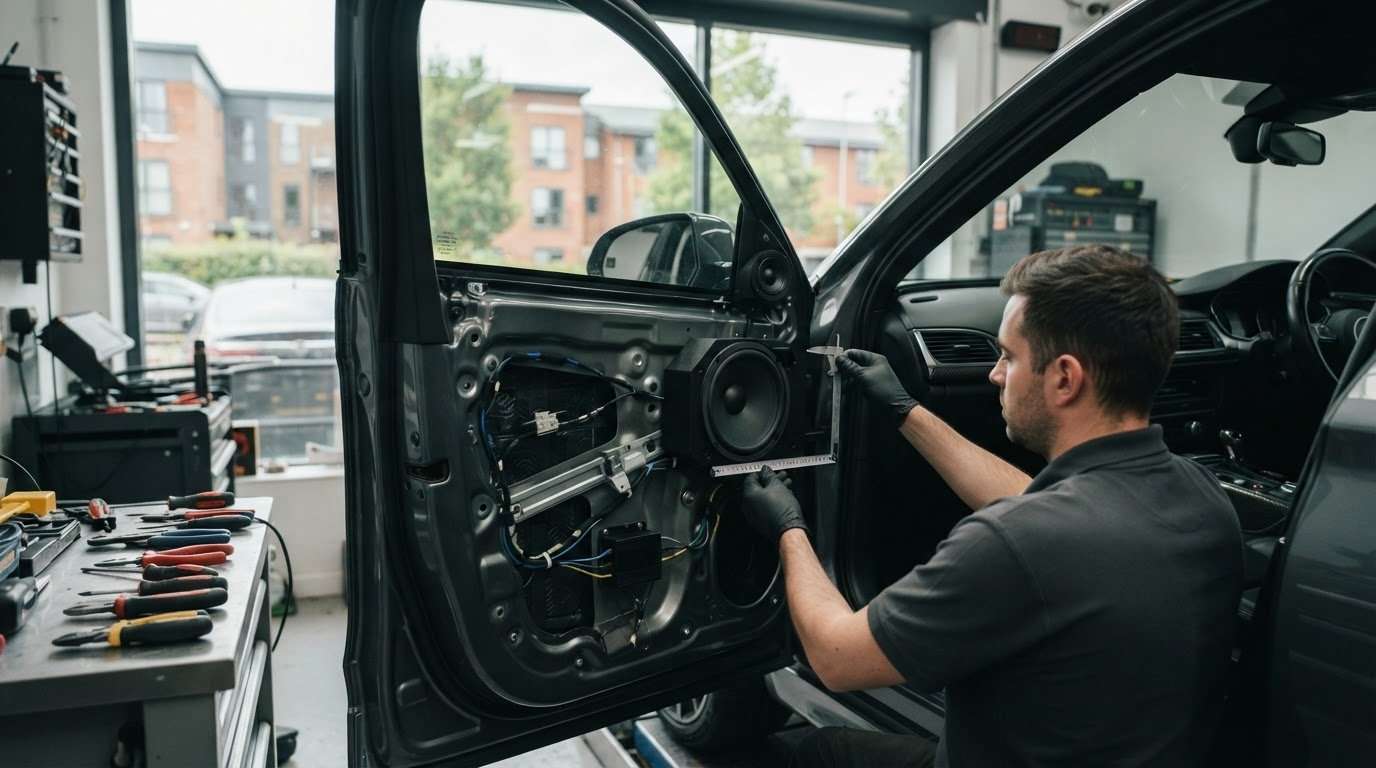
PowerBass Component System: What to Check Before You Buy
The right-sounding Powerbass component System can still be the wrong upgrade for your car if it doesn’t match your vehicle or existing audio equipment. A brand name alone can’t confirm fit or compatibility.
Before buying, check how the system is configured and what your car can accommodate. Component systems separate the woofer and tweeter, while a crossover directs audio signals to the appropriate speaker element. Your car’s speaker locations, available mounting space, factory amplifier and wiring can all affect what will work.
This guide explains what a component speaker system does and what to check before choosing a PowerBass system. You’ll learn which vehicle and audio details to verify, why the exact model specifications matter, and when professional car audio installation can help assess fitment and integration before work begins. If you’d prefer expert fitting at your location, mobile installation may also be an option. Check the details first, then choose an upgrade that suits your car and listening goals.
Key Takeaways
- Learn what a Powerbass component System does and how its speaker layout differs from a coaxial system.
- Check your vehicle’s make, model, year, speaker fitment and existing audio equipment against the exact system documentation.
- Compare system layouts by fit, installation requirements and the listening priorities that matter to you.
- Verify the model, included components and compatibility before arranging installation.
- Find out how a professional installer can assess fitment and integration, including whether mobile fitting suits your needs.
What Is a PowerBass Component System, and What Does It Change?
Clearer, more balanced sound is a common reason to upgrade a car’s speakers. The term “component system” can make it difficult to know what you’re buying. In simple terms, a component speaker system uses separate speaker elements to reproduce different parts of the audio range.
That separation can give an installer more choice about where each speaker element is positioned. For example, a woofer may sit in a lower door location while a tweeter is mounted higher, depending on the car’s available spaces and the system’s design. This affects placement options and installation requirements, but it doesn’t guarantee a particular listening result.
How component speakers differ from coaxial speakers
Component and coaxial speakers arrange their audio elements differently. In a component layout, the woofer and tweeter are separate units. In a coaxial layout, the elements are combined in one speaker assembly. This affects placement options and may influence installation work. Neither layout is automatically right for every car. Consider your vehicle, listening preferences and the confirmed details of the model you’re considering. For a foundational overview, see this explanation of component speakers.
What a crossover, woofer and tweeter do
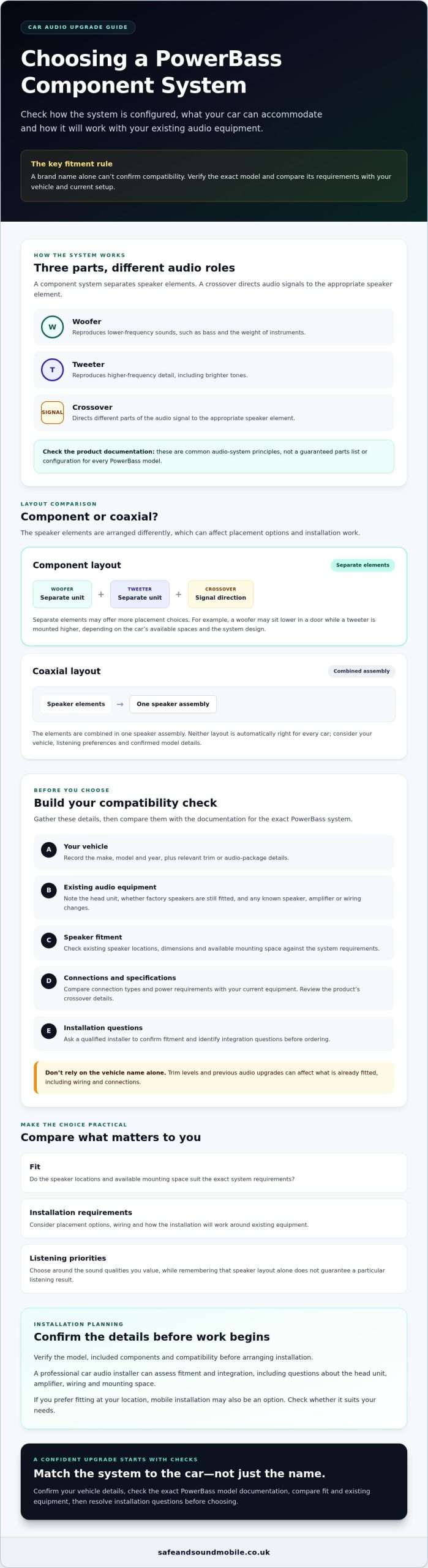
A woofer handles lower-frequency sounds, such as bass and the weight of instruments. A tweeter reproduces higher-frequency detail, including brighter tones. A crossover directs different parts of the audio signal to the appropriate speaker element. These are common audio-system principles, not a guaranteed parts list for every PowerBass model. Check the exact product documentation to confirm what a particular system includes and how it is configured.
In brief, the woofer reproduces lower frequencies, the tweeter handles higher frequencies, and the crossover directs audio signals between the speaker elements.
In your car, a component layout may allow the speaker elements to occupy different positions, while a coaxial speaker keeps them together in one assembly. That difference can affect mounting choices, wiring and how installation fits around existing equipment. It doesn’t, by itself, confirm that a system will fit your vehicle or suit your preferred sound.
Use “Powerbass component System” as a starting point for research, not as a fitment guarantee. Confirm the precise model, included components and installation requirements before choosing. Then compare those details with your vehicle and current audio equipment, rather than relying on the system category alone.
Check PowerBass System Compatibility Before You Choose
A speaker that looks suitable in a product listing may not fit your car or work with its existing audio equipment. Before buying a Powerbass component System, check the exact model documentation and compare it with your vehicle. Trim levels and previous audio upgrades can affect what is already fitted, so don’t rely on the vehicle name alone.
A brand name alone can’t confirm whether a speaker system is compatible with your vehicle. Gather these details before comparing products or asking an installer about fitment:
- Vehicle: Record the make, model and year, plus relevant trim or audio-package details.
- Current equipment: Note the head unit, whether the factory speakers are still fitted, and any previous speaker, amplifier or wiring changes you know about.
- Speaker fitment: Check the existing speaker locations, dimensions and available mounting space against the exact system requirements.
- Connections and specifications: Compare the system’s connections and power requirements with your current equipment. Review any crossover details in the product documentation.
- Installation: Ask a qualified installer to confirm fitment and identify unanswered integration questions before ordering.
Which vehicle details should you gather first?
Start with the make, model and year, then record the head unit and any known factory audio options. Note whether the speakers have been changed before. Previous upgrades can affect wiring and connections, so the original vehicle specification may not tell the whole story. Check vehicle-specific fitment information alongside the documentation for the exact speaker model before ordering.
Will the system work with your head unit and existing speakers?
Compatibility depends on the confirmed specifications of both the system and the equipment already in your car. Check connection types, power requirements and crossover information rather than assuming the new speakers can simply replace the old ones. If you can’t confirm whether the head unit or existing amplifier is suitable, pause and ask an installer to assess the setup.
Keep the product details and vehicle information together. A professional installer can compare them with the car’s speaker locations and existing audio equipment before work begins, helping clarify fitment and integration needs. Safe & Sound Mobile supplies and installs car audio components, including speakers and amplifiers, and offers mobile fitting across the UK. For general car audio installation options, confirm directly whether the specific PowerBass model can be supplied or fitted.
Compare Component Systems by Sound Goals, Fit and Integration
Choosing between a component and coaxial layout is only one part of planning a car audio upgrade. Consider where the speakers can fit, how much of the system you want to change and whether your current head unit or amplifier can support the selected equipment. Check the specifications for the exact PowerBass model before deciding.
Component or coaxial speakers: which arrangement suits your setup?
Use this comparison to identify what to investigate, not to assume one layout will sound better in every vehicle. Factory speaker locations and your preferred installation scope can help narrow the choice. Confirm the exact system’s dimensions, included parts and requirements before making a decision.
| System type | Fitment checks | Installation considerations | May suit priorities such as |
|---|---|---|---|
| Component | Check the separate speaker locations, dimensions and mounting options. | Separate elements may require planning for positioning, wiring and any crossover specified for the model. | Considering separate placement options as part of a more tailored upgrade. |
| Coaxial | Check whether the combined speaker assembly fits the existing location. | Confirm the mounting and connection requirements for the replacement speaker. | Keeping the replacement approach focused on the existing speaker position. |
Neither category is a universal winner. If you want to retain factory locations, check which layout fits them and whether any changes are needed. For broader planning, consult the car audio upgrade guide alongside your vehicle and product documentation.
Do you need an amplifier or a different head unit?
Not necessarily. Requirements vary by system and vehicle, so don’t assume a new amplifier or head unit is essential, or that existing equipment will work without checks. Compare the manufacturer’s stated requirements with your current head unit, amplifier and speakers. Pay attention to connection details, power requirements and any crossover information supplied for the exact model.
Your head unit also affects the features available in the car. If you’re considering features such as smartphone connectivity, the Apple CarPlay overview can help you assess that part of the decision. It won’t confirm speaker compatibility, so check that separately.
Choose a Powerbass component System based on confirmed specifications, vehicle fit and how the equipment will integrate as a whole. If the documentation leaves questions about connections, installation scope or existing equipment, ask a qualified installer to review the setup before you buy.
Plan the Installation and Avoid Common Component-System Mistakes
Good preparation helps prevent avoidable fitment and integration problems. Don’t assume the same speaker system will fit every vehicle, even within a single model range. Speaker locations, existing equipment and installation requirements can vary. Use this sequence before arranging a fitting:
- Verify the model. Record the exact PowerBass system model and check its documentation for specifications and included components.
- Confirm fitment. Compare the vehicle’s make, model and year with the system’s fitment information. Check speaker locations, dimensions, mounting and connection requirements.
- Review existing equipment. Note whether you’re keeping the current head unit, amplifier and speakers, and share details of any previous audio changes.
- Agree the installation plan. Discuss the proposed work with the fitter before it begins, including which components will be retained and how the system will be integrated.
Verify compatibility before you buy or arrange fitting. Suitable positioning and neat integration matter because the speaker elements, wiring and existing equipment need to work together as intended. An installer can check practical mounting options and connections for your vehicle. That assessment helps clarify what the job involves, but it can’t guarantee a particular sound result.
What to confirm before booking a fitting
Provide the fitter with your vehicle details and the exact system model, along with any available product documentation. Confirm whether the head unit, amplifier or other speakers are staying in place. Then agree the installation scope before work starts. If a detail is unknown, raise it early rather than assuming the replacement will use the same connections or mounting points as the original speakers.
When professional car audio installation can help
Professional fitting can be useful when you need an assessment of vehicle-specific fitment and how the chosen components may integrate with existing equipment. Safe & Sound Mobile offers car audio installation and mobile fitting across the UK. Check directly whether the specific PowerBass model can be supplied or installed before making plans.
For help discussing fitting requirements, discuss a professional car audio installation and provide your vehicle details and the exact model you’re considering.
Choose Your PowerBass Component System With Confidence
The right speaker layout depends on what you want from your upgrade and what your vehicle can accommodate. Component speakers may suit drivers who want separate speaker elements and have suitable positions for them. If you’d rather keep the change focused on replacing speakers in their existing locations, a coaxial option may be worth considering. Neither choice is automatically best. Let fit, confirmed product details and your listening priorities guide the decision.
Before choosing a Powerbass component System, confirm the exact model, what’s included and whether it’s compatible with your vehicle and existing audio equipment. Check local availability directly too. Don’t assume every model has the same configuration or that a system will fit simply because it’s from the same brand.
A final checklist before you buy
Use these checks to make your decision with confidence:
- Confirm the product: Verify the exact product name, specifications and included components with the seller or manufacturer.
- Check your vehicle: Match the fitment information to your vehicle and confirm speaker locations, dimensions and connections.
- Review your existing setup: Note which speakers, head unit or amplifier you plan to retain, and check for any additional installation requirements.
- Match the system to your plans: Consider whether the layout suits your listening priorities and the scale of the upgrade you want.
If product documentation doesn’t answer a fitment or integration question, a professional assessment can help clarify the options. That doesn’t mean every setup needs additional equipment or a more extensive upgrade. It means checking before purchase and fitting rather than relying on assumptions.
Get help with supply and fitting
Safe & Sound Mobile supplies and installs car audio components, including speakers and amplifiers, and offers mobile fitting across the UK. Check directly whether a specific PowerBass system is available or can be installed. Share your vehicle details and the exact model so availability and fitment can be discussed before you make plans.
Ready to discuss your options? Enquire about car audio supply and mobile fitting for guidance on your requirements and the next steps.
Make Your Audio Upgrade a Confident Choice
A component system separates speaker elements, while a coaxial speaker combines them in one assembly. Neither layout is automatically right for every car. Your vehicle’s fitment, existing audio equipment and listening priorities should guide the choice.
Before buying a Powerbass component System, confirm the exact model, specifications, included components and compatibility with your vehicle. Check the installation requirements too. If the documentation leaves questions about fit or integration, a professional assessment can help you understand the options before work begins.
Safe & Sound Mobile supplies and installs car audio components, and offers mobile fitting across the UK. Check directly whether the specific PowerBass system you’re considering is available or can be installed. Discuss car audio supply and mobile fitting to explore your requirements and fitting options.
With the right checks in place, you can choose an upgrade that suits your car and move ahead with greater confidence. If you are also considering cabin upgrades to protect your interior and audio electronics from heat and sun damage, check out PFM Performance Auto Group to explore professional window tinting solutions.
Frequently Asked Questions
What is a PowerBass component system?
A PowerBass component system is a car speaker setup with separate audio elements rather than all elements arranged together in one speaker. The exact parts included depend on the product, so check the model documentation before buying. Confirm the product name and specifications with the seller or manufacturer, then compare them with your vehicle and current audio equipment. The Powerbass component System label alone doesn’t confirm what’s included or whether it will fit.
Are component speakers better than coaxial speakers?
Neither type is automatically better for every driver. Component speakers arrange audio elements separately, while coaxial speakers combine them in one assembly. Your choice depends on your car’s speaker locations, the equipment already fitted, your listening priorities and the installation requirements. Compare confirmed details for the exact models you’re considering. Avoid relying on general claims about sound quality, as fit and suitability depend on the vehicle and full audio setup.
Will a PowerBass component system fit my car?
Fitment can’t be confirmed from the brand name alone. Check the exact system model against your vehicle’s make, model and year, then verify speaker dimensions, connections and installation requirements. Existing speakers and head-unit equipment may also affect compatibility. Read the product documentation and vehicle-specific fitment information before ordering. If either source leaves questions unanswered, ask a car audio installer to assess the setup before you buy.
Do component speakers need an amplifier?
Not necessarily. Whether an amplifier is required or suitable depends on the specific speakers, head unit and wider audio setup. Check the product documentation alongside the specifications for the equipment already in your car, including any stated connection and power requirements. Don’t choose an amplifier based on a general rule or an unverified online claim. If you’re unsure whether the components will work together, ask an installer to review your planned setup.
Can I install a component speaker system myself?
You may be able to fit a system yourself if you have the necessary experience, but installation requirements vary by vehicle and product. Before starting, check the exact model’s instructions, connections, fitment and positioning requirements. Also consider how the speakers will integrate with your existing car audio equipment. If you’re unsure about compatibility or the work involved, professional fitting can help assess the installation for your specific vehicle.
Does Safe & Sound Mobile sell PowerBass component systems?
Safe & Sound Mobile supplies and installs car audio components, but availability of a specific PowerBass system isn’t confirmed. Contact the company to check whether the exact model is available and confirm its specifications before ordering. Safe & Sound Mobile also offers car audio installation and mobile fitting across the UK. Share your vehicle details and product model to discuss supply and fitting options.


About author
Related posts

Could choosing the wrong tracker category leave your insurer’s requirement unmet? The right thatcham approved tracker installation uk starts with the... Continue reading

The right car tracking system isn’t necessarily the one with the longest feature list. It’s the one that suits your vehicle, your insurer’s... Continue reading

Need a car tracker fitted near you, but don’t want to drive across town or leave your vehicle at a fitting centre? Searching for tracking... Continue reading

UK most stolen vehicles figures contain a surprising twist: the most-stolen model variant in the first half of 2026 was the Nissan Juke Tekna CVT,... Continue reading

Could a tracker with plenty of features still be the wrong choice for your car? The right tracking device for vehicles depends on the protection... Continue reading