
No products in the cart.
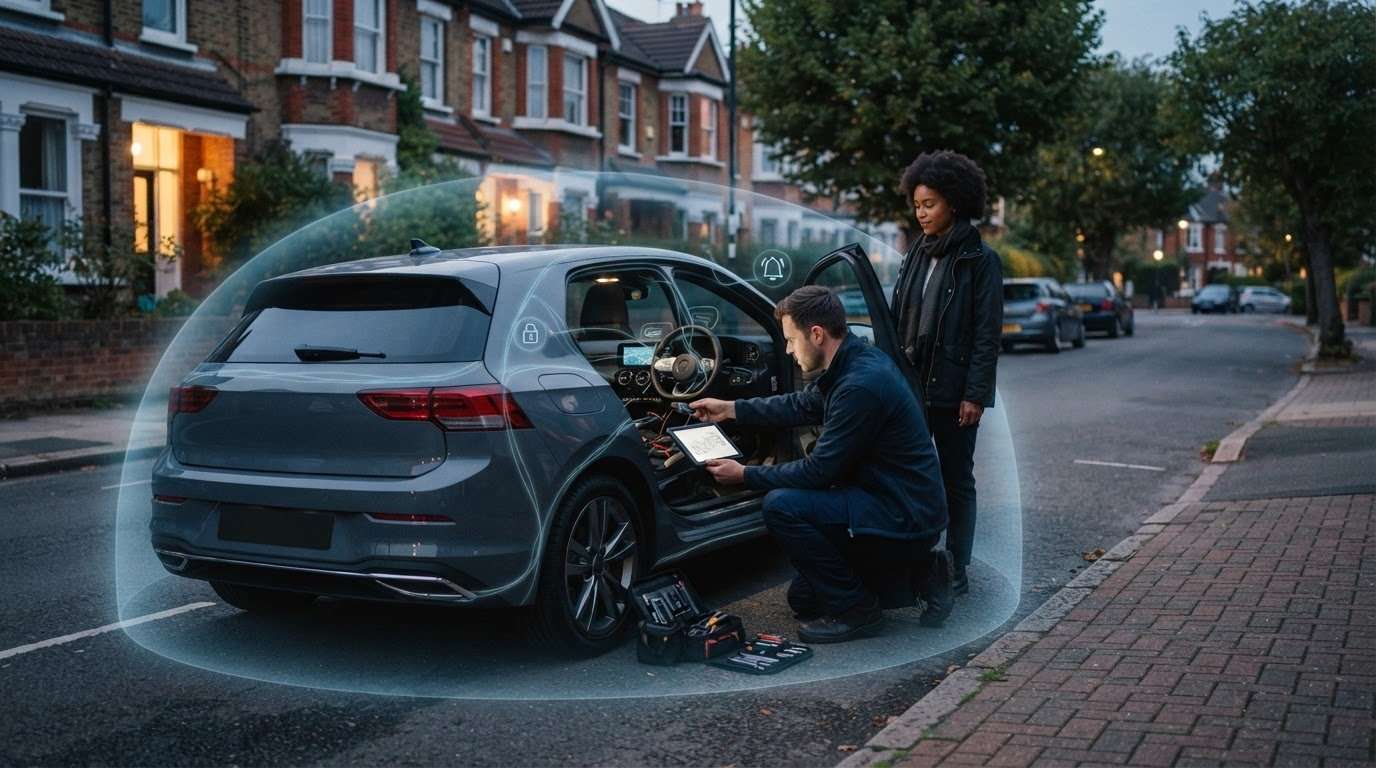
Car Immobilisers: UK Guide to Better Vehicle Security
UK Guide to Better Vehicle Security
A factory-fitted car immobilisers is a starting point, not always the whole security plan. If you’re weighing up an immobiliser for car security, it can be difficult to tell whether your existing system meets your needs, or how an extra device would fit alongside an alarm or tracker. The right choice depends on your vehicle, any insurer requirements and how you use your car day to day.
This guide explains what an immobiliser does and how it differs from other vehicle security devices. You’ll learn what to consider before choosing an additional system, including compatibility and the practicalities of professional fitting so that you can make a confident, informed decision.
We’ll also look at aftermarket options, including Ghost immobilisers, and where they can fit into a layered security approach. When you’re ready to explore your options, Safe & Sound Mobile provides vehicle-specific advice and professional mobile installation at home or work, helping you plan a suitable next step with less uncertainty.
Key Takeaways
- Start by identifying your vehicle and its existing security, then clarify what you want an additional immobiliser to address.
- Review your insurer’s requirements before choosing an immobiliser, and consider how it fits your everyday use.
- Compare the roles of an immobiliser, alarm and tracker to understand how each contributes to vehicle security.
- Professional fitting follows a clear process, from sharing vehicle details to arranging installation and reviewing the handover.
- Safe & Sound Mobile offers Ghost immobilisers, vehicle-specific advice and nationwide mobile fitting at home or work.
What an Immobiliser for a Car Does, and When Added Security Is Worth Considering
An immobiliser is a vehicle security device that restricts unauthorised starting. It helps prevent the vehicle from being driven away without the required authorisation. Unlike an alarm, it doesn’t alert you to a disturbance; unlike a tracker, it isn’t designed to help locate a stolen vehicle. Each has a different role in a security plan.
In simple terms, an immobiliser is intended to stop the vehicle from starting when someone tries to use it without the right authorisation. The exact system can vary between vehicles and devices. For a concise overview of the technology and its background, see What is a car immobiliser?
Owners may consider extra protection if their circumstances have changed, they’re concerned about the vehicle’s security, or their insurer has set a security requirement. That doesn’t mean every car needs an additional immobiliser. The useful question is whether the existing equipment and any proposed upgrade suit your vehicle and situation.
Factory-fitted and aftermarket immobilisers: what is the difference?
A factory-fitted immobiliser is included as part of the vehicle’s original equipment. An aftermarket immobiliser is an additional security option installed after manufacture. It may suit some owners, but it isn’t required. Start by checking your vehicle handbook or other vehicle information to understand what security equipment is already fitted.
When might an owner consider an additional immobiliser?
Consider how you use and store the vehicle, what concerns you want to address, and whether your insurer specifies particular security measures. A vehicle-specific assessment can help make sense of those factors and identify relevant options, without assuming that one upgrade suits every owner.
It can help to separate the purpose of each device before deciding what to add:
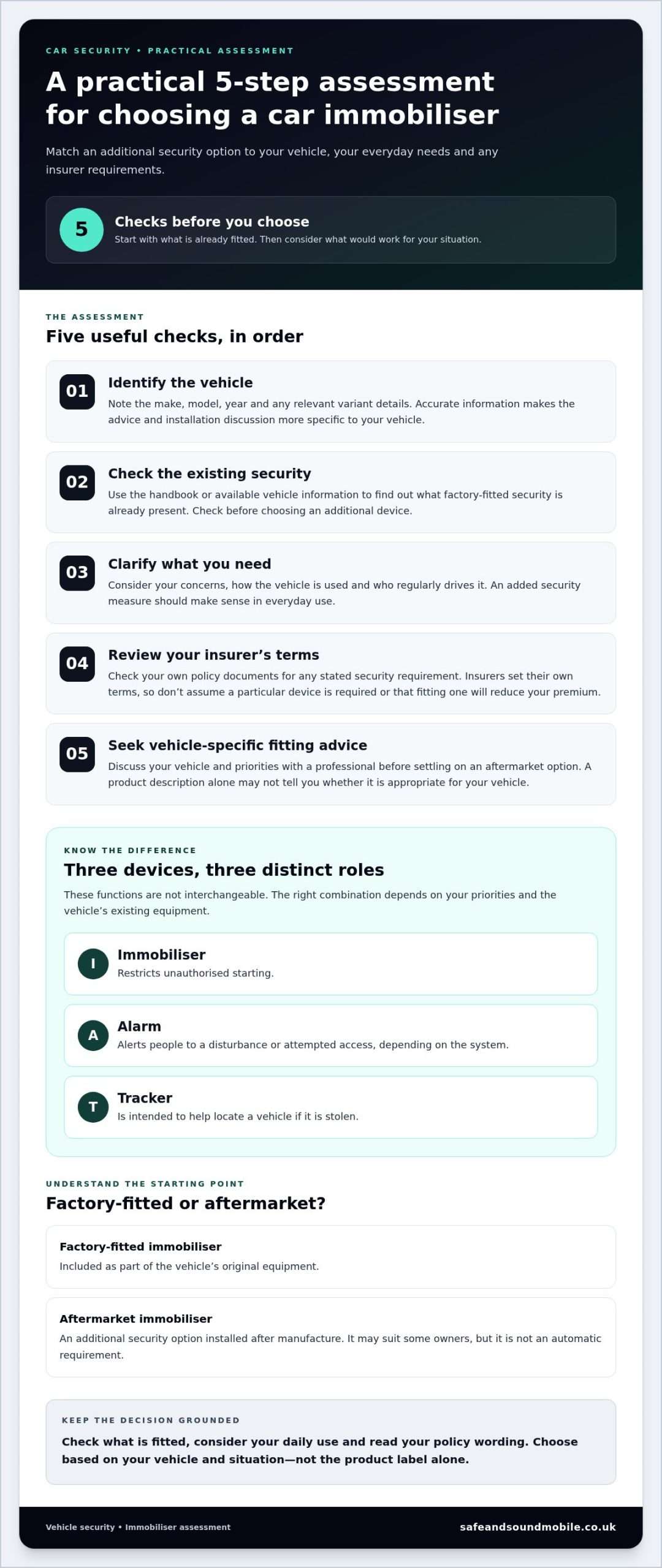
- Immobiliser: restricts unauthorised starting.
- Alarm: alerts people to a disturbance or attempted access, depending on the system.
- Tracker: helps locate a vehicle if it is stolen.
These functions aren’t interchangeable. An alarm may draw attention to an incident, while a tracker helps after a vehicle has been taken. An immobiliser focuses on starting. Some owners consider more than one type of device, but the right combination depends on their priorities and the vehicle’s existing equipment.
If an additional immobiliser seems worth exploring, don’t choose based on the product label alone. First establish what is already installed, then weigh your everyday needs and any insurer conditions. Professional, vehicle-specific advice can help you understand the options before arranging a fitting.
How to Choose an Immobiliser for Your Car: A Practical Assessment
Choose an immobiliser by matching your vehicle’s existing security, your ownership needs and any insurer requirements, then get vehicle-specific fitting advice. This practical sequence helps you compare options without assuming that one device suits every vehicle.
- Identify the vehicle. Note its make, model, year and any relevant variant details. Accurate information helps make the advice and installation discussion specific to your vehicle.
- Check the existing security. Check the handbook or vehicle information for details on factory-fitted security. Avoid selecting an additional device before you know what is already installed.
- Clarify what you need. Consider your concerns, how the vehicle is used and who regularly drives it. The best fit should make sense in everyday use.
- Review your insurer’s terms. Look for any stated security requirements in your own policy documents. Don’t assume a particular device is required, or that fitting one will reduce your premium.
- Seek fitting advice. Discuss the vehicle and your priorities with a professional before settling on an aftermarket option.
Start with the vehicle and its existing security.
Begin with the exact vehicle details, not a broad category such as car or van. Check the handbook and available vehicle information for factory-fitted equipment. Consider the installation for that specific vehicle, so avoid assuming a device suits every car, van, or motorhome. Clear details give an adviser a better starting point.
Match the choice to ownership and insurance needs.
Think about who uses the vehicle and how an added security measure would fit into regular journeys. For example, consider whether several people drive it and whether an extra step in the routine would be practical. Then read your policy wording for any stated security conditions. Insurers set their own terms, so distinguish a written requirement from an assumption about possible premium savings.
Choose professional advice before settling on a device
A product description alone may not tell you whether an aftermarket immobiliser suits your vehicle. Safe & Sound Mobile provides vehicle-specific advice to help you weigh up relevant options, including Ghost immobilisers. For a fuller explanation of that product, consult the dedicated Ghost Immobiliser guide alongside this assessment.
Before you decide, bring together the vehicle details, handbook information, policy wording, and your day-to-day needs. This keeps the discussion practical and helps you avoid choosing based on labels alone. If you’re ready to discuss a suitable option, explore vehicle-specific immobiliser advice from Safe & Sound Mobile.
Do You Need an Additional Immobiliser if Your Car Already Has Security?
Not automatically. Existing security is an important part of the decision, but it doesn’t necessarily meet every owner’s needs or satisfy every insurer’s requirements. Start by finding out what your vehicle already has, then consider what you want any additional device to do. More equipment doesn’t guarantee that a vehicle can’t be stolen.
Immobiliser, alarm and tracker: different security roles
These devices serve different purposes. An immobiliser restricts unauthorised starting. An alarm alerts people to a disturbance, while a tracker supports vehicle location or recovery if it’s stolen. A tracker isn’t built into an immobiliser simply because both are vehicle security devices.
| Device | Main role | What it doesn’t do |
|---|---|---|
| Immobiliser | Restricts unauthorised vehicle starting. | Doesn’t locate a vehicle after theft. |
| Alarm | Alerts people to a disturbance. | Doesn’t restrict starting the same way as an immobiliser. |
| Tracker | Supports locating or recovery functions. | Doesn’t itself serve as an immobiliser. |
The comparison helps clarify what you might need. If your priority is restricting starting, consider the immobiliser’s role. If you want an alert or a way to support locating the vehicle, those are different functions. Some owners may consider more than one type of device, but that doesn’t mean every vehicle needs all three.
What an existing device does, and does not, settle
Your car may already have a factory-fitted immobiliser. Check the handbook or vehicle information before deciding whether to add another device. Knowing what’s installed gives you a clearer basis for considering your concerns, rather than assuming the vehicle has no protection or that its existing system meets every need.
An additional device can be considered as part of an overall security approach, but no combination should be treated as a guarantee against theft. Think about the purpose of each product and whether it addresses a particular concern. For a closer look at alarm functions, the Car Alarms guide can help you compare that category with immobilisers and trackers.
Insurance conditions are separate from a device’s general function. Check your own policy wording for any stated security requirement. Insurers set their own conditions and decide whether any measure affects cover or premiums; don’t assume fitting an immobiliser will earn you a discount. If the wording is unclear, ask your insurer to explain the terms before you decide.
A balanced choice starts with what’s already fitted, what you want to address and what your insurer requires. Vehicle-specific advice can help you weigh those points without treating an additional immobiliser as essential for every owner.
What to Expect When Having a Car Immobiliser Professionally Fitted
Professional fitting gives you a clear process, from discussing the vehicle to understanding the fitted option. The conversation starts with your requirements and relevant vehicle information. You can then consider the advice, arrange the fitting and review the product-specific guidance at handover. Knowing what to expect helps you prepare without trying to install it yourself.
Prepare for a mobile fitting appointment.
Have your vehicle’s make, model, and year ready when discussing a suitable immobiliser. Share any information you have about existing security and explain what you want the additional device to address. This gives Safe & Sound Mobile a useful basis for vehicle-specific advice and helps keep the discussion focused on your circumstances.
Once you’ve discussed the vehicle and relevant options, agree the fitting arrangements with the team. Before the appointment, gather any questions about how the selected option may fit into your everyday routine. You don’t need to install it yourself or change the vehicle. Leave the technical work to a professional.
It can help to have these details ready for the discussion:
- The vehicle’s make, model and year.
- Information you have about existing security equipment.
- Your main reason for considering an additional immobiliser.
- Any relevant security wording from your insurer.
Preparing these points helps you explain what matters to you. It also gives you a chance to raise practical questions before the fitting is arranged, rather than trying to resolve them during handover.
Understand the handover and everyday use.
After fitting, take time to review the instructions for the specific product installed. The installer can provide guidance relevant to your vehicle and chosen security option. Ask about anything unclear, and follow the product-specific information provided rather than assuming all immobilisers work the same way.
Keep the instructions somewhere accessible, especially if others regularly use the vehicle. Make sure they understand the relevant guidance too. That small step can help everyone follow the same routine. Avoid relying on general information about other devices, as operation and guidance can vary by product.
Safe & Sound Mobile provides professional fitting and vehicle-specific advice to support your decision. If you’re ready to discuss the fitting process for your vehicle, arrange professional immobiliser installation with the team.
Choose Safe and Sound Mobile for Vehicle-Specific Immobiliser Advice and Fitting
Choosing an additional immobiliser for car security is easier when expert advice and professional fitting are part of the same process. Safe & Sound Mobile supplies and installs advanced car security systems, with vehicle-specific guidance to help you choose an option that fits your car and priorities. The aim is a clear, practical next step, not a one-size-fits-all recommendation.
A mobile service built around the vehicle and owner
Share your vehicle details and explain what security you want to add. Safe & Sound Mobile can discuss relevant options with you, using vehicle-specific advice to shape the conversation. This gives you the chance to weigh your priorities and ask practical questions before deciding whether to arrange a fitting.
An immobiliser should suit both the vehicle and the way it’s used. A car shared between several drivers, for example, may raise different everyday considerations from one with a single regular driver. A considered discussion accounts for those circumstances instead of assuming one option is right for every vehicle or owner.
Professional advice can also help you move from general research to a decision that reflects your own situation. Explain what you already know about the vehicle and what you want the device to address. That gives the discussion focus and helps you understand the next steps for the car immobiliser protection you’re considering.
Take the next step with Safe & Sound Mobile.
Before deciding, gather your vehicle information, any relevant insurer wording, and your main questions. Safe & Sound Mobile can advise based on your vehicle and discuss Ghost immobilisers as an option. If you’re comparing that product, the dedicated Ghost Immobiliser guide offers a more focused explanation to support your decision.
Once you’re ready to discuss an immobiliser for car security and fitting, contact Safe & Sound Mobile on 01245 921133. The team can talk through your vehicle-specific requirements and help you decide how to proceed. Take the next step with clear advice and professional fitting.
Make Your Next Security Decision with Confidence
Choosing an immobiliser for car security doesn’t have to mean navigating technical details alone. The most useful next step is to turn what you know about your vehicle and your priorities into a clear conversation about suitable options. That way, you can move forward at a pace that feels right, with a better understanding of what you’re choosing and why.
Safe and Sound Mobile can help you explore Ghost immobilisers and discuss a fitting plan tailored to your vehicle. Take a moment to consider what you want your security setup to address, then use that as a starting point for advice.
Explore Ghost immobilisers and nationwide mobile fitting and take a confident step towards a security choice that suits your vehicle.
Frequently Asked Questions
Can a car have an aftermarket immobiliser if it already has a factory-fitted one?
Yes, an aftermarket immobiliser may be considered alongside factory-fitted security, but it isn’t automatically needed or suitable for every vehicle. Check the handbook and note the exact make, model and year before discussing options. If your insurer has specified a device or security condition, use the policy wording as part of that discussion. Vehicle-specific advice can help you understand whether an additional immobiliser is appropriate for your car.
Will fitting an immobiliser reduce my car insurance premium?
Don’t assume fitting an immobiliser will reduce your premium. Insurers set their own policy conditions and decide on cover and pricing. If your documents require a particular security measure, check the wording carefully and clarify any uncertainty with your insurer before arranging a fitting. An immobiliser alone doesn’t mean a policy requirement has been met or that a discount will apply.
How can I check whether my car already has an immobiliser?
Start with the handbook or information supplied with the car, which may describe its factory-fitted security equipment. If you’ve bought the vehicle second-hand and don’t have these documents, vehicle-specific advice may help you understand what’s fitted before considering an upgrade. Don’t rely only on the car’s age, appearance or a dashboard light as proof. Record the make, model and year to make any follow-up discussion more precise.
Does an immobiliser stop a car from being stolen?
No device should be treated as a guarantee that a vehicle can’t be stolen. An immobiliser is meant to make unauthorised starting harder, but it plays a specific role within a wider security approach. For example, an owner might consider an alarm for alerts or a tracker for location support, rather than expecting one device to do everything. Follow the instructions for each fitted product and keep expectations realistic.
Can you fit an immobiliser at my home or workplace?
Safe & Sound Mobile offers mobile installation. Share your vehicle’s make, model and year when discussing the fitting, along with any relevant information about existing equipment. We base the fitting plan on the vehicle and selected product. Arrange the appointment details with the team, then take time during handover to understand the product-specific instructions and guidance for everyday use.
Is a car immobiliser the same as a tracker or alarm?
No, these are separate products with different purposes. An immobiliser relates to starting the vehicle, an alarm alerts you, and a tracker supports vehicle location or recovery. For example, choosing a tracker doesn’t mean you’re also getting an immobiliser. Consider what you want each device to do, your vehicle’s existing equipment, and any relevant insurer conditions before choosing a combination.


About author
Related posts
Could choosing the wrong tracker category leave your insurer’s requirement unmet? The right thatcham approved tracker installation uk starts with the... Continue reading
Car Immobiliser Fitting Shenfield: Options and Preparation Immobiliser fitting in Shenfield should start with the vehicle and the purpose of the installation. An additional immobiliser... Continue reading
Ghost Immobiliser 3: How Ghost III Works and UK Fitting Ghost Immobiliser 3 is a common way of searching for Autowatch Ghost III, a digital... Continue reading
What Is Car Ghosting? Ghost Immobilisers and Relay Theft Car ghosting is a phrase you may encounter while researching Ghost immobilisers and keyless theft. It... Continue reading
Ghost Immobiliser Cost: UK Prices and Fitting Explained The Ghost immobiliser cost depends on the exact product and the installation being quoted. As checked on... Continue reading