
No products in the cart.
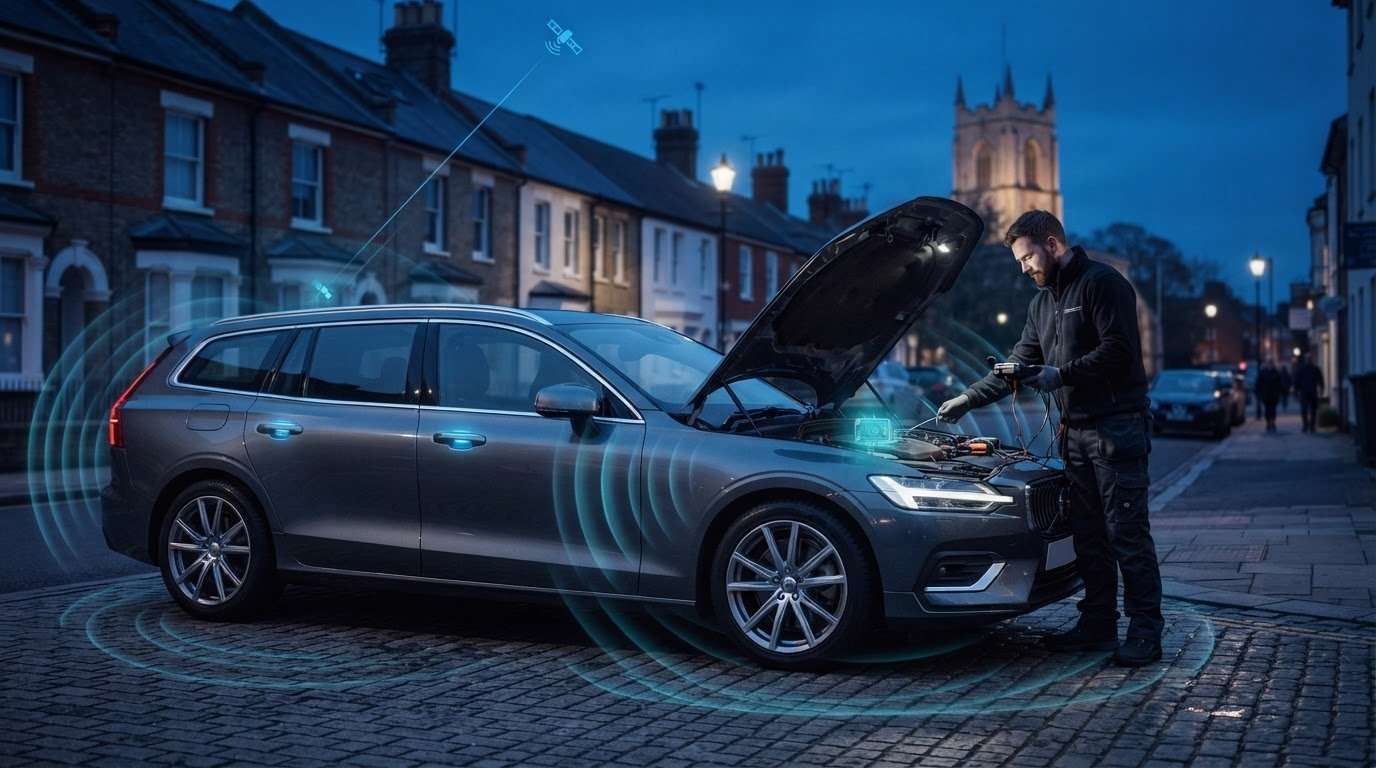
Choosing a Car Alarm for Your Vehicle
A siren is only one part of vehicle security. Choosing a car alarm means considering the protection you want and how it suits your vehicle.
A clear alert matters, but so do the alarm’s controls, sensors and installation. This guide covers alarm types and fitting, and explains how tracking systems can complement vehicle security.
Look beyond the sound when comparing options. Consider what you want the system to detect, how alarms differ from other security devices, and when professional installation may help. Use these points to identify a setup that suits your vehicle and priorities.
Key Takeaways
- Compare sensor types by the activity they detect, then consider how sensitivity settings affect everyday use.
- Understand how rolling-code remotes help manage access and why second-hand vehicles may need key reprogramming.
- Learn how factory-fitted and aftermarket systems differ, and what to consider when choosing an alarm for your vehicle.
- See how professional fitting, an immobiliser and a tracker can play different roles in a vehicle security setup.
- Explore the security products and mobile installation options available from Safe & Sound Mobile.
Car alarm components and sensors
A vehicle security system combines sensors, a control unit and an alert. Sensors detect selected activity, then the control unit determines whether to sound the siren or flash the lights. Compare the events the system detects rather than judging it by its warning alone.
Shock and Impact Detection
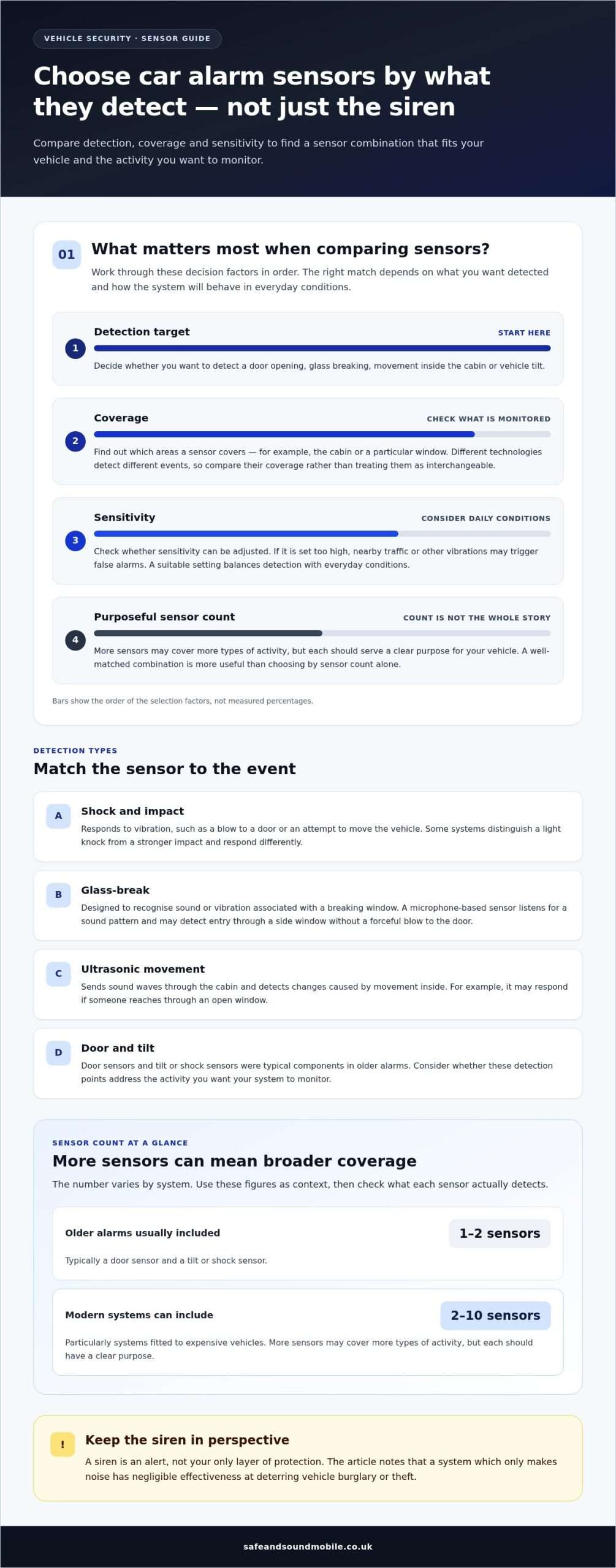
Shock and impact sensors respond to vibration, such as a blow to a door or an attempt to move the vehicle. Some systems distinguish a light knock from a stronger impact and respond differently. Check whether sensitivity is adjustable. If it is set too high, nearby traffic or other vibrations may trigger false alarms. A suitable setting balances detection with everyday conditions.
Glass-Break Detection
Glass-break sensors are designed to recognise sound or vibration associated with a breaking window. A microphone-based sensor can listen for a sound pattern instead of relying on an impact to the bodywork. This may detect entry through a side window without a forceful blow to the door. Check which areas the sensor covers, such as the cabin or a particular window.
The number of sensors varies by system. Older alarms usually included one or two, typically a door sensor and a tilt or shock sensor. Modern systems, particularly those fitted to expensive vehicles, can include two to ten different sensors. More sensors may cover more types of activity, but each should serve a clear purpose for your vehicle.
Microphone sensors listen for sounds associated with intrusion, including breaking glass. Ultrasonic sensors send sound waves through the cabin and detect changes caused by movement inside. For example, one may respond if someone reaches through an open window. These technologies detect different events, so compare their coverage rather than treating them as interchangeable.
Are car alarms legally required in the UK? A fully working horn is required, and a faulty or missing horn results in an MOT failure. An alarm is a separate security feature.
What should you do if your car alarm sounds in the UK? Check the vehicle from a safe place and use the remote to disarm it if you recognise a false trigger. If you suspect an attempted break-in, keep your distance and contact the police.
Are modern factory-fitted car alarms effective against theft? Most modern cars have a basic alarm, but a system that only makes noise has negligible effectiveness at deterring vehicle burglary or theft. Treat its siren as an alert, not as your only layer of protection.
Choose sensors based on what you want detected, such as a door opening, glass breaking, cabin movement or vehicle tilt. Then consider their coverage and sensitivity. A well-matched combination is more useful than choosing by sensor count alone.
Check its coverage and whether it suits the activity you want to detect.
Remote controls and rolling codes
A remote control gives you a direct way to arm or disarm a vehicle’s security system. Recent alarm remotes use rolling codes, which change the transmitted code instead of repeatedly sending the same signal. This helps protect against someone recording a transmission and trying to reuse it later.
How rolling codes work
Press the remote button and it sends a code for the vehicle’s receiver to check. With a rolling-code system, the next button press uses a different code. The receiver recognises the expected sequence and responds to an authorised command. This makes a copied, previously used transmission less useful than a fixed code that stays the same.
The remote and receiver must stay synchronised for normal operation. If a button press doesn’t work, try the other remote if you have one, then follow the vehicle handbook’s instructions. Avoid pressing random button combinations repeatedly. This won’t identify the cause and may complicate troubleshooting.
Second-hand vehicle checks
When you buy a used vehicle, you may not know how many keys or remotes remain in circulation. Car owners are advised to reprogram the keys after buying a second-hand car. This helps ensure the vehicle recognises the keys you hold, rather than relying on an unknown history of access.
Before driving away, test each supplied remote and confirm it arms and disarms the system. Check that the physical key works too, if the vehicle has one. Keep track of which remotes are yours, and store any spare securely rather than leaving it inside the vehicle.
If a remote stops working, work through these checks:
- Use the vehicle handbook to find the correct operating and reset instructions.
- Try the spare remote to see whether the issue affects one control or both.
- Notice whether the buttons feel damaged or give no response.
- Record when the fault began, such as after a key was lost or replaced.
A failed remote doesn’t automatically mean the alarm itself has failed. The issue may be limited to the control, its battery or its pairing with the receiver. For example, if a spare remote works, the original control may be the problem. If neither remote operates the system, the vehicle’s receiver or setup may need attention.
Choose a replacement control that works with the vehicle’s security system, not just one with similar-looking buttons. The receiver must recognise its signal, and any programming steps must match the vehicle. For a broader view of vehicle security options, consider how remote access fits with the protection you need.
Alarm arming and disarming
Arming tells the system to monitor the vehicle; disarming lets you enter without triggering it. Almost all factory-fitted alarms are armed and disarmed with the vehicle’s keyless-entry remote. The fob is therefore part of your everyday security routine, not just a way to unlock the doors.
For a reliable routine, follow the vehicle handbook and watch for the system’s response. Depending on the model, this may include a light flash, an audible confirmation or a dashboard change. Signals vary, so learn what your vehicle uses. If there’s no expected response, don’t assume the alarm has armed.
Arming before leaving
Before pressing the lock button, close the doors, boot and bonnet. A door left ajar can prevent some systems from arming fully or trigger a warning. Move away from the vehicle and check its indicators or dashboard feedback, if provided. This simple routine helps you spot an open door before leaving the car unattended.
Some systems offer different arming settings, such as monitoring the vehicle’s exterior while limiting interior detection. The options depend on the alarm and vehicle, so check the handbook before using them. For example, limited cabin monitoring may suit a vehicle with an occupant or pet inside, but it changes which areas the system monitors.
Disarming and access
Use the authorised keyless-entry remote to unlock the vehicle before opening a door. If the alarm sounds after entry, use the remote or the vehicle’s stated procedure to disarm it. Keep the fob accessible, but don’t leave it visible inside the car. If the remote fails, follow the handbook’s guidance rather than trying unfamiliar button combinations.
For a keyless-entry vehicle, the handbook can explain whether its fob’s wireless signal can be switched off when unused. Car owners are also advised to keep car keys and spares well away from the vehicle at home. Secure key storage is part of a sensible routine.
After buying a second-hand vehicle, have its keys reprogrammed. This helps ensure the vehicle recognises the keys you hold, rather than relying on an unknown history of access. If the alarm repeatedly arms or disarms unexpectedly, note when it happens, such as after locking with the fob or using a particular door. These details can help identify whether the issue relates to the control, settings or alarm system.
Alarm fitting and tracking systems
A third-party alarm system can add protection beyond the basic alarm fitted to many modern vehicles. Both compatibility and installation quality affect how it works day to day.
Alarm Fitting
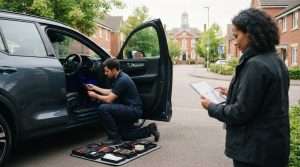
Professional fitting involves connecting the alarm’s control unit, sensors and siren to the vehicle’s electrical system. The installer also positions components, sets up the controls and tests the system’s response. For example, testing should confirm that locking the doors arms the alarm and that the intended trigger activates it.
Incorrectly installed alarm parts can cause false alarms. A system that sounds repeatedly may be faulty or incorrectly fitted. Ask for a demonstration of the completed installation, including how to arm and disarm it and recognise a fault. This gives you a practical chance to learn the controls before relying on them.
Alarm, Immobiliser, and Tracker Differences
An alarm detects selected activity and alerts people nearby with sound or flashing lights. An immobiliser prevents the vehicle’s engine from starting without the correct authorisation, but generally offers no audible or visual theft deterrent. A tracker supports locating a vehicle by transmitting its position. Each device has a different role.
Consider the outcome you need. If you want an audible warning, focus on alarm coverage and triggers. If preventing an unauthorised start matters, consider an immobiliser. If locating the vehicle after theft is the priority, a tracker addresses that need. Combining systems can provide distinct layers of protection rather than relying on one device to do every job.
Vehicle Compatibility
Start with the vehicle’s make, model, year and existing security equipment. Check the alarm’s wiring and control requirements against the vehicle handbook. Some aftermarket alarms are designed for 12-volt negative-ground electrical systems, so the vehicle’s electrical setup matters before installation.
Also consider how the new system will interact with factory features, including remote locking and existing sensors. A compatible setup should let the alarm work without disrupting ordinary access or creating unexpected triggers. Note any existing warning lights or alarm faults before fitting, so it’s easier to identify new behaviour.
Before choosing an installation, compare the system’s capabilities with your vehicle and priorities:
- Match sensor coverage to the risks you want the system to detect.
- Check whether the alarm works with the vehicle’s electrical system and existing controls.
- Ask for a demonstration of arming, disarming and the alarm’s response to a trigger.
- Learn how to recognise repeated false alarms and report the circumstances clearly.
Installation quality is part of the decision, not an afterthought. A poorly fitted component can cause nuisance alerts, while a system designed for the vehicle can work alongside its existing controls. Consider alarm, immobiliser and tracker functions separately, then choose the combination that addresses your security priorities.
What types of car alarms are available in the UK?
Most modern cars have a basic factory-fitted alarm, while aftermarket systems can add detection options. The right type depends on the vehicle’s existing security, what you want detected and how the system will be fitted.
Factory-fitted alarms
A factory-fitted system is built into the vehicle and usually works with its standard keyless-entry remote. Almost all factory-fitted alarms are armed and disarmed using that remote. This makes everyday operation straightforward, since locking the vehicle also activates its security system.
Factory equipment varies between vehicles. Check the handbook to understand which areas and triggers the alarm monitors, and how it signals that it is armed. A basic system may suit an owner who wants to use the vehicle’s existing controls, while someone seeking extra coverage may compare aftermarket options.
Aftermarket alarms
An aftermarket alarm is fitted separately from the vehicle’s factory equipment. Third-party systems are described as offering greater security than the basic alarms fitted to most modern cars. Features vary, so compare detection methods and controls rather than choosing by the number of functions listed.
Some systems focus on perimeter protection, detecting access through doors or other openings. Others can include cabin monitoring or sensors that respond to impact or vehicle tilt. For example, interior monitoring may suit someone concerned about entry through a window. The best choice depends on the risks that matter for the vehicle and its usual parking conditions.
Choosing a system for your vehicle
Start with the vehicle’s make, model and existing alarm controls. Check whether the new system works with its electrical setup and keyless-entry functions. Some aftermarket alarms are designed for 12-volt negative-ground systems, so electrical compatibility matters before fitting.
Next, compare the alarm’s trigger coverage with your needs. Adjustable sensitivity can help limit nuisance alerts, since high sensitivity can cause false alarms. Improper installation can also trigger false alarms, and repeated sounding may indicate a fault or incorrect fitting.
Use this practical comparison before selecting a type:
- Choose factory equipment if the existing coverage and controls meet your needs.
- Consider aftermarket detection if you want the system to monitor additional activity.
- Match sensitivity and sensor coverage to where the vehicle is normally parked.
- Include correct fitting and a clear demonstration in your decision.
No alarm type suits every vehicle. The priority is a compatible system with useful trigger coverage and reliable everyday controls. If you’re ready to explore car alarm options, compare systems based on your vehicle and the protection you want.
Safe & Sound Mobile: Insurance Approved Vehicle Trackers
Safe & Sound Mobile supplies and professionally fits insurance-approved vehicle trackers, including Thatcham S5/S7 systems. A tracker may suit you if you want a way to locate your vehicle, while an immobiliser addresses unauthorised starting. Safe & Sound Mobile also offers advanced immobilisers such as the Ghost, with mobile installation to bring the fitting service to your location.
Choose security equipment based on the role you need it to play. A tracker and immobiliser serve different functions, so consider whether you want location capability, an added barrier to starting, or both. Safe & Sound Mobile also fits car alarms, alongside these security options.
For insurance-approved tracker or immobiliser fitting, contact Safe & Sound Mobile or visit safeandsoundmobile.co.uk.
Make your next security decision with confidence
Choose protection based on how you use your vehicle and the risks you want to address. A car alarm can provide an audible warning, while other security equipment serves different purposes. Decide which role matters most before choosing your next step, and consider whether a single system or a combination better suits your needs.
Safe & Sound Mobile offers Insurance Approved Vehicle Trackers, Vehicle Immobilisers and Car Audio Systems. If you’re considering additional vehicle equipment, focus on the function you need and how it will fit into your setup. A clear priority makes it easier to discuss suitable options without getting distracted by features that don’t serve your purpose.
Take the next step at your own pace. Contact Safe & Sound Mobile to discuss your vehicle security needs and explore the available options. Make an informed choice that feels right for your vehicle.
Safe & Sound Mobile can help with vehicle security
Safe & Sound Mobile provides professional mobile fitting of insurance-approved Thatcham S5/S7 vehicle trackers and advanced immobilisers like the Ghost.
If you’re considering additional vehicle security alongside a car alarm, turn to Safe & Sound Mobile to arrange mobile installation of a tracker or immobiliser.
Frequently Asked Questions
How Do Car Alarms Work?
An alarm monitors its sensors while armed and responds when it detects a programmed trigger. For example, opening a protected door can send a signal to the control unit, which activates the warning. Systems monitor different events, so the response depends on the sensors fitted and settings selected. A useful practical check is to test each intended trigger during installation, then learn the vehicle’s normal alert signals.
What is a car alarm and how does it work?
A car alarm is an electronic warning system designed to alert people when someone attempts unauthorised access. It uses a control unit to receive signals from sensors and activate an audible or visual alert. Unlike an immobiliser, an alarm does not itself prevent the engine from starting. For example, a siren may draw attention to forced entry, while an immobiliser serves a separate function by restricting vehicle start-up.
Can an aftermarket car alarm reduce UK car insurance premiums?
An aftermarket alarm does not automatically reduce a UK car insurance premium. Insurers calculate premiums using their own criteria, and the effect of security equipment depends on the policy and vehicle. An alarm’s features, fitting and recognition by the insurer may all matter. Treat any possible saving as a policy-specific consideration, not a standard benefit of installing an alarm. An alarm also doesn’t replace the terms or cover provided by your insurance policy.
How is a car alarm installed and maintained?
An installer connects the alarm’s control unit and sensors to the vehicle, then tests its controls and triggers. After fitting, keep the operating instructions with the vehicle documents and learn how to silence and reset the system. If alerts become frequent, note when they happen and which conditions preceded them. Keep sensor areas clear, and follow the system’s maintenance guidance rather than adjusting wiring or settings without the correct instructions.
About author
Related posts
A GPS signal alone doesn't make a motorhome tracker Thatcham-approved. For motorhome tracker installation in the UK, the key difference is whether... Continue reading
Professional car dash camera fitting gives you a securely mounted camera, concealed wiring and a tested power connection. With mobile fitting, the... Continue reading
The car tracker fitting cost in the UK depends on the tracker type, installation needs and any ongoing subscription, so there isn’t one price that... Continue reading
A dash cam’s recording time depends on its memory card and video quality. For a single-camera setup, a 32GB card stores around 2 to 4... Continue reading
Could choosing the wrong tracker category leave your insurer’s requirement unmet? The right thatcham approved tracker installation uk starts with the... Continue reading