
No products in the cart.
Car Tracker Fitting Cost UK
Prices and Insurance Options
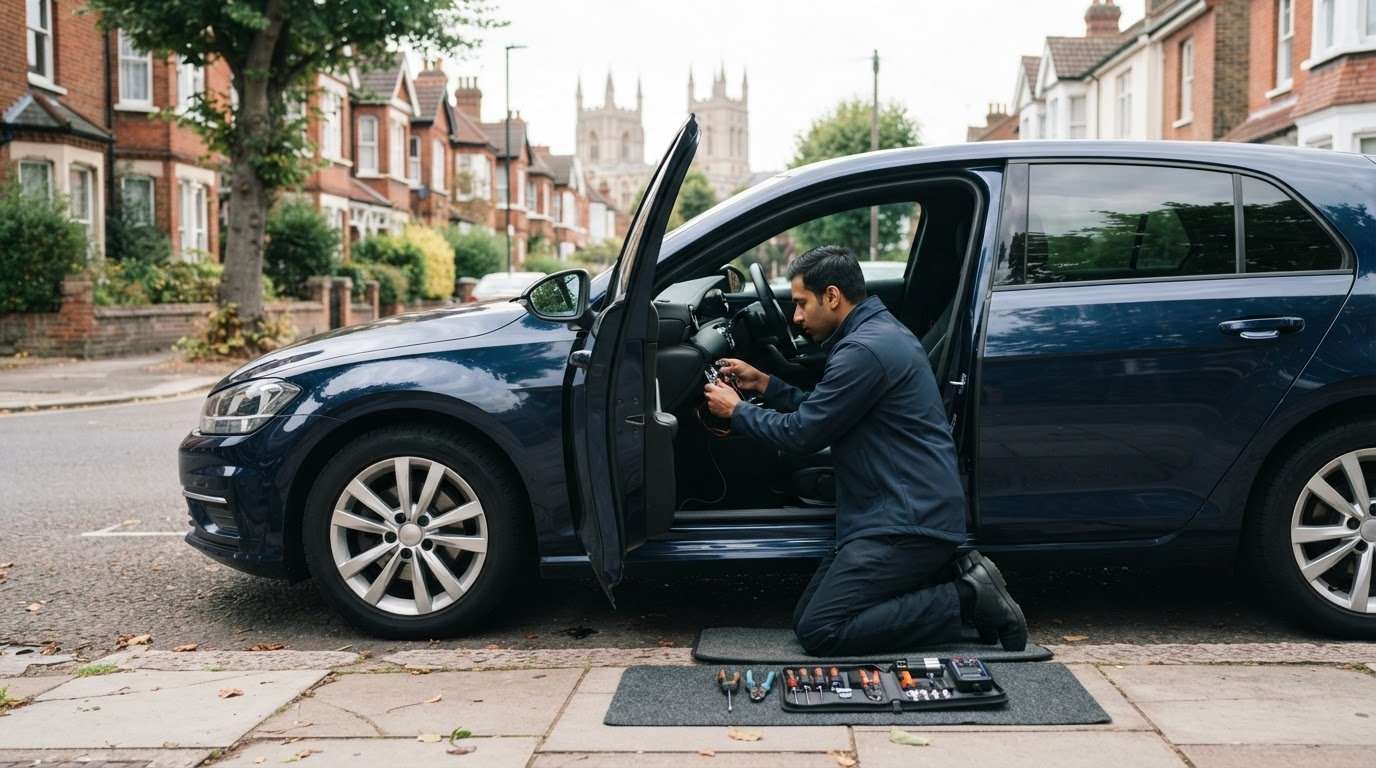
The Car Tracker Fitting Cost UK depends on the tracker type, installation needs, and any ongoing subscription, so no single price applies to every car. Insurance requirements can also affect which option is suitable. Fitting usually takes 1-2 hours.
When comparing car tracker fitting costs in the UK, look at the complete package, not just the device. Ongoing subscriptions and the level of protection can affect the total cost over time. This guide explains what drives the price and how to compare options to match your needs.
You’ll also learn how Thatcham S5 and S7 trackers differ, what to expect from mobile fitting, and when a tracker may be worthwhile. That should make it easier to understand the choices and see what matters most before arranging an installation.
Key Takeaways
- Compare the upfront fitting cost with any ongoing subscription to understand the total cost over time.
- Match the tracker type to your insurer’s requirements: S7 and S5 options offer different security features.
- Mobile fitting brings installation to your chosen location, and the work usually takes 1-2 hours.
- Weigh the cost against your vehicle’s security needs and whether an approved tracker is required by your policy.
- Learn what a fitting service involves and how Safe & Sound Mobile’s insurance-approved vehicle trackers may suit your needs.
What Tracker for Car is Suitable For Insurance?
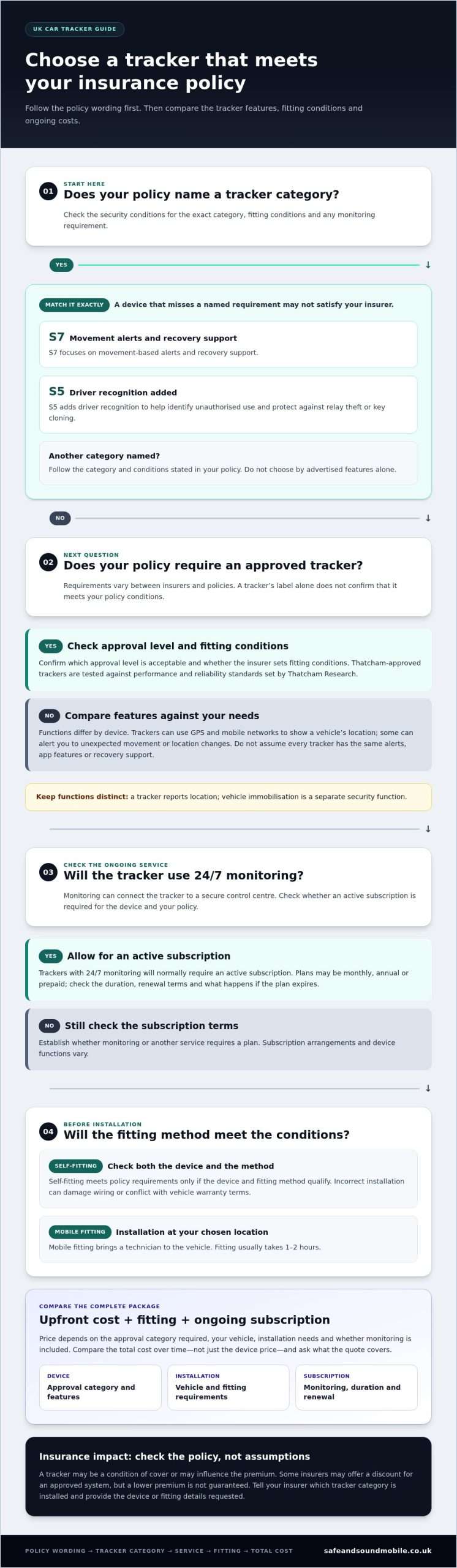
The right tracker depends on your insurance policy wording, not just the device’s features. UK insurers set their own requirements, so check the specified category before choosing a tracker. Thatcham S7 and S5 are common approval categories, but they provide different protection features. A device that doesn’t meet your policy’s stated requirement may not satisfy the insurer.
A Thatcham-approved tracker has passed performance and reliability tests set by Thatcham Research, the UK automotive security authority. S7 focuses on movement-based alerts and recovery support. S5 adds driver recognition technology to help identify unauthorised use and protect against relay theft or key cloning. Choose between them by matching the category and features named in your policy.
The cost of a tracker depends on more than the hardware. Its approval category, fitting requirements and subscription arrangement all affect the overall price. Compare the full package, including any ongoing monitoring subscription, rather than judging a tracker by its device price alone. For example, a tracker with a recurring subscription has a different long-term cost than one without.
Subscriptions for insurance-approved trackers can cover monitoring and a connection to a secure control centre. Trackers with 24/7 monitoring will normally require an active subscription, so include this recurring commitment when comparing options. Subscription terms can vary, including whether payment is monthly, annual or prepaid. Check the plan’s duration, renewal terms and what happens if it expires.
Monitoring matters because an insurer-approved device may rely on an active service as well as installed hardware. A tracker can use GPS and mobile networks to show a vehicle’s location, while some devices can alert the owner to unexpected movement or location changes. Functions vary by device, so don’t assume every tracker includes the same alerts, app features or recovery support.
- Check the policy: identify whether it names S5, S7 or another specific tracker requirement.
- Compare features: S7 focuses on movement alerts and recovery support; S5 adds driver recognition.
- Include the subscription: establish whether monitoring requires an active plan and how it renews.
- Keep functions distinct: a tracker reports location; vehicle immobilisation is a separate security function.
The price of a fitted tracker depends on the required approval category, your vehicle, the installation, and whether monitoring is included. Ask for a quote that sets out what the total covers, including any ongoing subscription.
Insurance-approved tracker options
Choose a device that matches the tracker category and fitting conditions in your insurance policy. Self-fitting meets those requirements only if both the device and fitting method qualify. Installation that damages wiring or conflicts with vehicle warranty terms can affect warranty cover.
Insurance recognition and discounts
Insurers assess trackers by their approval category and evidence that the required device is fitted. Thatcham Research sets performance and reliability standards for approved vehicle security devices. A tracker’s label alone doesn’t show whether it meets your policy’s conditions, so compare the category in your policy documents with the device being offered.
Some UK insurers may offer a discount or lower premium for a vehicle fitted with an approved tracking system, but the reduction isn’t automatic. An approved device does not guarantee a cheaper policy. Tell your insurer which tracker category is installed and provide any device or fitting details they request.
Tracker impact on insurance
A tracker can affect insurance in two ways: it may be a condition of cover, or it may influence the premium. For some high-value or high-risk vehicles, an insurer may require an approved tracker before providing cover. The policy wording determines the requirement, not the vehicle’s make or the tracker’s advertised features alone.
If a vehicle is stolen, an approved tracking system can support recovery by helping locate it. S7 focuses on movement-based alerts and recovery support, while S5 adds driver recognition to identify unauthorised use and protect against relay theft or key cloning. That extra feature doesn’t replace checking which category your insurer requires.
Requirements vary between insurers and policies. Read the security conditions carefully and note the exact category, fitting conditions and whether an active monitoring subscription is required. A device that doesn’t meet a named requirement may fail to satisfy the policy condition, even if it offers useful location or movement features.
- S7: movement-based alerts and recovery support.
- S5: driver recognition, alongside protection against relay theft or key cloning.
- Policy terms: the insurer’s stated category and conditions decide which option is suitable.
For example, if your policy specifies S5, choosing an S7 device solely because it sends movement alerts won’t meet that stated category. If the policy requires an approved tracker but doesn’t name a category, the approval level and any other conditions still matter. Keep the policy wording and installation record together, so you can provide accurate details if your insurer asks.
Self-fitting and warranty cover are separate considerations. A device can be approved yet still fail to meet an insurer’s installation conditions if fitted incorrectly. Before starting, compare the tracker instructions with the policy requirements and vehicle warranty terms. For a professionally fitted option, explore insurance-approved vehicle trackers suited to insurer requirements.
Mobile fitting and booking
Mobile fitting brings a technician to the vehicle’s location for installation. Professional car tracker installation usually takes 1-2 hours.
Fitting service inclusions
Tracker fitting involves installing the chosen device in the vehicle and checking that it works. A working installation is essential before you can use features such as location updates or alerts.
Before booking, have the vehicle available and share its make, model and location. These details help plan the visit and identify any vehicle- or tracker-specific fitting requirements.
After fitting, ask for a clear explanation of how the device works. Understand how to access location information and what alerts mean, if those features are included in your system. Keep any instructions with the vehicle records.
Professional installation time
Professional installation usually takes 1-2 hours, although the vehicle and device affect the work involved. A straightforward installation may take less time than one that requires more access to the vehicle’s wiring or interior.
Allow time for the full appointment rather than planning to drive away at a precise minute. The technician needs access to the vehicle, and final checks are part of completing the installation.
Mobile fitting can make it easier to arrange an appointment where the vehicle is parked. Choose a suitable location where the technician can access the car and carry out the work. A driveway or workplace parking space may be suitable if there is enough room.
When booking, give accurate vehicle details and explain whether you need an insurance-approved tracking system. If your policy specifies a category, such as S5 or S7, include that information. The selected device affects the installation plan and the functions to be demonstrated afterwards.
- Before booking: have the vehicle make, model and location ready.
- For insurance requirements: share the tracker category named in your policy.
- At the appointment: allow 1-2 hours for fitting and checks.
- After installation: learn how to use the tracking system and interpret its alerts.
Some tracking systems offer automatic features, while others require the driver to use an app or device interface. Don’t assume automatic driver recognition or driver ID is included; it depends on the tracker. Ask for a demonstration of the fitted system’s features, including how to access any alerts.
Clear booking details, accessible parking and time for installation checks help an appointment run smoothly. Mobile fitting is practical when taking the vehicle to a separate location would disrupt your day. The tracker must still match your chosen system and any insurance requirements.
Whether a car tracker is worth the cost
A tracker’s value depends on what you need it to do, not just its purchase price. If your insurance policy requires an approved device, fitting the specified system helps meet that condition. For other drivers, consider theft concerns, how you use the vehicle, and whether location information would help after a theft.
Start with your policy. If it names a Thatcham category, thetracker’ss approval must match that requirement. An S7 system focuses on movement-based alerts and recovery support. An S5 system adds driver recognition. Paying for features beyond your policy’s requirement may not improve your cover, so compare the category with your actual security needs.
Next, consider the total cost over the time you expect to own the vehicle. Include the device, fitting and any recurring monitoring subscription. A tracker that requires an active subscription has an ongoing cost, while one without a subscription has a different ownership profile. Compare the overall commitment, not just the initial outlay.
Monitoring can be valuable because an insurance-approved system can connect to a secure control centre, supporting the response process if a vehicle is reported stolen. However, trackers don’t all offer the same monitoring or recovery features. Check what the specific plan includes and weigh those features against how you use and secure the car.
- Policy requirement: a tracker can be necessary if your insurer specifies an approved category.
- Vehicle value and use: consider how important location and recovery support would be for your circumstances.
- Ongoing commitment: include the monitoring subscription when comparing total ownership costs.
- Feature fit: choose between S7 movement alerts and S5 driver recognition based on your needs.
Peace of mind is personal, so make the comparison practical. Write down the required approval category, the system’s monitoring arrangements and the features you’ll use. For example, a driver whose policy requires S5 has a clear reason to prioritise that category; someone without that condition can weigh S7 features against their own security priorities.
The price of an installed tracker depends on your vehicle, the required approval category, fitting and monitoring plan. Compare these factors on equal terms rather than treating an advanced feature as worthwhile simply because it is available.
What is included in a UK car tracker fitting service?
A car tracker fitting service includes installing a selected tracking device and checking that it operates in the vehicle. The precise work depends on the tracker, the vehicle and any insurance conditions. For example, a Thatcham S5 installation must use an S5 device, not just a tracker with general location features.
Your vehicle and tracker details help determine the fitting approach. A hardwired tracker is installed differently from a plug-in unit, and the model, vehicle layout and access to suitable fitting points shape the work. If your insurer names a category, share that requirement when arranging the appointment so the equipment matches your policy.
Fitting generally involves positioning and connecting the tracker, then checking that it powers on and communicates as intended. For systems with monitoring, the service arrangement should explain how activation works and whether a separate subscription is needed. Don’t assume every package includes monitoring, an app or automatic alerts: these depend on the device and plan.
- Device selection: match the tracker type to the vehicle and any insurance category, such as S5 or S7.
- Fitting: install the unit using the method required by that tracker.
- Basic checks: confirm the system starts and operates after installation.
- System guidance: understand how to access included functions and monitoring arrangements.
A useful handover explains how to use the fitted system day to day. The driver should know how to access location information (if available) and interpret movement alerts (if included). If the device uses a separate monitoring subscription, understand how to activate and renew it before relying on the service.
Professional installation usually takes 1-2 hours, depending on the vehicle and tracker. Allow the appointment window for fitting and operational checks. Keep the installation record with the policy documents, especially if the insurer requires an approved category. This gives you a clear reference for the fitted device and its installation details.
Mobile fitting means the vehicle can be attended at an agreed location rather than driven to a workshop. Prepare the vehicle details, access and any S5 or S7 policy requirements before the appointment. For example, a clear parking space gives the fitter access to the car and supports an orderly installation.
To arrange a mobile car tracker installation, choose the tracker type and share your vehicle and insurance requirements when booking.
Safe & Sound Mobile: Insurance Approved Vehicle Trackers
Safe & Sound Mobile supplies and professionally fits insurance-approved vehicle trackers for drivers seeking a suitable security system. Choose this service when you need a tracker fitted or want a system aligned with an insurance requirement. Share your vehicle details and the tracker category specified in your policy.
Safe & Sound Mobile offers mobile installation and vehicle immobilisers as another security option. The right choice depends on your vehicle and the protection you want. When comparing systems, focus on your policy requirements, the fitting and any monitoring subscription.
For information about insurance-approved vehicle trackers and fitting, visit Safe & Sound Mobile or contact the team.
Choose the next step for your vehicle.e
Before arranging a fitting, write down what you want from your vehicle security setup. Clear priorities help you compare options against your policy, daily use and preferred level of protection. Consider how you’ll use the system and what information you’ll need after installation, not just the device itself. That makes car tracker fitting costs in the UK easier to assess in context, rather than as an isolated figure.
Safe & Sound Mobile supplies insurance-approved vehicle trackers and vehicle immobilisers, as well as car audio systems. To discuss a suitable fitting, share your vehicle details and the requirements you’re working to. Contact the team to take the next step.
Contact Safe & Sound Mobile to discuss fitting and move forward with a clearer plan for your vehicle.
Safe & Sound Mobile: professional mobile tracker fitting
Safe & Sound Mobile provides professional mobile fitting of insurance-approved Thatcham S5 and S7 vehicle trackers, as well as advanced immobilisers like the Ghost.
If you’re comparing car tracker fitting costs and want a professional installation of an insurance-approved tracker or immobiliser, Safe & Sound Mobile can help.
Frequently Asked Questions
How much does a car tracker cost in 2025?
No single figure applies to every car tracker purchase in 2025. Check whether a quoted amount covers the device alone or the complete fitted system, and whether any service renews after the initial term. These differences make the two headline prices hard to compare. For a fair comparison, use the same inclusions and subscription period for each option.
Car Trackers: How Do I Arrange My Car Tracker Installation or Delivery?
Decide whether you want a delivered device or a full installation, then arrange the relevant purchase or appointment. Before paying, check the paperwork supplied with the device, how to activate it, and what records you’ll receive after fitting. Keep the booking confirmation and final documentation with your vehicle records. Safe & Sound Mobile provides vehicle tracker fitting.
Are car trackers worth it?
A tracker is more likely to suit you if you’ll use its features and can keep any required service active. Consider how long you expect to keep the vehicle, where you usually park it, and whether you would use location information or alerts. A feature you won’t use may add little value. Set out your priorities before comparing devices.
How much does it cost to fit a car tracker in the UK?
Car tracker fitting costs in the UK depend on the installation and what the quote includes. Compare the fitting charge separately from the hardware, then check whether setup or activation is listed as an additional item. This makes the installation expense clearer. Keep the written quote so you can compare the same scope with another offer.
What is the average UK price for fitting a GPS car tracker?
There’s no single average fitting cost that applies to every GPS tracker installation. Compare the fitting charge itself, not a combined total that may include hardware or services. Check whether the quote covers fitting, system setup and activation. If one quote combines these items and another separates them, compare like for like before deciding which offers better value.
Do UK insurers require a Thatcham-approved tracker, and which categories qualify?
Some policies require a tracker, but the requirement depends on the insurer and policy wording. Read the security conditions and look for the stated Thatcham category instead of relying on a general description such as “approved tracker”. Keep the device details and fitting paperwork together so you can show which system is installed if your insurer requests supporting information.
Where can I get a car tracker fitted in the UK, and do installers charge extra for mobile fitting?
Vehicle security specialists provide fitting, including mobile appointments in the UK. Whether mobile attendance is priced separately depends on the quote, so compare the total and its itemised scope rather than assuming a separate fee applies. Safe & Sound Mobile provides mobile installation. Share your postcode when arranging an appointment so the proposed visit can be included in the quote.


About author
Related posts
A GPS signal alone doesn't make a motorhome tracker Thatcham-approved. For motorhome tracker installation in the UK, the key difference is whether... Continue reading
A siren is only one part of vehicle security. Choosing a car alarm means considering the protection you want and how it suits your vehicle.A... Continue reading
A dash cam’s recording time depends on its memory card and video quality. For a single-camera setup, a 32GB card stores around 2 to 4... Continue reading

Does a gps tracking dash cam let you find your car if it’s stolen? Not by itself. GPS can add location and journey context to... Continue reading
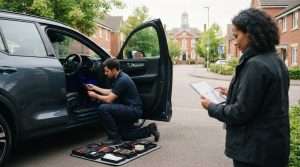
Could choosing the wrong tracker category leave your insurer’s requirement unmet? The right thatcham approved tracker installation uk starts with the... Continue reading