
No products in the cart.
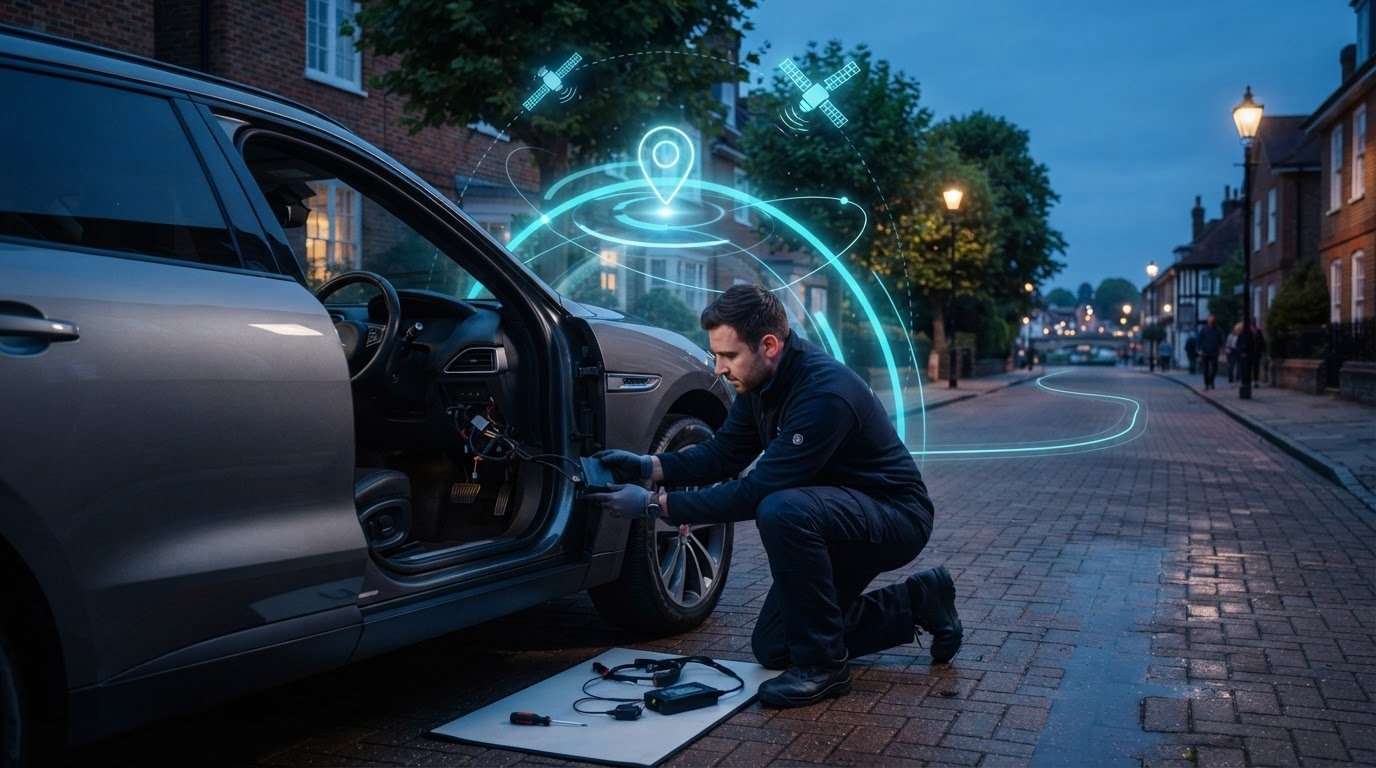
Tracking for Cars: How to Choose the Right Vehicle Tracker in 2026
How to Choose the Right Vehicle Tracker
The easiest car tracker to buy may not be the right one for your vehicle or insurance requirements. Car tracking can mean anything from a general-purpose locator to a professionally installed, insurance-approved vehicle tracker. Knowing the difference helps you choose an option that fits your needs.
Start with the purpose. A locating device and an installed vehicle tracker aren’t interchangeable, and your insurer may specify an S5 or S7 category. This guide explains the main options, how to match a tracker to your vehicle and policy wording, and what to consider when arranging a fitting. Safe & Sound Mobile supplies insurance-approved S5 and S7 trackers and offers nationwide mobile installation at home or work. S5 trackers offer driver identification, while S7 trackers include professional installation and ongoing monitoring options.
Key Takeaways
- Here, car tracking means a vehicle-security tracker, not wheel alignment or tyre tracking.
- Compare an installed vehicle tracker with a general-purpose locating device by considering what you need it to do.
- Use your insurer’s stated requirements to guide your choice of tracker category.
- For business or fleet vehicles, define the purpose of tracking before comparing options.
- Plan the fitting in a few steps: identify your needs, select a suitable category, arrange installation and follow the installer’s guidance.
What Does Tracking for Cars Mean? Start With the Right Definition
Car tracking means using a vehicle-mounted device to determine or report a car’s location for security or another defined purpose. In this guide, the term refers to vehicle-security tracking, not wheel alignment. The tracker’s intended use and fitting method help determine whether it suits your requirements.
An installed GPS tracker uses satellite positioning to establish a vehicle’s location. Depending on the system, a tracking service can then provide location information. The term vehicle tracking system covers a range of technologies and uses, so focus on the specific device and its purpose rather than assuming every tracker works in the same way.
Vehicle tracking versus wheel alignment
Wheel alignment is a garage service that adjusts a vehicle’s wheels so they align with its steering and contact the road properly. It has nothing to do with finding a car. In this article, “tracking” refers to a vehicle security device that provides location information. Keeping the terms separate makes it easier to find relevant advice and compare suitable options.
What a vehicle-security tracker is designed to do
A vehicle-security tracker is installed in a car to help identify its location. Owners may choose one as part of their vehicle security or because their insurance policy requires a tracker. A tracker can provide location information, but it does not guarantee a stolen vehicle will be recovered.
Not all tracking options serve the same purpose. A general-purpose locating device may help someone find an item or vehicle, while an insurance-approved vehicle tracker is designed for vehicle security and may require professional installation. Categories such as S5 and S7 matter when an insurer names a required category. The right choice depends on that wording and your needs, not simply on which device seems easiest to use.
For example, someone who wants to locate a vehicle for personal convenience may need a different type of device from a driver whose insurer requires an approved tracker. In the second case, the category and fitting approach matter as well as location capability. Read your policy wording carefully and use any stated category as a key decision point.
Safe & Sound Mobile supplies insurance-approved GPS trackers, including S5 and S7 options, with nationwide mobile installation at home or work. Start by identifying why you want tracking, then use your vehicle and any insurer requirements to narrow down the options. This gives you a clear basis for comparing trackers.
Which Car Tracker Types Match Your Security and Insurance Needs?
Choose a tracker by matching its purpose to your vehicle and any requirements in your insurance documents. A general-purpose tracker and an insurance-approved vehicle tracker serve different purposes. If your policy names a tracker category, use that wording as the starting point rather than assuming a general locating device will meet the requirement.
In the UK, S5 and S7 are categories used for insurance-approved vehicle trackers. The category alone doesn’t describe every product feature or fitting arrangement, so consider the stated details too. Safe & Sound Mobile supplies S5 and S7 trackers and provides mobile installation at home or work.
When an insurance-approved tracker is relevant
Some drivers consider an approved tracker because their policy specifies one. Requirements can differ, so don’t assume every insurer asks for the same category. Find the relevant wording in your policy documents and note the category named. Then compare options against that requirement instead of choosing based only on a general product description.
If your policy doesn’t name a category, you can still make a considered choice based on your security needs, vehicle and preferred fitting arrangement. Keep your personal preference separate from policy conditions: a tracker that suits your needs does not automatically meet a policy requirement, while a category named in your policy should guide your selection.
How S5 and S7 options differ in the confirmed details
The key differences are that S5 trackers include driver identification, while S7 trackers offer professional installation and ongoing monitoring. These details can help you compare the categories, but they don’t replace your insurer’s wording. Match the category first, then consider which stated features and fitting arrangements suit your circumstances.
Use this simple check before choosing:
- Purpose: Decide whether you need a vehicle-security tracker or a general-purpose locating device.
- Policy wording: Look for a specific tracker category in your insurance documents.
- Category: Compare the stated requirement with the S5 or S7 option you’re considering.
- Fitting: Include professional installation in your comparison where it’s relevant to the category or policy requirement.
This makes tracking for cars more straightforward. If your policy states S5, use S5 as the reference point when comparing options. If it states S7, focus on that category instead. If you’re considering a tracker for personal security and your policy doesn’t name a category, compare the options by purpose and their stated features.
The Insurance Approved Vehicle Trackers guide provides further detail on the categories. You can also view insurance-approved vehicle trackers and compare the available S5 and S7 options with your policy wording and fitting needs.
How to Compare Car Tracking Options Before Choosing
A useful comparison starts with why you want a tracker, not with a long list of features. Your priority might be an insurance requirement, security for a privately owned vehicle or tracking for business use. Define the purpose first, then compare the vehicle, category and fitting approach against it.
Match the tracker to the vehicle and the reason for fitting.
Start by identifying which vehicle needs a tracker and why. A car owner responding to policy wording starts from a different point than someone considering security for a van or motorhome. For a business or fleet, define the organisation’s purpose for tracking and which vehicles are involved. Don’t assume a choice for a privately owned car will automatically meet a business requirement, or that every tracker has the same functions.
Compare each option by purpose, policy wording, tracker category and fitting approach. Use the table to organise the details before weighing up specific options.
| Comparison point | What to consider |
|---|---|
| Purpose | Is the priority private vehicle security, an insurance requirement or business use? |
| Policy wording | Does your policy name a tracker requirement or category? |
| Category | Which category matches the wording and your intended use? |
| Fitting | What installation approach is appropriate for the tracker you’re considering? |
For private owners, including car, van and motorhome owners, the decision may centre on the individual vehicle and any policy requirement. For a business, start with the organisation’s reason for tracking and consider the vehicles as a group, without assuming specific fleet functions are included. In both cases, let the actual requirement lead the comparison. A broad feature checklist can distract from the category or fit details that matter most.
Compare stated features without assuming every tracker is alike.
Compare features that are clearly stated for the option you’re considering. For example, S5 trackers offer driver identification, while S7 trackers offer professional installation and ongoing monitoring. These details can inform your comparison, but they don’t mean that every tracker in a category has additional functions or identical service terms.
If your policy names a category, treat that as a key decision point before comparing other details. If it doesn’t, write down your purpose and vehicle first, then compare the stated category and fitting approach. This gives you a focused basis for choosing, whether the vehicle is for private or business use.
Safe & Sound Mobile supplies insurance-approved vehicle trackers and provides nationwide mobile installation at home or work. Explore insurance-approved vehicle trackers, keeping your vehicle and requirements at the centre of the decision.
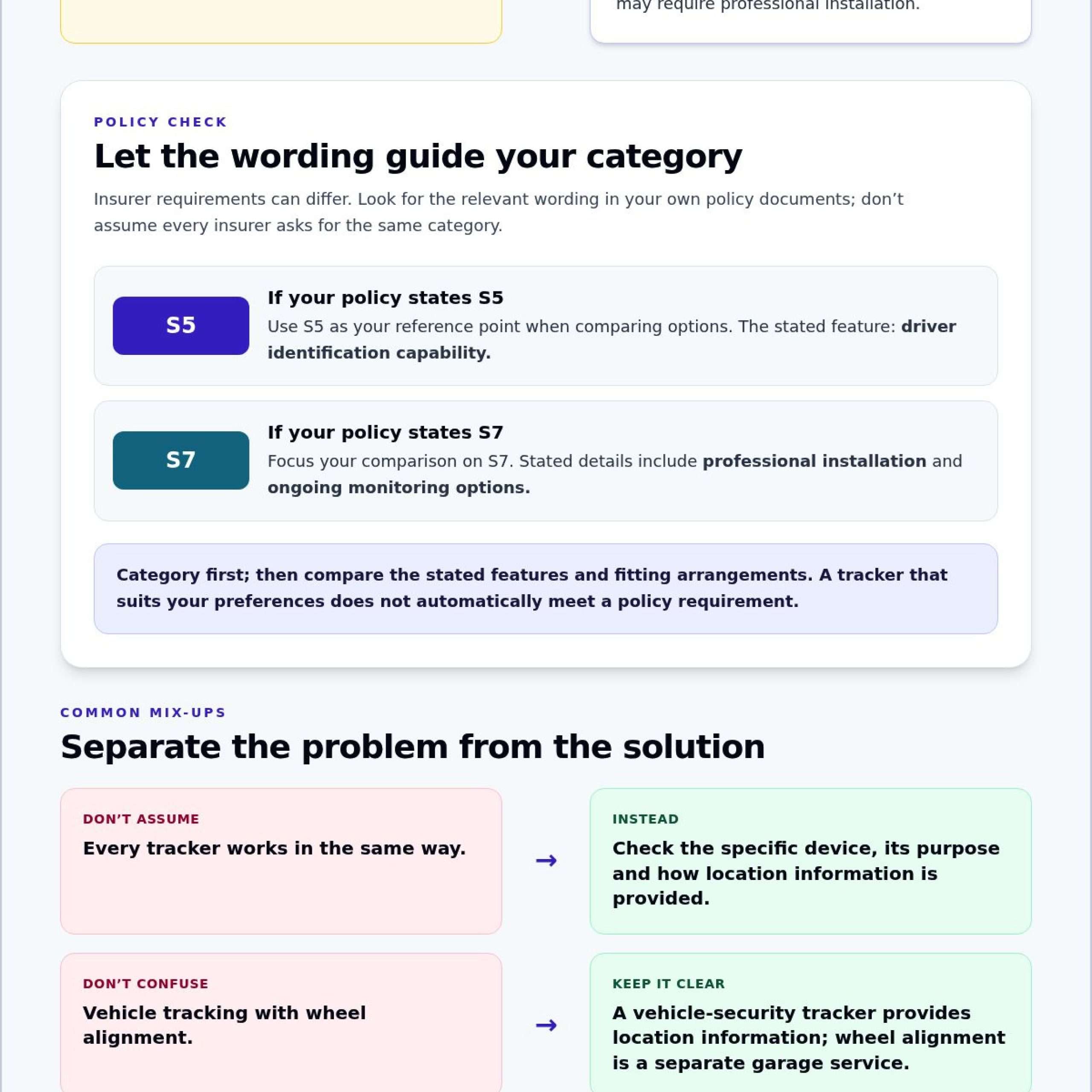
What to Expect When Arranging Professional Car Tracker Fitting
Arranging a car tracker fitting is easier when you work through the decision in order. Identify why you need tracking, match the tracker category to your vehicle and any policy wording, arrange a suitable fitting, then follow the installer’s guidance. This keeps the process focused on your requirements rather than assumptions about what every tracker or installation involves.
- Identify the need. Decide whether you’re arranging tracking for vehicle security, meeting an insurance requirement, or fitting a tracker for another purpose.
- Select the category. Use any category named in your policy as a key part of your decision. If there’s no stated category, focus on the vehicle and your reason for fitting.
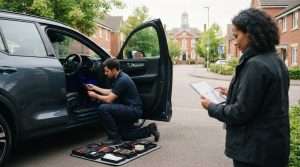
- Arrange fitting. Safe & Sound Mobile provides nationwide mobile tracker installation at home or work.
- Follow installer guidance. Take note of the guidance provided for the fitted tracker and how to use it.
Prepare for a mobile fitting appointment.
Before arranging a fitting, have your vehicle details and any relevant policy wording to hand. This makes it easier to explain which vehicle the tracker is for and whether your insurer has specified a category. Safe & SoundMobile’s mobile fitting service brings installation to your home or workplace, so you can arrange a fitting at a location that suits you.
Keep preparation simple. Share what you know about the vehicle and your tracker requirements, then follow the installer’s guidance on anything else you need. Don’t assume a particular fitting duration or procedure, as those details depend on the specific arrangement.
Why professional installation belongs in the decision
Fitting is part of choosing a tracker, not an afterthought. Consider the installation approach alongside the category and your policy wording, so your choice reflects the full requirement. S7 trackers have professional installation and ongoing monitoring options. Include fitting in your comparison from the start when arranging an insurance-approved tracker.
For example, if your policy names a category, keep that wording available when arranging fitting. It helps connect your chosen option with the reason for installation. If you’re arranging tracking for cars for personal security without a stated policy requirement, explain the vehicle and purpose so the fitting arrangement can be considered in context.
Once the fitting is arranged, follow the installer’s instructions for the tracker. Keep relevant system information with your vehicle documents so you can refer to it later. A clear fitting process helps you make an informed choice, but a tracker should not be treated as a guarantee of vehicle recovery.
Safe & Sound Mobile offers mobile tracker fitting nationwide at home or work. Learn about mobile car tracker fitting.
Choose a Car Tracker With Safe & Sound Mobile
The right tracker choice brings several details together: your vehicle, reason for fitting, any wording in your insurance policy, the relevant tracker category and your preferred fitting arrangement. Set these out before choosing. This keeps the decision focused on what you need, whether you’re securing a private car or responding to an insurer’s requirement.
If your policy names a category, use it as a key part of the decision. If it doesn’t, start with the vehicle and purpose, then choose the tracker features that suit your needs. Think about fitting at the same time rather than treating installation as a separate decision for later.
What Safe & Sound Mobile brings to the fitting process
Safe & Sound Mobile supplies insurance-approved GPS trackers and provides professional mobile installation across the UK, at home or work. This gives you a practical way to arrange fitting at a suitable location. Vehicle-specific advice helps bring the vehicle, intended use and any policy wording into the decision, so the tracker choice and fitting approach are considered together.
The available S5 and S7 options have different stated details. S5 trackers offer driver identification, while S7 trackers include professional installation and ongoing monitoring options. Use your policy wording to guide the category choice, then consider the details relevant to your requirements. Tracker products include a Lifetime Warranty on Trackers. This applies to tracker products only.
Take the next step with a suitable tracker.r
Before exploring options, gather the key information that will shape your choice:
- Vehicle: Identify which car needs a tracker.
- Purpose: Note whether your priority is security or an insurance requirement.
- Policy wording: Keep any stated category or tracker condition in view.
- Fitting preference: Consider whether you’d prefer installation at home or woou.
This preparation makes it easier to compare options on the details that matter, rather than getting distracted by features that don’t match your needs. It also gives you a clear basis for arranging professional fitting and following the installer’s guidance. A tracker is one part of a vehicle-security decision, not a promise that theft will be prevented or a vehicle recovered.
Choose a tracker that fits your vehicle and stated requirements, then arrange a suitable fitting. Explore car tracker options.
Take the Next Step Towards the Right Tracker
A confident choice starts with clarity, not guesswork. Keep your vehicle and reason for fitting at the centre of the decision, and let any policy wording guide your next move. That way, you can focus on options that suit your situation instead of features that don’t meet your needs.
Car tracking isn’t a one-size-fits-all decision. The right option fits your requirements and gives you a clear route to professional fitting. Safe & Sound Mobile supplies vehicle trackers and provides mobile fitting at home or work across the UK.
Explore car tracker options and arrange a suitable fit for your vehicle.
Frequently Asked Questions
Is a car tracker the same as a GPS tracking device?
Often, yes: a car tracker may be a GPS tracking device used to establish a vehicle’s location. The terms aren’t always interchangeable, though. A general-purpose GPS locator may not be an insurance-approved vehicle tracker, so consider the device’s intended use and category. If car tracking relates to a policy requirement, use the category stated in your insurance documents as your reference point.
Can a car tracker guarantee that a stolen vehicle will be recovered?
No. A tracker can help locate a vehicle, but it can’t guarantee it will be found or recovered. It’s a security measure, not a guaranteed outcome. If your vehicle is stolen, report it to the police and follow your insurer’s instructions. Keep your tracker and policy information accessible so you can provide relevant details when needed.
How much does a car tracker and fitting cost?
Pricing is available on request and depends on the tracker option. No fixed amount should be assumed without seeing the price for the specific option you’re considering. Compare the tracker and fitting price together so you understand the full cost before deciding. General online estimates may not reflect your chosen tracker.
Do car trackers need ongoing monitoring or a subscription?
Not every car tracker has the same monitoring arrangement. S7 trackers have ongoing monitoring options, but that doesn’t mean every tracker includes monitoring or the same service terms. Review the details for the specific option, including whether monitoring is included and whether any ongoing charges apply. Don’t assume a subscription is included.
Can you fit a tracker to a van or motorhome?
Yes. Safe & Sound Mobile serves owners of vans and motorhomes as well as cars, with mobile vehicle-security fitting across the UK. For example, a motorhome owner can consider an insurance-approved tracker and its impact on the vehicle and policy wording. Have the vehicle details and relevant insurance information ready when arranging fitting so the choice can be considered in context.
Does every tracker from Safe & Sound Mobile include a lifetime warranty?
Safe & Sound Mobile states that tracker products include a lifetime warranty. This applies to tracker products, not automatically to every item the company sells. If you’re comparing a tracker with another type of vehicle-security product, keep their warranty terms separate. Explore car tracker options and choose a tracker that fits your vehicle and requirements.

About author
Related posts
A dash cam’s recording time depends on its memory card and video quality. For a single-camera setup, a 32GB card stores around 2 to 4... Continue reading

Does a gps tracking dash cam let you find your car if it’s stolen? Not by itself. GPS can add location and journey context to... Continue reading
Could choosing the wrong tracker category leave your insurer’s requirement unmet? The right thatcham approved tracker installation uk starts with the... Continue reading

Car Immobiliser Fitting Shenfield: Options and Preparation Immobiliser fitting in Shenfield should start with the vehicle and the purpose of the installation. An additional immobiliser... Continue reading

Real-Time GPS Tracking Chelmsford: Cars, Vans and Fleets Real-time GPS tracking can help vehicle owners and businesses in Chelmsford view location information through a supported... Continue reading