
No products in the cart.
UK Most Stolen Vehicles in 2026: Trends, Risks and Protection
Trends, Risks and Protection
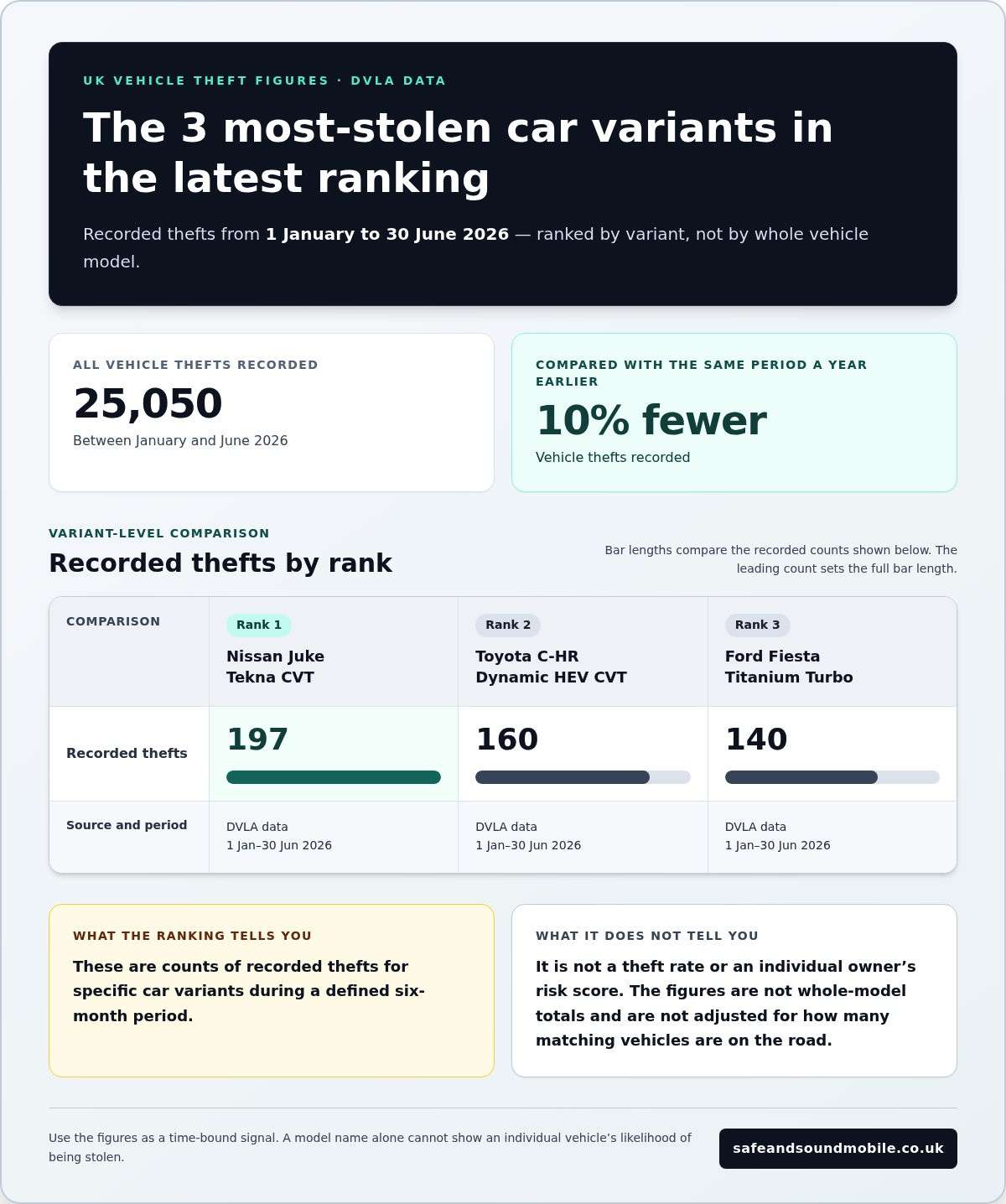
UK most-stolen vehicle figures contain a surprising twist: the most-stolen model variant in the first half of 2026 was the Nissan Juke Tekna CVT, with 197 thefts recorded, while the Ford Fiesta topped the full-year 2025 car ranking. The latest DVLA data also recorded 25,050 vehicle thefts between January and June 2026, 10% fewer than in the same period the year before.
A ranking is useful context, but it doesn’t mean every owner of a listed car faces the same level of risk. Some lists count specific variants rather than entire models, and raw theft totals don’t show how likely an individual vehicle is to be targeted. The number of similar vehicles on the road, your vehicle’s security features, and where you park and store your keys all affect how you should interpret the figures.
This guide explains what the latest UK theft data can and can’t tell you, highlights trends such as thefts involving hybrid and electric vehicles, and outlines practical ways to reduce exposure. You’ll also learn how an immobiliser and a tracker address different parts of the risk, so you can choose protection that suits your vehicle and routine.
Key Takeaways
- Understand what UK most stolen vehicles rankings measure, and why a model-variant list can differ from a whole-model ranking.
- Use UK MOST STOLEN VEHICLES data as a risk signal, not a prediction that every owner of a listed vehicle faces the same exposure.
- Consider parking habits, vehicle features and key security alongside make and model.
- Use practical security measures that suit how and where you use your vehicle.
- Understand the different roles of a tracker and an immobiliser, and how Thatcham S5 or S7 requirements may inform your choices.
What “UK most stolen vehicles” means in the latest available data
A “most stolen” ranking counts recorded thefts of specified vehicles during a stated period. It ranks totals, not the likelihood that an individual vehicle will be stolen. A model with a high number of recorded thefts may also be common on UK roads. A less common model could have a different relative risk if thefts were compared with the number of vehicles in use.
The latest model-variant ranking covers DVLA data from 1 January to 30 June 2026. When comparing rankings, look at the source, reporting period and vehicle categories counted, not just the headline. A list covering six months may look quite different from one covering a full year.
Which UK sources publish vehicle theft figures?
The Office for National Statistics (ONS) publishes police-recorded crime statistics for England and Wales. These include broader vehicle-offence categories, such as theft of a vehicle, theft from a vehicle and vehicle interference. They help explain the wider pattern of vehicle crime, but don’t necessarily provide a like-for-like ranking of individual car models.
The Home Office also publishes police-recorded crime data. DVLA data, including tables released following Freedom of Information requests, can support rankings by make, model or variant. Check what each table counts before comparing its figures with another dataset. Thatcham Research is known for vehicle security assessment, but that role alone doesn’t make it the source of a theft-frequency ranking.
Why theft rankings can differ between reports
Reports may cover different months or years, rank exact variants rather than whole models, or include different vehicle types. A car-only table can’t be compared directly with a total covering cars, vans and motorcycles. The DVLA model-variant ranking discussed here is a car ranking, not a complete count of every vehicle type.
Counts also answer a different question from theft rates. A count is the number of thefts recorded; a rate compares thefts with the number of matching vehicles on the road. Calculating a meaningful rate requires compatible theft and vehicle-population data for the same vehicle category and period. Insurance claims, recovery figures and police-recorded incidents are separate measures, not interchangeable rankings.
Quotable definition: “The latest UK model-variant theft ranking covered DVLA data for 1 January to 30 June 2026.” For background on the range of motor vehicle theft methods, see the overview, while keeping method explanations separate from UK theft-count data. Read the UK most stolen vehicles figures as a time-bound signal, not a personal risk score.
Which vehicles are most stolen in the UK? Read the verified ranking carefully.
The latest figures rank specific car variants, not every type of vehicle on UK roads. The table covers DVLA data from 1 January to 30 June 2026. Keep that reporting period in mind when comparing the results with a full-year ranking or another vehicle-theft dataset.
What the latest UK vehicle theft list actually shows
| Rank | Vehicle variant | Recorded thefts | Source and period |
|---|---|---|---|
| 1 | Nissan Juke Tekna CVT | 197 | DVLA data, 1 January to 30 June 2026 |
| 2 | Toyota C-HR Dynamic HEV CVT | 160 | DVLA data, 1 January to 30 June 2026 |
| 3 | Ford Fiesta Titanium Turbo | 140 | DVLA data, 1 January to 30 June 2026 |
These are variant-level counts. They shouldn’t be added to totals for every Nissan Juke, Toyota C-HR, or Ford Fiesta, and the table doesn’t provide a theft rate adjusted for how many of each variant are on the road. It also doesn’t provide comparable positions for vans or motorcycles. Treat it as a ranking of the listed car variants, rather than a comparison across all vehicle types.
Why a high theft count does not equal personal risk
A national theft total shows how often vehicles were recorded as stolen, not the chance that a particular owner will lose theirs. Popular models may lead raw-count rankings partly because more are in use. To compare relative risk, consider theft figures alongside the number of matching vehicles on the road, using compatible categories and time periods. This ranking doesn’t supply that rate.
A national ranking describes recorded theft totals for a defined period; it isn’t an individual risk assessment for every owner of a listed vehicle. You can’t read your own exposure from a model name alone. For wider context on organised vehicle theft, see the Royal United Services Institute’s Organised Vehicle Theft in the UK report.
Use the list as a prompt to review your vehicle’s security, not as a reason to assume theft is inevitable. If you’re considering additional protection, explore vehicle security options that suit your car and circumstances.
What theft trends and methods mean for UK vehicle owners
Vehicle theft patterns change, but a ranking can’t explain why a particular vehicle was targeted or predict what will happen to yours. Use the figures as a prompt to understand changing vehicle types and theft methods, then review your own vehicle’s features and security routine.
How vehicle theft methods can differ
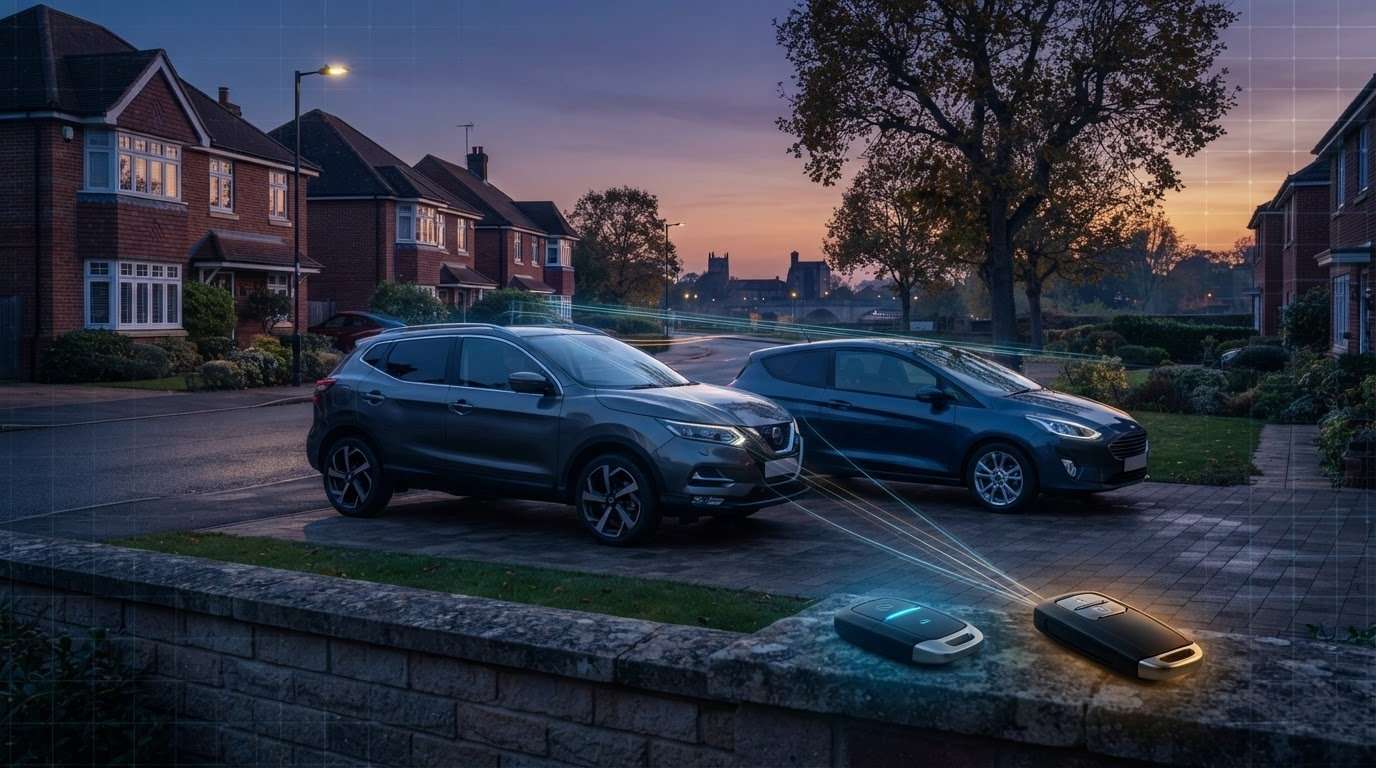
Keyless entry can create a vulnerability to relay theft, where criminals exploit communication between a vehicle and its key fob. Details vary by vehicle, key system, and specification, so a method associated with one model shouldn’t automatically apply to another. The practical steps are to protect your keys and choose security suited to your vehicle.
The DVLA-derived ranking for the first half of 2026 also points to a changing mix of vehicles: four fully electric models appeared in the top 20, compared with none in the 2025 top 20. This shows a shift in the models appearing in that list. It doesn’t prove that every electric vehicle is at greater risk or that a particular theft method explains the change.
For broader context, the Office for National Statistics publishes official vehicle theft data from the Crime Survey for England and Wales. This helps readers explore vehicle-related theft beyond individual model rankings, but it doesn’t provide a personal risk score. Treat dramatic headlines and individual accounts as prompts to investigate, not as evidence that every vehicle or owner faces the same threat.
What rankings can’t tell you about your own vehicle?
A national list doesn’t account for your vehicle’s exact security specification, where it’s kept, how often it’s used, or your routine around its keys. These details can help you choose security measures that suit your circumstances, but the ranking can’t quantify their effect on your individual risk. Review the vehicle handbook and your insurer’s requirements, then consider practical measures that fit your parking arrangements and daily use.
Trackers and immobilisers address different aspects of vehicle security, but no device can guarantee theft prevention or vehicle recovery. For the fundamentals of how tracking works, see the Vehicle Tracking Explained guide. Use UK MOST STOLEN VEHICLES figures as context, not as a prediction about your car.
How to reduce theft risk: practical steps for UK vehicle owners
UK most stolen vehicles rankings can help you think about security, but your everyday habits are a practical place to start. Build a routine around the vehicle you drive, the keys it uses and where you leave it. These steps can reduce avoidable opportunities for theft, but none can guarantee your vehicle will remain safe.
Simple habits that strengthen everyday vehicle security
- Lock the vehicle every time. Check that doors and windows are closed, even during a brief stop. Don’t leave valuables in view.
- Secure your keys. Keep keys away from doors and windows at home. If your vehicle uses keyless entry, follow the manufacturer’s guidance for protecting the key fob, including any advice on signal-blocking storage.
- Choose secure parking when available. At home, use a garage or other secure space if practical. Away from home, choose suitable parking for your circumstances and avoid leaving the vehicle unattended longer than necessary.
- Follow the vehicle’s security guidance. Check the handbook for instructions on its locking system, alarm and keyless features. Use any fitted security equipment as directed.
Small habits are most useful when they’re easy to repeat. For example, take your keys with you when parking at work and store them securely at home overnight. These are sensible precautions, not a substitute for security equipment or a promise that theft can’t happen. For broader peace of mind that extends beyond vehicle security to everyday personal safety, you can explore The Wellbeing App for round-the-clock monitoring options.
When a tracker or immobiliser may suit your needs
Different devices address different parts of the risk. A vehicle tracker can support efforts to locate a vehicle after theft, depending on its service, setup and the circumstances. An immobiliser helps prevent the vehicle from being started without authorisation. A car alarm can alert people nearby to interference, while a dash cam primarily records footage that may provide useful evidence. These devices aren’t interchangeable, and none guarantees prevention or recovery.
If you’re considering a tracker, read the Insurance Approved Vehicle Trackers guide. For information about an immobiliser, see the Ghost Immobiliser guide. Check your insurer’s security requirements and match your choice to your vehicle and parking routine. Professional installation can be a practical next step if you want equipment fitted to your vehicle.
Explore professionally fitted vehicle security to consider protection that fits your vehicle and everyday use.
Choosing professional vehicle security after checking the UK theft data
UK most stolen vehicles rankings are a starting point, not a security prescription. Choose protection based on your vehicle’s specification, how you use it, where it’s parked and any security conditions in your insurance policy. Requirements can differ between policies and vehicles, so read your own documents before choosing equipment.
Matching a security measure to the risk you want to address
- Tracker: helps locate a vehicle after theft. Thatcham S7 is a post-theft tracking category. S5 provides a higher level of security and includes Automatic Driver Recognition (ADR) tags. Neither guarantees recovery.
- Immobiliser: is designed to help prevent unauthorised starting. It addresses a different part of the theft risk from a tracker, which supports location after a theft.
- Car alarm: alerts people nearby to interference, depending on the system and circumstances.
- Dash cam: records footage that may be useful as evidence. It isn’t a substitute for a tracker or an immobiliser.
No single device suits every vehicle or circumstance. If your policy specifies a tracker category, use that requirement to guide your choice and make sure the selected system matches it. Don’t assume a product meets your insurer’s terms simply because it’s described as insurance-approved.
What professional mobile installation adds
Safe & Sound Mobile supplies and professionally installs insurance-approved Thatcham S5/S7 vehicle trackers across the UK. Its mobile installation service brings the fitting to your location, making it a practical option if travelling to an installation premises doesn’t suit your routine.
Before choosing, note your vehicle’s make, model, and security specification; consider whereit’ss usually parked; and read your policy for any stated security requirements. Then compare the role of a tracker with the separate purpose of an immobiliser, alarm or dash cam. A tailored combination may suit your needs, but no system can guarantee theft prevention or vehicle recovery.
Explore Safe & Sound Mobile’s vehicle security services and professionally fitted tracker options to find protection suited to your vehicle and everyday use.
Turn theft data into a practical security plan.
UK MOST STOLEN VEHICLES rankings are useful indicators, not predictions about an individual car. They count thefts within a defined dataset and period, so check which vehicles and measures a report includes before concluding. You can assess your vehicle’s security features, where it’s usually parked, your key-handling routine and any requirements in your insurance policy. Everyday precautions help, while additional devices can address different needs. An immobiliser helps prevent unauthorised starting; a tracker can support efforts to locate a vehicle after theft. Neither guarantees prevention or recovery.
For added protection, Safe & Sound Mobile provides insurance-approved Thatcham S5/S7 tracker installation, with a nationwide mobile fitting service that brings installation to your location. Choose security that fits your vehicle and circumstances, rather than relying on a ranking alone.
Explore professionally fitted vehicle security with Safe & Sound Mobile and take a considered next step towards protecting your vehicle.
Frequently Asked Questions
Which vehicles are most stolen in the UK?
The latest model-variant ranking uses DVLA data for 1 January to 30 June 2026. It lists the Nissan Juke Tekna CVT first, with 197 recorded thefts, followed by the Toyota C-HR Dynamic HEV CVT with 160 and the Ford Fiesta Titanium Turbo with 140. These are raw counts, not theft rates adjusted for how many vehicles are on the road. Rankings change with the dataset, timeframe and vehicle categories counted.
What is the most stolen car in the UK in 2026?
The leading variant in the latest 2026 ranking is the Nissan Juke Tekna CVT, with 197 thefts recorded in DVLA data from 1 January to 30 June 2026. That’s a half-year result, not a full-year ranking. Use the stated reporting period when comparing it with other figures.
Are vans or motorcycles included in UK vehicle theft statistics?
Coverage depends on the dataset. The model-variant ranking cited here covers cars only; it doesn’t provide comparable rankings for vans or motorcycles. Broader Office for National Statistics and Home Office vehicle-crime figures cover different measures, which may include theft from vehicles or vehicle interference, not just vehicle theft. Don’t compare counts across cars, vans or motorcycles unless the categories, reporting periods and methods are compatible.
Does being on a most-stolen list mean my vehicle is likely to be stolen?
No. A UK most-stolen vehicles ranking shows recorded theft totals for a defined period, not the likelihood of theft for an individual owner. Popular vehicles may appear high because more are in use; a raw count doesn’t adjust for the number of matching vehicles on the road. Consider your vehicle’s security, parking arrangements and insurer requirements. A national list is a signal to review protection, not a personal risk prediction.
How can I reduce the risk of my vehicle being stolen?
Lock the vehicle, close its windows and keep valuables out of sight. Secure keys at home, follow the vehicle manufacturer’s guidance, and use suitable secure parking where available. Check your insurance policy for any security requirements. Additional equipment can address different needs: an immobiliser helps prevent unauthorised starting, while a tracker can support efforts to locate a vehicle after theft. These precautions can’t guarantee prevention or recovery.
Can a vehicle tracker prevent a car from being stolen?
A tracker is primarily intended to help locate a vehicle after it’s stolen; it isn’t the same as an immobiliser, which is designed to help prevent unauthorised starting. A tracker’s usefulness depends on its product, setup, service and the circumstances of a theft. It may support recovery efforts, but can’t guarantee that a stolen vehicle will be found. Consider it as one part of a security plan, not a standalone promise.
Do insurers require a Thatcham-approved tracker?
Not every insurer or vehicle requires a tracker. Requirements depend on the insurer, policy and vehicle, so read your policy wording before choosing equipment. In the categories described here, S7 is a post-theft tracking system. S5 offers a higher level of security and includes Automatic Driver Recognition tags. These categories don’t mean every tracker meets the terms of an individual policy. Match the equipment to the requirement stated in your policy.
About author
Related posts
A dash cam’s recording time depends on its memory card and video quality. For a single-camera setup, a 32GB card stores around 2 to 4... Continue reading
Does a gps tracking dash cam let you find your car if it’s stolen? Not by itself. GPS can add location and journey context to... Continue reading
Could choosing the wrong tracker category leave your insurer’s requirement unmet? The right thatcham approved tracker installation uk starts with the... Continue reading
Car Immobiliser Fitting Shenfield: Options and Preparation Immobiliser fitting in Shenfield should start with the vehicle and the purpose of the installation. An additional immobiliser... Continue reading
Real-Time GPS Tracking Chelmsford: Cars, Vans and Fleets Real-time GPS tracking can help vehicle owners and businesses in Chelmsford view location information through a supported... Continue reading