
No products in the cart.
Tracking Device for Vehicles: How to Choose the Right Tracker
How to Choose the Right Tracker
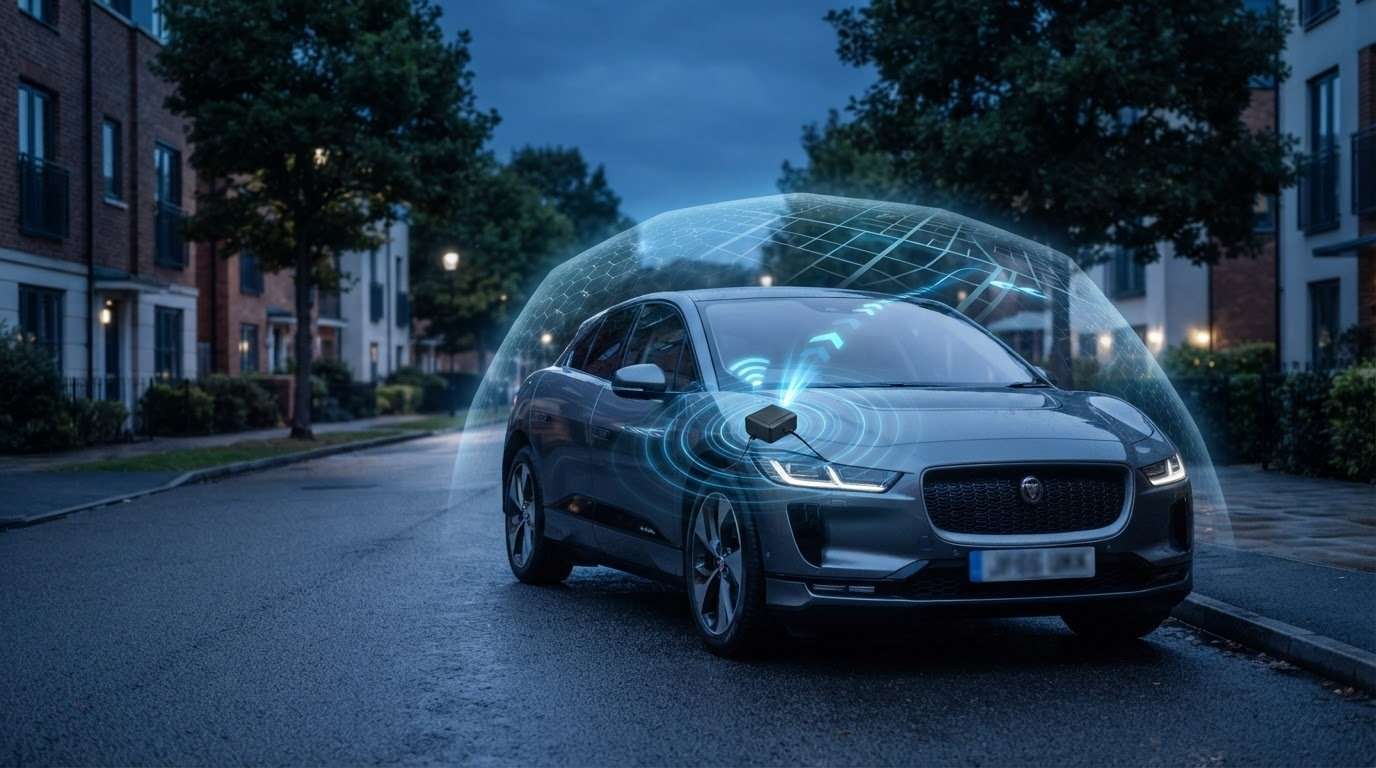
Could a feature-rich tracker still be the wrong choice for your car? The right tracking device for vehicles depends on the protection you need, your insurer’s requirements and how the system is fitted, not just the features listed on the product page.
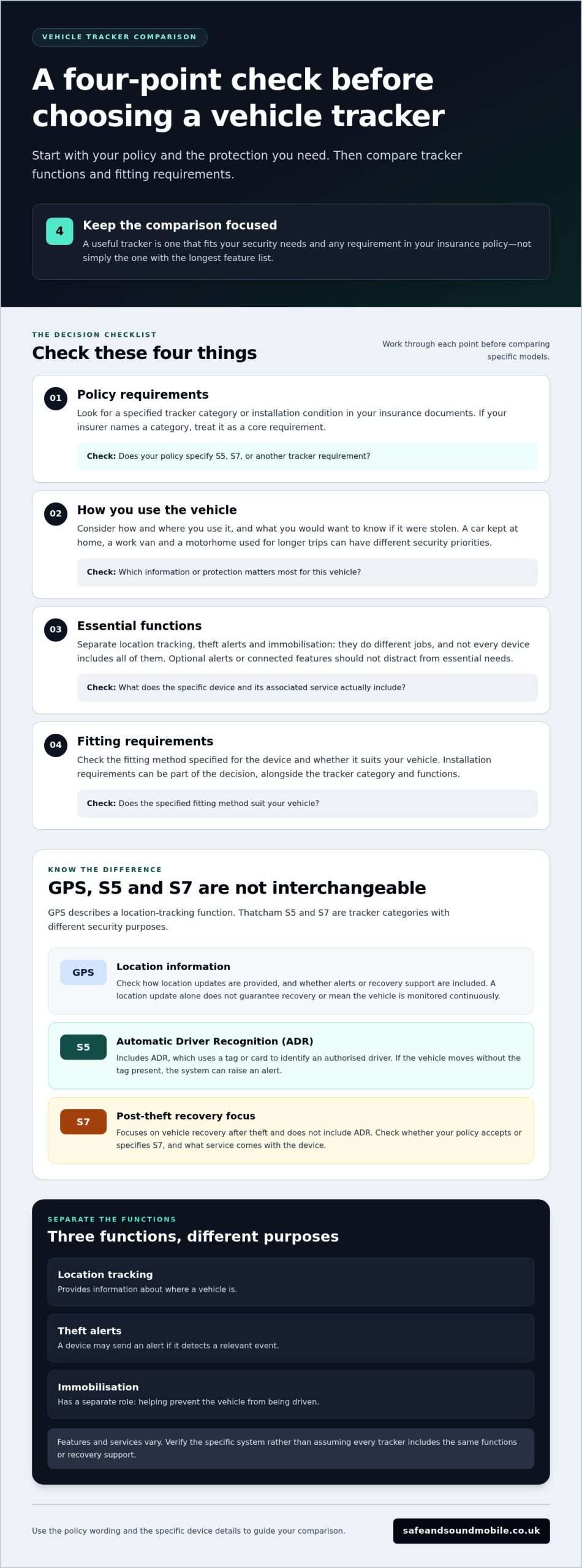
Comparing tracker types, ongoing services and installation options can feel confusing. Thatcham S5 trackers include Automatic Driver Recognition, while S7 trackers focus on vehicle recovery. Your insurer may specify which category your policy requires, so check the wording before choosing a device.
This guide explains the differences between tracker options, the insurance considerations to keep in mind and what to expect from professional mobile fitting. Safe & Sound Mobile provides mobile fitting across the UK. You’ll also find practical points to consider about subscriptions and ongoing services, so you can choose a tracker that suits your vehicle and policy.
Key Takeaways
- A vehicle tracking device can support location monitoring, theft alerts, or immobilisation. Identify the protection you need before comparing features.
- Compare tracker type, installation and policy requirements rather than getting distracted by optional extras.
- Separate essential functions from optional alerts and connected features to find a system that suits how you use your vehicle.
- Before fitting, gather your vehicle details, policy requirements and preferred installation location.
- Safe & Sound Mobile supplies insurance-approved tracker options and provides professional mobile fitting.
What a tracking device for vehicles does, and when it is useful
A vehicle tracking device is equipment fitted to or used with a vehicle to help locate and monitor it. Depending on the device and its associated service, it may provide location updates, theft-related alerts or an immobilisation function. These features aren’t universal, so choose a vehicle tracking device based on what you need it to do.
A tracking system establishes a vehicle’s location and communicates information to a connected service or user. Many systems use satellite positioning to establish location, then send updates through a communications network. Update frequency depends on the device and service. This overview explains common components and applications in more detail.
How does a vehicle tracking device work?
Think of the functions as separate layers. Location tracking provides information about where a vehicle is. A device may also send theft alerts if it detects a relevant event. An immobiliser has a different purpose: it helps prevent the vehicle from being driven. Not every tracker includes all these functions. A location update alone doesn’t guarantee recovery or mean the vehicle is being monitored continuously.
Recovery support also depends on the system and service. Before choosing, establish which functions are included and whether they match the protection you need.
Who may benefit from a vehicle tracker?
A tracker may suit an owner who wants help locating a vehicle, added support in the event of theft, or a device that meets an insurer’s stated requirement. The right option depends on the vehicle and how you use it. A car kept at home, a van used for work and a motorhome taken on longer trips can have different security priorities.
If your insurer specifies a tracker category, treat that as a key part of your decision. Don’t assume any tracking device will meet the policy wording. Also consider whether you need location information alone or additional security functions. For a broader introduction to vehicle tracking and security options, read this vehicle tracking guide.
Vehicle tracker types: understand GPS, S5 and S7 options
GPS describes a location-tracking function, while Thatcham S5 and S7 refer to recognised tracker categories with different security purposes. They aren’t interchangeable labels. To choose a vehicle tracking device, start with the protection you need and any category named in your insurance policy. Then compare the specific functions and fitting requirements.
| Category | Typical decision factor | Details to verify |
|---|---|---|
| GPS tracker | You want vehicle location information. | How location updates are provided and whether alerts or recovery support are included. |
| Thatcham S5 | You need a tracker with Automatic Driver Recognition (ADR). | Whether your policy requires S5 and what the specific system includes. |
| Thatcham S7 | You need a tracker focused on post-theft recovery. | Whether your policy accepts or specifies S7, and what service the device includes. |
What should you know about S5 and S7 trackers?
The key distinction is ADR. An S5 tracker includes Automatic Driver Recognition, which uses a tag or card to identify an authorised driver. If the vehicle moves without the tag present, the system can raise an alert. An S7 tracker focuses on post-theft recovery and doesn’t include ADR. The categories have different security purposes, so don’t assume one meets the same need as the other.
Let your insurer’s wording guide your choice. Check the category specified in your policy rather than relying on a general description of an “approved tracker”. Safe & Sound Mobile supplies and professionally fits insurance-approved S5 and S7 options. Read the insurance-approved vehicle tracker guide for more information.
How do GPS trackers differ from other vehicle security devices?
GPS tracking is about location. An immobiliser has a separate role: helping prevent a vehicle from being driven. A tracker may also include alerts, but features and services vary. Check the details of the specific device rather than assuming every GPS tracker includes the same functions or recovery support.
Match the tracker to your priority. If your main concern is knowing a vehicle’s location, focus on the tracking function and how often it updates. If your insurer specifies S5 or S7, make that requirement central. If you’re comparing security options, explore Safe & Sound Mobile’s tracker options.
How to compare vehicle tracking devices for your needs
The right tracker meets your security needs and any requirements in your policy. Use this four-point check before comparing models:
- Policy: Look for a specific tracker category or installation condition in your insurance documents.
- Vehicle use: Consider how and where you use the vehicle, and what you’d want to know if it were stolen.
- Functions: Separate essential location or security functions from optional alerts and connected features.
- Fitting: Check the device’s specified fitting method and whether it suits your vehicle.
This approach keeps the comparison focused. If your insurer names a tracker category, treat it as a core requirement. An extra alert may be useful, but it shouldn’t distract from meeting the policy wording. A work van and a motorhome used for leisure may have different priorities. Choose for your circumstances, not a general claim that one tracker is best for everyone.
Which features matter when selecting a tracker?
Compare the capabilities of the specific system, not just its headline description. Check what location information it provides, whether it can send alerts and what service supports those functions. Connectivity and update behaviour depend on the device and service, so don’t assume every system offers the same update frequency. Treat extras you don’t need as optional, and prioritise features that serve your main security goal.
Write down your essentials before reviewing options. If you need a policy-specified tracker, confirm that requirement first. Then consider whether additional functions solve a real need for you.
Do vehicle trackers require a subscription?
Service arrangements vary. Some tracking devices may involve ongoing service terms, while others may be offered differently. Don’t assume every tracker uses the same subscription model or that its functions continue the same way without ongoing service.
Read the terms for the particular system. Establish what the initial purchase includes, whether ongoing service is required for the functions you want, and how renewal or cancellation works. Keep these details alongside your policy requirements as you compare options. Understanding both helps you choose a vehicle tracking device that fits your security priorities and intended use.
Fitting a vehicle tracking device: installation, privacy and practicalities
Professional fitting helps ensure your chosen tracker is installed for your vehicle and its intended use. The method depends on the tracker and vehicle, so fitting can differ between a car, van and motorhome. Before arranging vehicle tracking devices, gather the details needed to match the installation to your requirements.
What happens during professional mobile tracker fitting?
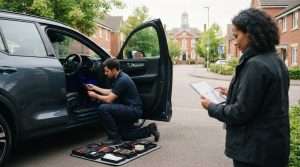
When arranging a visit, share your vehicle details, the tracker you’ve selected and any relevant policy requirement. Safe & Sound Mobile provides professional mobile installation across the UK, bringing the fitting service to a suitable location for your vehicle. The installer fits the device and provides a handover so you know what to expect from the system and its associated service. The process depends on the vehicle and tracker, so don’t assume every fitting follows the same procedure or takes the same amount of time.
Plan for vehicle access and a practical work area. Agree in advance where the vehicle will be available. This helps make the visit straightforward without relying on assumptions about fitting times or technical steps.
What should you prepare before the installation?
Preparation helps keep the installation aligned with your security needs. Have the vehicle available at the agreed location and provide accurate details when arranging the service. If your insurer requires a particular tracker category or fitting condition, keep the relevant policy instructions accessible.
- Confirm the vehicle’s make, model and any other requested details.
- Have the insurer’s tracker instructions ready to refer to.
- Choose a suitable location where you can access the vehicle for fitting.
- Note any questions about the tracker’s functions and post-installation service.
Leave vehicle wiring and security-device installation to a professional. Fitting equipment yourself may affect whether it meets the requirements of your chosen system or policy.
Consider privacy, particularly if a vehicle is shared or used by employees. Make sure drivers understand that tracking equipment is fitted, and explain its intended use clearly and appropriately. This helps set expectations about who uses the vehicle and how its tracking information is handled.
For a professionally fitted vehicle tracker, arrange mobile tracker installation with Safe & Sound Mobile.
Choose a professionally fitted vehicle tracking device with Safe & Sound Mobile.
Make your decision in three steps: identify the protection you need, check your insurance policy wording, then choose a tracker with features and fitting that meet those requirements. This keeps the focus on practical protection rather than extras you may not use. Safe & Sound Mobile supplies insurance-approved vehicle trackers, including Thatcham S5 and S7 options, and provides professional mobile fitting across the UK.
When an insurance-approved tracker may be the right fit
An insurance-approved tracker may be suitable if your policy specifies one. Read the wording carefully, as it may name a particular category. Don’t assume every tracker or approval will satisfy the same requirement. Compare the stated condition with the tracker option before choosing.
Safe & Sound Mobile offers Thatcham S5 and S7 tracker options. They serve different security purposes, so use your policy requirements and priorities to guide your selection. Explore the insurance-approved tracker options to compare the available categories.
Arrange mobile vehicle tracker fitting across the UK
Professional mobile fitting brings the service to your vehicle. Safe & Sound Mobile provides mobile fitting across the UK for cars, vans and motorhomes. The fitting approach depends on the vehicle and selected tracker, so have your vehicle details and any relevant insurer instructions ready when arranging the service.
Before proceeding, make sure the tracker’s category matches your policy wording, identify which functions matter to you and review any service terms connected to the device. This gives you a clear basis for choosing a vehicle tracking device without making assumptions about features or ongoing arrangements.
Explore vehicle tracker options and mobile fitting to take the next step towards a professionally fitted tracker.
Choose vehicle protection with confidence
The right vehicle tracking device matches your security priorities and your insurer’s wording. Compare the functions you need, check any specified tracker category and review the service terms. Don’t assume every device works in the same way.
Safe & Sound Mobile supplies insurance-approved Thatcham S5 and S7 tracker options, with professional mobile fitting across the UK. Specialist vehicle security fitting hhelps you movefrom research to iinstallationwith your vehicle and policy requirements in mind.
Explore insurance-approved vehicle trackers and UK-wide mobile fitting and take the next step towards protection that suits your vehicle.
Frequently Asked Questions
What is a tracking device for vehicles?
A vehicle tracking device is equipment that helps determine a vehicle’s location using tracking technology and a communications connection. Depending on the system, it may also provide alerts or other services. Features vary, so check the details of the specific device and service before choosing. Don’t assume every tracker provides continuous live updates, theft alerts or recovery support, as these capabilities depend on the system.
Is a vehicle tracker required by car insurance?
A vehicle trackerisn’tt required for every car insurance policy. An insurer may specify a tracker or category for a particular vehicle or policy, so read your policy wording carefully. If it names a requirement, use that wording to guide your choice. Before arranging professional fitting, make sure the selected tracker meets the stated condition rather than assuming any tracker will be accepted.
Do vehicle tracking devices need a subscription?
Some vehicle tracking systems may require an ongoing service or subscription, but arrangements vary by device and provider. Check the specific terms before choosing, including whether recurring charges apply for connectivity or other services. Don’t assume a tracker includes monitoring or that all devices use the same payment model. Understanding what an ongoing service covers helps you compare options and know what to expect after installation.
Can a tracking device be fitted to any vehicle?
Compatibility and fitting requirements depend on both the vehicle and the tracker. Share accurate vehicle details when arranging installation, and keep any relevant insurer instructions ready if the tracker is policy-related. Safe & Sound Mobile provides professional mobile fitting for cars, vans and motorhomes. The installation approach depends on the selected system and vehicle, so don’t assume one device or fitting method suits every vehicle.
What is the difference between a vehicle tracker and an immobiliser?
A vehicle tracker focuses on locating a vehicle and may provide related alerts, depending on the system. An immobiliser has a different purpose: it’s designed to help prevent the vehicle from being started without authorisation. These are distinct security functions and may be considered separately or together. Check each device’s specific capabilities rather than assuming a tracker includes immobilisation or that one function replaces the other.
Can a vehicle tracker guarantee that a stolen car will be recovered?
No vehicle tracker can guarantee recovery of a stolen car. Depending on its capabilities and connectivity, a tracker may provide location information that can support a response, but outcomes vary. If your vehicle is stolen, follow the relevant service’s instructions and contact the police. Don’t try to locate or recover the vehicle yourself. A tracker is a security measure, not a promise of recovery.

About author
Related posts
A dash cam’s recording time depends on its memory card and video quality. For a single-camera setup, a 32GB card stores around 2 to 4... Continue reading

Does a gps tracking dash cam let you find your car if it’s stolen? Not by itself. GPS can add location and journey context to... Continue reading
Could choosing the wrong tracker category leave your insurer’s requirement unmet? The right thatcham approved tracker installation uk starts with the... Continue reading

Car Immobiliser Fitting Shenfield: Options and Preparation Immobiliser fitting in Shenfield should start with the vehicle and the purpose of the installation. An additional immobiliser... Continue reading

Real-Time GPS Tracking Chelmsford: Cars, Vans and Fleets Real-time GPS tracking can help vehicle owners and businesses in Chelmsford view location information through a supported... Continue reading