
No products in the cart.
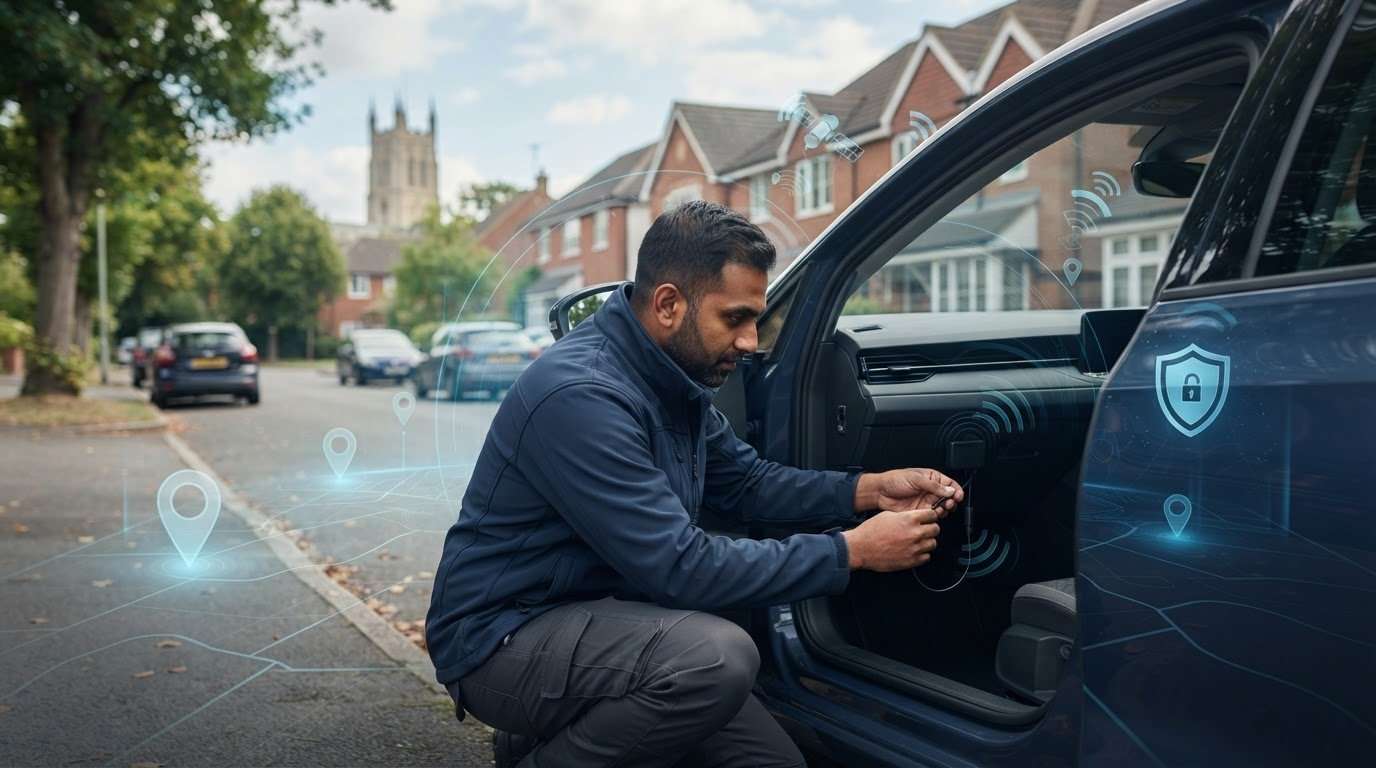
Vehicle GPS Tracker
How to Choose the Right One in the UK
Choosing a GPS vehicle tracking system means matching the device to your insurer’s requirements, your vehicle, and the service you need if it’s stolen. The most advanced tracker isn’t always the right choice. It’s easy to focus on location tracking and overlook important details such as the approved category, professional fitting and ongoing service.
If you’re unsure what a tracker actually does or whether you need a Thatcham S5 or S7 option, start by checking with your insurer. The right choice depends on its specific requirements. A tracker can support vehicle recovery, but it can’t guarantee it.
This guide explains how vehicle GPS trackers work, what to compare and which questions to ask your insurer and installer. You’ll also learn what to check about coverage, monitoring and recovery arrangements. Safe & Sound Mobile supplies insurance-approved S5 and S7 vehicle trackers, with a UK-wide mobile fitting service. Monitoring is a separate consideration, so confirm exactly what’s included and who provides it.
Key Takeaways
- Understand what a GPS tracker can help you do, and why it can’t guarantee vehicle recovery.
- Learn how to compare a GPS tracker vehicle option with insurance-approved S5 and S7 categories.
- Check coverage, fitting arrangements and ongoing service terms before choosing a tracker.
- Use a practical checklist to confirm your insurer’s requirements and what installation evidence to keep.
- See how professional mobile fitting from Safe & Sound Mobile can help you arrange a suitable tracker.
What a vehicle GPS tracker does and what it cannot guarantee
A vehicle GPS tracker uses location technology to help locate a vehicle. The device gathers location information, while its communication connection and associated service determine how it shares that information and what support may be available. These parts work together, but they are not the same thing.
That distinction matters when choosing a vehicle GPS tracker. A device that provides location updates doesn’t automatically include continuous monitoring, theft alerts or a recovery service. Check what comes with the specific tracker and any service you’re considering.
How vehicle GPS tracking works in everyday terms
A tracker uses satellite signals to estimate a vehicle’s location. Depending on the system, it may then send that information through a communications connection so you can view it through an associated service or interface. The Vehicle tracking system overview explains the basic relationship between tracking hardware and software.
A vehicle GPS tracker uses location technology to help determine where a vehicle is and, when the system allows, share that location with an authorised user or service. A location update is not the same as someone actively monitoring the vehicle or arranging its recovery. Those arrangements depend on the service connected to the tracker.
What a GPS tracker can and cannot do
A tracker may help locate a vehicle if it’s stolen, depending on the device, available signal and service arrangements. Some options may also provide alerts or let an authorised user access location information. Don’t assume these features are included. Ask the installer or provider what access, alerts and ongoing services come with the specific tracker, and whether you need to arrange anything separately.
A tracker can’t guarantee protection from theft, uninterrupted location updates or recovery of a stolen vehicle. Signal or service limitations may affect when location information is available, and recovery depends on circumstances beyond the tracker itself. Treat tracking as one part of vehicle security, not a substitute for other precautions. If you also need reliable breakdown assistance or vehicle transport across East and Outer London, check out Instant Recovery.
There’s also an insurance consideration. In the UK, your insurer may specify an approved tracker category for your vehicle. Requirements can differ, so confirm the exact category and any installation evidence your insurer accepts before choosing a device. A tracker that provides location data may not meet a policy requirement simply because it is described as GPS-enabled.
GPS tracker, S5 or S7: understand the options before comparing
GPS tracking describes what a device can do with location information. It doesn’t automatically mean the tracker meets an insurer’s requirements. Thatcham S5 and S7 are insurance-approved categories, and Safe & Sound Mobile supplies and installs options in both. Thatcham Research’s vehicle security standards provide useful context when comparing categories.
Broadly, S7 is a tracking category, while S5 includes Automatic Driver Recognition (ADR), which uses a driver ID tag or fob. The specific device and its associated service still matter. Don’t assume the category alone tells you what location access, alerts or ongoing support are included. For more category-specific information, see this insurance-approved vehicle tracker guide.
A GPS tracker vehicle search may bring up standalone devices as well as approved tracker options. Use the comparison below to separate questions about category, installation, and service. Not every GPS device meets an insurer’s requirements.
| What to compare | What to confirm |
|---|---|
| Insurer requirement | Which category, if any, your insurer requires for your specific vehicle. |
| Fitting | Whether professional installation is required and what evidence your insurer will accept. |
| Service terms | What location access, alerts or other services are included, and whether a subscription applies. |
| Your needs | Whether the confirmed features and service arrangements suit how you use the vehicle. |
When an insurer asks for an approved vehicle tracker
Before choosing or booking a tracker, ask your insurer to confirm the required category and acceptable installation evidence. Requirements can vary, so don’t assume S5 or S7 suits every policy. For broader background, read the Thatcham tracker guide.
Questions to ask about tracking and service terms
Before committing, confirm how you access location information, whether alerts are included, how signal coverage applies where you drive, and whether the service involves an ongoing subscription. Check these details directly with the provider for the specific option. Safe & Sound Mobile does not provide 24/7 monitoring, so confirm who, if anyone, provides the monitoring or recovery arrangements you need.
If you’re comparing approved options, explore professionally fitted vehicle trackers from Safe & Sound Mobile alongside your insurer’s confirmed requirements.
Compare vehicle GPS trackers by coverage, fitting and real-world use
The right tracker should meet your insurer’s confirmed requirements and suit how you use your vehicle. Compare more than the device label: consider how it’s fitted, how you access location information, and what ongoing service, if any, comes with it. A GPS tracker vehicle option can only deliver what its hardware, signal and associated service allow.
Coverage isn’t a blanket promise. Location updates and communication may depend on the specific device, available signal and service arrangement. If you regularly park or travel in places where signal may be limited, ask the supplier how the chosen system works in those conditions. Don’t assume all trackers update continuously or use the same alert method.
Coverage, alerts and location access
Ask how location information is made available, how you can access it and whether alerts are included. Confirm who receives an alert and what happens if the tracker can’t communicate. These details vary by option, so check product-specific coverage, notifications and access arrangements with the supplier before deciding.
Fitting, compatibility and ongoing terms
Confirm that the proposed tracker suits your vehicle and meets your insurer’s requirements. Ask how professional fitting is arranged and what installation evidence you’ll receive. Then check whether the hardware and any tracking or monitoring service are separate. Clarify service duration, recurring charges and cancellation terms directly with the supplier.
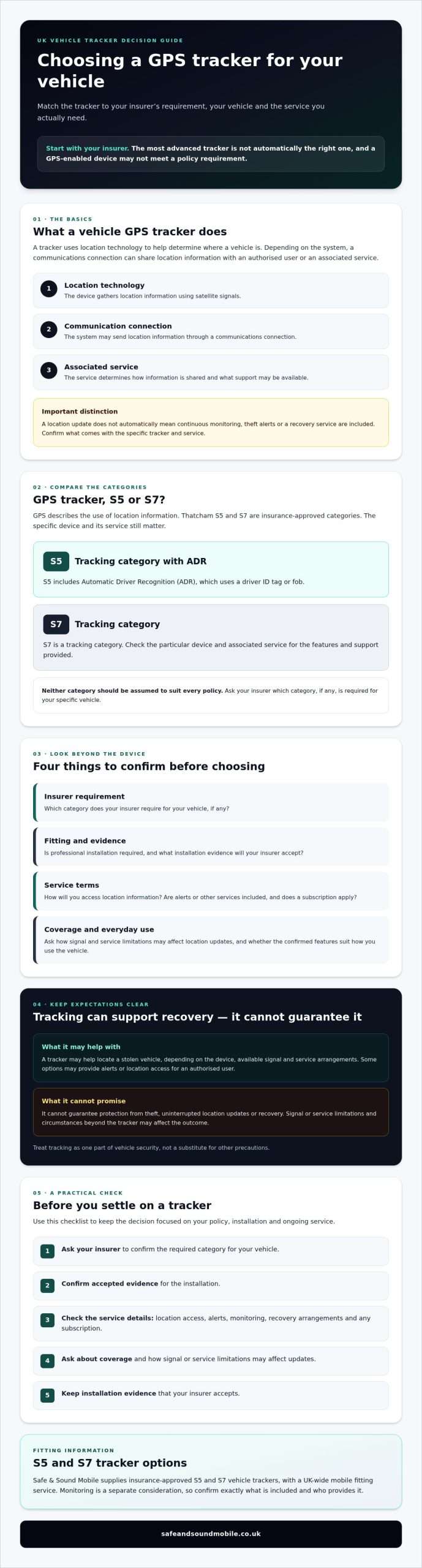
Choose a vehicle GPS tracker with this practical UK checklist
A clear process helps you choose a vehicle GPS tracker that fits your insurer’s requirements and your practical needs. Start with the policy, not the device. Confirm the details with your insurer and installer before you commit.
Confirm the requirement before choosing.
Read your policy wording and contact your insurer to confirm whether a tracker is required and which category it specifies. Ask what installation conditions apply and what evidence they’ll accept. Requirements can vary between policies, so don’t assume one tracker category suits every vehicle. This checklist is a practical guide, not an interpretation of your policy.
Check the fitting plan and service details.
Give the installer your vehicle details and confirm that the tracker is suitable. Agree how fitting will be arranged, including the location and appointment details. Safe & Sound Mobile offers UK-wide mobile fitting, but check current coverage for your location before making arrangements.
Ask the provider to distinguish the tracker hardware from any associated tracking or monitoring service. Confirm which features are included, whether an ongoing service or subscription applies, and the duration, recurring charges and cancellation terms. Don’t assume location access, alerts or monitoring are included unless the provider confirms this for the specific option.
Your five-step tracker checklist
- Check the insurer’s requirements. Confirm the precise category, fitting conditions and acceptable installation evidence.
- Identify your needs. Decide what matters for your vehicle, such as location access or alerts, and ask which options provide those features.
- Compare the terms. Check what the device includes, whether a separate service is involved, and any ongoing or cancellation terms.
- Confirm suitability and fitting. Share your vehicle details with the provider, then verify the fitting location and appointment arrangements.
- Keep your records. Retain theinsurer’ss confirmation, product and service details, and installation documentation.
In short: confirm the insurer’s requirement, define your needs, compare service terms, agree fitting and keep the documentation. This sequence helps you check that the tracker, installation and associated service match what you’ve agreed with your insurer and provider.
Ready to explore professionally fitted options? View insurance-approved vehicle trackers from Safe & Sound Mobile, then confirm the exact category with your insurer before choosing.
Arrange a professionally fitted vehicle GPS tracker with Safe & Sound Mobile.
Start with yourinsurer’ss stated requirement. Match the tracker category to it, then confirm what tracking or monitoring service, if any, is associated with the option. Safe & Sound Mobile supplies and professionally installs insurance-approved Thatcham S5 and S7 vehicle trackers. The suitable option depends on your vehicle, your insurer’s instructions and the service details you need.
What to have ready before requesting tracker fitting
Have your vehicle’s make and model to hand, along with the tracker category your insurer has specified. If you’re still waiting for confirmation, check with your insurer before choosing. It’s also useful to have the insurer’s installation conditions or evidence requirements available when discussing your options with the provider.
Ask which tracker category may suit your vehicle and what the installation appointment includes. Confirm the proposed fitting location and appointment arrangements, and check that mobile fitting is available for your address. Safe & Sound Mobile offers a UK-wide mobile fitting service, but confirm current coverage for your location before proceeding.
Be clear about what comes with the tracker. Ask how you’ll access location information, whether alerts or other services are included, and whether you need to set up ongoing tracking or monitoring separately. Safe & Sound Mobile does not provide a 24/7 monitoring service, so confirm directly with the relevant provider who supplies any monitoring or recovery service you require.
Take the next step with a UK mobile fitting service.
Professional mobile fitting can make installation more practical by bringing the fitting service to an agreed location, subject to coverage and appointment arrangements. Before confirming a booking, make sure the tracker matches your insurer’s requirements and that you understand what the installation and any associated service include. Keep the insurer’s confirmation and installation documentation with your records.
If you’re comparing a GPS tracker vehicle option, bring your vehicle details,your insurer’s requirements, and your preferred fitting location into the conversation. These details help clarify which option to consider and what to check before installation. They also help avoid assuming that fitting automatically includes a separate tracking or monitoring service.
Ask Safe & Sound Mobile about vehicle tracker fitting and discuss your vehicle, your insurer’s stated category, and the fitting location. Confirm the policy requirement with your insurer before choosing.
Choose your vehicle tracker with confidence.
The right GPS tracker vehicle option matches your insurer’s stated requirement and practical needs. Confirm the tracker category before choosing, then check how it’s fitted and what location access, alerts or ongoing services are included. A tracker can support locating a vehicle, but it can’t guarantee theft prevention or recovery.
Safe & Sound Mobile supplies insurance-approved Thatcham S5 and S7 tracker options, with professional mobile fitting across the UK. Check that fitting is available for your location, and confirm any monitoring or recovery arrangements separately. Safe & Sound Mobile does not provide a 24/7 monitoring service.
Have your vehicle details and insurer’s requirements ready, then ask Safe & Sound Mobile about a professionally fitted vehicle tracker. With these checks in place, you can make an informed choice and take a practical step towards vehicle security.
Frequently Asked Questions
What does a GPS tracker do in a vehicle?
A vehicle GPS tracker uses location technology to help determine where a vehicle is and, depending on the system, share that information with an authorised user or service. The hardware, connection and any associated tracking service are separate parts of the arrangement. Check what the specific tracker includes, such as location access or alerts. A tracker can help locate a vehicle, but it doesn’t guarantee theft prevention or recovery.
Can a vehicle GPS tracker help locate a stolen car?
Yes, a tracker may help locate a stolen car if the device and its associated service can provide location information. What’s available depends on the tracker, signal, and service arrangements. It doesn’t guarantee the vehicle will be found or recovered. Before choosing, check how location information is accessed, whether alerts are included, and who, if anyone, provides monitoring or recovery services.
Does my insurer require a Thatcham-approved vehicle tracker?
Your insurer may require an approved tracker, but the requirement depends on your policy and vehicle. Check your policy wording and contact the insurer before buying or arranging fitting. Ask them to confirm the required category, any installation conditions and what evidencethey’lll accept. Don’t assume every GPS device meets an insurance requirement, or that the same category applies to every policy.
What is the difference between an S5 and S7 vehicle tracker?
Both are Thatcham-approved tracker categories, but they aren’t interchangeable for every insurance requirement. Broadly, an S5 tracker includes Automatic Driver Recognition, which uses a driver ID tag or fob; S7 is a tracking category without that feature. Confirm the specific requirement with your insurer and check the selected device’s service details. Safe & Sound Mobile supplies and installs insurance-approved S5 and S7 options.
Do vehicle GPS trackers need a subscription?
Some tracker arrangements may involve an ongoing subscription or separate service, while others may have different terms. Don’t assume the hardware purchase includes location access, alerts or monitoring. Ask the supplier what’s included, whether a subscription applies, how long the service runs, and what renewal or cancellation terms apply. Safe & Sound Mobile doesn’t provide 24/7 monitoring, so check monitoring arrangements separately.
Can a GPS tracker work if a vehicle has no mobile signal?
GPS location technology and the connection used to communicate location information are separate. A tracker may be able to determine a location but be can’t send an update or alert when its communication signal is unavailable. What happens next depends on the specific device and service. Ask the supplier about coverage and how the tracker behaves when it can’t communicate. Don’t assume uninterrupted updates or offline storage.
How much does it cost to have a vehicle GPS tracker fitted?
The cost depends on the tracker selected, fitting arrangements and any associated ongoing service. Safe & Sound Mobile supplies and professionally installs vehicle trackers, so ask the business for current pricing based on your vehicle and insurer’s requirements. Request a clear breakdown of what the quote includes, including fitting and any separate subscription or service charges. Confirm recurring costs and cancellation terms with the relevant provider before proceeding.


About author
Related posts

A dash cam’s recording time depends on its memory card and video quality. For a single-camera setup, a 32GB card stores around 2 to 4... Continue reading

Does a gps tracking dash cam let you find your car if it’s stolen? Not by itself. GPS can add location and journey context to... Continue reading
Could choosing the wrong tracker category leave your insurer’s requirement unmet? The right thatcham approved tracker installation uk starts with the... Continue reading

Real-Time GPS Tracking Chelmsford: Cars, Vans and Fleets Real-time GPS tracking can help vehicle owners and businesses in Chelmsford view location information through a supported... Continue reading
Thatcham Trackers in Widford: S5, S7 and Fitting Checks Thatcham trackers for a vehicle in Widford should be chosen around the exact product, vehicle and... Continue reading