
No products in the cart.

What Is a Ghost Immobiliser and How Does It Work?
How Does It Work?
Car theft has become more advanced in recent years. Criminals can now clone key fobs and bypass traditional security systems with ease. This means your standard factory-fitted immobiliser might not be enough to protect your vehicle.
A ghost immobiliser is an advanced vehicle security device that prevents your car from starting until you enter a unique PIN code using existing buttons in your vehicle, such as those on your steering wheel or centre console. Unlike traditional alarms or immobilisers, it operates invisibly through your car’s electronic network. Even if a thief has your keys, they cannot drive away without knowing your secret code.
This type of car security works differently from what most people expect. It doesn’t add visible keypads or emit radio signals that thieves can detect. Instead, it connects directly to your vehicle’s existing systems and stays completely hidden. This article will walk you through everything you need to know about how these devices work, what they cost, and whether they’re the right choice for protecting your vehicle.
Defining the Ghost Immobiliser Concept
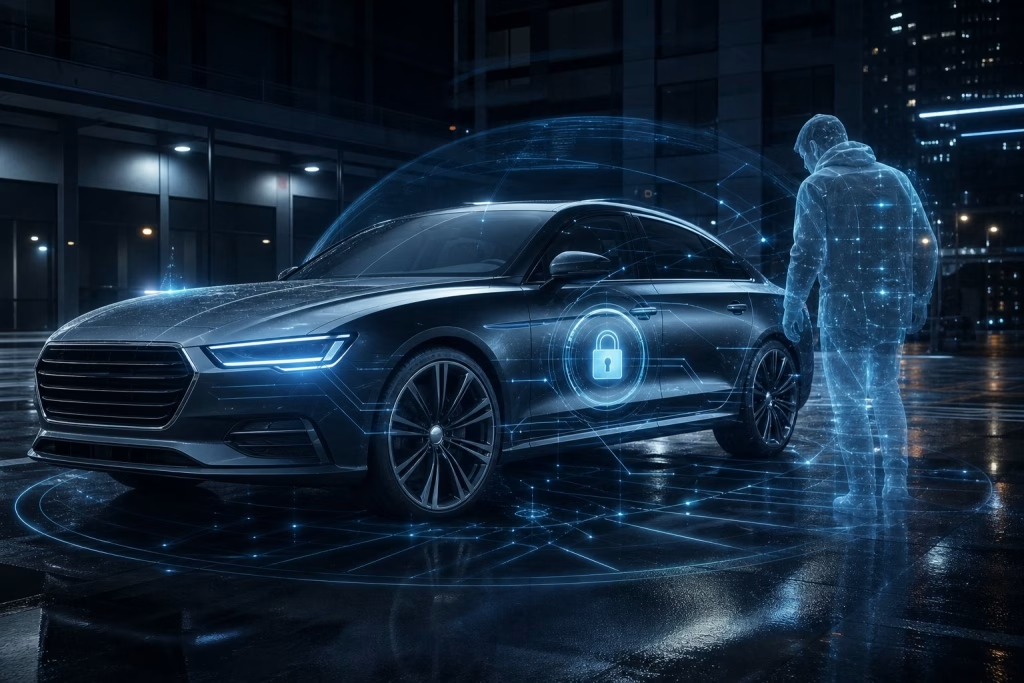
A ghost immobiliser is an aftermarket vehicle security device that prevents your car from starting unless a secret code is entered via the existing buttons. Unlike traditional car alarms, this anti-theft device works invisibly through your vehicle’s electronic network to stop thieves who have cloned keys or use advanced stealing methods.
Origins and Development
The Autowatch Ghost emerged as the world’s first CCAN immobiliser in the early 2010s. Autowatch developed this system in South Africa to combat rising vehicle theft rates involving key cloning and signal relay attacks. The Ghost II immobiliser followed as an improved version with enhanced features.
Other manufacturers recognised the need for similar protection. CAN Phantom entered the market as a UK-designed alternative, offering comparable security with different features. These systems appeared when car thieves became more tech-savvy and traditional security measures proved insufficient.
The development focused on creating undetectable protection. Determined criminals with the right equipment could bypass standard immobilisers. Ghost immobilisers changed this by integrating directly into the vehicle’s Control Area Network without radio signals or visible components that thieves could identify and defeat.
Difference from Standard Immobilisers
Your car likely came with a factory-fitted immobiliser that communicates with a chip in your key. This standard system stops the engine if it doesn’t detect the correct key signal. Thieves can bypass these by cloning your key fob or using relay devices to capture and replay the signal.
A ghost immobiliser adds another layer of security that criminals can’t easily overcome. Even with your genuine keys, the car won’t start unless the correct PIN code is entered via the buttons on your steering wheel, door panel, or centre console. There’s no keypad to spot and no signal to intercept.
Standard immobilisers rely on wireless communication between your key and the car. Ghost immobilisers use no radio frequencies at all. They connect via the CAN bus and communicate directly with your Engine Control Unit (ECU) using your car’s internal digital language. This makes them invisible to radio scanners and diagnostic tools used by thieves.
Types of Ghost Immobilisers
The Autowatch Ghost immobiliser remains the most established system on the market. You enter a PIN code using existing buttons in your car, with sequences ranging from 4 to 20 button presses. The Autowatch Ghost 2 added smartphone app control and emergency override codes on scratch cards.
CAN Phantom offers similar protection with different features. This UK-manufactured system includes a web app for valet and maintenance mode. Both systems work with almost all modern vehicles and don’t require cutting wires during installation.
Some ghost immobilisers provide fob options if you worry about forgetting your PIN. The fob automatically disarms the system when you enter your vehicle. Service modes allow mechanics or valets to temporarily drive your car without revealing your security code. All systems recognised by the Tracking and Aftermarket Security System Association (TASSA) meet specific standards for aftermarket vehicle security, though they’re not currently Thatcham-approved.
How Ghost Immobilisers Operate
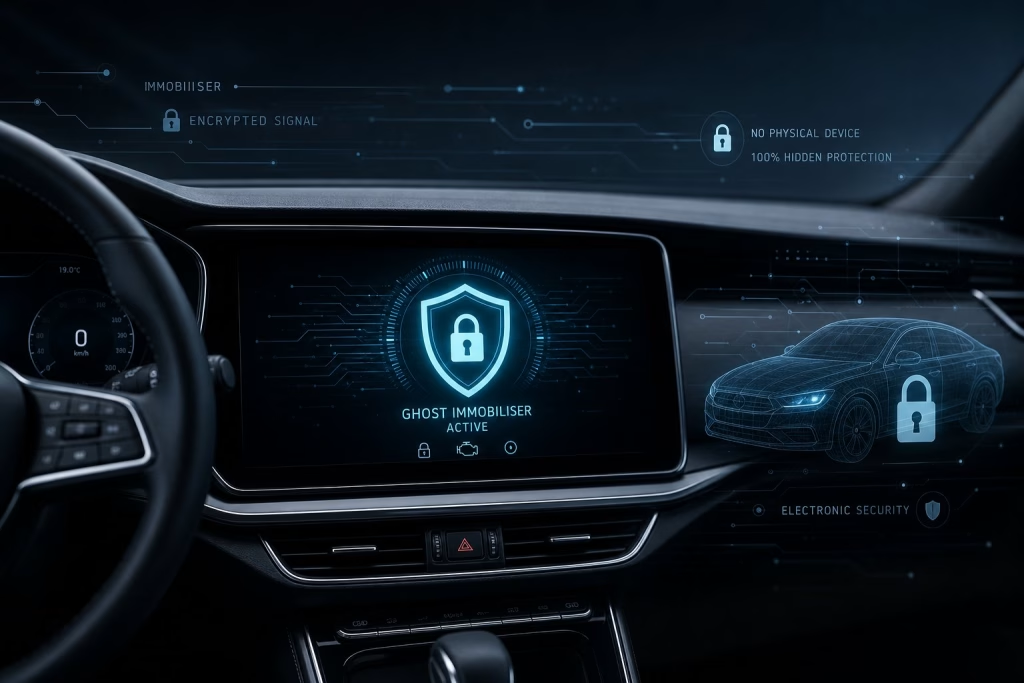
Ghost immobilisers work by blocking communication between your car’s electronic systems until you enter a secret code using buttons already built into your vehicle. The device integrates directly with your car’s data network and interrupts the engine start process without creating any signals that thieves could detect or bypass.
CAN Bus Integration Explained
A ghost immobiliser connects to your vehicle’s CAN bus system. The CAN (Controller Area Network) bus is the digital network that allows different electronic components in your car to communicate with each other.
This network carries messages between components such as the engine control unit, gearbox, and dashboard. The ghost immobiliser taps into this network and monitors the data flowing through it.
When you try to start your car, the immobiliser intercepts the communication on the CAN bus. It prevents the start command from reaching the engine unless you’ve first entered the correct PIN code. This integration happens at the data level rather than through physical wires that thieves could cut or bypass.
PIN Code Disarm Sequence
You must enter a unique PIN code before your engine will start. This code uses buttons that already exist in your car, such as:
- Steering wheel controls
- Dashboard buttons
- Door panel switches
- Centre console buttons
The disarm sequence involves pressing these buttons in a specific order you choose during installation. For example, your code might be pressing the volume up button twice, then the cruise control button once, then the hazard lights button three times.
You enter this sequence after turning on the ignition but before the engine starts. If you enter the wrong code or skip the sequence, the engine remains immobilised. Most systems allow multiple attempts, and some offer smartphone app options for additional control via the ghost app.
No Signals or Visible Hardware
Ghost immobilisers produce no RF signals and have no visible hardware that thieves could identify. There is no key fob to carry, no LED indicator on your dashboard, and no external keypad fitted to your car.
This invisible design makes the system nearly impossible for thieves to detect. Traditional immobilisers and alarms often have visible components or emit radio signals that skilled thieves can intercept or locate. A CAN bus immobiliser operates silently within your car’s existing electronics.
The lack of signals also means thieves cannot use relay attacks or signal cloning methods. They might successfully clone your key, but the car still won’t start without the PIN code.
Role of the Engine Control Unit (ECU)
The engine control unit (ECU) is the computer that manages your engine’s operation. It controls fuel injection, ignition timing, and other critical functions needed to start and run your engine.
Your ghost immobiliser prevents the ECU from receiving the authorisation it needs to start the engine. When you enter the correct PIN code, the immobiliser sends a digital command via the CAN bus, allowing the ECU to proceed with the start sequence.
Without this authorisation, the ECU will not fire the engine even if a thief has a valid key. The immobiliser essentially places a lock on the ECU’s start function that only your unique code can release.
Key Features and Daily Use
The Ghost immobiliser adapts to your routine whilst maintaining maximum security. The system offers flexible customisation, secure service modes, emergency backup access, and minimal power consumption.
Customisation Options
You can personalise your PIN code sequence using up to 20 button presses on existing vehicle controls. The Ghost 2 allows you to select from buttons on your steering wheel, door panels, or centre console. This flexibility means you choose a pattern that feels natural to you.
You should change your PIN every six months to maintain optimal security. The Ghost app lets you update your code remotely through an encrypted Bluetooth connection. The app also provides a smartphone disarm feature using Bluetooth Low Energy technology. Your phone acts as a digital key when within range of the vehicle.
For owners who prefer not to use smartphones, encrypted key fobs are available. These small devices automatically disarm when you approach your car. You can configure the system to suit multiple drivers by assigning different PINs or using shared smartphone access.
Service and Valet Modes
Valet Mode lets you hand over your keys without revealing your private PIN sequence. You activate this mode through your button sequence before leaving the vehicle for servicing or valeting. The Ghost II immobiliser temporarily suspends the security system whilst maintaining basic theft protection.
The system includes automatic safety limits. If the vehicle exceeds 31 mph or runs continuously for more than 15 minutes, Valet Mode deactivates automatically. This prevents unauthorised extended use whilst your car is in the garage. Service Mode works identically but is designed specifically for longer maintenance periods, such as MOT testing.
You must manually deactivate either mode when you collect your vehicle. The system then immediately returns to full protection. Never share your actual PIN code with service staff under any circumstances.
Emergency Override and Recovery
Every Ghost immobiliser installation includes a physical emergency override card. This credit-card-sized document contains a unique 4-digit code hidden beneath a scratch-off panel. Use this code if you forget your PIN or a button fails.
Store this card in a secure location such as your wallet or home safe. Please do not leave it inside the vehicle or photograph it on your phone. The override code provides one-time access and should prompt you to reset your main PIN immediately.
If you lose both your PIN and your override card, a professional installer can reset the system using specialised diagnostic equipment. This process requires proof of ownership and typically takes 30 to 60 minutes.
Battery Drain Prevention
The Ghost draws minimal power from your vehicle’s electrical system. The device consumes approximately 1-3 milliamps when armed, which is negligible compared to standard vehicle systems. You won’t experience battery drain even if the car remains parked for several weeks.
Modern vehicles already draw power continuously for alarm systems, keyless entry modules, and onboard computers. The Ghost immobiliser adds virtually no additional load to this baseline consumption. Vehicle compatibility is not affected by the device’s power requirements.
If you plan to leave your car unused for more than three months, consider using a trickle charger. This recommendation applies to all modern vehicles regardless of the security systems fitted.
Protection Against Modern Car Theft
Car thieves now use electronic methods to bypass factory security systems. Ghost immobilisers address these specific techniques by requiring a PIN code before the engine can start.
Relay Attacks and Key Cloning
Relay attacks target keyless entry systems through signal amplifiers that capture and extend your key fob’s signal. Thieves position one device near your keys inside your home, whilst another amplifier sits by your car. The extended signal tricks your vehicle into thinking the key is present, allowing criminals to unlock and start it.
Key cloning involves copying the electronic code from your key fob or exploiting vulnerabilities in the vehicle’s computer system. Once cloned, thieves can create a duplicate key that your car recognises as genuine.
A ghost immobiliser stops both methods. Even when thieves successfully relay your key signal or clone your fob, they cannot start the engine without your unique PIN sequence. The system operates independently of your key fob, making relay theft and key cloning ineffective against it.
OBD Port Hacking and CAN Attacks
The OBD port in your vehicle provides direct access to its computer systems. Thieves use this port to programme new keys or turn off factory security in minutes. They plug in diagnostic tools that communicate with your car’s network to gain control.
CAN bus attacks target the communication system connecting your vehicle’s electronic components. Criminals can inject false commands through this network to unlock doors or override security protocols.
Ghost immobilisers connect directly to the CAN bus but require the correct PIN before allowing engine operation. Unlike systems that rely on radio signals, there’s no external signal to intercept or amplify.
Layered Vehicle Security Strategies
Combining multiple security measures provides stronger protection than relying on a single system. A ghost immobiliser serves as the primary deterrent by preventing the engine from starting, whilst tracking devices help recover your vehicle if it is stolen.
Physical deterrents like steering locks add visible protection that may discourage thieves from targeting your car. However, physical barriers alone won’t stop electronic theft methods.
Your layered approach should prioritise prevention over recovery. Ghost immobilisers prevent unauthorised engine start even when thieves have your keys, whilst aftermarket security systems add supplementary monitoring. This combination addresses both electronic and physical theft attempts without relying solely on a single method.
Professional Installation and Certification
Getting a Ghost immobiliser fitted by a trained professional ensures the system works properly and keeps your manufacturer’s warranty intact. Approved installers have the training and tools to properly hide the device and program it to your vehicle’s systems.
Why Professional Fitting Is Essential
Please do not attempt to install a Ghost immobiliser yourself. The device connects directly to your vehicle’s CAN bus system, which controls vital functions such as the engine, airbags, and dashboard electronics. One wrong connection could damage expensive components or cause electrical faults.
Professional installers know exactly where to hide the unit so thieves cannot find it. They complete a full diagnostic check before touching any wiring to ensure your car’s systems are working properly. The installation takes between two and four hours, depending on your vehicle type.
A proper fitting includes clean connections that won’t damage your interior or leave visible signs of the security system. The technician programs your unique PIN sequence and tests it thoroughly to ensure everything functions correctly. They also show you how to enter your code and use features like service mode when you need to leave your car with a mechanic or valet.
Approved Installer Requirements
Look for installers who hold TASSA certification (Tracker and Aftermarket Security Systems Association). This certification proves that the technician has completed official training on Ghost immobiliser systems and adheres to industry standards.
Insurance companies recognise TASSA-approved installations, which can help you get lower premiums. The certification also means the installer carries professional insurance in case anything goes wrong during the fitting process.
Many approved installers offer mobile installation services. They come to your home or workplace to fit the device at a time that suits you. This saves you the hassle of dropping your car off at a garage and waiting around for hours.
Manufacturer Warranty Considerations
The Ghost immobiliser installation does not require cutting any factory wiring. This non-invasive approach means your vehicle manufacturer’s warranty stays valid after fitting the aftermarket security device.
Professional installers use special connectors that tap into your CAN bus system without damaging the original loom. If you ever need to remove the immobiliser, a trained technician can do so without leaving permanent changes to your vehicle’s electrical system.
Some vehicle manufacturers actually recommend Ghost immobilisers as an approved security upgrade. Always check your warranty terms before installing any aftermarket security system, though most modern warranties allow professional security installations that don’t alter factory components.
Certification, Recognition, and Industry Standards
Ghost immobilisers carry specific certifications that determine their credibility with insurers and their effectiveness against theft. These standards validate the device’s quality and ensure professional installation meets rigorous safety benchmarks.
Costs, Compatibility, and Value Considerations
A Ghost immobiliser typically costs between £449 and £549 for professional installation in the UK. Most modern vehicles with CAN bus systems support the device, and the one-time payment offers long-term security without ongoing fees.
Typical Immobiliser Costs
The immobiliser cost for a Ghost system includes both the device and professional fitting. In 2026, certified installers charge £449 to £549 for the complete service. This is a single payment with no monthly subscriptions required.
The price covers several components. You receive the genuine Autowatch Ghost 2 unit, mobile installation at your location, and full TASSA registration. Your installer will provide an emergency card and demonstrate how to set your unique PIN sequence.
Avoid unusually cheap quotes. Non-certified installers may use fake hardware or damage your vehicle’s electrical system. An improper installation can void your manufacturer’s warranty and invalidate insurance claims. Only use TASSA-approved fitters to ensure your immobiliser functions correctly.
Some insurers offer premium discounts for TASSA-approved security devices. Request a review of your policy after installation to potentially reduce your annual costs.
Which Vehicles Are Supported?
Vehicle compatibility depends on your car’s electronic systems. Most vehicles built after 2000 with a CAN bus network can support a Ghost immobiliser. This includes cars, vans, motorhomes, and motorcycles.
Modern luxury vehicles, performance cars, and electric vehicles work particularly well with the system. The Ghost integrates directly with your vehicle’s existing electronics without requiring additional wiring or visible components. Your steering wheel buttons or dashboard controls become the interface.
Complex vehicles, such as hybrids and premium EVs, may require specialist knowledge during fitting. Some manufacturers’ systems need additional setup time, which can affect the final installation fee. A certified installer will perform a compatibility check before booking your appointment.
Older vehicles without CAN bus systems cannot use a Ghost immobiliser. If your car predates modern digital networks, you’ll need alternative car security solutions.
Weighing Up the Security Investment
The Ghost immobiliser provides better value than many alternatives over time. A typical GPS tracker costs around £400 to install,l plus £100 annually in subscriptions. Over five years, you’d pay £900 total. The Ghost costs £499 once with no recurring fees.
Thiimmobiliser’s cost reflects its effectiveness against modern theft methods. Factory-fitted security rarely stops relay attacks or key cloning. The Ghost prevents engine start without your PIN, making stolen keys useless to thieves.
Your vehicle’s resale value may increase with a Ghost system fitted. Buyers recognise the added protection, particularly for high-theft models like Range Rovers and BMW M-series vehicles. The device transfers to new owners, maintaining its security benefits.
For ultimate protection, combine the Ghost with a tracking system. The immobiliser prevents theft whilst the tracker aids recovery if your car is somehow moved.
Frequently Asked Questions
Ghost immobilisers raise practical questions about cost, maintenance, and insurance implications. Understanding these details helps you make an informed decision about protecting your vehicle.
How much does a Ghost immobiliser typically cost to buy and have fitted in the UK?
You can expect to pay between £400 and £650 for a Ghost immobiliser, including professional installation. The price varies by your vehicle’s make and model, with more complex installations costing more.
Some luxury or high-performance vehicles require additional installation time. This pushes the cost towards the upper end of the range.
What are the main disadvantages or drawbacks of fitting a Ghost immobiliser?
You must remember your PIN sequence every time you drive. Forgetting it means you cannot start your vehicle until you enter the correct code.
The system requires you to enter a sequence using the existing buttons in your car. This adds an extra step to your starting routine, which some drivers find inconvenient.
You might face challenges if you sell your car and need to transfer or remove the device. Professional removal costs extra money.
Does a Ghost immobiliser require a monthly subscription or any ongoing fees?
Ghost immobilisers do not require monthly subscriptions or ongoing fees. You pay once for the device and installation, then own it outright.
This differs from GPS tracking systems that often charge monthly monitoring fees. The Ghost system operates independently without external services.
How can you tell whether a vehicle already has a Ghost immobiliser installed?
You cannot easily spot a Ghost immobiliser through visual inspection. The device has no physical presence inside or outside the vehicle that thieves or buyers can identify.
The installer should provide documentation and proof of installation. Ask the previous owner for installation certificates and the PIN reset code.
You can contact an authorised Ghost installer to check the vehicle’s system. They can verify if a device is present using diagnostic tools.
Do UK insurance companies recognise a Ghost immobiliser, and can it reduce premiums?
Most major UK insurance companies recognise Ghost immobilisers as valid security devices. The system holds Thatcham approval, which insurers value when assessing vehicle security.
You may receive a discount on your insurance premium after installation. The discount typically ranges from 5% to 15%, depending on your insurer and vehicle.
You must inform your insurance provider about the installation. Provide them with the installation certificate and Thatcham approval details.
What are the most common Ghost immobiliser problems, and how are they usually resolved?
The most common issue is forgetting your PIN. Please get in touch with your installer to reset the code, which may involve a call-out fee.
Battery disconnections can sometimes affect the system settings. Your installer can reconfigure the device if this occurs.
Faulty installations rarely cause problems with your vehicle’s existing electronics. Choose an authorised installer to avoid these issues. They provide warranties that cover installation faults.
Related Posts


About author
Related posts

The lowest upfront cost doesn’t automatically make a tracker the best auto GPS tracker for your car. The right choice depends on what you need... Continue reading

A hardwired car tracker installation connects the device to the vehicle’s power, earth and ignition or accessory circuit. The tracker is typically... Continue reading

A tracker can help locate a vehicle after it’s stolen, but it won’t prevent the theft itself. To choose between auto security systems, understand... Continue reading

Features, Compatibility and Fitting A car key used to be proof enough that you were allowed to drive the vehicle. That assumption no longer holds,... Continue reading

Could the tracker you choose be impractical to move if you change cars? With mobile car tracker fitting in the UK, start by matching the... Continue reading