
No products in the cart.

Viper 106V Immobiliser
Advanced Security for Modern Vehicles
Advanced Security for Modern Vehicles. Car theft remains a serious concern for vehicle owners across the UK, with criminals constantly developing new methods to bypass factory-fitted security systems. Keyless entry vehicles face a particular risk from relay attacks, in which thieves can capture and replay signals to gain unauthorised access and drive away within seconds.
The Viper 106V is a Thatcham Category 2-approved immobiliser that prevents the engine from starting unless an authorised coded touch-key tag is present, creating an effective barrier against hot-wiring, key cloning, and relay attacks. This system requires physical contact between the unique tag and a receptacle before the vehicle can start, adding a crucial layer of protection beyond standard factory security.
This article explores how the Viper 106V works, its key security features, and why it has become a popular choice for drivers seeking insurance-recognised protection. Readers will learn about installation requirements, maintenance considerations, and which vehicles benefit most from this additional security measure.
What Is the Viper 106V Immobiliser?
The Viper 106V is an electronic immobiliser that stops a vehicle’s engine from starting without authorised access. It works by cutting essential electrical circuits and requires a coded touch-key to disarm the system before driving.
Thatcham Category 2 Certification
The Viper 106V holds Thatcham Category 2 approval, which means it meets strict standards set by Thatcham Research for vehicle security products. UK insurance companies recognise this certification, which often leads to reduced premiums for vehicles fitted with approved systems.
Thatcham Category 2 specifically covers electronic immobilisers that prevent unauthorised engine starts. The certification requires the device to pass rigorous testing for reliability and effectiveness against standard theft methods.
Insurance providers trust this rating because it demonstrates the immobiliser can resist hot-wiring, key cloning, and other vehicle theft techniques. Many insurance policies require Thatcham-approved security devices for specific vehicles or to qualify for lower rates.
Electronic Immobilisation Technology
The 106V uses touch-key technology, where a hand-held coded tag must make physical contact with a receptacle before the engine can start. Each tag is uniquely coded to its specific system, preventing unauthorised keys from working.
The device interrupts up to three independent electrical circuits in the vehicle. These circuits remain cut until the correct touch-key is presented to the receptacle, creating multiple layers of protection.
The system integrates discreetly with the vehicle’s existing electronics, with no visible components or obvious wiring. It features automatic arming that activates after the ignition is switched off, requiring no action from the driver. The immobiliser includes a four-digit PIN code emergency override when the touch-key is unavailable.
Key Features of the Viper 106V
The Viper 106V is a Thatcham Category 2 electronic immobiliser that uses touch-key technology to prevent unauthorised engine starting. The system provides up to three independent immobilisation circuits and includes automatic arming features with emergency override capabilities.
Touch-Key Immobiliser System
The touch-key immobiliser operates through a unique coded key system, in which vehicle owners press the key against a receptacle before driving. Each Viper 106V comes with a pair of Viper touch-keys that are programmed specifically for the installed system.
The touch-key receptacle combines with an LED assembly in a single unit. This design makes installation simpler whilst providing clear visual feedback to the driver. The LED indicates the system’s armed status.
New tags must be programmed into the system before they can be used. This programming requirement ensures that lost or stolen keys cannot be easily replaced by unauthorised individuals. The system creates a strong defence against hot-wiring and key cloning attempts.
Multiple Immobilisation Circuits
The Viper 106V provides up to three independent immobilisation circuits to protect different vehicle functions. These circuits prevent the engine from starting unless the authorised coded key is present.
Multiple circuits offer better protection than single-circuit systems. If one circuit is bypassed, the additional circuits continue to prevent unauthorised starting. This layered approach makes it significantly harder for thieves to turn off the system.
The immobilisation circuits work together to create a robust barrier against standard vehicle theft methods. Non-volatile memory ensures the system retains its programming even when the vehicle battery is disconnected.
Automatic Arming and Disarming
The system features automatic arming that activates without driver intervention. Once the vehicle is switched off and the touch key is removed from proximity, the immobiliser arms itself automatically.
A 4-digit PIN code emergency override allows drivers to start their vehicle if the touch key is lost or damaged. This backup feature prevents owners from being locked out of their cars.
The automatic arming eliminates the risk of forgetting to activate the immobiliser. Drivers press their touch key to the receptacle when they want to drive, and the system disarms instantly.
How the Viper 106V Protects Against Theft
The Viper 106V uses multiple security layers to stop thieves from starting or stealing a vehicle. It blocks unauthorised starts through coded key authorisation and disrupts modern theft methods such as relay attacks and key cloning.
Coded Key Authorisation
The system requires a coded touch key or fob to be present before the engine can start. Each touch key contains a unique code that matches the installed immobiliser unit.
The driver must press the touch key against the receptacle before driving. Without this authorisation step, the immobiliser keeps critical engine circuits disabled.
The Viper 106V includes a pair of touch keys with each installation. Additional keys can be programmed into the system, but each new tag must go through a secure programming process. This prevents thieves from simply obtaining a blank key fob and using it to bypass the security.
If the authorised key is lost or unavailable, the system offers a 4-digit PIN code emergency override. This backup feature lets the vehicle owner start the car without the physical touch key when necessary.
Relay Attack Prevention
The touch key system requires physical contact with the receptacle to authorise starting. This design makes relay attacks ineffective since thieves cannot amplify or copy the signal remotely.
Unlike passive keyless entry systems that broadcast signals continuously, the Viper touch key only communicates when pressed directly against its receptacle. Thieves cannot intercept or relay this signal from outside the vehicle.
The system also features automatic arming that activates the immobiliser shortly after the engine stops. This eliminates the risk of leaving the vehicle unprotected.
Defence Against Hot-Wiring and Key Cloning
The Viper 106V uses up to three independent immobilisation circuits that interrupt different engine systems. These circuits prevent hot-wiring by keeping the engine disabled even if a thief bypasses the ignition.
The unique coded keys resist key cloning attempts. Each touch key contains encrypted data specific to that particular immobiliser installation. Non-volatile memory stores this security information permanently, so it remains protected even if the vehicle battery is disconnected.
The Thatcham Category 2 approval confirms the system meets strict insurance industry standards for preventing vehicle theft. This certification demonstrates proven protection against standard theft methods, including key theft and unauthorised starting attempts.
Installation and Insurance Compliance
The Viper 106V requires professional fitting by certified technicians and meets specific industry standards recognised by insurers. The device cannot be purchased as a DIY product due to security protocols and certification requirements.
Professional Installation By Accredited Engineers
The Viper 106V must be installed by Thatcham-accredited engineers rather than fitted by vehicle owners. This requirement ensures the immobiliser integrates correctly with the vehicle’s electrical systems and meets security standards.
Professional installation includes connecting up to three independent immobilisation circuits within the vehicle. The installer mounts the touch-key receptacle in a discreet dashboard location and configures the system’s programming. Most suppliers include nationwide mobile installation in their pricing, meaning technicians travel to the customer’s location.
The fitting process typically takes a few hours, depending on the vehicle model. Installation cannot be completed on a mail-order, DIY basis due to the security features and technical expertise required. After completion, the installer provides a certificate of installation that documents the work.
Insurance Recognition and Requirements
Insurance companies recognise the Viper 106V as an approved security device for policy compliance. Many insurers require vehicles with a value above a specific threshold to have additional security beyond factory-fitted systems.
The immobiliser provides insurance-recognised protection that may reduce premiums or satisfy mandatory security conditions. The installation certificate serves as proof for insurance purposes when submitting documentation or making claims.
Some policies specifically request Thatcham Category 2 immobilisers for high-value or theft-prone vehicles. The 106V meets these stipulations without requiring ongoing subscription costs that tracker systems demand.
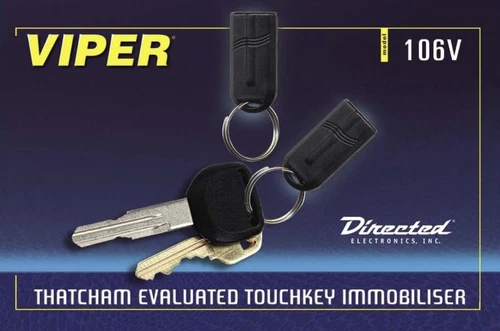
Thatcham Evaluation Standards
The 106V holds Thatcham Category 2 approval as an electronic immobiliser. This classification indicates the device has undergone testing by Thatcham Research to verify that it meets specific security criteria.
Category 2 requirements include:
- Coded key authorisation before the engine starts
- Prevention of unauthorised ignition activation
- Reliable electronic security components
- Resistance to bypass attempts
The Thatcham-evaluated status confirms that the immobiliser has passed an independent assessment for UK car insurance compliance. This third-party verification ensures the device functions as intended and provides genuine protection against theft attempts.
Warranty, Reliability, and Maintenance
The Viper 106V comes with comprehensive warranty protection and requires no ongoing maintenance after installation. The system operates independently once fitted, with no subscription fees or regular servicing needed.
Limited Lifetime Warranty
The Viper 106V includes a limited lifetime warranty that covers manufacturing defects and installation issues when fitted by approved engineers. This warranty from Directed Electronics provides long-term protection for the immobiliser system.
The warranty applies to vehicles fitted by accredited installers who follow proper installation procedures. Manufacturing defects in the control unit, the touch-key receptacle, or the coded tags are covered under warranty.
Authorised dealers provide warranty support and technical assistance for complex problems. The three-year warranty period covers installation-related issues, whilst the lifetime warranty addresses component failures.
Owners must retain proof of professional installation to make warranty claims. The warranty does not cover damage from accidents, misuse, or unauthorised modifications to the system.
Maintenance-Free Operation

The Viper 106V requires no maintenance after installation. The system uses non-volatile memory that retains all programming even when the vehicle battery disconnects.
The immobiliser activates automatically without driver intervention. No battery replacements, software updates, or periodic inspections are necessary for continued operation.
The touch-key tags contain passive technology that requires no power source. These coded keys last indefinitely under normal use conditions.
The discreet integration with vehicle electronics means no visible components that could deteriorate or require attention. The system continues working reliably throughout the vehicle’s lifespan with zero ongoing costs.
Suitability and Benefits for Vehicle Owners
The Viper 106V serves vehicles of all types and ages whilst offering insurance-recognised protection that may reduce premiums. Older vehicles gain modern security features, and all owners benefit from enhanced theft prevention.
Compatibility With Vehicle Types
The Viper 106V works with all cars regardless of make, model, or age. The system adapts to different electrical configurations across manufacturers without requiring vehicle-specific versions.
Both petrol and diesel engines accommodate the immobiliser equally well. Modern vehicles with keyless entry systems receive additional protection against relay attacks, whilst traditional keyed vehicles gain electronic security that they may lack from the factory.
The system integrates invisibly with existing vehicle electronics. Installation connects to the vehicle’s wiring harness without visible modifications to the dashboard or interior.
Vehicle types suited for installation:
- Family saloons and hatchbacks
- Sports cars and performance vehicles
- Vans and commercial vehicles
- Classic and vintage cars
- SUVs and 4x4s
The CAT 2 immobiliser meets insurance requirements across all vehicle categories. This universal compatibility makes the system practical for households with multiple vehicles.
Upgrade for Older Vehicles
Older vehicles often lack the electronic security found in modern cars. Factory-fitted immobilisers in vehicles from the 1990s and early 2000s may use outdated technology that thieves can more easily bypass.
The Viper 106V provides contemporary vehicle protection for older models. The touch-key system creates a security barrier that did not exist when these vehicles were manufactured.
Classic and vintage cars particularly benefit from discrete electronic security. The system protects valuable vehicles without altering their appearance or requiring modifications to original components.
Three independent immobilisation circuits create multiple barriers against theft attempts. Even if thieves defeat one circuit, the remaining circuits prevent the engine from starting.
Installation on older vehicles often proves simpler due to less complex factory electronics. The system works alongside basic ignition systems found in vehicles manufactured before advanced engine management became standard.
Peace of Mind and Value
Thatcham Category 2 approval provides insurance compliance that many insurers recognise when calculating premiums. Vehicle owners may qualify for reduced insurance costs after professional installation.
The touch-key system prevents unauthorised engine starts even when the original keys are stolen. Thieves cannot bypass the immobiliser through hot-wiring or key cloning methods.
Key ownership benefits:
- Automatic arming requires no user action
- 4-digit PIN emergency override prevents lockouts
- Non-volatile memory retains settings during battery changes
- Limited lifetime warranty covers system faults
The vehicle security upgrade protects the vehicle’s financial investment. Professional mobile installation brings qualified technicians to convenient locations, eliminating trips to fitting centres.
Physical touch-key authentication adds security beyond remote key fobs. Owners maintain control over who can start their vehicles by managing the coded touch keys.


About author
Related posts

Safe & Sound — Professional Vehicle Enhancers For example, the ability to monitor your vehicle’s movements can drastically enhance safety. Essential Tracker Features A reliable... Continue reading

The most capable security GPS tracker isn’t automatically the right choice for every car. Choose one based on the protection you need, its features... Continue reading

The best car tracker GPS isn’t simply the one with the most alerts. It’s the system that suits your vehicle, installation needs, tracking... Continue reading

Scorpion tracking combines vehicle location technology with professional theft monitoring, giving owners more than a dot on a map. The Scorpion Automotive range includes S7... Continue reading

The cheapest tracker to buy may not be the cheapest to keep. The best car tracker devices depend on the protection you need, how you... Continue reading