
No products in the cart.

Wireless Dashcams
The Complete 2026 Guide to "Wire-Free" Security
What if the perfect wireless dashcam isn’t actually wireless at all? It’s a common frustration to see messy cables dangling across your dashboard, yet many drivers find that battery-only models often fail when they’re needed most. While you’re searching for wireless dashcams to achieve that clean, factory-fitted look, it’s vital to understand the difference between how a camera connects to your phone and how it draws its power.
We know you want a setup that’s reliable, easy to use, and completely hidden from view. This 2026 guide will show you how to achieve a truly cable-free aesthetic using professional hardwiring, which typically costs between £55 and £150 in the UK. You’ll learn the truth about WiFi versus battery power, explore the latest cloud-connected features like those found in the £349.99 Garmin Dash Cam Live, and discover how to ensure your vehicle has 24/7 parking protection without the clutter. We provide the facts you need to move from a messy DIY job to a professional security solution that gives you total peace of mind.
Key Takeaways
- Learn the vital difference between wireless data and wireless power to avoid common reliability issues.
- Discover how to hide every cable behind your vehicle’s trim for a seamless, professional finish.
- Compare the benefits of WiFi-enabled wireless dashcams, such as instant evidence sharing and sleeker, screen-free designs.
- Understand why professional hardwiring is essential for unlocking 24/7 parking protection.
- Find out how our UK-wide mobile fitting service delivers expert security directly to your driveway.
What is a Wireless Dash Cam? Understanding the Basics
When you start searching for wireless dashcams, you’re likely looking for two specific things: a clean dashboard and easy access to your video files. It’s a common mistake to assume that "wireless" means a total absence of cables. In the UK market as of May 2026, the term actually describes the technology used for data management rather than the power source. These devices use WiFi or Bluetooth to connect to your smartphone, allowing you to control settings and manage footage without ever touching an SD card.
The demand for wireless dashcams has surged recently because drivers want immediate results. If you’re involved in an incident on a busy UK road, you don’t want to wait until you get home to a laptop to see what happened. You need to be able to show the footage to a police officer or an insurance agent at the roadside . By using a dedicated smartphone app, you can view, download, and share high-definition clips in seconds. This connectivity is the "wireless" part of the equation, providing a bridge between the camera on your glass and the phone in your pocket.
The Role of WiFi in Modern Dashcams
WiFi technology has moved on significantly. By 2026, 5GHz WiFi has become the standard for premium models, offering download speeds that are roughly five times faster than older 2.4GHz versions. This makes a massive difference when you’re trying to download a large 4K video file. High-end units, like the Garmin Dash Cam Live, which retails for £349.99, even offer LTE cloud connectivity. This allows the camera to send real-time alerts to your phone if someone bumps your car while it’s parked, regardless of how far away you are.
Why "True" Wireless (Battery Only) is Rare
You might wonder why you can’t just buy a dash cam that runs entirely on a rechargeable battery. There are three main reasons why this isn’t standard practice yet:
- Power Consumption: Recording at 4K resolution while running GPS tracking and G-sensors requires a constant, heavy energy draw. A small battery would run flat in less than an hour.
- Emergency Backup: Internal batteries or capacitors are designed for emergency file saving. They ensure that if your car loses power during a crash, the camera has enough juice to finish writing the video to the memory card.
- Thermal Challenges: UK windscreens can reach high temperatures in the summer. Lithium-ion batteries don’t mix well with intense heat; they can swell or fail, which is why most manufacturers favour a hardwired power connection.
To get the best of both worlds, most drivers opt for a WiFi-enabled camera that is professionally hardwired. This setup provides the "wireless" app experience you want while keeping the power cables completely hidden behind the vehicle’s interior trim.
Connectivity vs Power: The "Wireless" Confusion
When you search for wireless dashcams, you’re likely chasing the "Invisible Wire" goal. You want a dashboard that looks like it came straight from the factory, free from the clutter of hanging cables. However, there’s a massive difference between how a camera talks to your phone and how it stays powered. While many consumers expect a battery-powered solution, a reliable power source is vital. If a camera loses power at the exact moment of impact, your insurance claim could fail due to missing evidence. A hybrid wireless setup that combines a hardwired power connection with high-speed WiFi data transfer is the industry gold standard for 2026.
Achieving a clean look doesn’t mean sacrificing performance. Most drivers find that the best way to get a "wire-free" aesthetic is to have the unit professionally integrated into the vehicle’s electrical system. If you want to achieve this clean look without the hassle of a DIY install, consider a professional mobile installation service to hide those cables for good.
WiFi-Enabled Dashcams (The Standard)
Brands like Thinkware, Blackvue, and Nextbase have mastered the WiFi-first approach. By removing the bulky LCD screen from the unit, these manufacturers can create much smaller, more discreet cameras that hide behind your rearview mirror. You control everything through a smartphone app, from changing the G-sensor sensitivity to downloading clips. These units also handle automatic firmware updates over the air, ensuring your security system always has the latest crash-detection algorithms without you ever needing to plug it into a computer.
Battery-Powered Dashcams (The Myth)
The idea of a dash cam that runs entirely on a battery like a smartphone is largely a myth in the high-end security market. Internal lithium-ion cells or supercapacitors are small for a reason. They typically only provide about 20 minutes of recording, which is nowhere near enough for a full day of driving or 24/7 parking protection. Without a hardwire kit, these cameras often fail to wake up in time to catch a "hit and run" incident in a car park. Relying on a battery alone introduces a significant risk of losing footage during a critical impact, as the force of a crash can easily dislodge a simple 12V cigarette lighter plug.
Pros and Cons of WiFi Dash Cams
Choosing the right technology for your vehicle involves weighing up convenience against technical demands. While wireless dashcams offer incredible freedom, they aren’t without their quirks. The primary advantage is the ability to provide instant evidence. If you’re involved in a collision, you can pull over and immediately show the police the footage on your smartphone screen. This saves you from fumbling with tiny buttons or hunting for a laptop at the roadside when you’re already feeling stressed.
Another benefit is the discreet nature of these units. Because they don’t require a built-in LCD screen, they have a much smaller footprint. This improves your visibility through the windscreen and keeps your interior looking tidy. However, you should be aware of potential downsides. In busy urban centres like London or Birmingham, signal congestion can sometimes cause WiFi interference, slowing down the connection between your camera and phone. Additionally, syncing large 4K files puts a significant strain on your smartphone’s battery. If you’re downloading a five-minute clip, expect your phone’s charge to drop by a few percentage points during the process.
The Benefits of App Integration
Using a dedicated app is far more intuitive than traditional dash cam interfaces. You can adjust G-sensor sensitivity or toggle audio recording with a few taps on your screen. Most premium apps in 2026 also include integrated GPS mapping. This feature allows you to view your exact location, speed, and heading on a digital map right next to the video playback. It’s a powerful tool for verifying facts during insurance disputes. Many modern systems now even allow for direct uploads to insurance portals or secure cloud storage, which can speed up the claims process by several days.
Potential Technical Hurdles
Not every wireless experience is seamless. If you’re using a smartphone that’s more than four years old, you might experience compatibility issues with the latest high-bandwidth apps. Data transfer also requires specific hardware to work correctly. To handle the high-speed data bursts required for wireless dashcams, you must use a high-end SD card, typically rated U3 or V30. Without this, you’ll likely encounter corrupted files or failed transfers. Cheaper, unbranded wireless cameras often use inferior internal processors, leading to laggy, stuttering video playback that can make it difficult to clearly identify number plates.

The Secret to a Wire-Free Dashboard: Professional Hardwiring
Drivers searching for wireless dashcams usually want a clean, factory-finish aesthetic. Achieving this look requires more than just a WiFi connection; it requires a completely invisible physical power source. By hiding cables behind the A-pillar and headlining, you can remove the clutter of dangling wires from your windscreen. This process isn’t just about looks. It’s the only way to unlock "Parking Mode," which monitors your vehicle for impacts while you’re away. Without a constant power feed, your camera is effectively blind the moment you turn off the ignition.
Attempting a DIY install in a modern vehicle is risky. Cars built after 2022 feature complex CAN bus electrical systems and sensitive curtain airbags hidden within the interior pillars. If you route a cable incorrectly across an A-pillar, you could prevent an airbag from deploying correctly in a crash. Professional fitting ensures your security system is safe and functional without compromising your vehicle’s structural integrity. To ensure your car remains protected and tidy, book your mobile dash cam installation today for a professional finish at your home or workplace.
How Hardwiring Works
Hardwiring involves connecting your camera directly to the vehicle’s fuse box. This provides a stable power source that doesn’t occupy your 12V socket or leave wires trailing across the gear stick. High-quality hardwire kits include built-in voltage protection. This feature automatically cuts power to the camera if your car battery drops below a specific level, such as 11.6V, ensuring you’re never left with a flat battery. You can choose between "Ignition Only" power, which turns the camera off when the engine is off, and "Permanent Power" for 24/7 surveillance.
Why Professional Fitting is Essential
Expert installation prevents common technical headaches that DIY kits often ignore. Poorly shielded cables can interfere with your DAB radio reception or GPS signals, leading to dropped map connections or static on your favourite stations. An authorised install also protects your manufacturer’s warranty. Most dealerships will look for any excuse to void a warranty if they find non-standard wiring tapped into the wrong circuit. By using a professional service, which typically costs £55 to £150 in the UK, depending on the camera setup, you ensure the job is done to insurance-approved standards.
Expert Mobile Dash Cam Fitting Across the UK
Safe & Sound Mobile provides a premier UK-wide installation service that takes the stress out of vehicle security. We know that the latest wireless dashcams require precise handling, especially in modern cars with intricate electrical systems. Our technicians are the preferred choice for high-end vehicle security because they understand the nuances of every make and model. The Safe & Sound promise ensures that every installation is neat, professional, and fully tested. We don’t just hide the wires; we ensure the system integrates seamlessly with your vehicle’s existing tech. To maximise your car’s safety, consider bundling your camera setup with a ghost immobiliser. This combination provides a powerful dual-layer of protection against both accidents and theft.
Our Mobile Service: We Come to You
Our mobile service is designed around your schedule. We carry out professional fittings at your home or workplace, anywhere in the UK, so you never have to disrupt your day. If you’re unsure which model suits your needs, our experts offer impartial advice on the best dash cam for your specific vehicle type. We’ve seen a significant increase in requests for mobile fitting since May 2025, as more drivers prioritise professional hardwiring over DIY attempts. Once the physical install is complete, our technician will provide a full demonstration of the wireless app features. We’ll make sure your phone is synced, and you know exactly how to access your footage before we leave your driveway.
Complete Security Integration
High-performance and luxury vehicles require a more robust approach to security. We specialise in combining wireless dashcams with insurance-approved vehicle trackers to create a fortress on wheels. This integrated approach is often a requirement for high-value cars to satisfy insurance underwriters and help lower your premiums. A professionally fitted system ensures that all security components communicate without interference, maintaining your vehicle’s reliability. With thousands of 5-star reviews from Trustpilot and Google, we’re the trusted partner for drivers who refuse to compromise on safety. Contact us today for a bespoke security quote and take the first step toward total peace of mind.
Secure Your Vehicle with a Clean Professional Finish
Choosing between different wireless dashcams doesn’t have to be a headache. You now know that the "wire-free" look you want comes from a smart combination of WiFi data transfer and expert hardwiring. By hiding the power cables and connecting directly to your fuse box, you unlock vital features like 24/7 parking protection without cluttering your dashboard. Professional installation is the only way to ensure your safety systems, including curtain airbags, remain fully functional and safe.
Safe & Sound Mobile is here to help you achieve that factory-fitted result. As Thatcham recognised installers with 5-star reviews from Trustpilot and Google, we provide a reliable nationwide mobile installation service that comes directly to you. Don’t risk a messy DIY job that could void your warranty or fail during an accident. Take the next step toward total peace of mind and a clutter-free interior.
Book Your Professional Dash Cam Installation Today and enjoy expert security anywhere in the UK.
Frequently Asked Questions
Do wireless dash cams need a battery to work?
No, most high-quality wireless dashcams use supercapacitors instead of traditional batteries. Supercapacitors are far more reliable in the UK’s varying temperatures and won’t swell or fail like lithium-ion cells often do. While they don’t hold enough charge to record for hours, they provide the vital 5 to 10 seconds of power needed to safely save a file during a collision. For continuous recording and parking protection, you must have the unit hardwired to your vehicle’s fuse box.
Can I view my wireless dash cam footage on my phone from home?
You can only view footage from home if your camera features LTE cloud connectivity. Standard WiFi models require you to be within ten metres of the car to sync and download files. Premium units like the Garmin Dash Cam Live allow for remote viewing from anywhere in the UK, provided you have an active LTE subscription. This is ideal for receiving instant alerts on your smartphone if your vehicle is tampered with while parked in your driveway.
Will a hardwired dash cam drain my car battery?
A professionally installed dash cam won’t drain your battery to the point of a non-start. Modern hardwire kits include an intelligent voltage cut-off switch as standard. If your car battery drops below a safe threshold, typically 11.6V or 11.8V, the system automatically shuts down the camera. This prioritises your engine’s ability to start over parking mode recording, ensuring you’re never stranded with a flat battery after leaving the car overnight.
What is the best wireless dash cam for UK insurance purposes?
The best choice for insurance is a 4K-resolution model from a recognised brand such as Nextbase, Thinkware, or Blackvue. Insurance providers value clear evidence that identifies number plates and driver faces without any ambiguity. To be truly effective for a claim, the unit should be professionally hardwired to ensure it never misses a second of the journey. This setup removes the risk of the camera being accidentally unplugged or losing power during a critical impact.
How far does the WiFi signal from a dash cam reach?
The WiFi signal from a dash cam is designed for short-range use, typically reaching between five and ten metres. It creates a local hotspot specifically for your smartphone to connect to while you’re inside or standing immediately next to the vehicle. Because it isn’t a high-powered router, the signal won’t usually reach inside your house from the street. This limitation actually keeps the connection secure and prevents unauthorised access from people passing by your car.
Do I need a subscription for a wireless dash cam?
You don’t need a subscription for basic functions like downloading clips via WiFi or changing camera settings. These features work via a direct, free link between your phone and the camera. However, if you want advanced cloud features, such as real-time theft alerts or remote live view, you’ll need a data plan. For example, the Garmin Dash Cam Live LTE service currently costs £9.99 per month in the UK as of May 2026 for its cloud storage features.
Can I install a wireless dash cam myself, or do I need a pro?
While you can plug a basic camera into a 12V socket yourself, professional installation is essential for a clean, reliable result. Modern vehicles use complex CAN bus wiring and sensitive curtain airbags that can be easily obstructed by incorrect DIY cable routing. A Thatcham-recognised installer ensures the wiring is safe, hidden, and won’t interfere with your car’s electronics. This professional approach also protects your manufacturer’s warranty and ensures the wireless dashcams work perfectly when you need them.
What happens to the wires during a professional installation?
During a professional install, every centimetre of wiring is hidden behind the vehicle’s interior trim panels. Our technicians carefully route the cables along the headlining and down the A-pillars, ensuring they stay well clear of any airbag mechanisms. The wires then terminate at the fuse box using a non-invasive connection, leaving your dashboard completely clear of clutter. The result is a factory-fitted appearance that makes it look as if the camera was a standard feature built into the car from day one.


About author
Related posts

A dash camera may record when the car is off if it has parking mode and a suitable power supply. Whether dash cameras record when... Continue reading
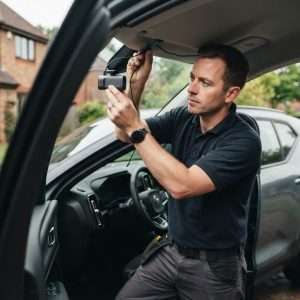
Professional car dash camera fitting gives you a securely mounted camera, concealed wiring and a tested power connection. With mobile fitting, the... Continue reading
Does a gps tracking dash cam let you find your car if it’s stolen? Not by itself. GPS can add location and journey context to... Continue reading
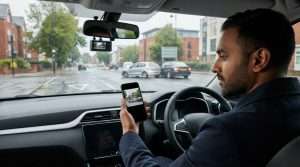
A dash camera can capture a collision clearly and still not tell the whole story. Understanding car dash camera causes of road traffic accidents... Continue reading

A GPS car tracker can locate your vehicle, but satellites alone can’t show its position on your phone. The key is the connection between GPS... Continue reading