
No products in the cart.

Vehicle Speakers Upgrade
Choosing, Fitting and Tuning
Most factory car speakers are built to a budget, not for sound quality. Swapping them for better units is one of the simplest ways to improve what you hear on every journey.
A vehicle speaker upgrade replaces your standard door and dash speakers with better-built aftermarket units, which usually deliver clearer vocals, tighter bass, and less distortion at higher volumes — often without changing your head unit. By investing in a Vehicle Speakers Upgrade, you can significantly enhance your audio experience. Many replacement car speakers are made to fit specific models, so they drop straight into the existing openings using vehicle-specific adapters and wiring leads.
The tricky part is choosing the right ones. Coaxial or component, how much power your standard stereo can supply, and whether your doors need sound deadening all affect the result. This guide walks you through choosing speakers that suit your car and taste, planning the installation, and getting the most from your car audio system without wasting money on parts you don’t need.
Key Takeaways
- Pick speakers that match your car’s fitment, your stereo’s power and the sound you actually want.
- Correct adapters, wiring and door sound deadening make a bigger difference than most people expect.
- Professional fitting is worth considering if you’d rather not remove door cards or run new cabling yourself.
Choose Speakers That Suit Your Vehicle and Listening Goals
The right car speakers depend on three things: the space in your doors and rear panels, the power feeding them, and the sound you actually want. Getting those three factors to line up matters far more than the brand name printed on the basket.
Identify Factory-System Limitations and Compatible Upgrade Paths
Most factory head units send out roughly 10–18 watts RMS per channel, even when the marketing sticker claims 200 watts peak. That low output limits how loud and how clean your replacement car speakers can play.
Start by working out what you have. Check whether your car uses a basic setup or a premium system from a brand such as Bose, Harman Kardon, or JBL, with a factory amplifier and separate tweeters.
Premium systems often use low-impedance speakers, active crossovers, or built-in signal correction. Swapping only the door speakers in those cars can make the sound worse, not better.
Your upgrade path usually follows one of these routes:
- Speakers only — fine for basic systems, if you pick high-sensitivity models
- Speakers plus a small amplifier — a 4-channel amp with a line output converter gives a clear jump in headroom
- Speakers, amplifier and DSP — needed when the factory amp applies heavy equalisation

Compare Coaxial and Component Speaker Designs
Coaxial car speakers put the tweeter on the same frame as the woofer. One unit, one pair of wires, and a simple crossover inside. That makes them the quickest swap for most owners.
Component speakers separate the parts. You get a woofer, a tweeter and an external passive crossover so that the tweeter can sit higher in the door or on the A-pillar.
That higher tweeter position lifts the soundstage toward windscreen level, which noticeably improves vocal placement.
| Coaxial | Component | |
|---|---|---|
| Install time | Short | Longer, needs tweeter mounting |
| Crossover | Internal | External, often with attenuation switches |
| Soundstage height | Low, at door level | Higher, adjustable by aiming |
| Typical use | Rear fill, budget upgrades | Front stage, high-fidelity audio |
Pioneer, Kenwood and Sony cover the affordable coaxial end well. Focal, Morel, Hertz, Audison and BLAM Audio focus more on component sets, while Alpine, Kicker and JL Audio offer both.
Match Door Speakers, Tweeters and Woofers to Available Locations
Measure before you buy. Diameter is only part of the job — mounting depth, tweeter protrusion and the shape of the window mechanism all decide whether a speaker fits.
Common sizes include 6.5in and 6x9in door and rear-deck speakers, 5.25in in older doors, and 2.5in to 4in in dash or pillar pods.
A few practical checks:
- Depth: many door cavities allow only 50–65mm behind the mounting surface
- Tweeter clearance: a tall tweeter can foul the door card or window glass
- Tweeter housings: surface, flush and angled cups suit different pillars
Where two sizes fit, the larger woofer generally moves more air and handles mid-bass better. Keep the front pair as your main focus, since front speakers do most of the work for the driver.
If you want real low bass, add a subwoofer rather than expecting door speakers to produce it.
Understand RMS Power, Peak Power, Sensitivity and Frequency Response
RMS power handling tells you what a speaker takes continuously. Peak power is a short-burst figure and is far less useful when comparing models.
Match RMS ratings to your source. A head unit alone suits speakers rated at about 50–75 watts RMS; an external amplifier lets you use higher-rated sets.
Sensitivity matters as much. A speaker rated 92dB produces noticeably more volume from the same watts than one rated 87dB, so high-sensitivity speakers are the sensible pick for unamplified factory systems.
Frequency response shows the range a speaker reproduces, often 60Hz–20kHz for a 6.5in coaxial. Treat published figures as a guide only, since measurement conditions vary between manufacturers.
Also check impedance. Most aftermarket car audio speakers are 4 ohms, but some factory systems use 2-ohm drivers.
Select Direct-Fit and Vehicle-Specific Speaker Kits
Vehicle-specific kits remove most of the guesswork. They combine the correct speaker size with the adaptor rings, wiring harnesses and tweeter pods your car needs.
Look for these parts in a kit:
- Mounting adaptors so the speaker bolts to factory holes
- Plug-and-play harnesses that avoid cutting original wiring
- Foam or plastic baffles to seal gaps and block moisture
- Grille or pillar pods shaped for your model
BLAM, Focal, Hertz and Audison all produce plug-and-play sets aimed at particular models, including many VW, BMW and Mercedes fitments.
These kits usually cost a little more than generic speakers. In return, you keep the factory look, avoid drilling, and can refit the original parts if you sell the car.
Plan Installation, Power and Cabin Acoustics
New speakers only sound as good as the fitting behind them, so measure your door and dash openings, work out whether you need extra power, and treat the panels that rattle. A few checks before you buy will save you returns, trim damage and disappointing results.
Check Fitment, Mounting Depth, Wiring and Mounting Adapters
Speaker size is only the starting point. You also need to know the available mounting depth behind the trim, the bolt pattern, and how much clearance the magnet has before it hits a window mechanism or door bar.
Most cars take 5.25 in, 6.5 in, or 6x9in speakers, but the factory openings rarely match aftermarket frames exactly. That is where mounting adapters (speaker pods or rings) come in, letting a round 6.5 in driver bolt into an oval or odd-shaped hole.
Wiring matters too. Vehicle-specific speaker harnesses plug into the factory connector at one end and the new speaker terminals at the other, so you never cut a standard loom.
Quick checklist before ordering:
- Speaker diameter and screw spacing
- Depth from mounting surface to obstruction
- Grille clearance for tweeters and raised frames
- Plug-and-play harness or fascia plates if you are also changing the car stereo
- Correct polarity marked on each wire
Suppliers such as InCarTec and retailers like Car Audio Centre list vehicle-specific installation accessories by make, model and year, which removes most of the guesswork.
Decide When a Car Amplifier or Subwoofer Is Needed
Factory head units typically produce around 15–22 watts RMS per channel. That is enough to run efficient replacement speakers at moderate volume, but it limits the headroom and bass response.
You should consider a car amplifier if:
- Your new speakers are rated below 90dB sensitivity
- You listen loudly and hear the sound harden or compress
- You have fitted component sets with passive crossovers
- You want clean output at motorway speeds
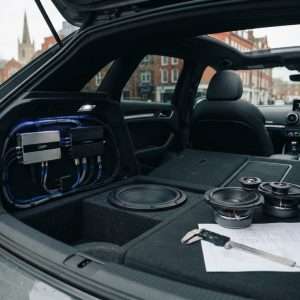
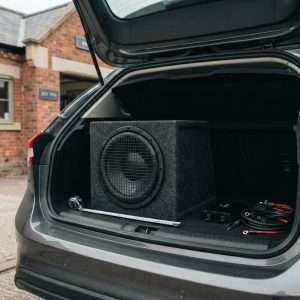
Subwoofers handle the frequencies door speakers physically cannot. An 8in or 10in sub in a compact sealed enclosure, powered by a small mono amp, takes bass strain off the mid-bass drivers and usually makes the whole system sound cleaner, not just louder.
Match power sensibly. Aim for an amplifier RMS rating close to each speaker’s RMS rating, and use a line-output converter or a DSP amp if you are keeping the factory car stereo.
Use Sound Deadening to Reduce Resonance and Road Noise
A door skin is a thin metal panel that flexes when a speaker plays. That flex cancels bass and adds buzzes and rattles.
Sound-deadening mats, such as Dynamat and similar butyl products, add mass and damping to the panel. Applying around 25–50% coverage on the outer skin, plus a sealing layer behind the speaker, noticeably tightens mid-bass.
Where to treat, in order of value for money:
| Area | Benefit |
|---|---|
| Outer door skin | Less panel ring, stronger mid-bass |
| Inner door card | Fewer rattles from clips and plastics |
| Speaker ring seal | Stops sound cancelling behind the cone |
| Boot floor and arches | Lower road noise, tighter sub output |
Clean the metal with isopropyl alcohol first, then roll the mat down firmly so no air is trapped.
Choose Between DIY Speaker Fitting and Professional Installation
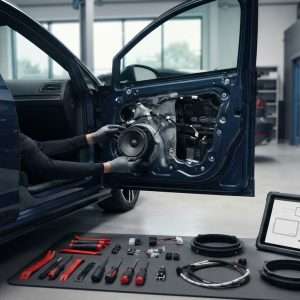
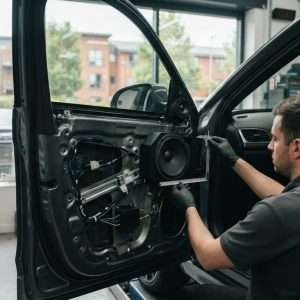
Straight swaps in door pods are within reach of most people. You need trim removal tools, a socket set, crimps or a soldering iron, and an hour or two per pair.
Car audio fitting gets harder when you add amplifiers, run power cable from the battery, or work on cars with amplified factory systems, fibre-optic buses or airbag sensors in the doors.
| DIY suits | A fitting service suits |
|---|---|
| Direct-fit coaxials | Component sets with tweeter relocation |
| Plug-in harnesses | Amplifier and subwoofer wiring |
| Basic car speaker installation | Factory systems with DSP or MOST networks |
| Sound deadening a door | Custom pods, dash builds and tuning |
Professional car audio fitters bring measurement tools, tuning experience and, importantly, insured artistry. Many retailers offer an audio fitting service at a fixed price per pair, which is often close to the cost of buying the tools yourself.
Protect Vehicle Functions, Trim and Safety Systems
Modern doors and dashboards carry more than speakers. Side airbag sensors, pressure sensors, window motors, courtesy lighting and door-open switches all share the same space.
Never route speaker cable across an airbag connector, and never pinch wiring behind a trim panel. Yellow connectors normally indicate airbag circuits, so leave them alone.
Practical steps that protect the car:
- Disconnect the battery before working on any circuit near an airbag or module
- Use plastic trim tools rather than screwdrivers to avoid marking panels
- Keep every factory clip; replace broken ones rather than forcing panels back
- Fit an inline fuse within 30cm of the battery on any new power cable
- Retain steering wheel controls and reversing camera feeds with the correct interface
Also check your warranty terms and insurance. Many insurers require non-standard audio to be declared, and clean, reversible car audio installation protects both resale value and vehicle safety systems.
Frequently Asked Questions
New speakers change how your music sounds, but the results depend on your budget, your car and whether you add extra power. Below are clear answers on cost, fitting, bass performance and matching speakers to your vehicle.
Is upgrading your car speakers worth it?
For most drivers, yes. Factory speakers are often made with paper cones and cheap foam surrounds to keep costs down. Aftermarket speakers usually use stiffer materials such as polypropylene cones and rubber surrounds, which handle more power and last longer.
The difference is easiest to hear in vocals, cymbals and mid-bass. Music sounds cleaner at higher volumes rather than harsh or muddy.
If your car came with a premium branded system, the gain may be smaller. Standard base-model systems tend to show the biggest improvement.
Can you upgrade the speakers in any car?
Nearly every car can take new speakers, though some need extra parts. Most vehicles use standard sizes such as 6.5in, 6x9in or 5.25in, so replacements drop straight into the existing holes.
Cars with unusual mounting depths or odd shapes need an adapter bracket. These are made for specific models and fill the gap between the new speaker and the door.
Wiring can also differ. Many cars accept plug-and-play harnesses, so you do not have to cut any factory cables.
Vehicles with a factory amplifier or fibre-optic audio bus, such as some BMW, Audi and Mercedes models, need more planning. You may need an interface adapter to keep chimes, fade controls and steering wheel functions working.
What are the best car speaker options for improved bass and sound quality?
For bass, a subwoofer does what door speakers cannot. An 8-in or 10-in sub in a sealed box produces tight, controlled low notes, while a ported box yields more volume at the lowest frequencies.
For overall clarity, component speakers are the stronger choice. They split the tweeter from the woofer so you can mount the tweeter higher up, near the A-pillar or mirror area, which lifts the sound towards ear level.
Coaxial speakers combine both drivers in one unit. They cost less and fit into factory locations without extra work, making them a sensible option if you want a simple swap.
Look at two specifications when comparing models:
- Sensitivity – speakers rated 90dB or higher play louder from a low-powered head unit.
- RMS power handling – match this to your amplifier’s continuous output, not the peak figure.
How much does it cost to replace car speakers?
Speakers themselves range widely:
| Item | Typical price |
|---|---|
| Budget coaxial pair | £40–£80 |
| Mid-range coaxial pair | £80–£180 |
| Component set | £150–£500+ |
| Mounting adapters and harnesses | £15–£50 |
| Sound deadening for two doors | £30–£70 |
Professional fitting usually costs £50–£120 for a pair of door speakers. Component sets take longer because tweeters need separate mounting and crossover placement, so labour can be higher.
Doing it yourself saves the labour cost. You will need a trim removal tool, a socket set and either crimp connectors or a soldering iron.
Do I need an amplifier when fitting new car speakers?
Not always. Most factory head units produce around 15–20 watts RMS per channel, which is enough to run efficient coaxial speakers at normal listening levels.
An amplifier helps when you want more volume without distortion, or when your speakers have low sensitivity ratings. It also gives cleaner output at high volume because the head unit is not being pushed to its limit.
A subwoofer is different. It needs its own amplifier or a powered enclosure, since head units cannot supply the power a sub requires.
A four-channel amp rated around 50–75 watts RMS per channel suits most door speaker upgrades.
What should I consider when choosing speakers for my car model?
Start with the size and depth of the existing openings. A speaker that is too deep will hit the window mechanism inside the door, and one that is too wide will not clear the trim panel.
Check the impedance too. Most cars use 4-ohm speakers, and some factory systems use 2-ohm units, so fitting the wrong load can affect the amplifier.
Think about where the sound needs to go. If your car only has speakers low in the doors, adding tweeters higher up will improve the clarity of the vocals.
Sound deadening matters more than many people expect. Adding damping material to the door skin reduces rattles and improves mid-bass response, often making a bigger difference than spending more on the speakers themselves.
Finally, confirm whether your car has a factory amp before you buy. Speakers designed for an amplified system have different power needs from those meant to run off a standard head unit.
Safe and Sound Essex
If you want your speaker upgrade fitted properly, Safe and Sound Essex is an option worth considering. The company is based at Hobbits Hole, South Hanningfield Road, Rettendon, Chelmsford, CM3 8HD.
They supply and fit car audio equipment from brands you’ll recognise:
- Pioneer
- Kenwood
- Sony
- JVC
- Alpine
- Focal
- Rockford Fosgate
- Powerbass
Stock is held at the workshop, so you usually won’t wait long for parts to arrive.
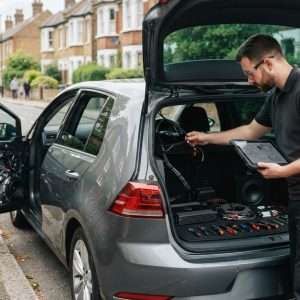
You have two ways to book a fitting. Visit the Chelmsford workshop, which has a waiting area, or ask for the mobile service and an installer will come to your home or workplace.
Their installers are Fitas-approved and trained across several audio and security brands. That matters for speaker work, because door speakers often need the right adaptors, wiring harnesses and mounting to sit correctly.
The team also offers free consultations. You can talk through your budget, the music you listen to and what you want the system to sound like before spending anything.
Beyond speakers, they fit related items such as:
| Service | Examples |
|---|---|
| Head units | Bluetooth and smartphone-ready stereos |
| Amplifiers | Multi-channel setups |
| Subwoofers | Boot and custom-built enclosures |
| Sound treatment | Deadening materials for doors |
They work with private car owners and commercial fleets alike. To ask questions or book, you can call 07710103333.


About author
Related posts
Could a well-known audio range still be the wrong fit for your car? Powerbass PBX covers several types of components, including amplifiers,... Continue reading
What if the best car audio upgrade isn’t the biggest component, but the accessory that makes everything work together? Choosing Powerbass Audio... Continue reading
“Direct fit” doesn’t mean “fits every Ford”. If you’re searching for Powebass Ford Oem Direct Fit speakers, match the product to your exact vehicle,... Continue reading
The right-sounding Powerbass component System can still be the wrong upgrade for your car if it doesn’t match your vehicle or existing audio... Continue reading
Will a Powerbass loaded enclosure fit your car and work with the stereo and amplifier you already have? A box can look right but take... Continue reading