
No products in the cart.

The Best Dash Cams for UK Roads
2026 Expert Review & Installation Guide
Choosing a dash cam for UK roads is a critical security decision, yet the market is saturated with confusing technical jargon. From 4K resolution and frame rates to complex sensor types, it’s easy to feel overwhelmed. Add the concerns over a messy DIY installation-dangling wires, a compromised interior, and the constant worry of a drained battery-and the task becomes daunting. This is why finding the best dash cam requires more than just reading online reviews; it demands expert, real-world testing.
Our nationwide team of specialist installers has rigorously evaluated the top models for 2026, focusing on the factors that deliver true peace of mind: flawless reliability, evidence-grade video quality, and seamless integration with your vehicle. In this definitive guide, you will discover our approved dash cams and understand why professional, hardwired fitting is the only way to guarantee performance, protect your battery, and secure the evidence you need when it matters most.
How to Choose the Best Dash Cam: Key Features Explained by Installers
Navigating the dash cam market means cutting through significant marketing hype. As professional installers, we see firsthand which technical specifications provide clear, reliable footage when you need it most. To find the best dash cam for your vehicle, it is essential to understand the core technology. While many sources can explain what a dash cam is, this guide focuses on the essential features for security and insurance on UK roads. Remember, the camera is only half the battle; professional installation is key to unlocking its full potential.
Video Quality: Resolution, Frame Rate, and Sensors
Crystal-clear footage is the primary requirement for any dash cam. For evidence to be useful, you must be able to identify number plates and other crucial details. Pay close attention to these three specifications:
- Resolution: Full HD (1080p) is the absolute minimum. We recommend 2K (1440p) or 4K (2160p) for superior clarity, ensuring number plates are legible day or night.
- Frame Rate (FPS): 60 fps provides smoother video and captures fast-moving details better than the standard 30 fps, which can be critical during a collision.
- Image Sensor: A high-quality sensor, such as the Sony STARVIS, is vital for low-light and nighttime performance, delivering clear recordings in challenging UK weather and after dark.
Coverage: Front-Only. Front and Rear Channels
A front-facing camera (1-Channel) provides baseline protection by recording events ahead of you. However, for comprehensive security, a 2-Channel system is the superior choice. A front-and-rear dash cam setup records what happens behind you, providing indisputable evidence in rear-end collisions, which are among the most common types of incidents. For taxi, private hire, or fleet operators, an interior-facing cabin camera is also essential for passenger and driver safety.
Essential Security Feature: Parking Mode
Your vehicle is most vulnerable when left unattended. Parking Mode provides surveillance against bumps, vandalism, and theft while you are away. It uses the camera’s G-sensor to detect impacts or motion and automatically saves the footage. This feature is not a simple plug-and-play option; it requires professional hardwiring to your vehicle’s fuse box. This ensures the camera has a constant power supply without draining your battery, making professional installation a critical part of a reliable security setup.
The Best Dash Cams of 2026: Our Top Picks
Selecting the best dash cam requires expert analysis of performance, reliability, and real-world usability. Our team of specialist installers has rigorously tested the leading 2026 models, focusing on trusted brands such as Thinkware and BlackVue to identify the definitive best performers. Our recommendations, which align with many findings in broader industry reviews of the best dash cams of 2026, are categorised to help you find the perfect fit for your vehicle and security needs. Each selection includes an exclusive ‘Installer’s Note’ that provides practical insights you won’t find anywhere else.
Best All-Rounder: Thinkware Q1000
The Thinkware Q1000 stands out as the ultimate all-rounder for most UK drivers. It delivers an exceptional balance of high-end features, superb video quality, and unwavering reliability, making it a complete security solution for daily driving and parked protection.
- Key Specs: 2K QHD front & rear resolution, advanced parking mode with radar, Super Night Vision 3.0.
- Pros: Superb video clarity in all lighting conditions, reliable and energy-efficient parking surveillance, robust cloud features for notifications and live view.
- Cons: Represents a significant investment at a premium price point.
Installer’s Note: The build quality of the Q1000 is immediately apparent. Thinkware offers high-quality cables and a discreet, screenless design that enables a very clean, factory-finish installation.
Best for Parking Security: Blackvue DR970X-2CH
For vehicle owners prioritising maximum security while parked, the Blackvue DR970X-2CH is the undisputed leader. Its combination of 4K resolution and seamless cloud integration provides unparalleled peace of mind, allowing you to monitor your vehicle remotely from anywhere.
- Key Specs: 4K UHD front camera, full HD rear camera, built-in GPS, Wi-Fi, and LTE (optional), intelligent parking mode.
- Pros: Unmatched 4K video clarity for capturing fine details like number plates, seamless cloud integration for live view and event notifications.
- Cons: Full cloud functionality depends on a consistent internet connection via a mobile hotspot or LTE module.
Installer’s Note: To maximise its parking mode capabilities, we strongly recommend pairing the DR970X with a dedicated battery pack. This prevents a drain on the vehicle’s main battery during extended use.
Best Discreet Option: Road Angel Halo Pro
The Road Angel Halo Pro is engineered for drivers who want comprehensive protection without a visible screen. Its minimal footprint ensures it remains almost invisible from both inside and outside the vehicle, preserving your car’s original aesthetic.
- Key Specs: 2K front / 1080p rear resolution, screenless design, Wi-Fi connectivity, winter heating mode.
- Pros: Extremely discreet and compact design; intuitive, easy-to-use companion app; winter mode prevents lens frosting.
- Cons: App-only operation for settings and footage review may not suit all users.
Installer’s Note: This model’s compact, cylindrical form factor is ideal for mounting behind the rearview mirror on most vehicles, without obstructing the driver’s view.
Why Professional Hardwiring is a Non-Negotiable Upgrade
A dash cam is only as reliable as its power source. While many units include a 12V adapter for the cigarette lighter socket, this method severely limits the device’s capabilities and reliability. To unlock the advanced security features that define the best dash cam models, professional hardwiring is not just an option-it is an essential upgrade.
Hardwiring directly integrates the dash cam into your vehicle’s fuse box. This provides a stable power supply and enables critical functions such as Parking Mode, transforming your dash cam from a simple journey recorder into a 24/7 surveillance system.
The Limitations of 12V ‘Cigarette Lighter’ Adapters
Relying on a 12V socket introduces significant drawbacks that undermine your vehicle’s security. This temporary solution is plagued by:
- Untidy Wires: Trailing cables across your dashboard are distracting and unprofessional, and they can easily snag or be disconnected.
- No Parking Mode: Most 12V sockets lose power when the ignition is off, meaning your camera is useless when your vehicle is parked and most vulnerable.
- Unreliable Connection: The plug can easily become dislodged by vibrations or accidental knocks, leading to gaps in your recording when you need it most.
Benefits of Professional Hardwiring
A professional hardwiring installation elevates your dash cam from a gadget to a fully integrated security asset. The benefits are immediate and substantial:
- 24/7 Parking Mode Surveillance: Hardwiring provides constant power, enabling the camera to monitor for impacts and motion even when the engine is off. This is the most important feature for protecting your vehicle against theft, vandalism, and hit-and-run incidents.
- Discreet Installation: All wires are neatly concealed behind the vehicle’s trim for a clean, factory-fitted appearance with no distractions.
- Battery Protection: Professional hardwire kits include a voltage cutoff feature that automatically shuts the dash cam down if your car battery’s voltage drops too low, ensuring you can always start your engine.
To ensure your investment is properly protected, view our dash cams, all of which include nationwide professional installation.
The Dangers of a DIY Hardwiring Attempt
While a DIY installation may seem cost-effective, the risks to modern vehicles are severe. Incorrectly wiring a dash cam can lead to costly and dangerous consequences, including:
- Interference with Safety Systems: Tapping the wrong fuse can interfere with critical systems such as airbags, ABS, and stability control.
- Electrical Faults & Warranty Issues: Improper connections can cause short circuits, blown fuses, or damage to the vehicle’s ECU. This type of work will almost certainly void your manufacturer’s warranty.
- Permanent Battery Drain: Without the correct voltage cutoff configuration, the dash cam can slowly drain your battery, leaving you stranded.

Dash Cam Legality and Insurance Benefits in the UK
Installing a dash cam provides more than just a recording of your journey; it is a critical tool for legal and financial protection on UK roads. However, ownership comes with clear responsibilities. Understanding the rules surrounding their use is essential to ensure your footage is admissible and that you operate within the law. This section clarifies your obligations and the tangible benefits of having an impartial witness in your vehicle.
UK Laws and Your Responsibilities
To ensure your dash cam is a benefit and not a liability, you must comply with UK regulations. Failure to do so can result in fines or render your footage unusable. Key responsibilities include:
- Correct Placement: The camera must not obstruct the driver’s view of the road. According to the Highway Code and MOT test rules, it cannot intrude more than 40mm into the area swept by the windscreen wipers.
- Informing Passengers: In a private vehicle, there is no legal requirement to inform passengers that they are being recorded. However, if you operate a commercial vehicle (e.g., a taxi, private hire vehicle, or company van), you must display clear signage informing your passengers that recording devices are in use.
- Data Protection (GDPR): You are the ‘data controller’ for the footage captured. Sharing it with the police or your insurer for a claim is a legitimate purpose. However, publishing footage on social media without obscuring faces and number plates could breach UK data protection laws.
Using Footage for Insurance Claims
In the event of an incident, a dash cam provides indisputable, timestamped evidence. This is your primary tool for proving you were not at fault and for protecting you from liability disputes and fraudulent claims. The benefits are immediate and significant.
High-quality footage from the best dash cam can significantly expedite the insurance claims process, enabling insurers to establish liability in days rather than weeks. Most importantly, it serves as a powerful defence against ‘crash for cash’ scams, where criminals deliberately cause collisions to make fraudulent injury claims. This protection is vital for safeguarding your No Claims Bonus, which can save you hundreds of pounds annually.
Do Dash Cams Reduce Insurance Premiums?
While some UK insurers offer a direct discount for drivers who use a dash cam, this is not a guaranteed industry-wide policy. Discounts can range from 10% to 20%, but you must verify eligibility directly with your provider. Some may require specific models or a professional, hardwired installation to qualify.
The most substantial financial benefit is not the initial premium reduction, but the long-term protection of your No Claims Bonus. By preventing a single fault claim, your dash cam has effectively paid for itself many times over. For guidance on insurance-approved models and professional fitting, always consult with vehicle security specialists.
Your Final Verdict: Investing in Total Peace of Mind
Choosing a dash cam for UK roads is a critical security decision. As this guide has shown, advanced features and insurance benefits are only fully realised through professional hardwiring. This step is non-negotiable to ensure reliability and to unlock essential features,s such as parking mode, that keep your vehicle protected 24/7.
The best dash cam is one that performs flawlessly when it matters most. As authorised dealers for Thinkware and Blackvue, we ensure just that. We provide a UK-wide mobile installation service, trusted by thousands of customers and proven by over 1,000 5-star Google reviews. We handle the technical details so you don’t have to.
Secure your investment and your no-claims bonus today. Browse our range of professionally installed dash cams for complete peace of mind. Drive with confidence knowing you are fully protected.
Frequently Asked Questions
Are dash cams worth it in the UK?
Yes, a dash cam is a crucial investment for UK drivers. It provides indisputable video evidence in the event of an accident, protecting you from false claims and ‘crash for cash’ scams. This footage can significantly speed up insurance claims and resolve disputes. Many UK insurance providers also recognise the value of dash cams. They may offer a premium discount, making them a sound financial and security decision for any vehicle owner.
Do dash cams drain your car battery?
A professionally installed dash cam will not drain your car battery. Models hardwired for parking mode include a voltage cutoff feature. This system continuously monitors your battery’s state of charge and automatically shuts down the dash cam if the voltage drops below a preset threshold. This ensures your vehicle will always have sufficient power to start. Our specialists guarantee a correct and safe installation to protect your battery.
How much does professional dash cam installation cost?
Professional dash cam installation costs in the UK typically range from £100 to £200. The final price depends on your vehicle’s complexity and whether you are installing a front-only or a front-and-rear system. This cost covers hardwiring the device directly into your vehicle’s fuse box, ensuring a clean setup with no visible wires and proper configuration of features such as parking mode. Always use a certified technician for secure, reliable fitment.
Can dash cam footage be used in court?
Yes, dash cam footage is admissible as evidence in UK courts, both for civil claims and criminal proceedings. To be effective, the footage must be clear, authentic, and unedited, with accurate timestamps and dates. Police forces across the UK now have dedicated online portals for submitting dashcam evidence of dangerous driving. This makes it a powerful tool for holding other road users accountable and protecting your legal position following an incident.
Should I leave my dash cam in my car overnight?
Leaving your dash cam in your vehicle overnight is strongly recommended, provided it is set to a properly configured parking mode. This feature enables the camera to automatically record any detected impact or motion while the car is parked, providing crucial evidence of theft, vandalism, or collisions. For maximum security, ensure the device is discreetly installed. A hardwired dash cam with parking protection is an essential component of a comprehensive vehicle security system.
Do you need a front-and-rear dash cam?
While a front-facing dash cam is essential, a dual-channel system with a rear camera provides comprehensive protection. Rear-end collisions are one of the most common types of accidents on UK roads. A rear camera provides undeniable evidence of fault in these situations and captures incidents in car parks or while reversing. For complete peace of mind and 360-degree evidence-gathering, we always recommend a front- and rear-dash-cam solution.
What is the best dash cam for a new driver?
The best dash cam for a new driver is one that prioritises reliability, ease of use, and high-quality video. Look for a model with a simple interface, automatic start/stop recording, and a G-sensor to lock footage during an incident. Features like GPS are also invaluable, as they log your speed and location, providing extra evidence to protect a new driver from unfair claims. A straightforward, set-and-forget device provides security without creating a distraction.


About author
Related posts

A dash camera may record when the car is off if it has parking mode and a suitable power supply. Whether dash cameras record when... Continue reading
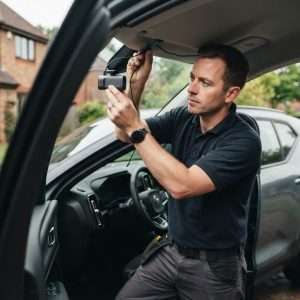
Professional car dash camera fitting gives you a securely mounted camera, concealed wiring and a tested power connection. With mobile fitting, the... Continue reading
Does a gps tracking dash cam let you find your car if it’s stolen? Not by itself. GPS can add location and journey context to... Continue reading
A dash camera can capture a collision clearly and still not tell the whole story. Understanding car dash camera causes of road traffic accidents... Continue reading

A GPS car tracker can locate your vehicle, but satellites alone can’t show its position on your phone. The key is the connection between GPS... Continue reading