
No products in the cart.

10 Reasons a Dash Cam Should Be on Every Commercial Vehicle
Essential Fleet Safety and Protection
Dash cams have become an essential part of modern fleet management across the UK. Recent data shows that most British drivers now support the use of dash cams in vehicles, with these devices playing a key role in documenting road incidents and improving overall safety. Fleet operators of all sizes are discovering how these cameras can transform their operations.
Installing dash cams in your commercial vehicles offers benefits that extend far beyond simple video recording. These systems can help you reduce costs, protect your drivers, and improve your fleet’s day-to-day operations. The technology has advanced rapidly, making dash cams more accessible and effective for businesses managing vehicles on British roads.
Key Takeaways
- Dash cams provide critical evidence for incidents whilst improving driver behaviour and fleet safety.
- Modern dash cam systems offer real-time monitoring and data that helps reduce operational costs.
- Installing dash cams in your fleet protects your business from false claims and supports better decision-making.g

Key Reasons Why Commercial Vehicles Require Dash Cams
1. Recorded Proof During Collisions
A forward-facing camera captures video evidence when incidents occur on the road. This footage helps you resolve disagreements quickly and prove fault after a collision. Commercial fleets benefit from having clear recordings that show exactly what happened during an accident.
2. Reduced Insurance Premiums
Installing dash cams in your fleet vehicles can lead to lower insurance costs. Insurance providers often offer discounts when your commercial vehicles are fitted with these cameras. The video recording capability reduces risk and simplifies handling insurance claims.
3. Protection From Fraudulent Schemes
Dash cam footage helps protect your business from crash-for-cash schemes. These cameras capture fraudulent activity on video, preventing costly false insurance claims against your company.
4. Encourage Better Road Behaviour
A dual-facing dash cam promotes safer driving across your commercial fleets. When drivers know their actions are recorded, they maintain higher standards. This accountability reduces risky behaviour and improves driver safety.
5. Safeguard Your Company’s Image
Video evidence protects your reputation when complaints arise about your fleet vehicles. Having dash cam footage available helps you respond to disputes with facts rather than uncertainty.
6. Real-Time Monitoring Capabilities
Modern dashcams allow fleet managers to view live footage remotely. An in-cab camera provides instant checks on driver performance and road conditions when required.
7. Enhanced Driver Development
Use recorded footage for driver training purposes. Real examples from your own fleet operations show both excellent and problematic behaviour, creating effective learning opportunities.
8. Streamlined Claims Processing
Providing dash camera recordings significantly speeds up insurance claims. Fleet managers can submit internal footage as definitive proof, reducing vehicle downtime.
9. Monitor Cabin Activity
A dual-facing system records what happens inside the vehicle. This internal footage ensures driver behaviour meets company standards and regulatory requirements.
10. Optimise Overall Fleet Performance
Commercial dash cams deliver valuable insights that improve fleet safety. The recorded data helps you identify patterns and make informed decisions about your operations.
Equip Your Fleet for Tomorrow
Modern camera systems work alongside telematics to deliver comprehensive oversight of your vehicles. GPS and vehicle tracking capabilities, combined with dash cam footage, create detailed trip histories that help you understand exactly how your fleet operates.
Driver performance analysis becomes straightforward when you have access to both video evidence and tracking systems data. This combination supports better fleet management decisions whilst strengthening your risk management approach.
You can reduce liability risk by having clear records of driver behaviour and vehicle locations. These tools provide the accountability and security needed to manage your fleet effectively and protect your business interests.
The Radius Vision Solution
Radius offers two camera systems designed for your commercial fleet. Vision-uno provides a forward-facing camera that records what happens on the road. Vision-duo includes both a forward-facing camera and an interior camera to monitor the road and the inside of your vehicle.
Both options include vehicle tracking features. You can review trip histories and analyse driver performance on a single device. This combined approach gives you both video evidence and tracking data in a single system.
Common Questions About Dash Cams for Commercial Vehicles
What advantages do dash cams provide for business vehicles?
Dash cams offer protection against fraudulent claims and false accusations. When someone makes an incorrect claim about your driver, the video evidence shows what actually happened.
These devices help improve driver behaviour. When your staff know their driving is recorded, they tend to follow traffic rules more carefully and drive more safely.
You gain valuable proof if accidents occur. The footage shows the exact sequence of events, road conditions, and actions of all parties involved.
Key advantages include:
- Protection from insurance fraud
- Lower accident-related costs
- Faster claim resolution
- Better driver training opportunities
- Reduced fuel costs through improved driving habits
- Fleet safety monitoring
How does video evidence assist with incident claims and liability determination?
Camera footage provides an unbiased record of what occurred during a collision or incident. The video shows vehicle positions, road markings, traffic signals, and weather conditions at the exact moment of impact.
This evidence helps insurance companies process claims more quickly. Rather than relying on conflicting witness statements, adjusters can review clear footage to determine responsibility.
Your company can defend against false liability claims. If another driver incorrectly blames your employee, the dash cam proves what actually took place.
The footage typically includes time stamps and GPS coordinates. These details verify when and where the incident occurred, which strengthens your evidence.
Do commercial vehicle cameras lower insurance costs?
Many insurers offer discounts when you fit dash cams to your fleet. The reduction varies between providers but typically ranges from 10% to 15% on premiums.
Some insurance companies require dash cams for certain types of commercial cover. They recognise that these devices reduce risk and the likelihood of fraudulent claims.
Factors that influence insurance savings:
| Factor | Impact on Premium |
|---|---|
| Number of vehicles equipped | Higher coverage = larger discount |
| Camera quality and features | Advanced systems = better rates |
| Driver training programme | Combined approach = maximum savings |
| Claims history | Improved record = additional reductions |
You may need to provide proof of installation and regular maintenance. Insurers want confirmation that the cameras work properly and record continuously.
The long-term savings extend beyond premiums. Fewer accidents and faster claim resolution can significantly reduce your overall costs.
Which errors should operators avoid when implementing dash cam systems?
Installing poor-quality cameras is a common mistake. Cheap devices often fail when you need them most, producing unclear footage or missing critical moments.
Failing to inform drivers about recording policies creates problems. You must tell your staff that cameras are fitted and explain why they are necessary.
Improper maintenance of equipment leads to failures. Memory cards fill up, lenses get dirty, and mounting brackets come loose without regular checks.
Common mistakes to avoid:
- Neglecting to check footage quality regularly
- Failing to secure and back up important recordings
- Installing cameras incorrectly
- Ignoring software updates
- Not training staff on system use
- Overlooking battery or power issues
Some operators forget to create clear policies about footage access and storage. Without proper procedures, you may face legal complications or data protection issues.
What drawbacks or challenges come with commercial dash cam use?
Initial costs can be substantial for larger fleets. Quality systems range from £200 to £1,000 per vehicle, plus installation and ongoing storage fees.
Managing large amounts of video data requires time and resources. You need systems to store, organise, and retrieve footage when necessary.
Some drivers feel uncomfortable with being constantly monitored. This can affect morale if you do not clearly communicate the reasons and benefits.
The cameras may not capture everything. Blind spots exist, and footage quality drops in poor lighting or bad weather conditions.
Technical issues occur with any electronic equipment. Cameras malfunction, memory cards can become corrupted, and systems require regular updates and maintenance.
Potential challenges:
- Staff resistance to monitoring
- Data storage and management costs
- Privacy compliance requirements
- Equipment reliability concerns
- Reviewing footage takes time
- Technical support needs
How do you manage driver privacy and data regulations with dash cams?
You must inform your drivers before installing cameras. Written notification should explain what the cameras record, where footage is stored, and who can access it.
Create clear policies about when and how recordings are reviewed. Footage should typically only be checked after incidents or complaints, not for routine surveillance.
Comply with data protection laws by limiting how long you keep recordings. Most operators delete footage after 30 to 90 days unless needed for claims or investigations.
Fleet operators should also follow the ICO’s guidance on dash cams and UK GDPR to ensure footage is recorded, stored and accessed responsibly.
Data protection requirements:
- Inform drivers in writing about recording
- Explain the purpose of monitoring
- Limit access to authorised personnel only
- Store footage securely
- Delete recordings according to schedule
- Respond to subject access requests properly
Forward-facing cameras raise fewer privacy concerns than driver-facing devices. If you install inward-facing cameras, you need stronger justification and clearer policies.
Drivers have the right to request copies of footage that shows them. You must provide this information within the timeframes set by data protection regulations.
Train your managers on proper footage handling. Only designated people should access recordings, and all reviews should be documented.
Safe and Sound Essex
Safe and Sound Mobile is a specialist provider of vehicle security and audio systems in Essex. The company has built its reputation over more than a decade, serving customers throughout Chelmsford and the surrounding regions.
Services and Expertise
The business focuses on several key areas:
- Dash camera installation and supply
- Vehicle tracking systems
- GPS immobilisers and security solutions
- Audio system fitting and upgrades
- Anti-theft technology
You can access a wide range of premium security brands through their service. They stock and install equipment from manufacturers including Smartrack and Thinkwave for tracking and camera systems.
Dash Camera Solutions
When you need a dash cam fitted to your commercial vehicle, Safe and Sound Essex provides both supply and installation services. Their team handles the complete process, from selecting the right camera for your fleet needs to professional fitting that ensures optimal performance.
The company uses parking-mode cameras that provide protection even when your vehicle is stationary. This feature proves particularly valuable for commercial vehicles that spend time parked in public areas or at job sites.
Professional Installation
Proper installation matters as much as the camera itself. Safe and Sound Mobile’s technicians ensure your dash cam is positioned correctly in accordance with legal requirements. They handle the wiring and setup to avoid interfering with your vehicle’s systems whilst maintaining a clean, professional appearance.
You benefit specifically from their experience with commercial vehicles. They understand the unique requirements of fleet operations and can advise on camera placement that captures the road ahead without obstructing your view.
Contact and Location
The business operates from Chelmsford, making it accessible for commercial vehicle operators throughout Essex. You can reach them by phone to discuss your specific requirements and arrange a fitting appointment.
Related Posts


About author
Related posts

A GPS location alone doesn’t mean a tracker meets a Thatcham security standard. For motorhome tracker installation in the UK, the key difference is... Continue reading
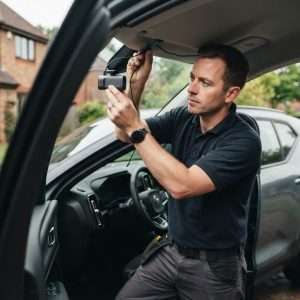
Professional car dash camera fitting gives you a securely mounted camera, concealed wiring and a tested power connection. With mobile fitting, the... Continue reading
A siren is only one part of vehicle security. Choosing a car alarm means considering the protection you want and how it suits your vehicle.A... Continue reading

What if the lowest tracker quote costs more once ongoing charges are included? If you’re asking how much for car tracking in the UK in... Continue reading

A high win rate doesn’t always mean a hero or build is the right choice for you. A DEADLOCK TRACKER can help you look beyond... Continue reading